

Process Guide for Students for Interdisciplinary Work in Computer Science/Informatics
Instructions Manual - Handbuch für Studierende


Instructions Manual - Handbuch für Studierende
Medical Informatics is defined as an interdisciplinary field studying the effective use of biomedical data, information and knowledge for scientific inquiry, problem solving, and decision making, motivated by efforts to improve human health. To emphasize the broad character it is called Biomedical Informatics. The course LV 444.152 consists of the following 12 1. Computer Science meets Life Sciences, challenges and future directions; 2. Back to the Fundamentals of Data, Information and Knowledge; 3. Structured Coding, Classification (ICD, SNOMED, MeSH, UMLS); 4. Biomedical Acquisition, Storage, Information Retrieval and Use; 5. Semi structured and weakly structured data; 6. Multimedia Data Mining and Knowledge Discovery; 7. Knowledge and Cognitive Science and Human-Computer Interaction; 8. Biomedical Decision Reasoning and Decision Support; 9. Intelligent Information Visualization and Visual Analytics; 10. Biomedical Information Systems and Medical Knowledge Management; 11. Biomedical Privacy, Safety and Security 12. Methodology for Information System Design, Usability and Evaluation
Successful research and development hinges on a clear vision, mission, and strategy, emphasizing the importance of team dynamics and effective leadership. The book highlights the challenges of building and managing a skilled team, stressing that even the best teams require adequate funding to thrive. As public budgets shrink, securing external funding becomes crucial for maintaining competitiveness and quality. Ultimately, a team's success is measured by their output, underscoring the need for actionable knowledge in the pursuit of excellence in research.
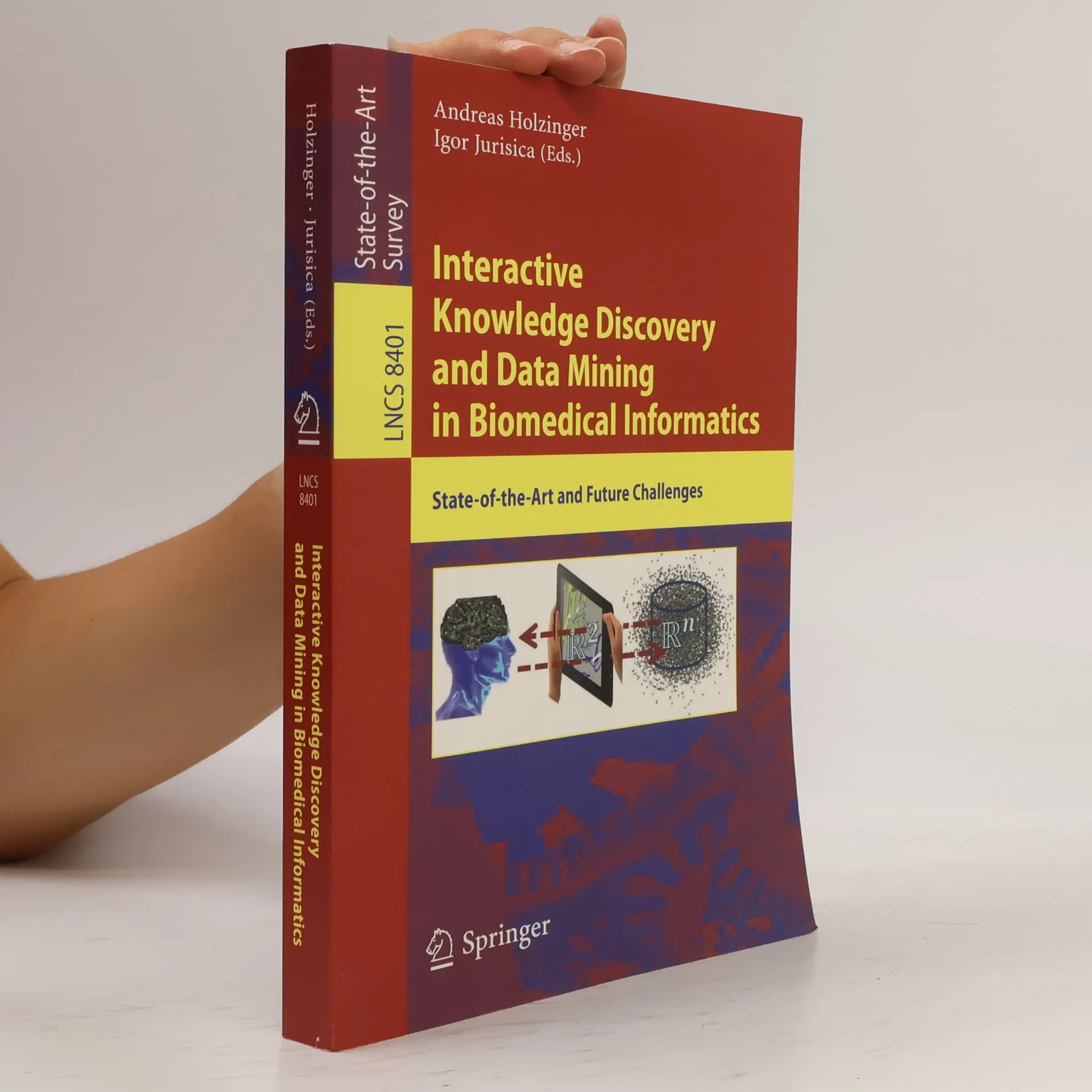
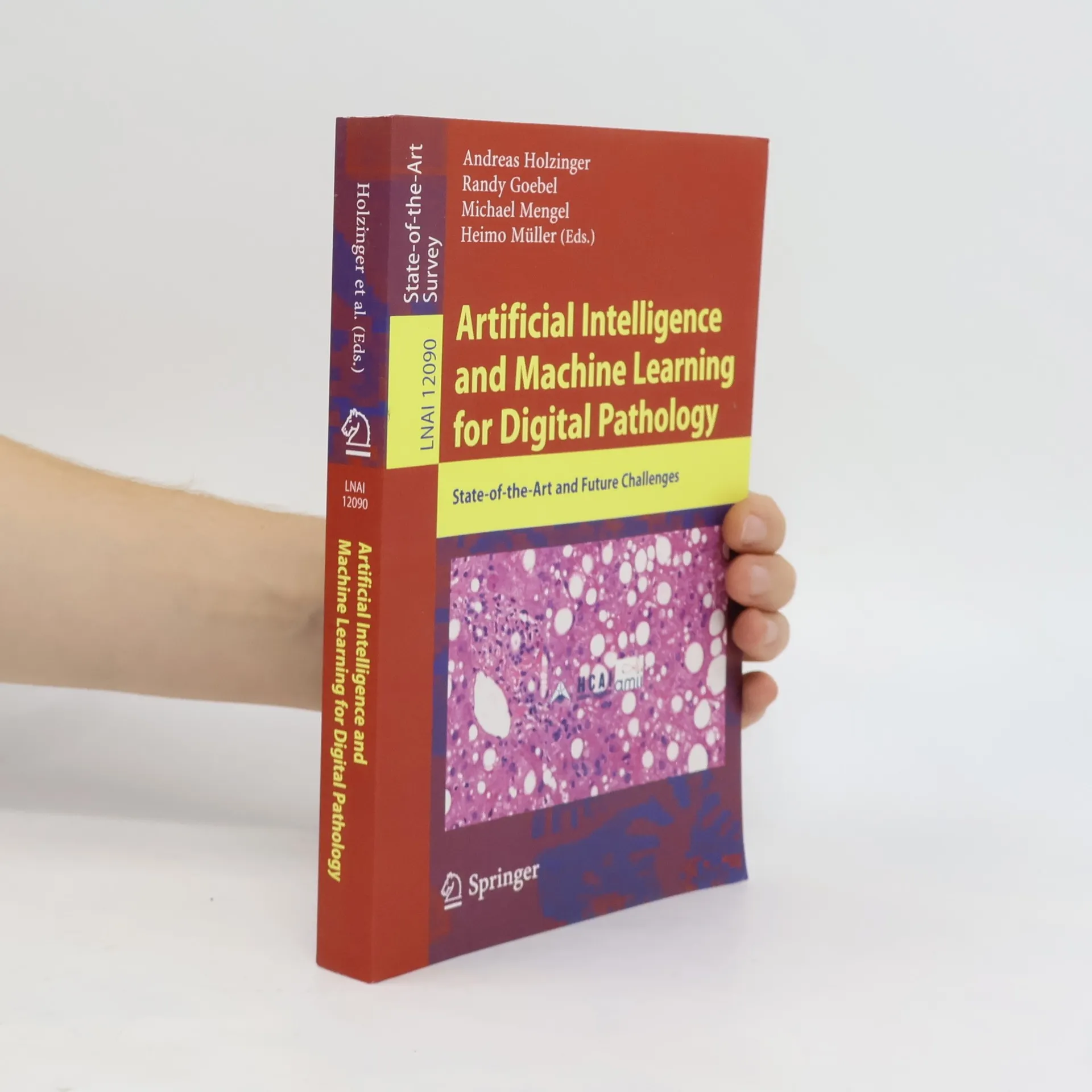
State-of-the-Art and Future Challenges
Data driven Artificial Intelligence (AI) and Machine Learning (ML) in digital pathology, radiology, and dermatology is very promising. In specific cases, for example, Deep Learning (DL), even exceeding human performance. However, in the context of medicine it is important for a human expert to verify the outcome. Consequently, there is a need for transparency and re-traceability of state-of-the-art solutions to make them usable for ethical responsible medical decision support. Moreover, big data is required for training, covering a wide spectrum of a variety of human diseases in different organ systems. These data sets must meet top-quality and regulatory criteria and must be well annotated for ML at patient-, sample-, and image-level. Here biobanks play a central and future role in providing large collections of high-quality, well-annotated samples and data. The main challenges are finding biobanks containing ‘‘fit-for-purpose’’ samples, providing quality related meta-data, gaining access to standardized medical data and annotations, and mass scanning of whole slides including efficient data management solutions.
This book constitutes the refereed proceedings of the 7th Conference of the Workgroup Human-Computer Interaction and Usability Engineering of the Austrian Computer Society, USAB 2011, in Graz, Austria, in November 2011. The 18 revised full papers together with 29 revised short papers and 2 posters presented were carefully reviewed and selected from 103 submissions. The papers are organized in topical sections on cognitive approaches to clinical data management for decision support, human-computer interaction and knowledge discovery in databases (hci-kdd), information usability and clinical workflows, education and patient empowerment, patient empowerment and health services, information visualization, knowledge & analytics, information usability and accessibility, governmental health services & clinical routine, information retrieval and knowledge discovery, decision making support & technology acceptance, information retrieval, privacy & clinical routine, usability and accessibility methodologies, information usability and knowledge discovery, human-centred computing, and biomedical informatics in health professional education.