
Explore the latest books of this year!
Bookbot

Marc Hauser

    October 25, 1959

    Drawing from a background in biological sciences, this author delves into the complexities of human nature and its evolution. Their writings span a remarkable range of disciplines, from animal behavior and evolutionary biology to cognitive neuroscience and philosophy, unified by an interdisciplinary approach. This author bridges scientific discovery with practical application, particularly in education and human welfare, by working with at-risk youths. Their work aims to enhance our understanding of the mind and brain while developing new tools to improve the lives of children and contribute to societal well-being.

    Wilde Intelligenz
    Vulnerable Minds
    Wild minds
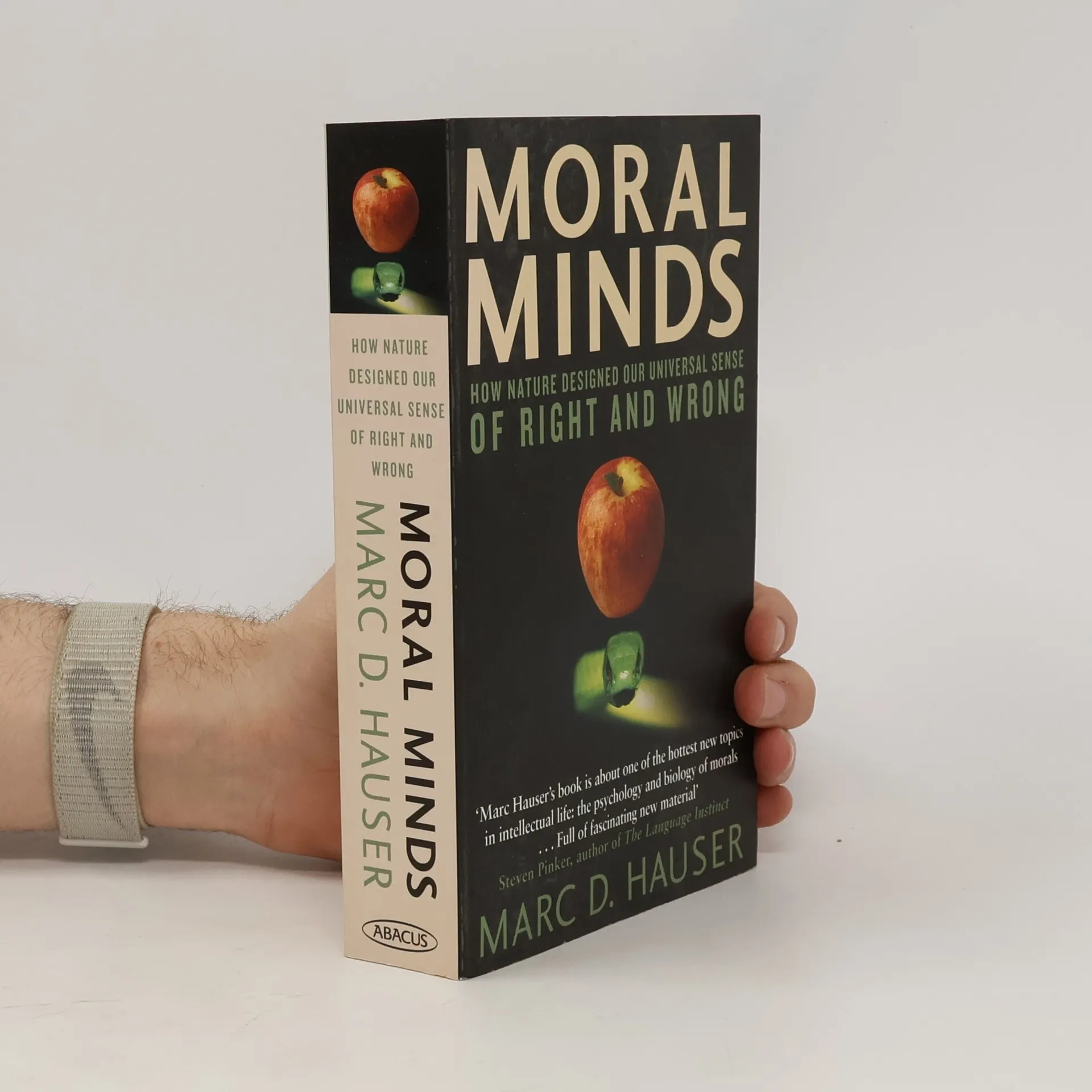
    Moral Minds
    The Evolution of Communication
    • This text addresses the problem of how communication systems, including language, have been designed over the course of evolution. It integrates conceptual issues and empirical results from neurobiology, cognitive and developmental psychology, linguistics, evolutionary biology, and ethology.

      The Evolution of Communication
    • Moral Minds

      The Nature of Right and Wrong

      • 528 pages
      • 19 hours of reading
      3.4(55)Add rating

      The book presents a revolutionary theory proposing that humans possess an innate moral instinct that drives our judgments of right and wrong, transcending factors like gender, education, and religion. Drawing on interdisciplinary research from cognitive psychology, neuroscience, and anthropology, the author examines the profound implications of this theory for bioethics, religion, law, and daily life, challenging conventional views on morality and its origins.

      Moral Minds
    • Do animals think? Can they count? Do they have emotions? Do they feel anger, frustration, hurt or sorrow? Are they bound by any moral code? Wild Minds provides authoritative answers to these long-standing questions. Marc Hauser, a scientist in the field of animal cognition, uses insights from evolutionary theory and cognitive science to examine animal thought. Treating animals as neither machines devoid of feeling nor as extensions of humans, but as independant beings driven by their own complex impulses, Hauser's work describes his background research in the field: a master tour of the animal mind.

      Wild minds
    • Können Tiere denken und wenn ja, was denken sie? Große Fragen über kleine Gehirne. Die Frage nach der Intelligenz der Tiere fasziniert uns seit jeher. Der renommierte Neuropsychologe Marc Hauser erläutert in seinem originellen Buch das erstaunliche intellektuelle und emotionale Leben der unterschiedlichsten Tiere, über das Psychologen, Sprachwissenschaftler und Biologen – basierend auf neuesten Forschungen – sehr Nachdenkenswertes zu berichten haben. Dabei geht es nicht darum, das romantische Bild von der Natur zu bekräftigen, das uns rührende Anekdoten von sprechenden Affen, weinenden Elefanten oder selbstlosen Hunden zeichnen. Hauser berichtet vielmehr von einer kleinen Sensation mit weitreichenden Konsequenzen: Tiere denken und fühlen in einem viel umfassenderen Sinne als bisher angenommen, und zumindest die höheren von ihnen besitzen eine eigene Wahrnehmungswelt, haben subjektive Erlebnisse und suchen ihr Verhalten danach auszurichten. Schon allein deshalb täten wir gut daran, in Tieren nicht nur Objekte unseres Tuns zu sehen.

      Wilde Intelligenz