Jonathan Israel Book order (chronological)
Jonathan Israel is a British writer focusing on Dutch history, the Age of Enlightenment, and European Jews. In recent years, his attention has centered on a multi-volume history of the Enlightenment, sharply contrasting the "radical Enlightenment," rooted in Spinozan rationalist materialism, with the "moderate Enlightenment," which he argues was weakened by its belief in God. Through his highly controversial interpretation, Israel posits the radical Enlightenment as the primary source of the modern concept of freedom. He contends that the moderate Enlightenment figures, including Locke, Voltaire, Montesquieu, and Rousseau, made no significant contribution to the campaign against superstition and ignorance.


The biography delves into the life and work of Spinoza, one of the most provocative early modern philosophers. It explores his relationships, career, and writings, challenging conventional perceptions of his influence on philosophy, religion, ethics, and political theory both during his lifetime and posthumously. This examination prompts a reevaluation of Spinoza's legacy and the complexities of his thought in shaping modern intellectual discourse.
Historical Dictionary of the Enlightenment
- 398 pages
- 14 hours of reading
With over 300 cross-referenced entries, this comprehensive dictionary serves as an essential resource for understanding the Enlightenment. It includes a detailed chronology and an introduction that contextualizes the period, alongside an extensive bibliography for further research. Ideal for students and scholars alike, it provides valuable insights into key figures, ideas, and events that shaped this transformative era in history.
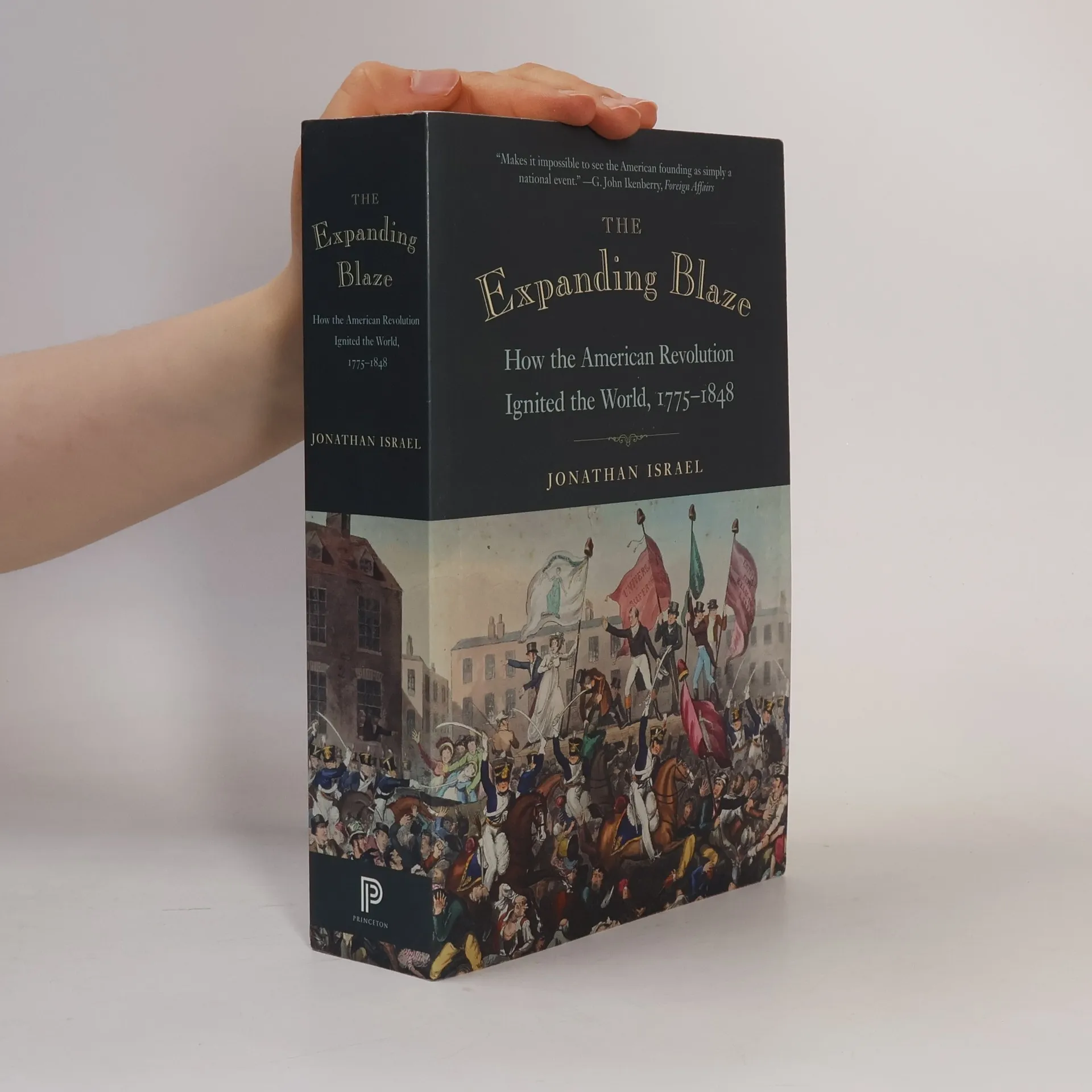
The Expanding Blaze
- 768 pages
- 27 hours of reading
A major intellectual history of the American Revolution and its influence on later revolutions in Europe and the AmericasThe Expanding Blaze is a sweeping history of how the American Revolution inspired revolutions throughout Europe and the Atlantic world in the eighteenth and nineteenth centuries. Jonathan Israel, one of the world's leading historians of the Enlightenment, shows how the radical ideas of the American founders set the pattern for democratic revolutions, movements, and constitutions in France, Britain, Ireland, the Netherlands, Belgium, Poland, Greece, Canada, Haiti, Brazil, and Spanish America. The book traces how American efforts to implement Radical Enlightenment ideas drove revolutions abroad, as foreign leaders followed the American example and espoused American democratic values. The first major new intellectual history of the age of democratic revolution in decades, The Expanding Blaze returns the American Revolution to its global context.
The Enlightenment that Failed
Ideas, Revolution, and Democratic Defeat, 1748-1830
- 1120 pages
- 40 hours of reading
The book explores the divergence between radical and conservative Enlightenment ideologies, highlighting the tension between the pursuit of a just society and the influence of religion and secularization. It examines how societal interests were nearly overshadowed by concepts that favored the privileged, illustrating the struggle between egalitarian ideals and entrenched power structures during this transformative period.
Die Französische Revolution
- 990 pages
- 35 hours of reading
Die Französische Revolution: ein Jahrhundertereignis, das immer wieder neu erzählt und gedeutet wird. Auf die Frage nach den Ursachen gibt es viele Antworten: Eine Krise des absolutistischen Staates. Verelendung des Volkes. Überhöhte Brotpreise. Die Revolution vollzog sich in drei parallel laufenden Bewegungen: der Forderung nach einer konstitutionellen Monarchie nach britischem Vorbild, einem gewalttätigen Protest in der radikalen Terrorherrschaft und einer demokratisch-republikanischen Revolution, die in der Aufklärung wurzelte. Dieser dritten Bewegung attestiert Jonathan Israel die zentrale revolutionäre Energie. Der international angesehene Experte vertieft und ergänzt so das überkommene Bild durch eine neue überraschende Dimension. Die radikalen Aufklärungsphilosophen Frankreichs dachten säkular und erklärten die Vernunft zur grundlegenden Triebkraft geschichtlichen Fortschritts. Damit bereiteten sie den umwälzenden Ereignissen den Weg, spalteten aber zugleich deren Führer in feindliche ideologische Blöcke.
Radikalaufklärung
- 277 pages
- 10 hours of reading
Seit einem Jahrzehnt gibt es eine intensive Forschung zur »Radikalaufklärung« – dem atheistischen, skeptischen und materialistischen Flügel des Denkens im späten 17. und 18. Jahrhundert. Vor allem Jonathan Israel hat für die aufregende These argumentiert, dass diese radikalen Aufklärer verantwortlich sind für die Errungenschaften der Moderne, für Freiheit und Menschenrechte, Gleichheit und Toleranz, und dass der Spinozismus eine zentrale Rolle bei deren Durchsetzung gespielt hat. In diesem Band setzen sich acht führende nationale und internationale Experten mit Israels These auseinander und zeigen die Vielfalt und Deutungen der Radikalaufklärung auf. Mit Beiträgen von Silvia Berti, Wiep van Bunge, Margaret C. Jacob, Anthony McKenna u. a.
Democratic Enlightenment
- 1088 pages
- 39 hours of reading
Jonathan Israel's radical new account of the late Enlightenment highlights forgotten currents and figures. Running counter to mainstream thinking, he demonstrates how a group of philosophe-revolutionnaires provided the intellectual powerhouse of the French Revolution, and how their ideas connect with modern Western democracy.
A Revolution of the Mind
Radical Enlightenment and the Intellectual Origins of Modern Democracy
- 296 pages
- 11 hours of reading
Focusing on the Radical Enlightenment, this work articulates Jonathan Israel's pivotal ideas regarding its influence on modern democratic values. It serves as a comprehensive statement for both seasoned readers and newcomers, offering clear and concise arguments alongside significant expansions of his scholarship. This book stands as a masterful introduction to the contributions of one of the foremost scholars in Enlightenment studies, making it an essential read for understanding the era's impact on contemporary thought.
Enlightenment Contested
Philosophy, Modernity, and the Emancipation of Man 1670-1752
- 1024 pages
- 36 hours of reading
The book presents a comprehensive analysis of the Enlightenment, emphasizing the divide between conservative and radical philosophical currents rather than the significance of national movements. Jonathan Israel delves into primary texts to provide a fresh interpretation of Enlightenment thought, highlighting the underlying tensions that shaped its development. This reinterpretation challenges conventional views and sheds light on the complexities of philosophical discourse during this pivotal era.
Enlightenment Contested
- 983 pages
- 35 hours of reading
Jonathan Israel's "Enlightenment Contested" offers a major reassessment of the Western Enlightenment, focusing on the first half of the 18th century. He explores the roots of modern principles like reason, democracy, and equality, highlighting the struggle between anti-democratic mainstream and repressed radical ideas. The book emphasizes the interconnectedness of various Enlightenments across Europe.
Exploring the impact of Spinoza's philosophy, this study reveals how his ideas contributed to the emergence of radical Enlightenment principles such as equality, democracy, and secularism. Jonathan I. Israel, a prominent cultural historian, argues that these revolutionary concepts laid the groundwork for the intellectual and political upheavals of the late eighteenth century. The book offers a fresh perspective on the connections between Enlightenment thought and modern societal structures.
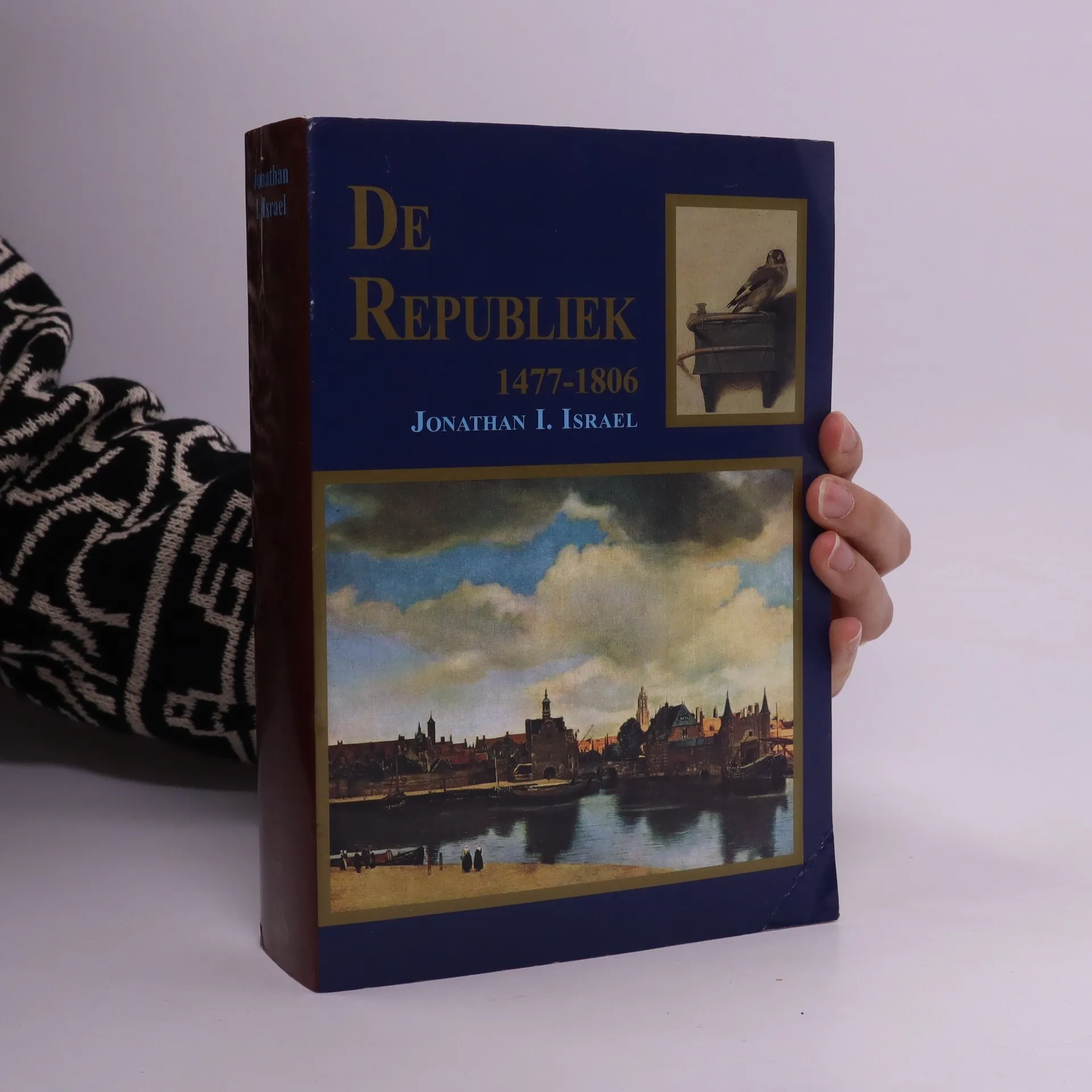
The Dutch Republic. Its Rise, Greatness, and Fall 1477-1806
- 1280 pages
- 45 hours of reading
The Dutch Golden Age, known for its renowned artists and writers, was also remarkable for its immense impact on the spheres of commerce, finance, shipping, and technology. Israel gives the definitive account of the emergence of the United Provinces as a great power, its subsequent decline in the 18th century, and the changing relationship between the northern Netherlands and the south, which was to develop into modern Belgium. 32 color plates.
La judería europea en la era del mercantilismo, 1550-1750
- 335 pages
- 12 hours of reading
Contrario a la creencia comúnmente aceptada, los siglos XVI y XVII marcaron una fase radicalmente nueva en la historia judía. Mucho más que una mera extensión de la Edad Media judía, esta fue una era en la que la comunidad judía europea se liberó parcialmente de las asfixiantes restricciones del pasado. Este estudio histórico se centra en el papel en rápida expansión de los judíos en los ámbitos político, económico y cultural que comenzó en la década de 1570, cuando la marea del mercantilismo, las actitudes políticas y la teoría política de la razón de Estado llevaron a los judíos de nuevo a la corriente principal de la vida occidental. El libro destaca la interacción entre la comunidad judía y los estados europeos, viendo la edad de oro de los "judíos de corte" de 1650 a 1713 como el período culminante del impacto judío en la cultura y los asuntos europeos, y concluye con el declive de la influencia judía en la sociedad europea en el siglo XVIII.
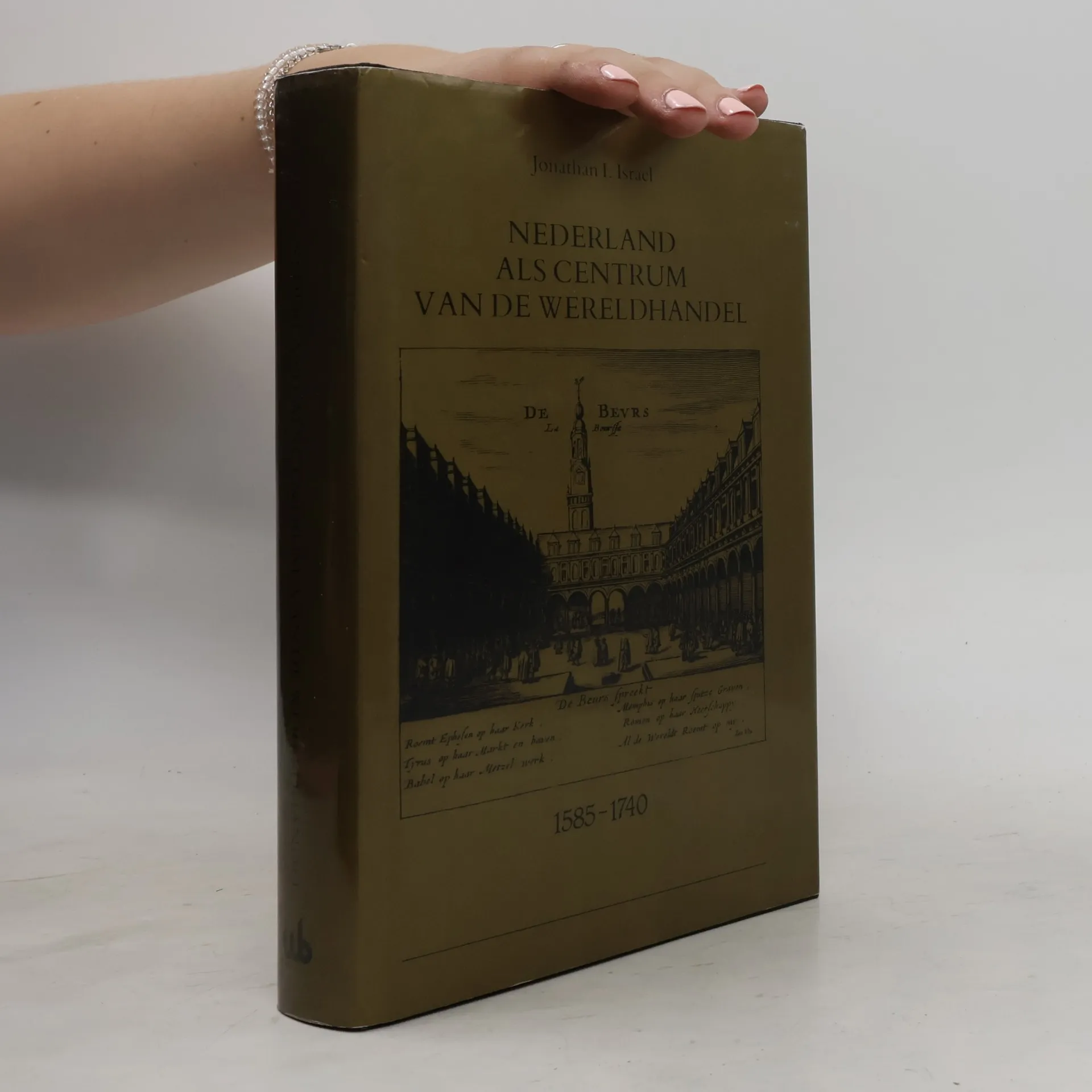
Nederland als centrum van de wereldhandel
- 504 pages
- 18 hours of reading
Fast zwei Jahrhunderte lang fungierte die Niederländische Republik, trotz ihrer geringen Größe und Bevölkerung, als das Zentrum des Welthandels, der Schifffahrt und der Finanzen. Dies ist der erste detaillierte allgemeine Bericht über diese Hegemonie von ihren Ursprüngen im sechzehnten Jahrhundert bis zum endgültigen Zusammenbruch des niederländischen Handelssystems im achtzehnten Jahrhundert. Die Wirtschaftsstruktur der frühmodernen Welt war so beschaffen, dass die Niederländische Republik – insbesondere ihr wichtigstes Handelszentrum, Amsterdam – in der Lage war, die Weltwirtschaft in einem viel größeren Maße zu dominieren als jede Handelsmacht zuvor oder danach. Anhand von Archiv- und Sekundärquellen erklärt dieses Buch, wie eine kleine Nation in der Lage war, diese Vorherrschaft so lange aufrechtzuerhalten, und beschreibt die Mechanismen, durch die dies erreicht und aufrechterhalten wurde, sowie die Phasen ihrer Entwicklung.