

More about the book
American linguist Paul Postal noted in 1964 that many prevalent syntactic theories in the U.S. were variations of Chomsky's phrase structure grammars. British linguist John Lyons remarked in 1966 that no work has influenced current linguistic theory more than Chomsky's "Syntactic Structures." Historian R. H. Robins stated in 1967 that its publication marked a radical shift in descriptive linguistics and theory. Frederick Newmeyer described it as "revolutionary" for two main reasons: it demonstrated the feasibility of a formal, non-empiricist theory of language by formally analyzing a fragment of English grammar, and it positioned syntax as the core of linguistic theory, highlighting how a finite set of rules can generate an infinite number of sentences, thus diminishing the significance of morphology and phonology. Additionally, "Syntactic Structures" sparked an interdisciplinary dialogue between philosophers and linguists. John Searle praised Chomsky's work as a remarkable intellectual achievement, likening it to the contributions of Keynes and Freud. It not only revolutionized linguistics but also established generative grammar as a new discipline, significantly impacting philosophy and psychology. Furthermore, its formal treatment of language fostered connections between linguistics and emerging computer science.


Book purchase
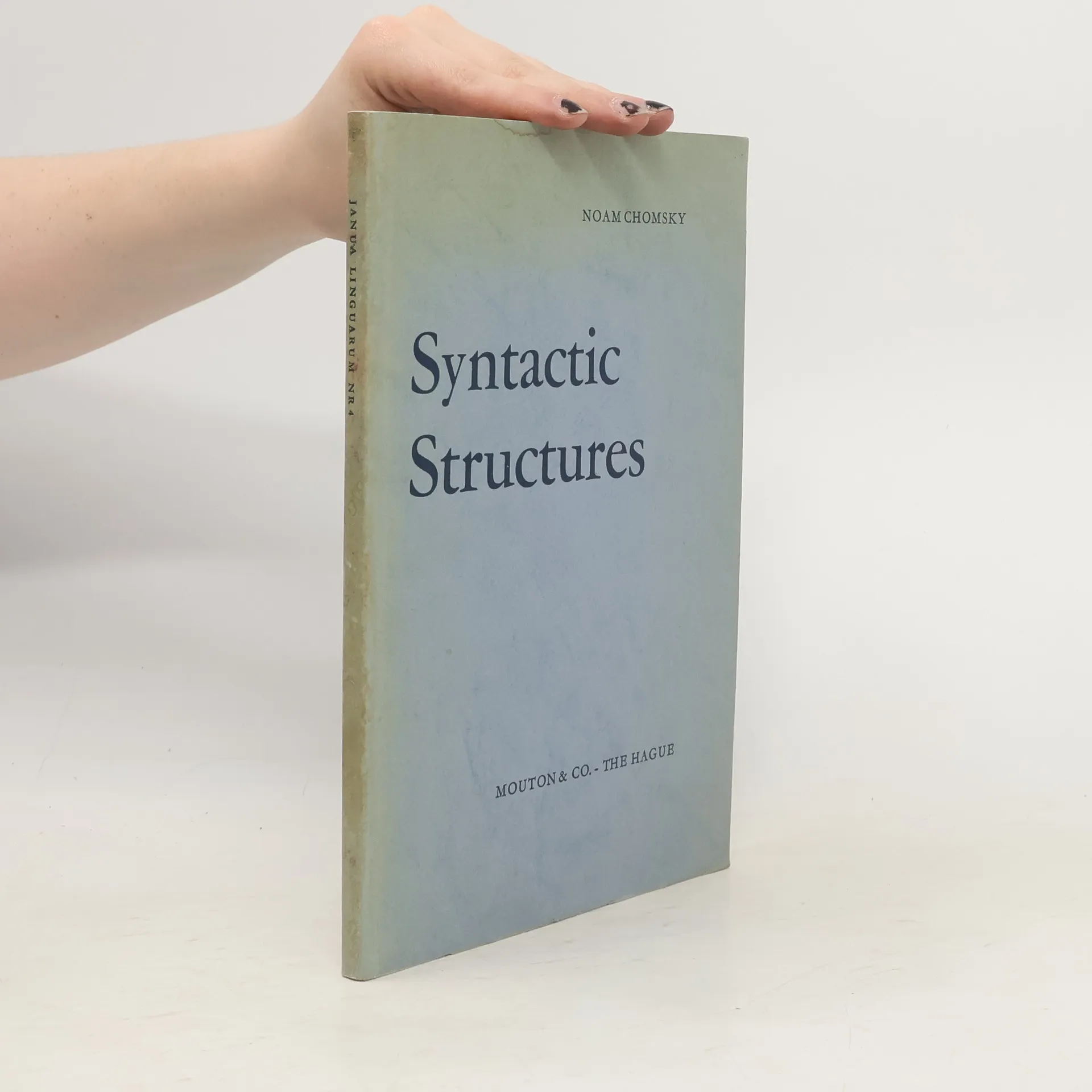
Syntactic Structures, Noam Chomsky
- Language

- Released
- 1964
- product-detail.submit-box.info.binding
- (Paperback)
Payment methods
We’re missing your review here.