

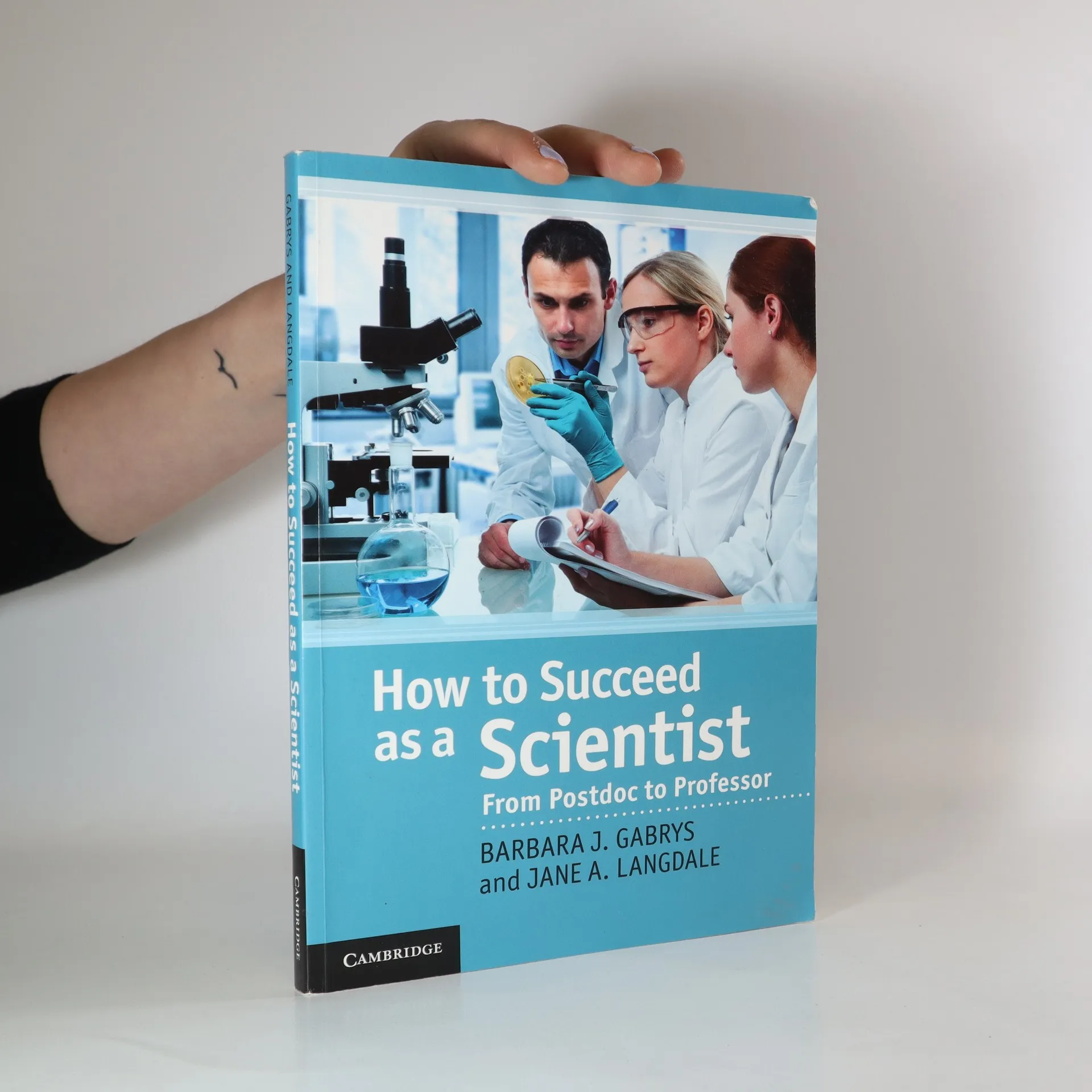
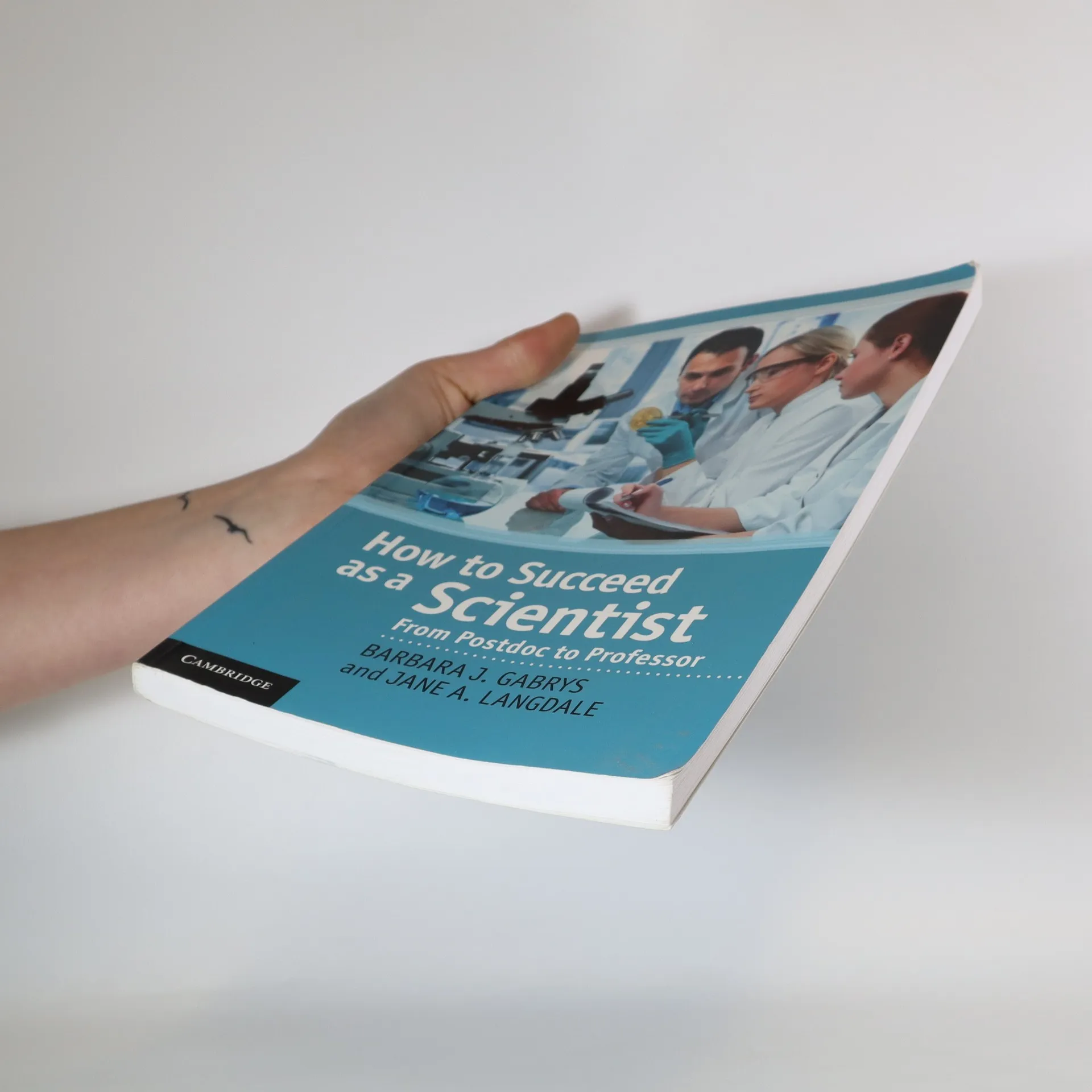

How to succeed as a scientist. From postdoc to professor
Book rating
Parameters
- 226 pages
- 8 hours of reading
More about the book
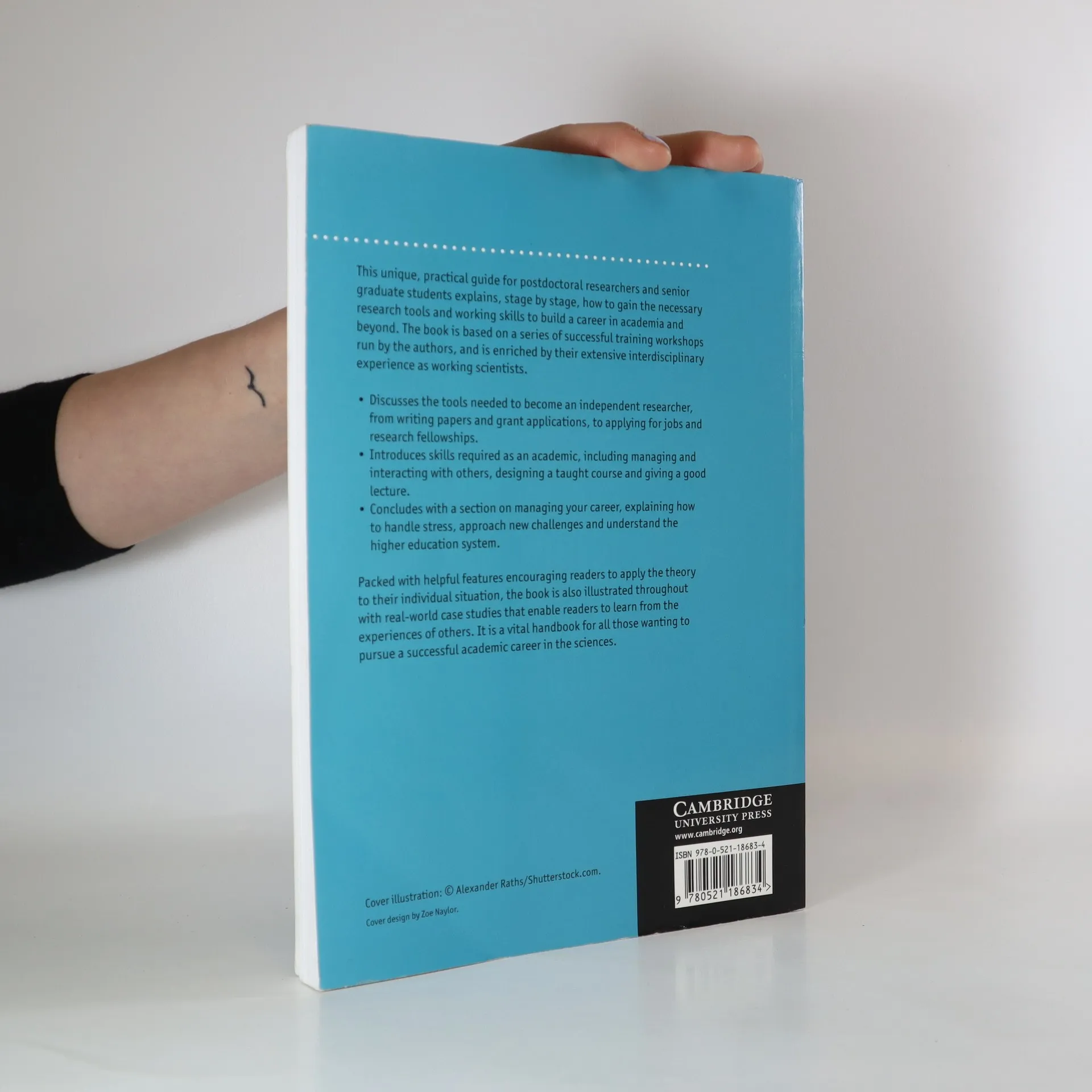
This unique, practical guide for postdoctoral researchers and graduate students explains how to build and perfect the necessary research tools and working skills to build a career in academia and beyond. It is based on successful training workshops run by the authors: first, it describes the tools needed for independent research, from writing papers to applying for academic jobs; it then introduces skills to thrive in a new job, including managing and interacting with others, designing a taught course and giving a good lecture; and it concludes with a section on managing your career, from how to manage stress to understanding the higher education system. Packed with helpful features encouraging readers to apply the theory to their individual situation, the book is also illustrated throughout with real-world case studies to enable readers to learn from others' experience. It is a vital handbook for everyone seeking to make a successful scientific career.
Publication

Book purchase
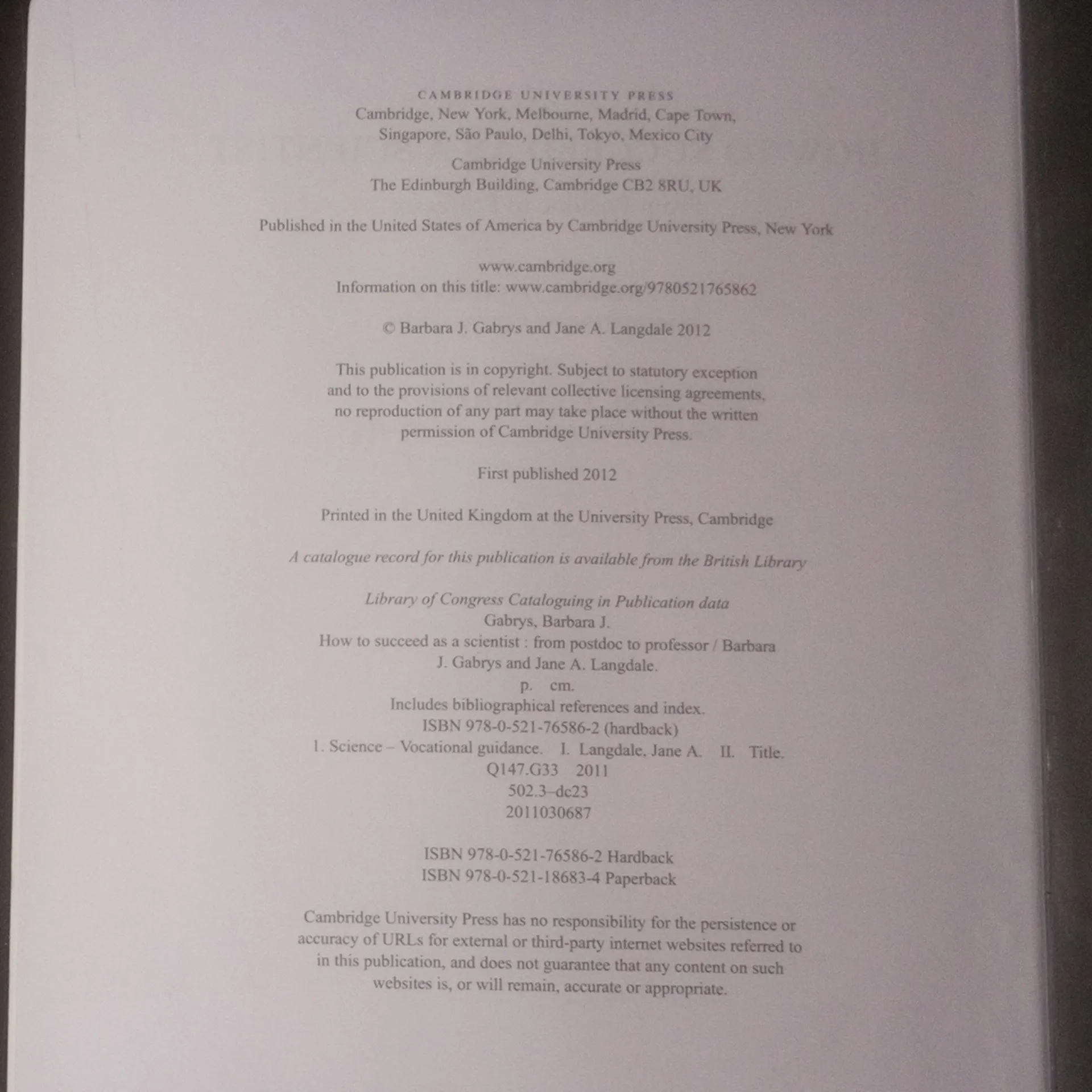
How to succeed as a scientist. From postdoc to professor, Barbara J. Gabrys, Jane A. Langdale
- Language

- Released
- 2012
- Binding
- (Paperback)
Payment methods
We’re missing your review here.
- Title
- How to succeed as a scientist. From postdoc to professor
- Language
- English
- Authors
- Barbara J. Gabrys, Jane A. Langdale
- Publisher
- Cambridge University Press
- Released
- 2012
- Format
- Paperback
- Pages
- 226
- ISBN10
- 0521186838
- ISBN13
- 9780521186834
- Series
- Tags
- Science
- Rating
- 3.25 out of 5
- Description
- This unique, practical guide for postdoctoral researchers and graduate students explains how to build and perfect the necessary research tools and working skills to build a career in academia and beyond. It is based on successful training workshops run by the authors: first, it describes the tools needed for independent research, from writing papers to applying for academic jobs; it then introduces skills to thrive in a new job, including managing and interacting with others, designing a taught course and giving a good lecture; and it concludes with a section on managing your career, from how to manage stress to understanding the higher education system. Packed with helpful features encouraging readers to apply the theory to their individual situation, the book is also illustrated throughout with real-world case studies to enable readers to learn from others' experience. It is a vital handbook for everyone seeking to make a successful scientific career.