

More about the book
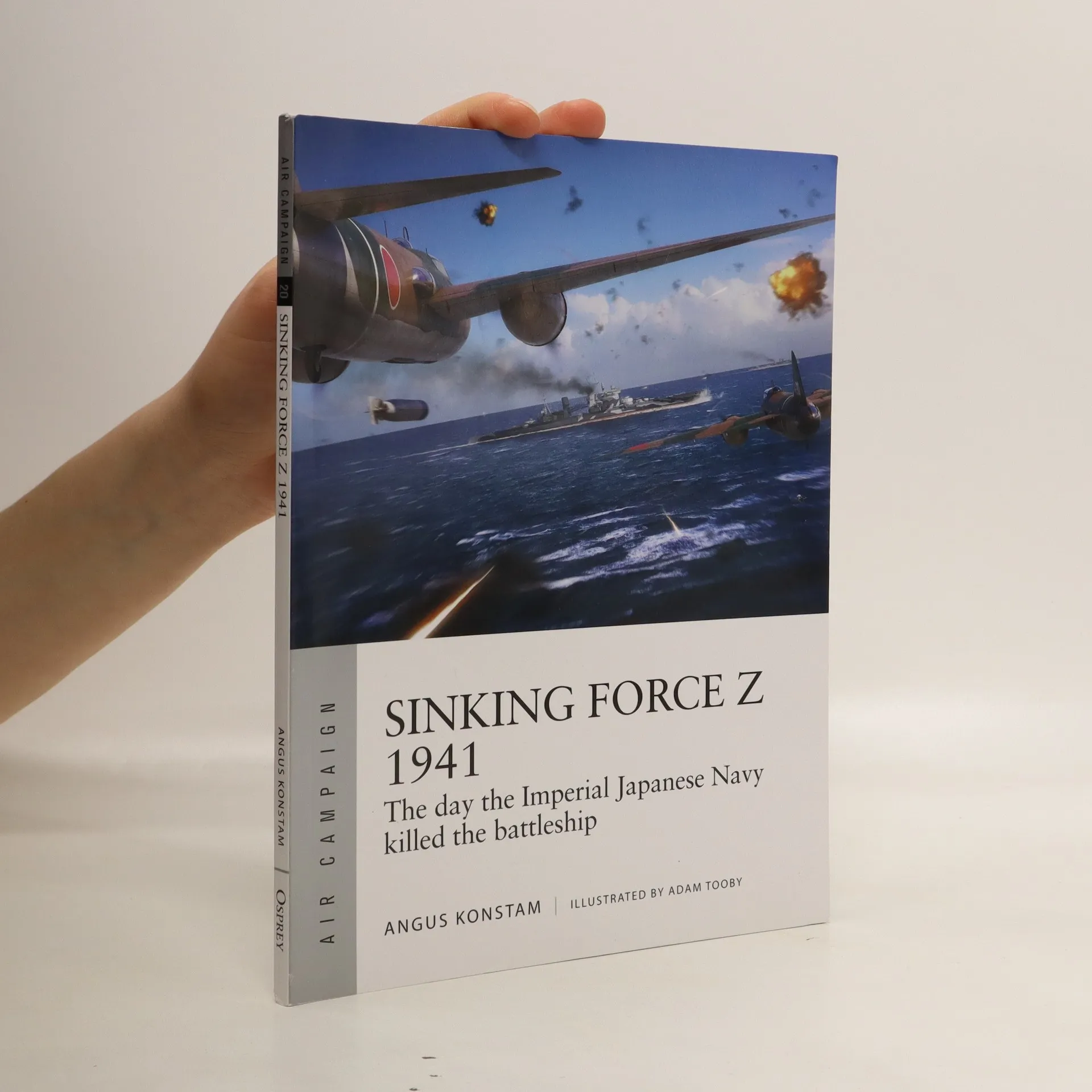
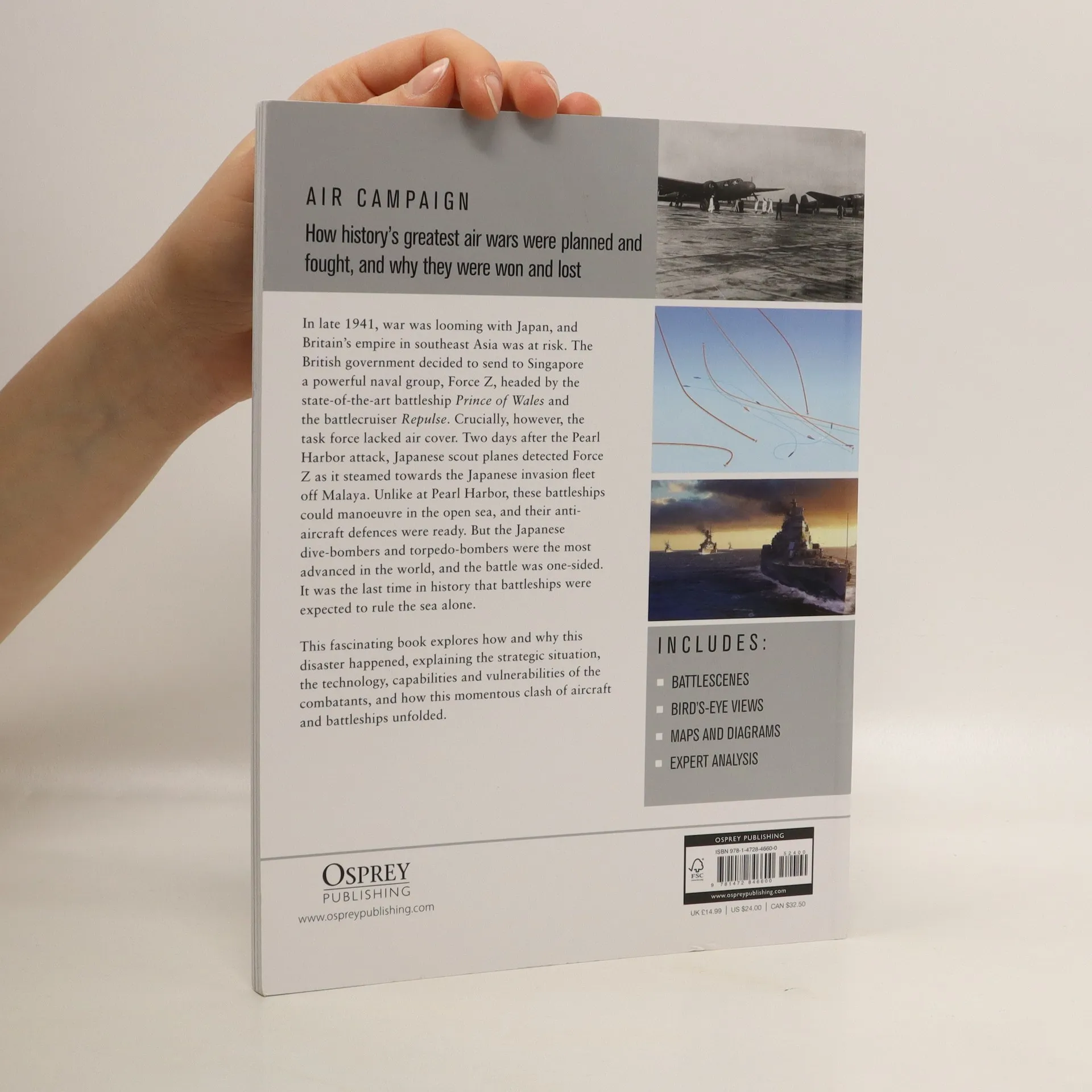
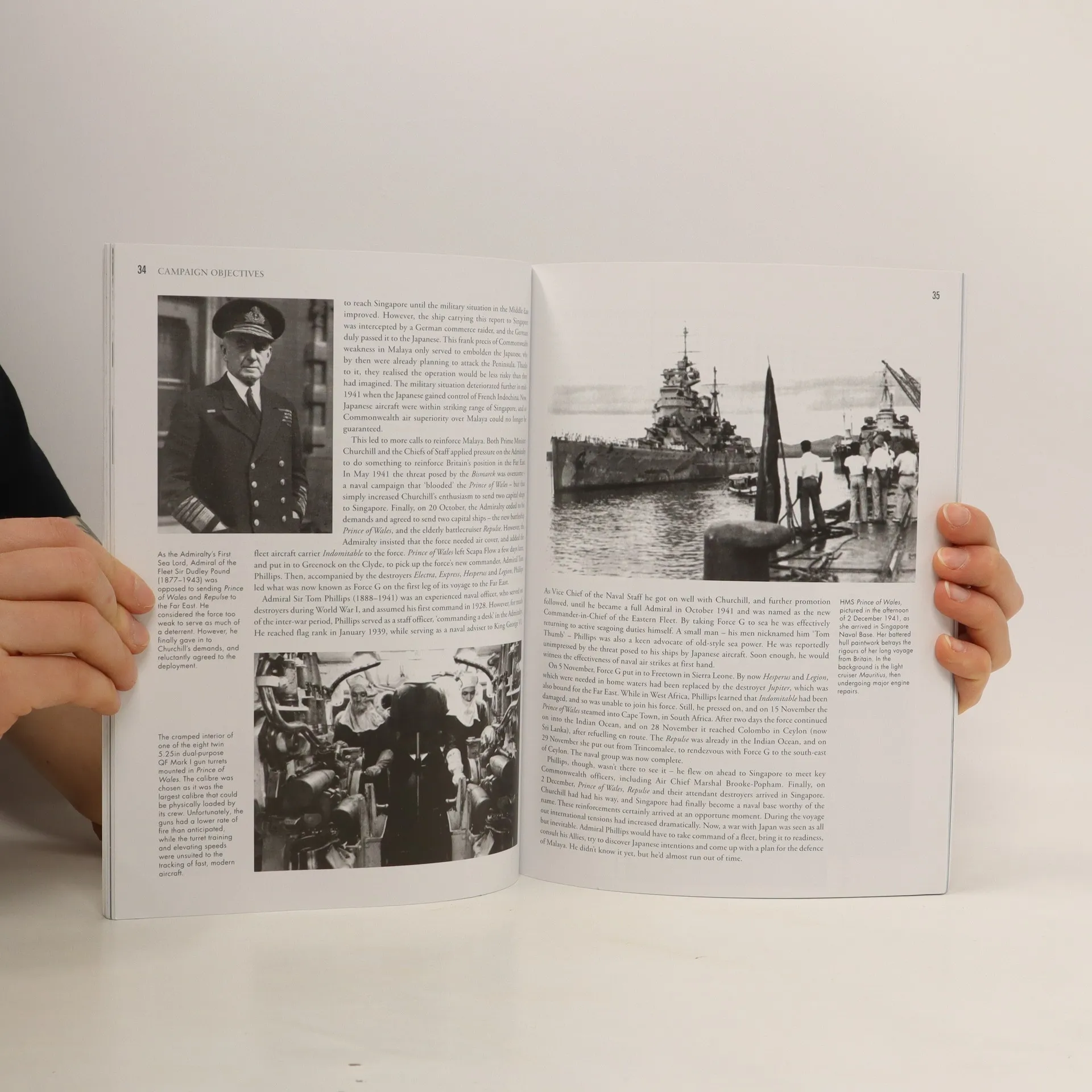
A history and analysis of one of the most dramatic moments in both air power and naval history. With the sinking of HMS Prince of Wales and Repulse, no battleship was safe on the open ocean, and the aircraft took its crown as the most powerful maritime weapon. In late 1941, war was looming with Japan, and Britain's empire in southeast Asia was at risk. The British government decided to send Force Z, which included the state-of-the-art battleship Prince of Wales and the battlecruiser Repulse, to bolster the naval defenses of Singapore, and provide a mighty naval deterrent to Japanese aggression. These two powerful ships arrived in Singapore on 2 December--five days before the Japanese attack on Pearl Harbor. But crucially, they lacked air cover. On 9 December Japanese scout planes detected Force Z's approach in the Gulf of Thailand. Unlike at Pearl Harbor, battleships at sea could maneuver, and their anti-aircraft defenses were ready. But it did no good. The Japanese dive-bombers and torpedo-bombers were the most advanced in the world, and the battle was one-sided. Strategically, the loss of Force Z was a colossal disaster for the British, and one that effectively marked the end of its empire in the East. But even more importantly, the sinking marked the last time that battleships were considered to be the masters of the ocean. From that day on, air power rather than big guns would be the deciding factor in naval warfare.
Book purchase
Sinking Force Z 1941, Angus Konstam
- Language

- Released
- 2021
- Binding
- (Paperback)
Payment methods
We’re missing your review here.
- Title
- Sinking Force Z 1941
- Language
- English
- Authors
- Angus Konstam
- Publisher
- Bloomsbury
- Released
- 2021
- Format
- Paperback
- Pages
- 96
- ISBN10
- 1472846605
- ISBN13
- 9781472846600
- Series
- Categories
- Rating
- 4.45 out of 5
- Description
- A history and analysis of one of the most dramatic moments in both air power and naval history. With the sinking of HMS Prince of Wales and Repulse, no battleship was safe on the open ocean, and the aircraft took its crown as the most powerful maritime weapon. In late 1941, war was looming with Japan, and Britain's empire in southeast Asia was at risk. The British government decided to send Force Z, which included the state-of-the-art battleship Prince of Wales and the battlecruiser Repulse, to bolster the naval defenses of Singapore, and provide a mighty naval deterrent to Japanese aggression. These two powerful ships arrived in Singapore on 2 December--five days before the Japanese attack on Pearl Harbor. But crucially, they lacked air cover. On 9 December Japanese scout planes detected Force Z's approach in the Gulf of Thailand. Unlike at Pearl Harbor, battleships at sea could maneuver, and their anti-aircraft defenses were ready. But it did no good. The Japanese dive-bombers and torpedo-bombers were the most advanced in the world, and the battle was one-sided. Strategically, the loss of Force Z was a colossal disaster for the British, and one that effectively marked the end of its empire in the East. But even more importantly, the sinking marked the last time that battleships were considered to be the masters of the ocean. From that day on, air power rather than big guns would be the deciding factor in naval warfare.