



More about the book
William Henry Hudson (1841-1922) was an author, naturalist, and ornithologist born in Quilmes, Argentina, to US settlers of English and Irish descent. His youth was spent studying local flora and fauna and witnessing the dramas of a lawless frontier. In 1874, he moved to England, settling in Bayswater, London, and married Emily Wingrave in 1876. He maintained a friendship with author George Gissing, exchanging publications and discussing literary and scientific topics until Gissing's death in 1903. Hudson was a proponent of Lamarckian evolution, critiqued Darwinism, and defended vitalism, influenced by Samuel Butler's non-Darwinian evolutionary writings. A founding member of the Royal Society for the Protection of Birds, he authored several ornithological studies, including Argentine Ornithology (1888) and British Birds (1895). He gained fame with his works on the English countryside, such as Hampshire Days (1903), Afoot in England (1909), and A Shepherd's Life (1910), which contributed to the back-to-nature movement of the 1920s and '30s. His notable novel is Green Mansions (1904), while his popular non-fiction work is Far Away and Long Ago (1918), adapted for film. Hudson cherished Patagonia, and his book Idle Days in Patagonia (1893) recounts his year there, blending descriptive power with scientific interest, showcasing his acute observations of nature and humanity.
Book purchase
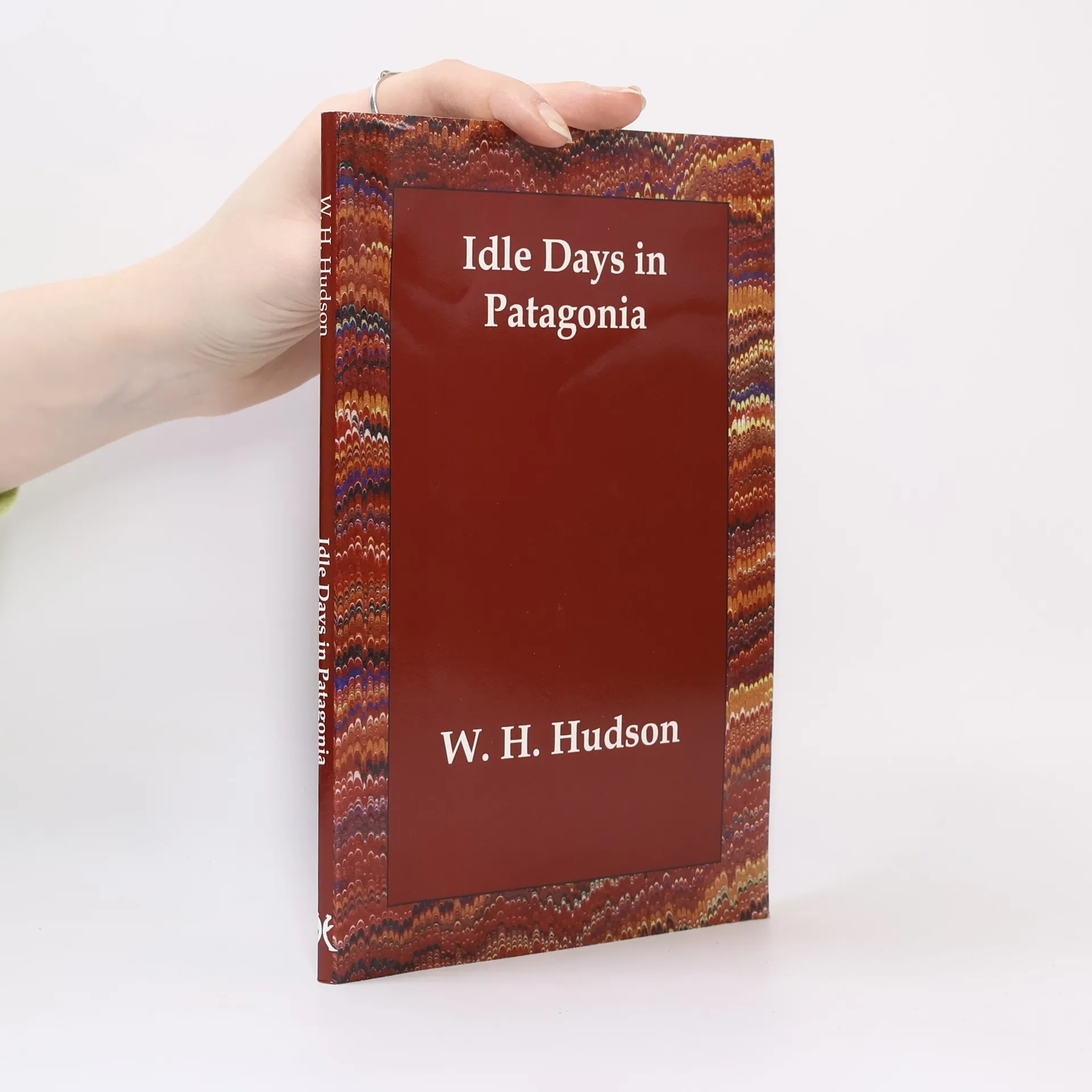
Idle Days in Patagonia, William Henry Hudson
- Language

- Released
- 2006
- Binding
- (Paperback)
Payment methods
We’re missing your review here.
- Title
- Idle Days in Patagonia
- Language
- English
- Authors
- William Henry Hudson
- Publisher
- Echo Library
- Released
- 2006
- Format
- Paperback
- Pages
- 124
- ISBN10
- 140680312X
- ISBN13
- 9781406803129
- Series
- Rating
- 4.35 out of 5
- Description
- William Henry Hudson (1841-1922) was an author, naturalist, and ornithologist born in Quilmes, Argentina, to US settlers of English and Irish descent. His youth was spent studying local flora and fauna and witnessing the dramas of a lawless frontier. In 1874, he moved to England, settling in Bayswater, London, and married Emily Wingrave in 1876. He maintained a friendship with author George Gissing, exchanging publications and discussing literary and scientific topics until Gissing's death in 1903. Hudson was a proponent of Lamarckian evolution, critiqued Darwinism, and defended vitalism, influenced by Samuel Butler's non-Darwinian evolutionary writings. A founding member of the Royal Society for the Protection of Birds, he authored several ornithological studies, including Argentine Ornithology (1888) and British Birds (1895). He gained fame with his works on the English countryside, such as Hampshire Days (1903), Afoot in England (1909), and A Shepherd's Life (1910), which contributed to the back-to-nature movement of the 1920s and '30s. His notable novel is Green Mansions (1904), while his popular non-fiction work is Far Away and Long Ago (1918), adapted for film. Hudson cherished Patagonia, and his book Idle Days in Patagonia (1893) recounts his year there, blending descriptive power with scientific interest, showcasing his acute observations of nature and humanity.