

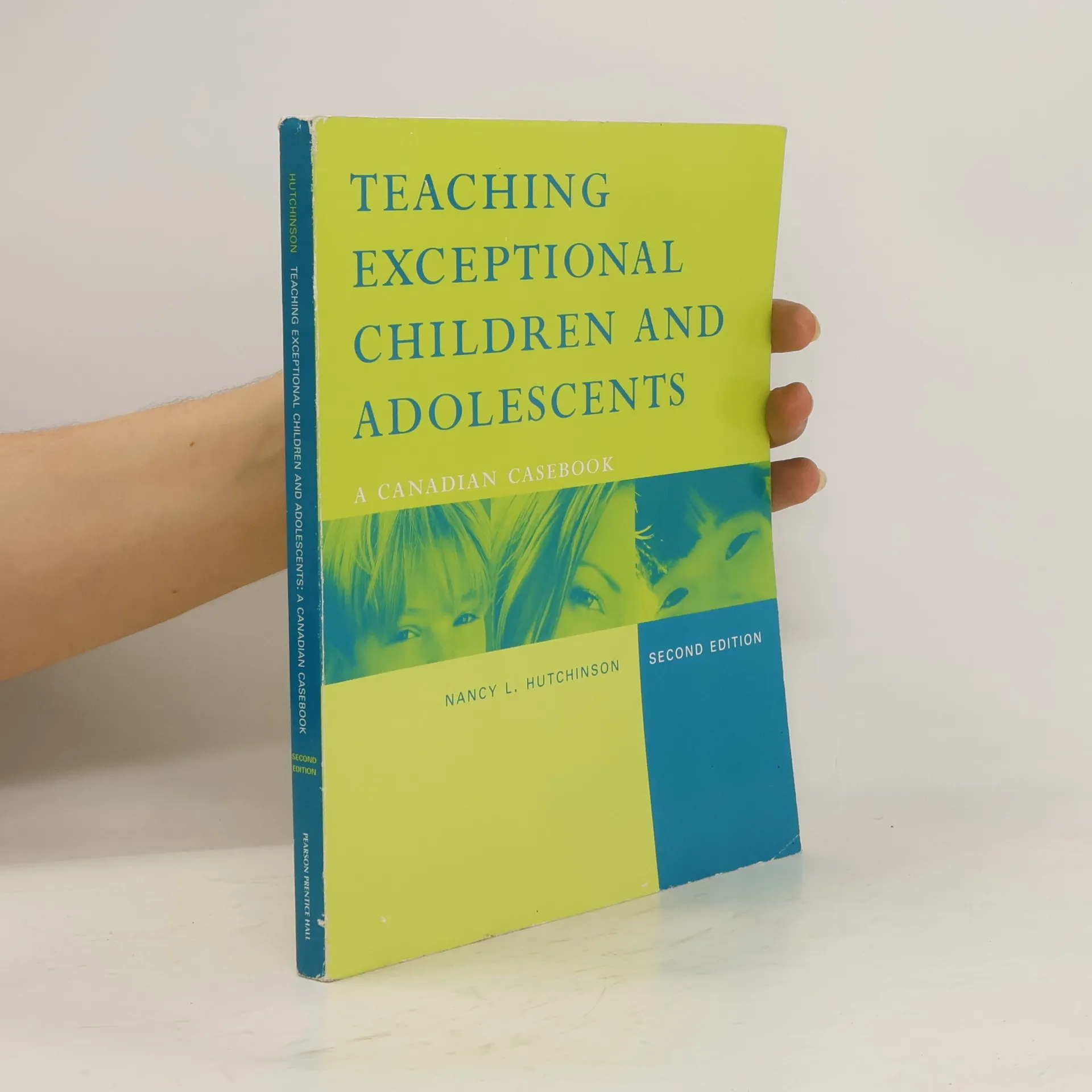
More about the book
Appropriate for courses in Teaching Educational Learners, The Psychology of Exceptional Children, Mainstreaming, Inclusion, and Inclusive Education at colleges and universities. Teaching Exceptional Children and A Canadian Casebook, Second Edition, brings to teacher education challenging dilemmas based on the experiences of beginning and experienced teachers in Canadian classrooms. Twenty-two cases focus on teaching exceptional learners in inclusive classrooms in elementary and secondary schools. These Dilemma cases pose challenging, realistic situations without obvious right answers. Teacher candidates are stimulated to think like teachers. For candidates without practicum experience, case discussions serve as preparation to meet these challenges in a classroom. Issues of equity, cultural diversity, and child abuse arise in some cases.
Book purchase
Teaching Exceptional Children and Adolescents, Nancy Lynn Hutchinson
- Language

- Released
- 2003
- Binding
- (Paperback)
Payment methods
We’re missing your review here.
- Title
- Teaching Exceptional Children and Adolescents
- Subtitle
- A Canadian Casebook
- Language
- English
- Authors
- Nancy Lynn Hutchinson
- Publisher
- Prentice Hall
- Released
- 2003
- Format
- Paperback
- Pages
- 218
- ISBN10
- 0131216678
- ISBN13
- 9780131216679
- Series
- Categories
- Tags
- Rating
- 3.95 out of 5
- Description
- Appropriate for courses in Teaching Educational Learners, The Psychology of Exceptional Children, Mainstreaming, Inclusion, and Inclusive Education at colleges and universities. Teaching Exceptional Children and A Canadian Casebook, Second Edition, brings to teacher education challenging dilemmas based on the experiences of beginning and experienced teachers in Canadian classrooms. Twenty-two cases focus on teaching exceptional learners in inclusive classrooms in elementary and secondary schools. These Dilemma cases pose challenging, realistic situations without obvious right answers. Teacher candidates are stimulated to think like teachers. For candidates without practicum experience, case discussions serve as preparation to meet these challenges in a classroom. Issues of equity, cultural diversity, and child abuse arise in some cases.