



More about the book
Miguel de Unamuno y Jugo was born in Bilbao on 29th September 1864. He wrote novels, essays, poems and plays, and in addition to these he played an important part in the political and intellectual life of Spain - an involvement that led to his exile to Fuerteventura in 1924. San Manuel Bueno, matir (1930) was his last novel before his death in 1936. It tells the story of a heroic priest who has lost his faith in immortality, a theme that had interested Unamuno for many years. The setting of the novel is atmospheric and significant, the characters shadowy and symbolic. The book overall is a synthesis of Unamuno's philiosophy.


Book purchase
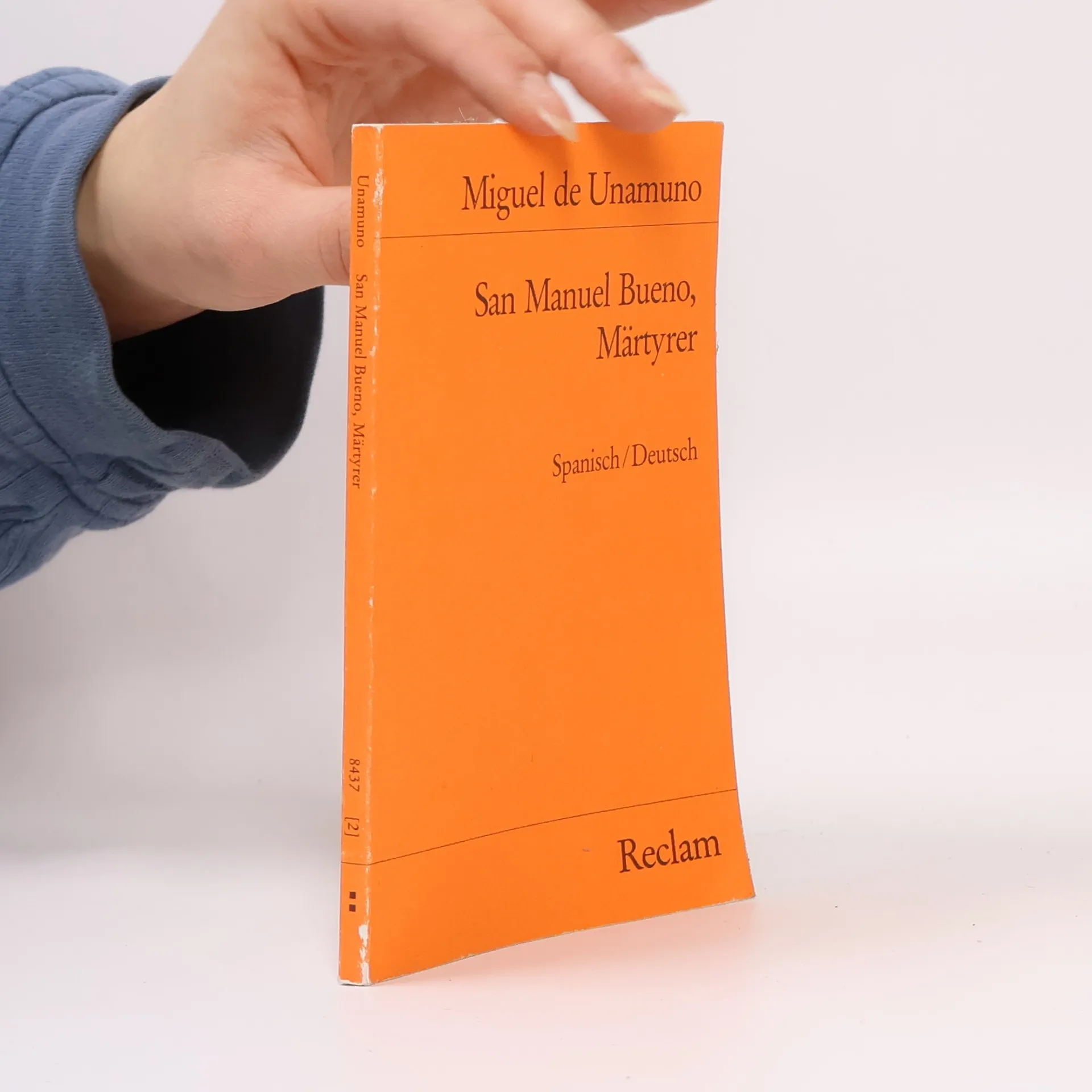
San Manuel Bueno, Märtyrer - Spanisch/Deutsch, Miguel de Unamuno
- Language

- Released
- 1987
- Binding
- (Paperback)
We’ll email you as soon as we track it down.
Payment methods
3.9
Very Good
99+ Ratings
We’re missing your review here.
- Title
- San Manuel Bueno, Märtyrer - Spanisch/Deutsch
- Language
- German
- Authors
- Miguel de Unamuno
- Publisher
- Reclam
- Released
- 1987
- Format
- Paperback
- Pages
- 119
- ISBN10
- 3150084377
- ISBN13
- 9783150084373
- Series
- Tags
- Philosophical Topics, School, Faith, Novellas, Spain, Spanish Literature, Saints, Priests, Atheism
- First published
- 1931
- Original title
- San Manuel Bueno, mártir
- Rating
- 3.9 out of 5
- Description
- Miguel de Unamuno y Jugo was born in Bilbao on 29th September 1864. He wrote novels, essays, poems and plays, and in addition to these he played an important part in the political and intellectual life of Spain - an involvement that led to his exile to Fuerteventura in 1924. San Manuel Bueno, matir (1930) was his last novel before his death in 1936. It tells the story of a heroic priest who has lost his faith in immortality, a theme that had interested Unamuno for many years. The setting of the novel is atmospheric and significant, the characters shadowy and symbolic. The book overall is a synthesis of Unamuno's philiosophy.