

More about the book
This comprehensive history delves into the German Jews on the brink of Hitler's rise, exploring their internal divisions and interactions with broader German society. It reveals that German Jewry was far from united, with significant rifts along religious, political, and ideological lines. The liberal majority, characterized by patriotic and assimilationist views, faced challenges from Zionist factions questioning their "Germanness." This internal struggle permeated families, synagogues, and community institutions. While Jewish contributions to Germany's economy and culture were often exaggerated, they were indeed significant, leading to accusations of privilege. The book analyzes the nuances of German anti-Semitism, differentiating between traditional and radical forms, and challenges the notion that Germans were predisposed to become "willing executioners" under Hitler. It also evaluates Jewish responses to racism, highlighting the Central Association of German Citizens of the Jewish Faith's self-defense campaigns, which included counter-propaganda and legal actions against anti-Semitic rhetoric. Although these efforts could only temporarily mitigate the rise of Nazism post-1930, they illustrate that German Jewry was not passive in the face of fascism. Ultimately, their commitment to liberalism, while clear-sighted, left them increasingly isolated as many Germans gravitated toward political radicalism in the waning years of
Book purchase
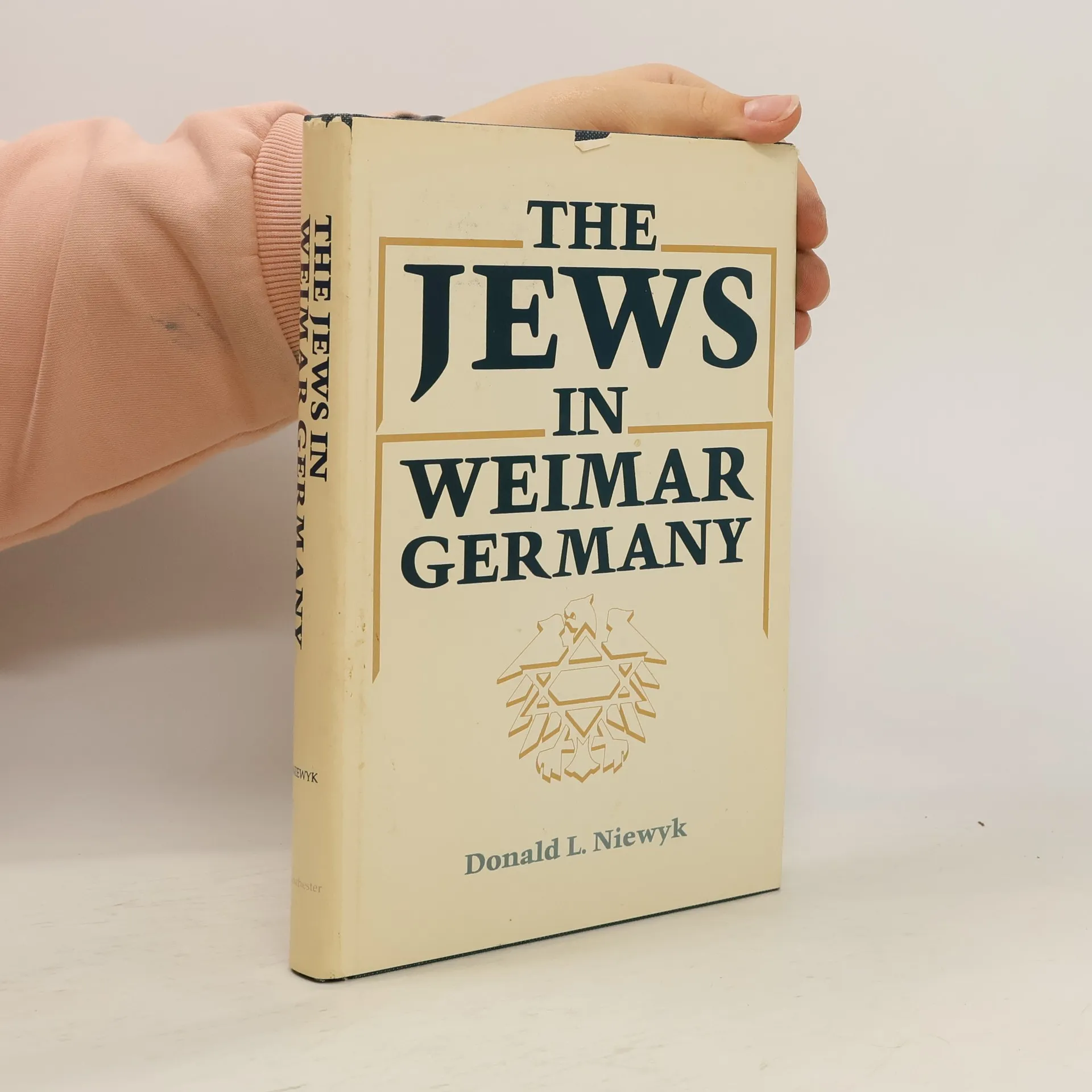
The Jews in Weimar Germany, Donald L. Niewyk
- Language

- Released
- 1980
Payment methods
No one has rated yet.
- Title
- The Jews in Weimar Germany
- Language
- English
- Authors
- Donald L. Niewyk
- Publisher
- Manchester University Press
- Released
- 1980
- Pages
- 229
- ISBN10
- 071900828X
- ISBN13
- 9780719008283
- Series
- Categories
- Description
- This comprehensive history delves into the German Jews on the brink of Hitler's rise, exploring their internal divisions and interactions with broader German society. It reveals that German Jewry was far from united, with significant rifts along religious, political, and ideological lines. The liberal majority, characterized by patriotic and assimilationist views, faced challenges from Zionist factions questioning their "Germanness." This internal struggle permeated families, synagogues, and community institutions. While Jewish contributions to Germany's economy and culture were often exaggerated, they were indeed significant, leading to accusations of privilege. The book analyzes the nuances of German anti-Semitism, differentiating between traditional and radical forms, and challenges the notion that Germans were predisposed to become "willing executioners" under Hitler. It also evaluates Jewish responses to racism, highlighting the Central Association of German Citizens of the Jewish Faith's self-defense campaigns, which included counter-propaganda and legal actions against anti-Semitic rhetoric. Although these efforts could only temporarily mitigate the rise of Nazism post-1930, they illustrate that German Jewry was not passive in the face of fascism. Ultimately, their commitment to liberalism, while clear-sighted, left them increasingly isolated as many Germans gravitated toward political radicalism in the waning years of