

Sold out but wanted!
Got it on your shelf?Earn between €0.36 and €1.21 by selling this book.
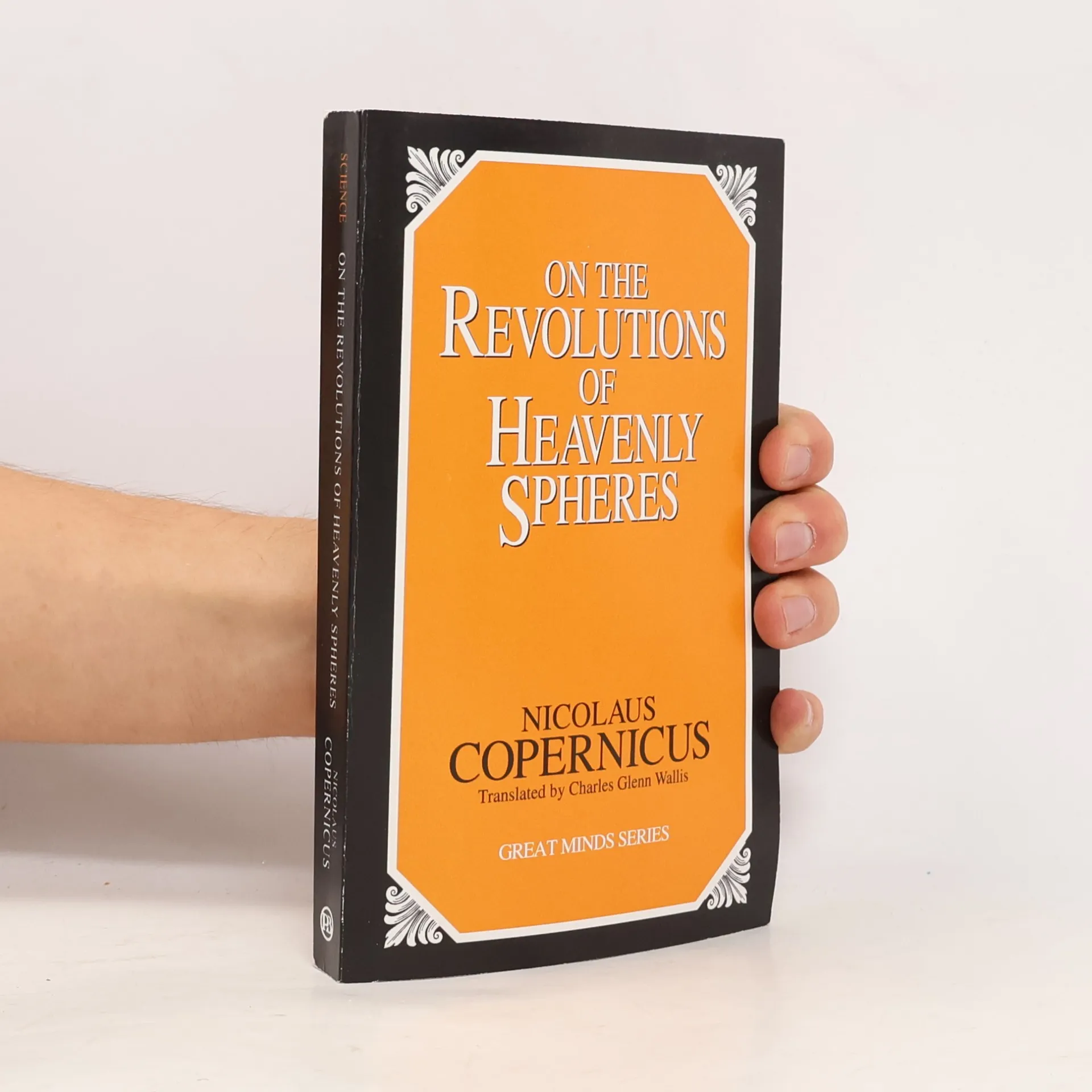
Sell booksGreat Minds Series: On The Revolutions Of Heavenly Spheres
Book rating
Parameters
- 352 pages
- 13 hours of reading
More about the book
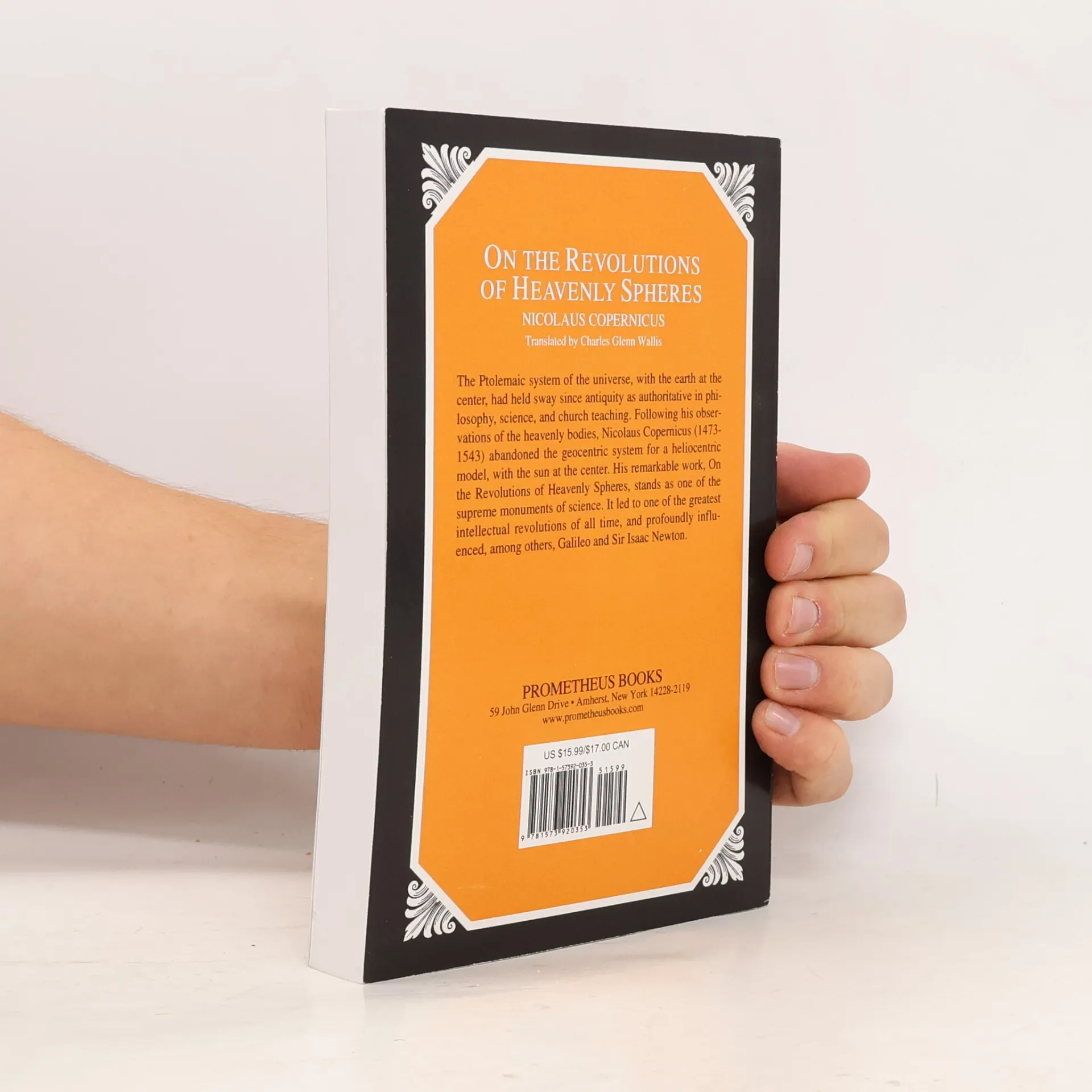
The Ptolemaic system of the universe, with the earth at the center, had held sway since antiquity as authoritative in philosophy, science, and church teaching. Following his observations of the heavenly bodies, Copernicus abandoned the geocentric system for a heliocentric model, with the sun at the center. This book stands as one of the supreme monuments of science. It led to one of the greatest intellectual revolutions of all time, and profoundly influenced, among others, Galileo and Sir Isaac Newton

Publication

Book purchase
Great Minds Series: On The Revolutions Of Heavenly Spheres, Nikolaus Kopernikus, Charles Glenn Wallis
- Language

- Released
- 1995
- Binding
- (Paperback)
We’ll email you as soon as we track it down.
Payment methods
4.6
Excellent
9 Ratings
We’re missing your review here.
- Title
- Great Minds Series: On The Revolutions Of Heavenly Spheres
- Language
- English
- Publisher
- Prometheus
- Released
- 1995
- Format
- Paperback
- Pages
- 352
- ISBN10
- 1573920355
- ISBN13
- 9781573920353
- Series
- Tags
- Historical Themes, Natural sciences, Philosophical Topics, Science, Space, Cosmology, History of Humanity, Nicolaus Copernicus, 1473-1543, Heliocentrism
- First published
- 1543
- Original title
- Nikolaus Kopernikus De revolutionibus orbium caelestium
- Rating
- 4.55 out of 5
- Description
- The Ptolemaic system of the universe, with the earth at the center, had held sway since antiquity as authoritative in philosophy, science, and church teaching. Following his observations of the heavenly bodies, Copernicus abandoned the geocentric system for a heliocentric model, with the sun at the center. This book stands as one of the supreme monuments of science. It led to one of the greatest intellectual revolutions of all time, and profoundly influenced, among others, Galileo and Sir Isaac Newton