

This new translation of The Science of Logic (also known as 'Greater Logic') includes the revised Book I (1832), Book II (1813), and Book III (1816). Recent research has given us a detailed picture of the process that led Hegel to his final conception of the System and of the place of the Logic within it. We now understand how and why Hegel distanced himself from Schelling, how radical this break with his early mentor was, and to what extent it entailed a return (but with a difference) to Fichte and Kant. In the introduction to the volume, George di Giovanni presents in synoptic form the results of recent scholarship on the subject, and, while recognizing the fault lines in Hegel's System that allow opposite interpretations, argues that the Logic marks the end of classical metaphysics. The translation is accompanied by a full apparatus of historical and explanatory notes.
Encyclopaedia of the Philosophical Sciences Series Series
This series delves into the depths of Hegelian philosophy, focusing on his monumental work, the Encyclopaedia. It explores the core concepts of his idealism, logic, and philosophy of spirit. This is an essential resource for anyone seeking to engage with one of the most influential thought systems in Western philosophy. Readers can expect a systematic overview of complex ideas presented with clarity.

Recommended Reading Order
Hegel's philosophy of nature
- 482 pages
- 17 hours of reading
Hegel's aim in this work is to interpret the varied phenomena of Nature from the standpoint of a dialectical logic. Those who still think of Hegel as a merely a priori philosopher will here find abundant evidence that he was keenly interested in and very well informed about empirical science.
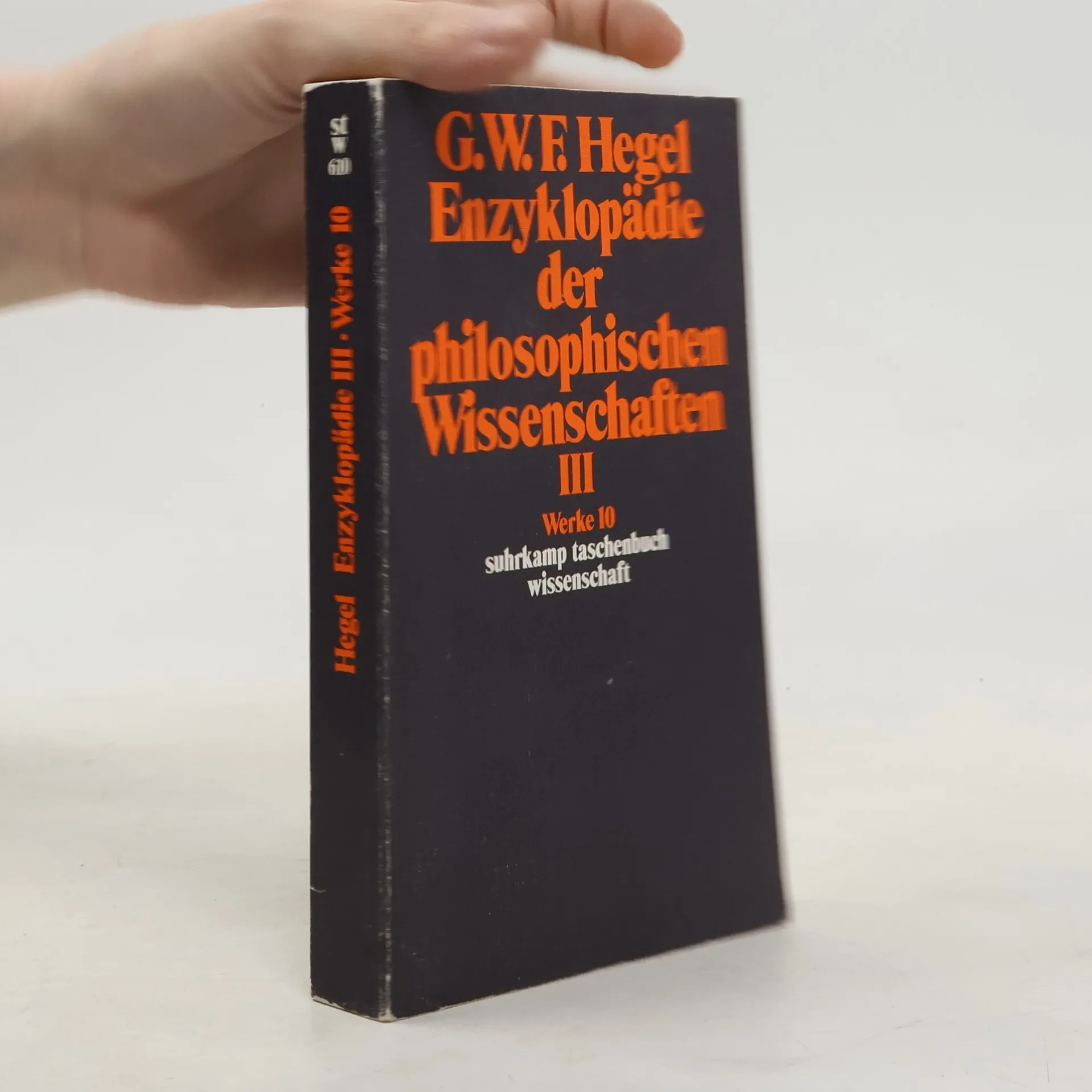
Enzyklopädie der philosophischen Wissenschaften im Grundrisse (1830). Tl.3
- 432 pages
- 16 hours of reading