

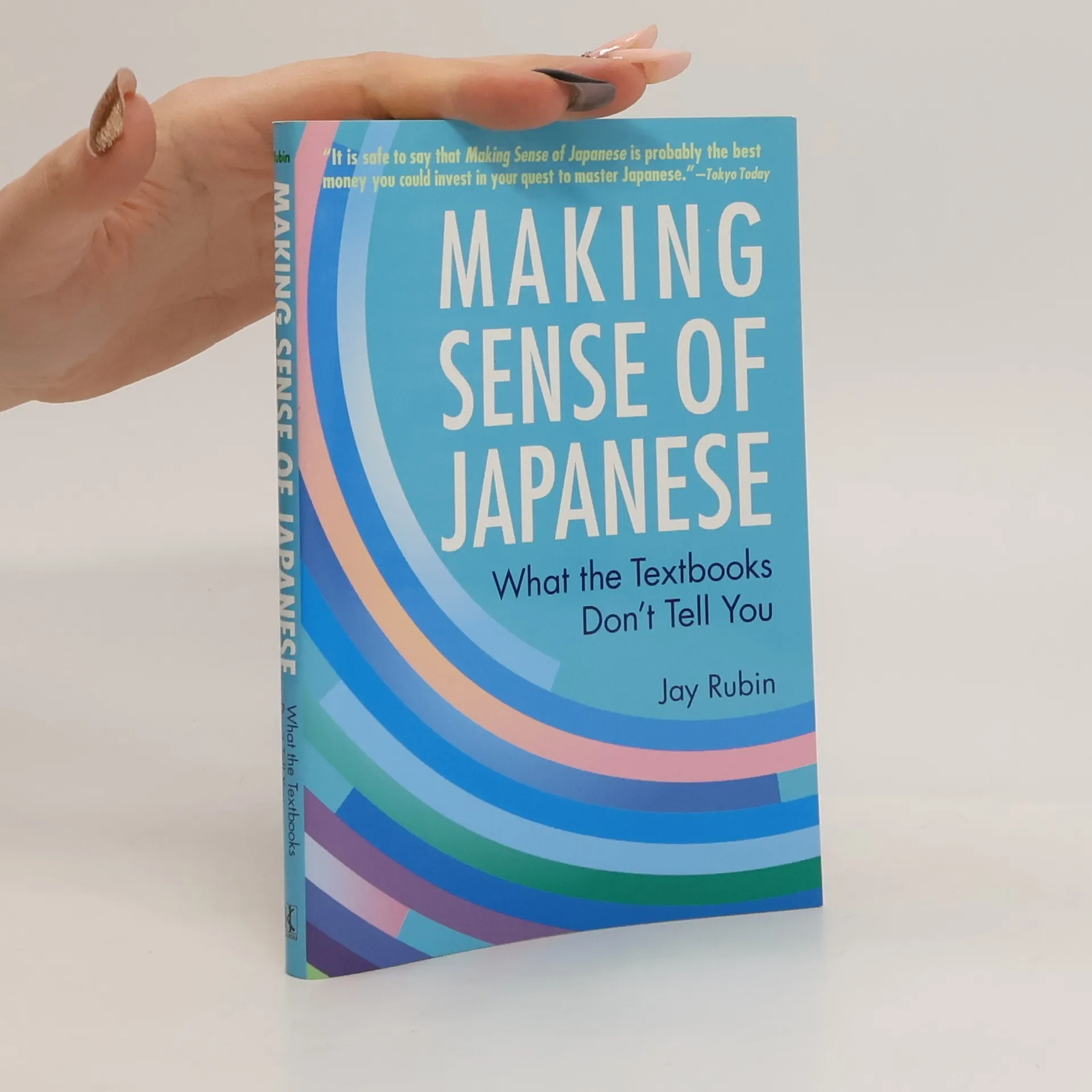
Making Sense of Japanese is the result of an American's thirty-year journey to learn and teach the complexities of the Japanese language. Formerly titled Gone Fishin', this work has garnered significant feedback, even amidst some criticism. Rubin aims to demonstrate that the Japanese language is not vague, offering clear explanations of challenging grammatical forms using everyday English. From a recuperative center in Kyoto, he maintains that Japanese is not as vague as it may seem. The first part of the book closely examines the "subjectless sentence," providing tools to uncover hidden subjects. It also addresses the rest of the sentence, known technically as "the rest of the sentence." In the second part, Rubin tackles expressions that have perplexed students over the years, introducing his unique method of analyzing upside-down Japanese sentences in a more straightforward manner. Quoting the renowned Japanese novelist Soseki Natsume, who noted that scholars often make the comprehensible incomprehensible, Rubin seems to have achieved the opposite. Previously published in the Power Japanese series, this book continues to be a valuable resource for those seeking clarity in the Japanese language.
Power Japanese Series
This series delves into the rich and complex world of Japanese culture and language. It offers an engaging and accessible introduction to the nuances of Japanese, from fundamental grammar to intricate cultural customs. Ideal for aspiring learners who want to not only master the language but also understand the deeper contexts that shape Japanese society. The series promises a journey of discovery that is as informative as it is enriching.



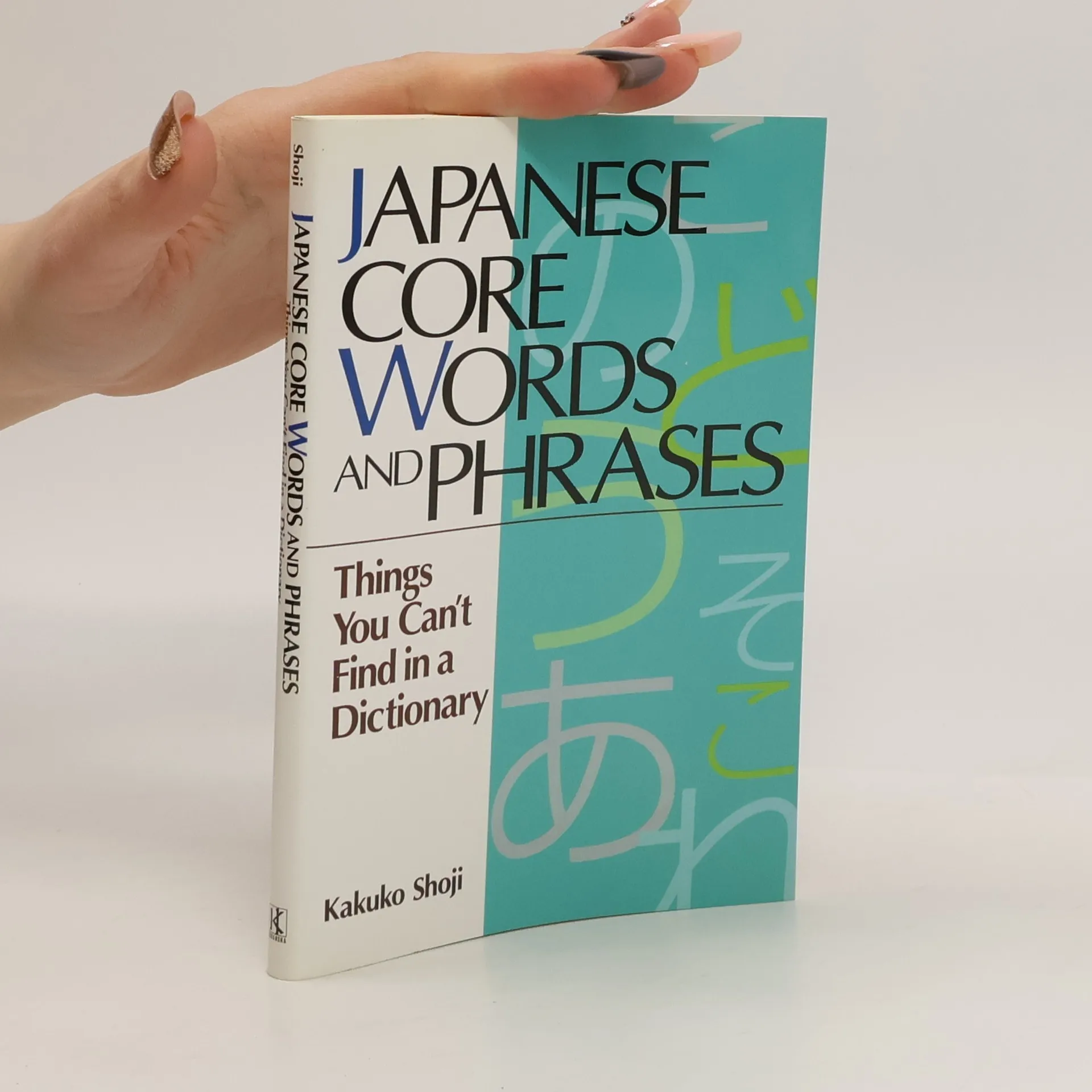
Some Japanese words and phrases, even though they lie at the core of the language, forever elude the student's grasp. They are not explained satisfactorily in dictionaries or textbooks for the simple reason that they cannot be conveniently defined. Japanese Core Words and Phrases brings theserecalcitrants to bay.The book is divided into two parts, each of which is arranged in alphabetical order. The first part is devoted to words indicating physical as well as psychological distance-roughly equivalent to "this," "that," "that over there," and "where," but quite different in usage. Physical distance iscovered in most textbooks, but psychological distance-every student's nemesis-is not.The second part of the book covers a variety of idiomatic expressions, many of which appear in Japanese proficiency tests. Each entry word or phrase is not simply explained but exemplified in sentence form, clarifying its meaning (in the case of many students) for the very first time.Japanese Core Words and Phrases has a great deal to offer the beginning student and much to offer the intermediate student. Little more can be asked of a book on the Japanese language.Previously published in the Power Japanese series as Core Words and Things You Can't Find in a Dictionary .
Basic Connections: Making Your Japanese Flow
- 160 pages
- 6 hours of reading
Basic Connections provides basic information about expressions and usages that facilitate the flow of ideas and thoughts in written and spoken Japanese. It explains how words and phrases dovetail, how clauses pair up with other clauses, how sentences come together to create harmonious paragraphs. Since this is a book about the basics it starts with the fundamentals, explaining first the two types of Japanese sentence—"A is B" and "A does B." Then it proceeds to the problem of the modifier and the modified—a matter of "which is which." Wa and ga naturally get considerable play; after all, it is downright impossible to speak properly without them. There is also a discussion of linking nouns and noun phrases, not to speak of verbs and verb phrases. The book goes on to devote a whole chapter to common mistakes and troublesome usages. The final chapter attempts to pin down some particularly slippery locutions: such as toshite, imada ni, sore kara, whoppers like "Sentence A-te sae inakereba, Sentence B," and many more. Any beginning or intermediate student, having spent a certain amount of time and energy studying this book, will be able to speak and read Japanese in a much more coherent fashion.
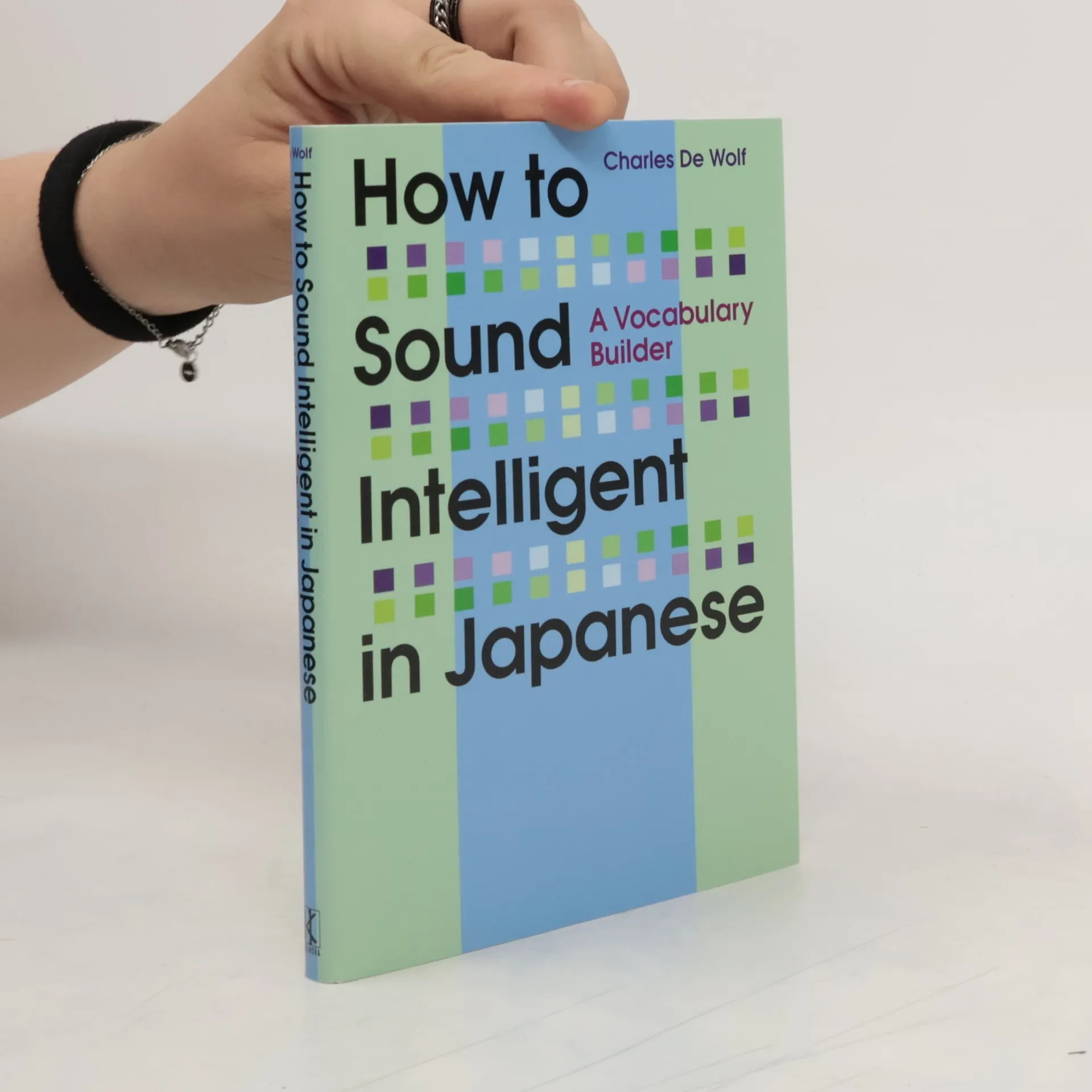
For every student, there comes a time when basic grammar is no longer the issue. You can express simple thoughts and be understood, but discussing complex topics like philosophy, politics, or science becomes challenging due to a lack of specialized vocabulary. Often, acquiring this vocabulary requires extensive reading or dictionary use. This book aims to streamline that process by compiling commonly used key terms from essential fields of human endeavor. With this resource, you can find the right word during conversations without years of language mastery, even if your kanji skills are limited, as you can learn words by sound. The book covers various categories, including ideas and theories, philosophy and religion, politics and government, fine arts, humanities, social sciences, science and technology, law and justice, and business and economics. This organization allows students to focus on specific areas where vocabulary is needed, avoiding the frustration of sifting through a dictionary. Additionally, certain kanji are frequently repeated within categories, helping students develop familiarity with their meanings and uses. Beginning students can learn individual words and create simple sentences, while advanced learners can gain context from sample sentences. This resource is beneficial for all levels, enabling quick acquisition of key terms in unfamiliar areas. Previously published in the Power Japanese series, it remai
Onomatopoeia is a standout feature of the Japanese language, crucial for students aiming to speak naturally, read literature or manga, or enjoy anime in the original. However, Japanese onomatopoeic words differ significantly from their English counterparts, making them challenging to remember and use. The book begins with an introduction explaining "onomatopoeia" in both languages, covering sound and meaning, English onomatopoeia, sound symbolism, types of Japanese onomatopoeia, their grammatical functions, written forms, and the formation of new words, especially in manga. This foundational knowledge prevents students from learning onomatopoeia in isolation, allowing them to see the logical connections among words, presenting it as a coherent system rather than a chaotic collection. The second part features eleven situational dialogues that immerse students in authentic Japanese conversations. These dialogues are presented in Japanese script with furigana, romanization, and English translations. Each instance of onomatopoeia includes commentary on definitions, usage, and sample sentences, along with cultural notes for context. Quizzes follow each dialogue to reinforce learning. With its comprehensive introduction and engaging dialogues, this resource aids students at all levels in mastering this fascinating aspect of the language, making the study of Japanese more enjoyable and effective. The book has been updated from its p
This is a student's guide to the expression of emotion in the Japanese language. Arranged by emotion type to cover a wide range of feelings - from infatuation to revulsion - this text offers standard Japanese script, romanized Japanese and English translation. A desire to communicate heart-to-heart with people from another culture is what attracts many people to language study in the first place. But it can take a long time to make friends and feel socially comfortable in a Japanese-speaking context, and there are few textbooks that can help. This volume does just