

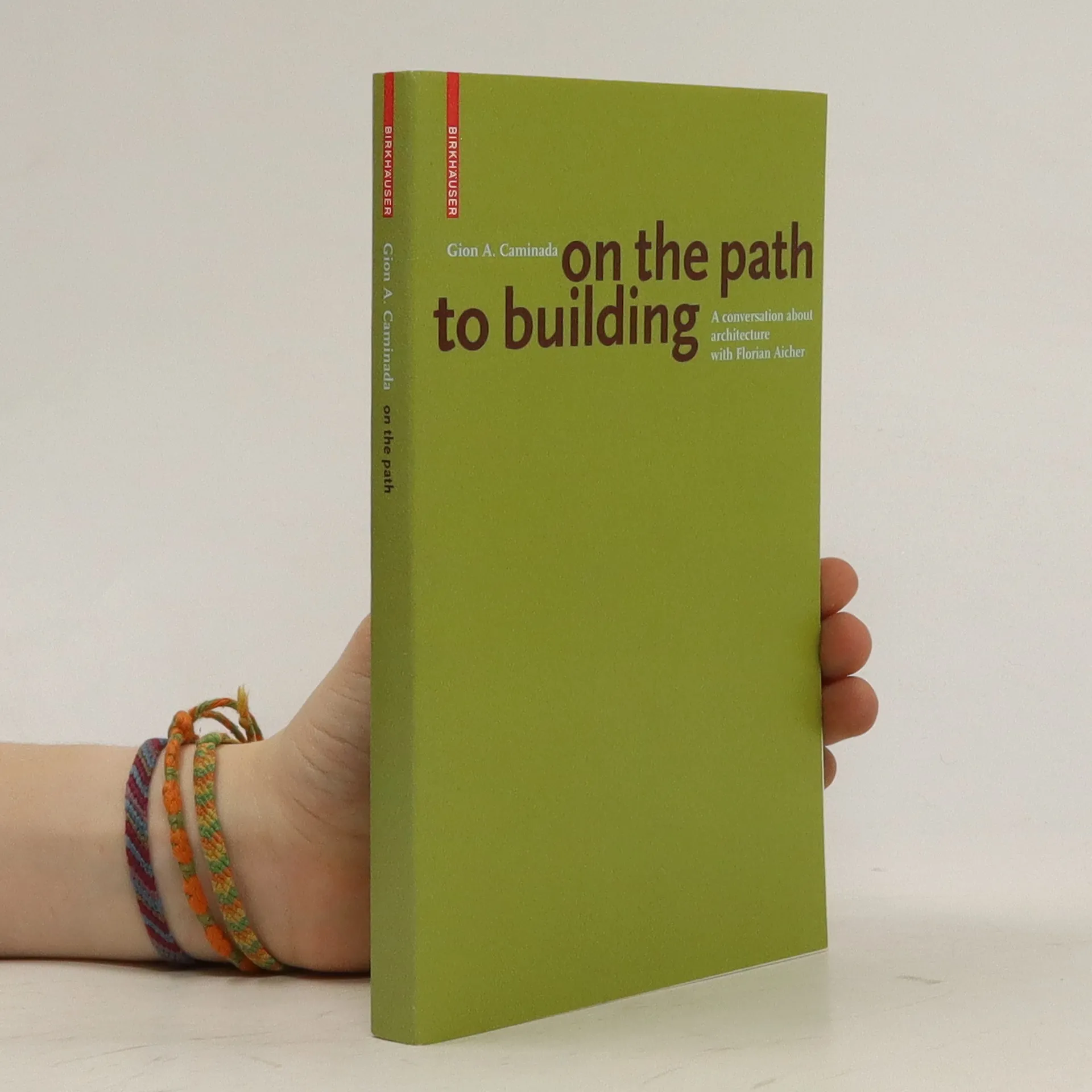
Gion Caminada is well-known far beyond Switzerland’s borders: as an architect, whose work is developed out of – and gives new life to – its context. The award-winning renewal of his native community of Vrin, the renaissance of the village of Valendas with its inn and village hall, the buildings in and around Disentis Abbey that contributed to the abbey’s revival, and many more. He passes on his experience in his role as a professor of architecture and design at the ETH. His contribution to architecture is being presented at the 2018 Venice Biennale. In this illustrated interview Gion Caminada tells of his path to building, of old villages, of working together with engaged citizens, and of the ideas that drive him forward in life.
Gion A. Caminada Book order
Gion Antoni Caminada, based in his native village of Vrin in the Swiss canton of Graubünden, is an architect deeply engaged with the dialogue between local building traditions and modern architecture. After honing his skills as a carpenter and cabinet maker, and further education at an applied arts school and ETH Zurich, he returned to Vrin to establish his practice. Much of his work, situated in and around Vrin, focuses on optimizing the village's functionality. Caminada skillfully employs traditional local materials like wood and stone, exploring ways to integrate historical construction techniques into contemporary architectural designs.


- 2018
- 2003
Mit Beiträgen von Andreas Cabalzar, Gion A. Caminada, Martin Tschanz.Fotoessay von Lucia Degonda.Die 2002 fertiggestellte «Totenstube» in Vrin ist in einzigartiger Weise auf den Ort und die Funktion zugeschnitten: Die Wahl des Standorts zwischen Friedhof und Dorf, das Raumprogramm, das Material und die Konstruktion machen die Stiva da morts zu einem exemplarischen Bau. Die Publikation hinterfragt den Entstehungskontext und den Bezug zum traditionellen Ritual und unterzieht die spezifische architektonische Lösung einer kritischen Würdigung.Auszeichnung «Die schönsten Schweizer Bücher 2003»