

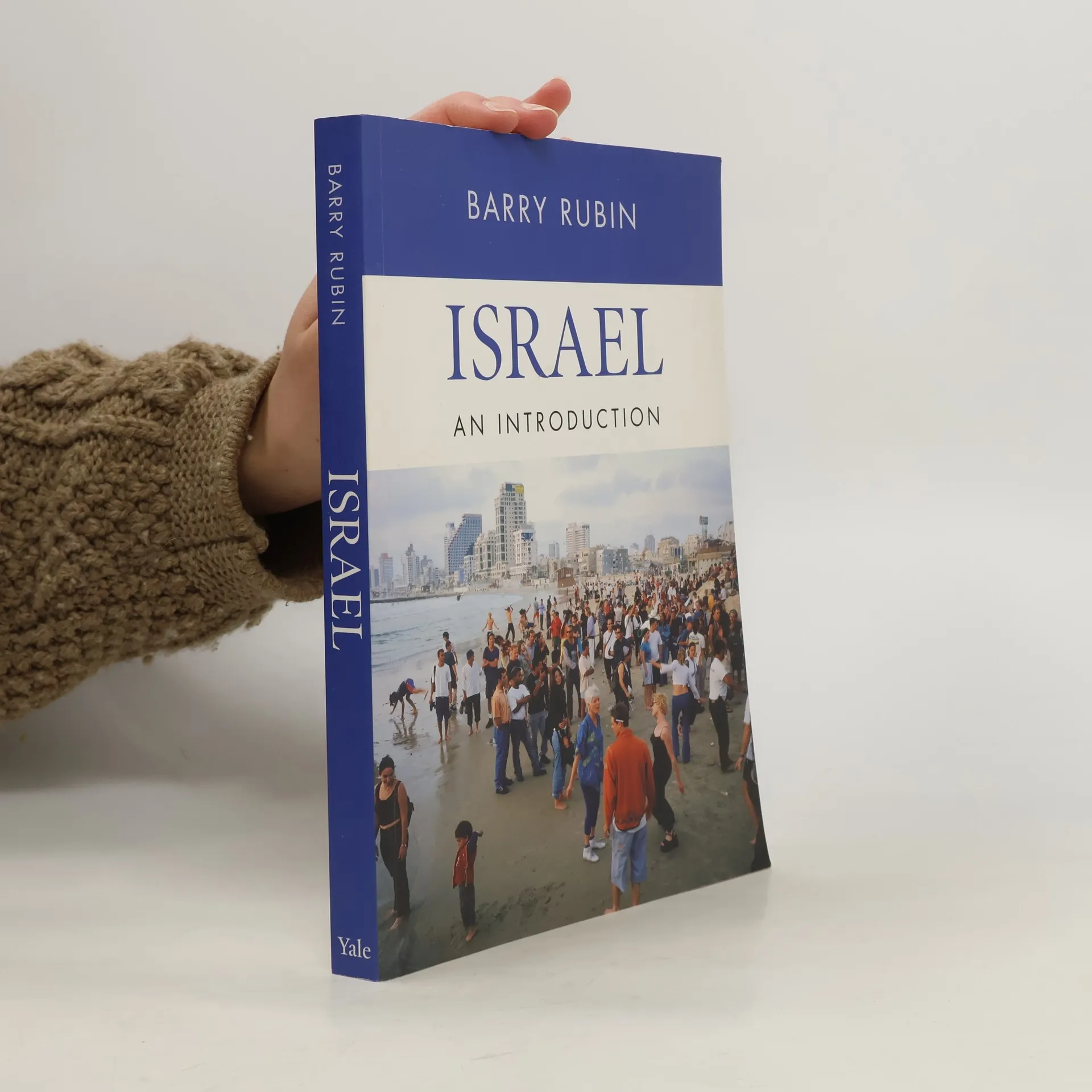
This comprehensive book provides a well-rounded introduction to Israel—a definitive account of the nation's past, its often controversial present, and much more. Written by a leading historian of the Middle East, Israel is organized around six major themes: land and people, history, society, politics, economics, and culture. The only available volume to offer such a complete account, this book is written for general readers and students who may have little background knowledge of this nation or its rich culture. Based on research by scholars with extensive firsthand knowledge of Israel, this book offers accessible, clearly explained material, enhanced with a generous selection of images, maps, charts, tables, graphs, and sidebars. This book provides readers with a solid foundation of knowledge about Israel and provides useful reference lists by topic for those inspired to read further.
Barry Rubin Book order (chronological)
Barry Rubin was an American-born Israeli expert on terrorism and Middle Eastern affairs. His expertise focused on global security and international relations. As director of the Global Research in International Affairs (GLORIA) Center and editor of the Middle East Review of International Affairs (MERIA), he contributed to a deeper understanding of complex Middle Eastern issues.

The Transformation of Palestinian Politics
From Revolution to State-Building
- 304 pages
- 11 hours of reading
This book provides a detailed analysis of the Palestinians' transition from a revolutionary movement to a state, highlighting the challenges rooted in their history, society, and diplomatic agreements. It explores the quest for national identity, economic system choices, and government structure. The political system is characterized as a pluralist dictatorship, featuring free elections and multiple parties, yet it is marked by a powerful executive and arbitrary law enforcement due to limited freedoms. The ruling elite comprises veteran revolutionaries, wealthy heirs, professional soldiers, technocrats, and Islamic clerics. Rubin examines the functioning of the executive and legislative branches, the impact of public opinion on the peace process, the role of nongovernmental institutions, and the Palestinian Authority's foreign relations, particularly with the Arab world, Israel, and the United States. Drawing from documents in Arabic, Hebrew, and English, along with interviews and observations, he concludes that the Palestinian Authority's positive aspects outweigh the negatives, predicting the establishment of a Palestinian state. His insights into the triumphs and challenges of this evolving state provide a framework for understanding future developments in the Middle East.