
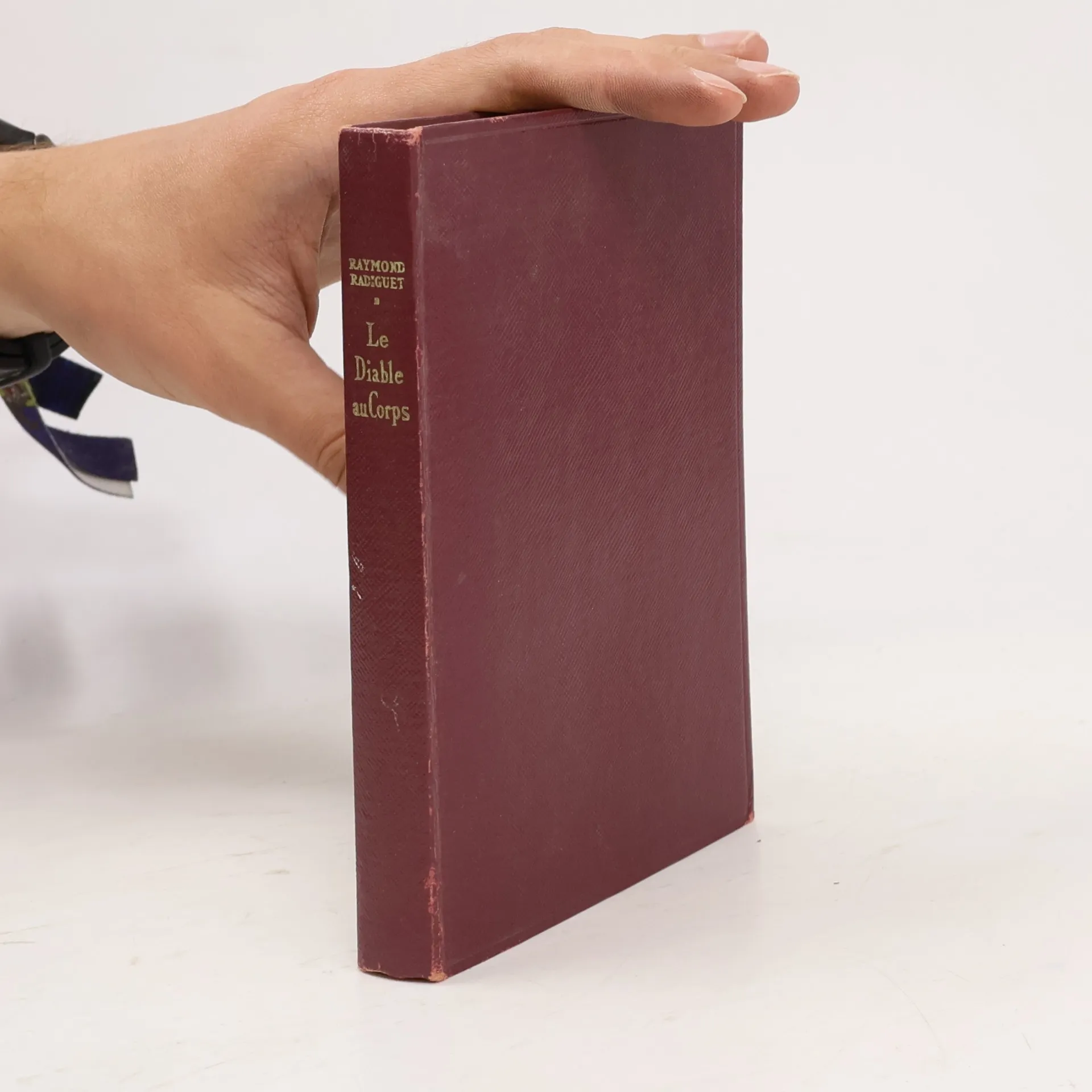




Raymond Radiguet was a French novelist who left an indelible mark on the literary world despite his brief life. His works, particularly his novels, became known for their daring exploration of illicit relationships and moral decay. Radiguet examined the complexities of human desire and societal expectations through his sharp prose and objective perspective. Though young, he crafted literature with a timeless appeal that continues to provoke and fascinate readers.
Exploring the intense emotions of love, this book delves into the struggles of lovers who strive to preserve their connection amidst challenges. It captures the delicate balance between beauty and despair, highlighting the complexities of relationships and the yearning for personal fulfillment. Through poignant storytelling, it reflects on the sacrifices made in the name of love and the quest for identity within it.
Count d'Orgel is handsome, charming, and carefree, a model of cool aristocratic aplomb. His wife, the Countess, is beautiful and pure, and loves her husband more than anything in the world. But from the moment the d'Orgels meet and befriend the clever young François de Séryeuse backstage at the circus, all three of these supremely civilized and witty people are caught up in an ever more intricate and seductive dance of deception and self-deception. At Count d'Orgel's masquerade ball, the real disguises are those of the human heart.Completed just before Raymond Radiguet's death at the age of twenty, Count d'Orgel's Ball is a love story that is as disturbing as it is delicious.
In dieser Liebesgeschichte mit dem Titel "Der Ball des Comte d''Orgel" sind die autobiographischen Bezüge bis zur Unkenntlichkeit kaschiert Radiguet verwendete ein klassisches Schnittmuster: das Dreiecksverhältnis zwischen zwei Freunden und der Frau des einen, die gleichzeitig Geliebte des anderen ist.
François de Séryeuse, jeune homme tranquille et raffiné, fait par hasard la connaissance du comte d'Orgel, mondain à la frivolité grandiose » et de sa femme, Mahaut. Il devient leur ami mais François aime Mahaut. Ayant jusqu'ici mené de front le devoir et l'amour, Mahaut, de son côté, se méprend d'abord sur le sentiment que lui inspire François. Couvé, nourri, grandi dans l'ombre, ce sentiment finit par se faire reconnaître ; elle doit s'avouer, non sans effroi, qu'elle aime François... Dans ce roman d'amour chaste, aussi scabreux que le roman le moins chaste, selon l'auteur lui-même, les coeurs humains sont percés à jour avec une implacable lucidité.
Mit siebzehn Jahren schrieb Raymond Radiguet dieses Meisterwerk, das zu einem der erfolgreichsten Bücher des 20. Jahrhunderts wurde. Hinrich Schmidt-Henkel, für seine Neuübersetzung von Célines »Reise ans Ende der Nacht« gefeiert, überträgt den Roman erstmals in einen zeitgemäßen Ton. »Ich weiß, dass ich mich Vorwürfen aussetze. Aber kann ich etwas dafür? Ist es mein Fehler, dass ich wenige Monate vor Kriegsbeginn zwölf Jahre alt wurde? Alle, die mich verurteilen, sollten sich vor Augen führen, was der Krieg für so viele Heranwachsende wie mich bedeutete: vier Jahre große Ferien.« François ist fünfzehn Jahre alt, als er sich in die achtzehnjährige Marthe verliebt, deren Ehemann im Ersten Weltkrieg kämpft. Zwischen den Heranwachsenden entspinnt sich eine ebenso leidenschaftliche wie aussichtslose Affäre. Als Marthe von François ein Kind erwartet, bricht eine Katastrophe über die Liebenden herein. Das Erscheinen des Romans, der durch seinen unschuldigen und zugleich kühl analysierenden Ton besticht, löste 1923 einen Skandal aus, verschaffte Radiguet aber auch glühende Bewunderer wie Paul Valéry, Jean Cocteau und Pablo Picasso.
Scritto da Radiguet a soli diciotto anni, Il diavolo in corpo ebbe subito un clamoroso successo: da allora è diventato un romanzo di culto per più di una generazione di lettori, un culto rafforzato dalle versioni cinematografiche di Claude Autant-Lara (1974) e di Marco Bellocchio (1986). Ispirandosi in parte a vicende autobiografiche, Radiguet racconta la "scandalosa" storia d'amore di un sedicenne e di una giovane signora, Marthe Grangier, sposata a un soldato partito per la Grande Guerra. Più che la scabrosità della "relazione pericolosa", a fare del libro un mito letterario sono la febbrile tensione - tipicamente adolescenziale - del protagonista e la sua smania, frenetica e contraddittoria, di vivere fino in fondo i propri impulsi e di affermare una propria adulta identità agli occhi della donna e del mondo.