


Explore the latest books of this year!
Bookbot

Carrie Menkel-Meadow

    Mediation
    Negotiation: A Very Short Introduction
    What's Fair
    • What's Fair

      • 594 pages
      • 21 hours of reading

      What's Fair is a landmark collection that focuses exclusively on the crucial topic of ethics in negotiation. Edited by Carrie J. Menkel-Meadow and Michael Wheeler, What's Fair contains contributions from some of the best-known practitioners and scholars in the field including Roger Fisher, Howard Raiffa, and Deborah Kolb. The editors and distinguished contributors offer an examination of why ethics matter individually and socially, and explain the essential duties and values of negotiation beyond formal legal requirements. Throughout the book, these experts tackle difficult questions such as: What do we owe our counterparts (if anything) in the way of candor or disclosure? To what extent should we use financial or legal pressure to force settlement? Should we worry about whether an agreement is fair to all the parties, or the effects our negotiated agreements might have on others?

      What's Fair
      3.0
    • Negotiation is essential for peace and international relations, but also for economically efficient trades and bargains in business, and for problem solving skills in workplaces, families and interpersonal interactions. Menkel- Meadow illustrates different models, approaches, and styles of negotiation, which are both conceptual and behavioral.

      Negotiation: A Very Short Introduction
      3.4
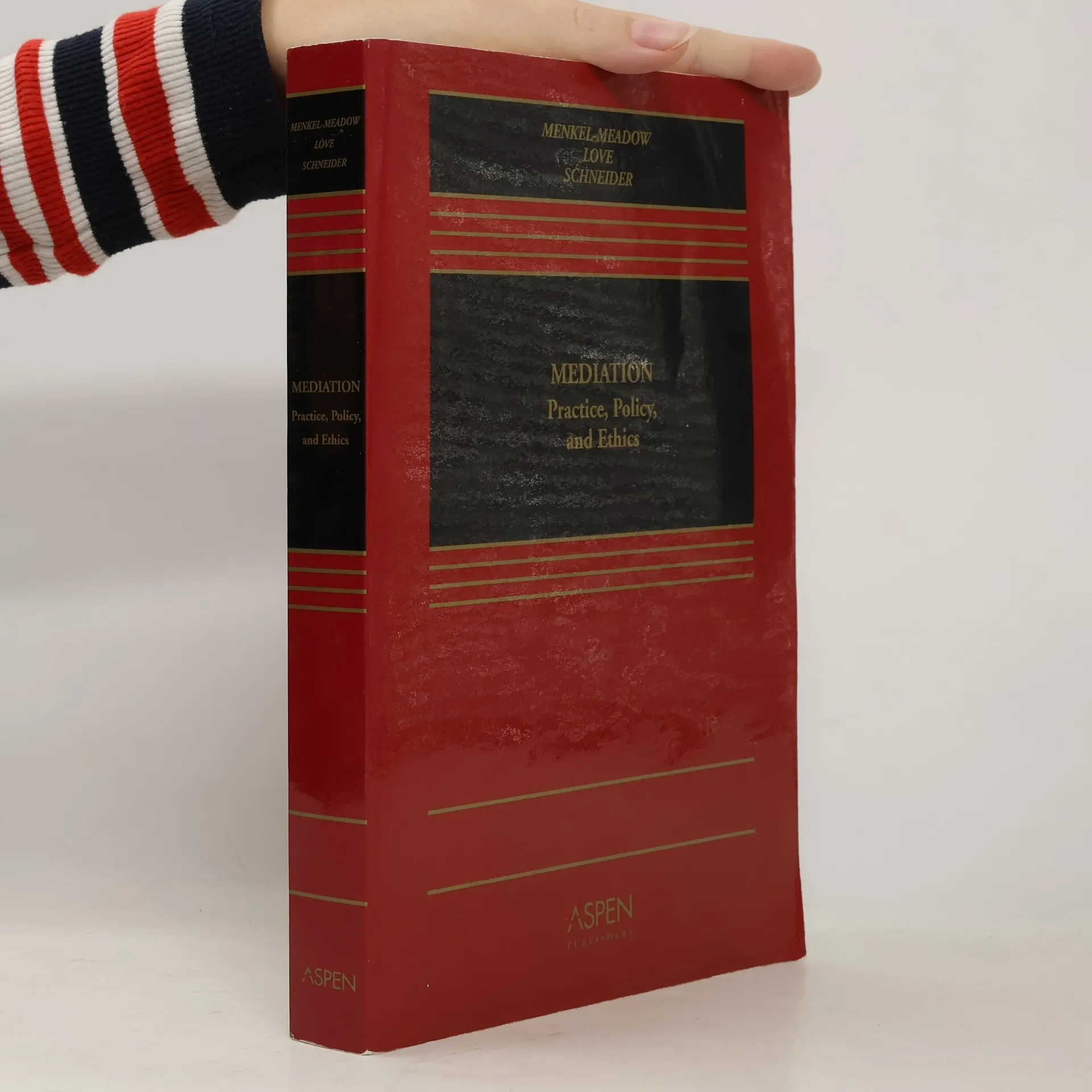
    • Mediation

      Practice, Policy, And Ethics

      • 696 pages
      • 25 hours of reading

      The innovative author team of Menkel-Meadow, Love, and Schneider presents a comprehensive book dedicated to mediation. Building on their 2005 ADR survey casebook, this work expands the topic while maintaining the original structure. It offers a fresh perspective on the skills and processes involved in mediation, covering law, policy, case examples, and practice guidelines for mediators and attorney representatives. The exploration includes mediation in transactional and international contexts, along with an analysis of ethical guidelines and dilemmas. The authors provide critiques of mediation, highlighting its promise and potential. Recognized leaders in dispute resolution, the authors are noted for their contributions to scholarship, teaching, and policy-making. The book adopts a practical problem-solving approach, incorporating both analytical and behavioral strategies across diverse gender, race, and cultural contexts. Carefully selected cases are complemented by key readings, including critical articles, empirical studies, and relevant statutes. To aid class preparation, an extensive Teacher's Manual includes suggested syllabi, teaching notes, discussion prompts, additional problems, role plays, and lists of supplemental materials, such as videos and transcripts, along with examination and paper suggestions for each chapter.

      Mediation