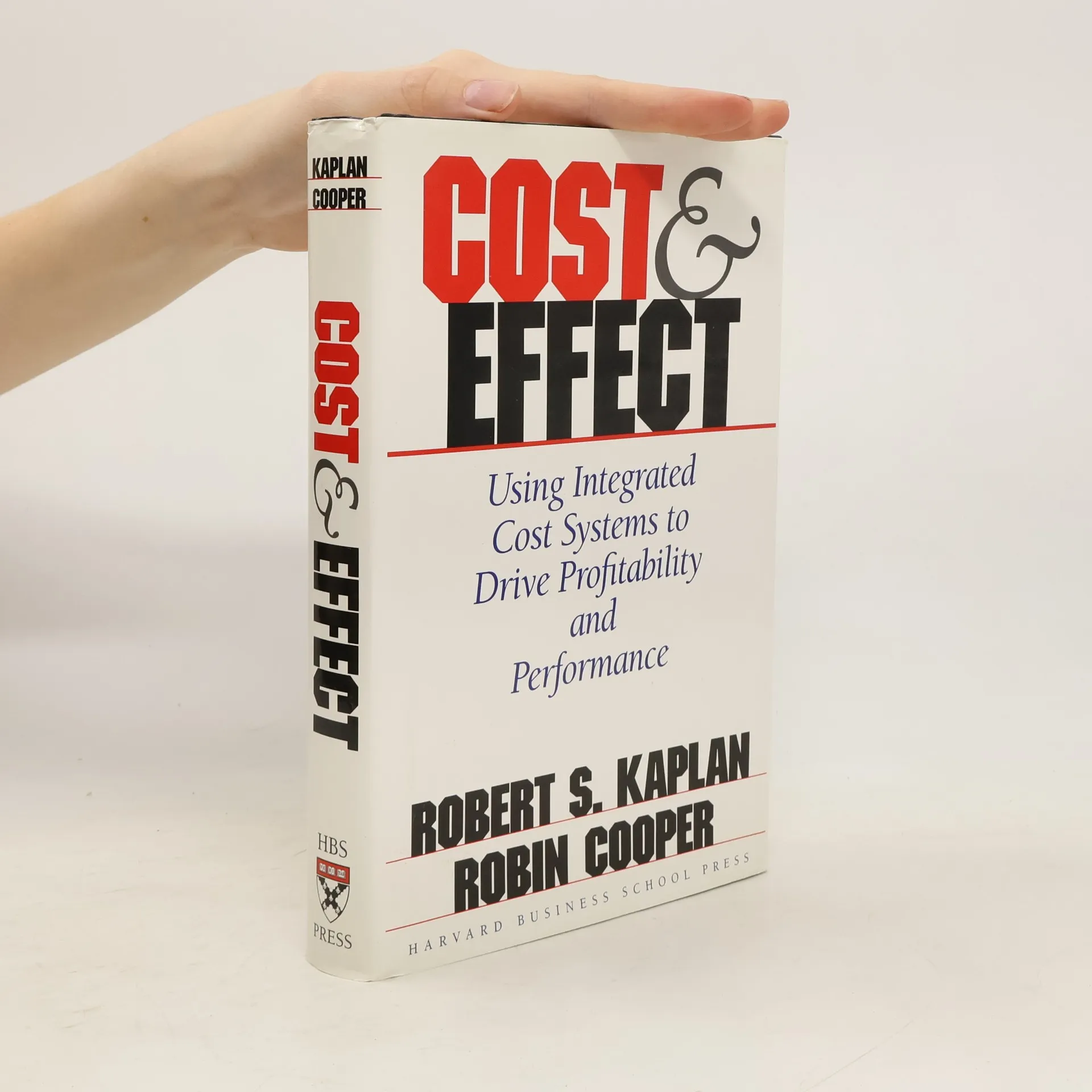
Cost and Effect is written for the general manager, and explains activity-based costing systems. It focuses on creating integrated, knowledge-based systems that provide managers with meaningful information, not just data.
The authors of "The Balanced Scorecard" and "The Strategy-Focused Organization" present a blueprint any organization can follow to align processes, people, and information technology for superior performance.
For years, the best source for management thinking has been Harvard Business Review. This book pulls from the best HBR articles to help leaders rise to the tests they face on a daily basis. If you want to navigate through muddy business waters, overcome difficult hurdles, and thrive in this modern world of business, read Harvard Business Review on the Tests of a Leader.
In a world of stiffening competition, business strategy is more crucial than ever. Yet most organizations struggle in this area--not with formulating strategy but with executing it, or putting their strategy into action. Owing to execution failures, companies realize just a fraction of the financial performance promised in their strategic plans.It doesn't have to be that way, maintain Robert Kaplan and David Norton in The Execution Premium . Building on their breakthrough works on strategy-focused organizations, the authors describe a multistage system that enables you to gain measurable benefits from your carefully formulated business strategy. This book shows you how to:Develop an effective strategy --with tools such as SWOT analysis, vision formulation, and strategic change agendasPlan execution of the strategy --through portfolios of strategic initiatives linked to strategy maps and Balanced ScorecardsPut your strategy into action --by integrating operational tools such as process dashboards, rolling forecasts, and activity-based costingTest and update your strategy --using carefully designed management meetings to review operational and strategic dataDrawing on extensive research and detailed case studies from a broad array of industries, The Execution Premium presents a systematic and proven framework for achieving the financial results promised by your strategy.
This book, authored by the creators of the Balanced Scorecard, illustrates how managers can effectively utilize this innovative tool to engage their teams in achieving the company's mission. Beyond a mere measurement system, the Balanced Scorecard serves as a comprehensive management framework that harnesses the skills and knowledge of employees to reach long-term strategic objectives. Kaplan and Norton highlight its application by senior executives across various industries, including banking and retail, demonstrating how it guides current performance while setting targets for the future. They explain how to leverage metrics in four key areas—financial performance, customer insights, internal processes, and learning and growth—to align initiatives across individuals and departments, and to discover new processes that fulfill customer and shareholder needs. The authors also discuss using the Balanced Scorecard as a dynamic learning tool for testing and refining organizational strategies. They provide actionable steps for managers to create their own Balanced Scorecard. Ultimately, this framework encourages companies to focus on long-term investments in customers, employees, and innovation, transforming the approach to measuring and managing business success.
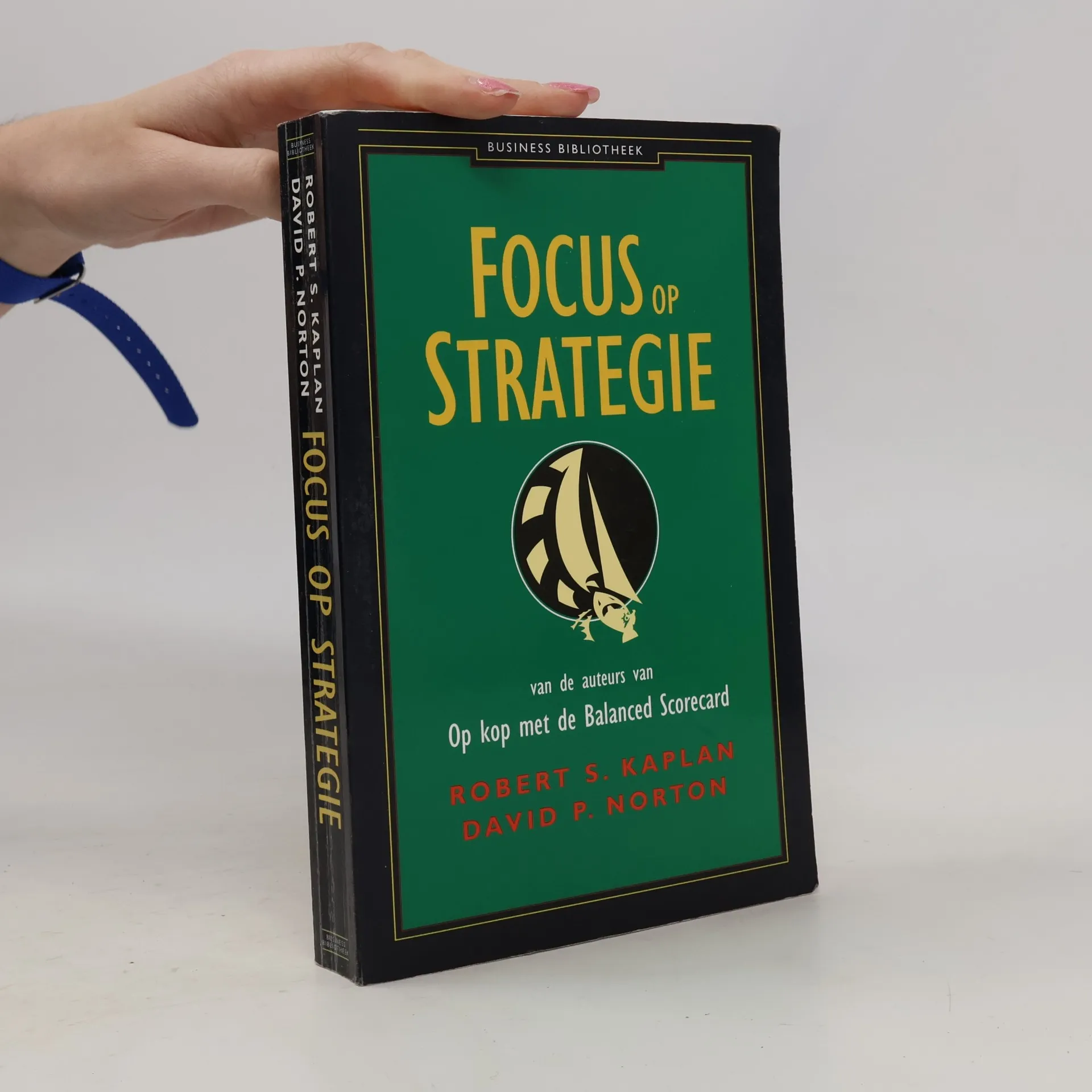
The creators of the Balanced Scorecard apply their proven approach to corporate level strategy and offer a framework for aligning all of a company's individual business units with the organizations' overall strategy to ensure optimal business performance.
Suitable for upper level advanced management or cost accounting courses at the undergraduate or MBA/graduate level, this book provides treatment of innovative management accounting issues used by major companies throughout the world. It takes a systematic management-oriented approach to management topics. Each chapter is accompanied by cases.
This book, based on the author's monograph, "The Bidual of C(X) I", throws new light on the subject of Lebesgue integration and contributes to clarification of the structure of the bidual of C(X). Kaplan generalizes to the bidual the theory of Lebesgue integration, with respect to Radon measures on X, of bounded functions (X is assumed to be compact). The bidual of C(X) contains this space of bounded functions, but is much more "spacious", so the body of results can be expected to be richer. Finally, the author shows that by projection onto the space of bounded functions, the standard theory is obtained.
The future of business growth is in the partnerships that companies and their executives form. Partnering explains how critical it is for business leaders to "partner" effectively, and features original contributions from more than 30 thought leaders, including such luminaries as Ken Blanchard, Jim Kouzes and Brian Tracy. Topics * Ken Blanchard on situational leadership * Beverly Kaye on building, living, and leaving a legacy for the organization * Kevin Cashman's Five Touchstones of Authentic Partnering Leadership * Robert Kaplan on the Balanced Scorecard for leadership * R. Roosevelt Thomas on fostering trust and resonance through diversity * Jim Kouzes on building cultures of collaboration * Brian Tracy on the importance and power of focus * Jon Katzenbach on where team performance fits in the balanced leadership approach
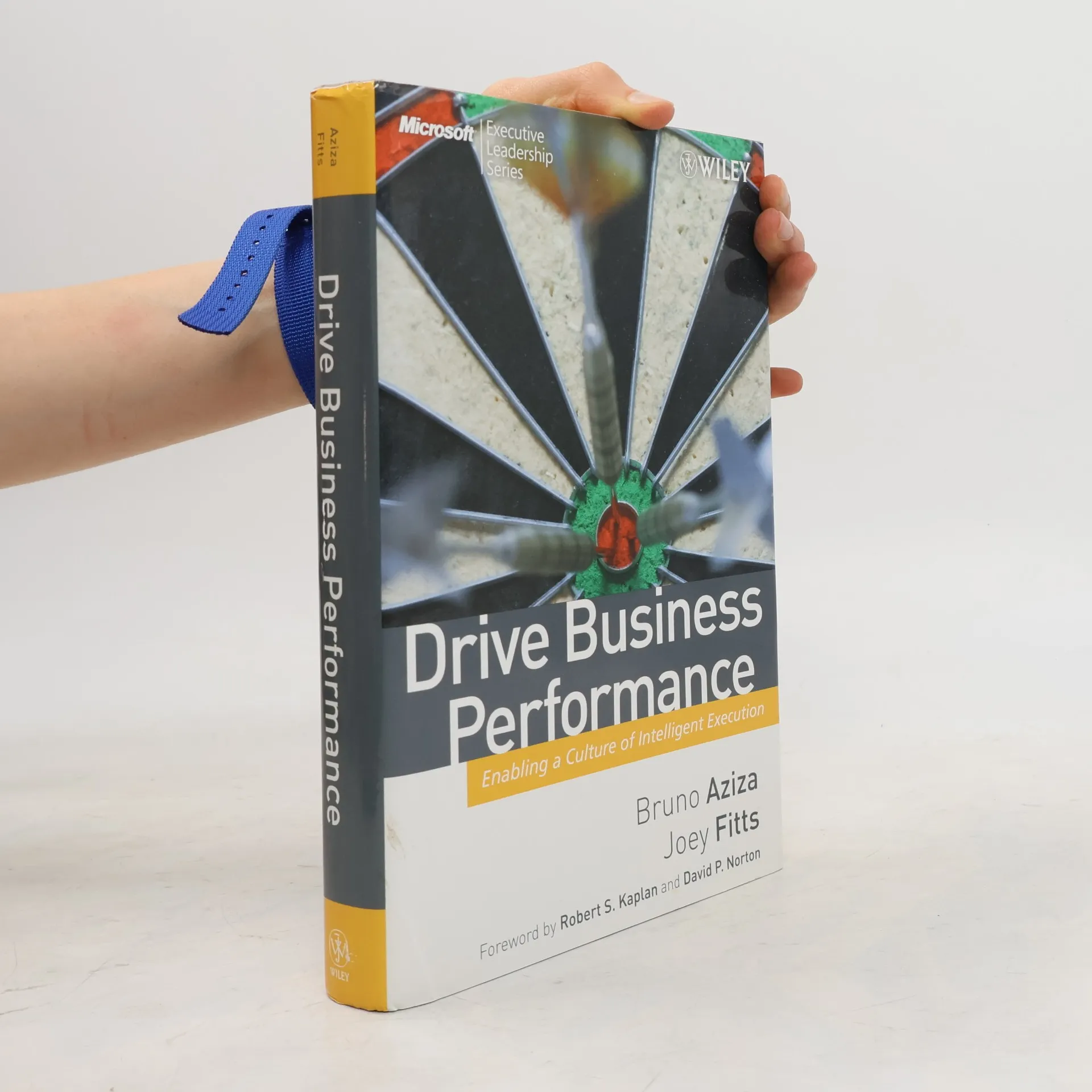
This groundbreaking guide provides a deep understanding of how to achieve enterprise performance management objectives, backed up by first-hand accounts from Fortune 500 companies who are winning by building accountability, intelligence, and informed decision-making into their organizational DNA. Drive Business Performance explains the competitive advantage experienced by organizations that create and manage a "Culture of Performance."
Based on the proceedings of the Boston Symposium in the late days of 1980, Reflections in Self Psychology is a testament to the "remarkable spirit of open inquiry," as co-editor Joseph Lichtenberg observes, which characterized the event. Composed of chapters based on the work and presentations of some of the leading theorists and clinicians in the field at the time, the book itself has feels more like a dialogue than an exposition, more a seminar than a lecture. The vast sweep of self psychology is thoughtfully divided into clear sections, bringing order to the myriad of voices and discussions running through the narrative as a whole. But far from merely promoting and propagating self psychological theory and clinical applications, the contributors are also aware of its critiques. Though the volume is more than 25 years old, it offers a breadth of knowledge that would be comprehensive, even by today's standards.
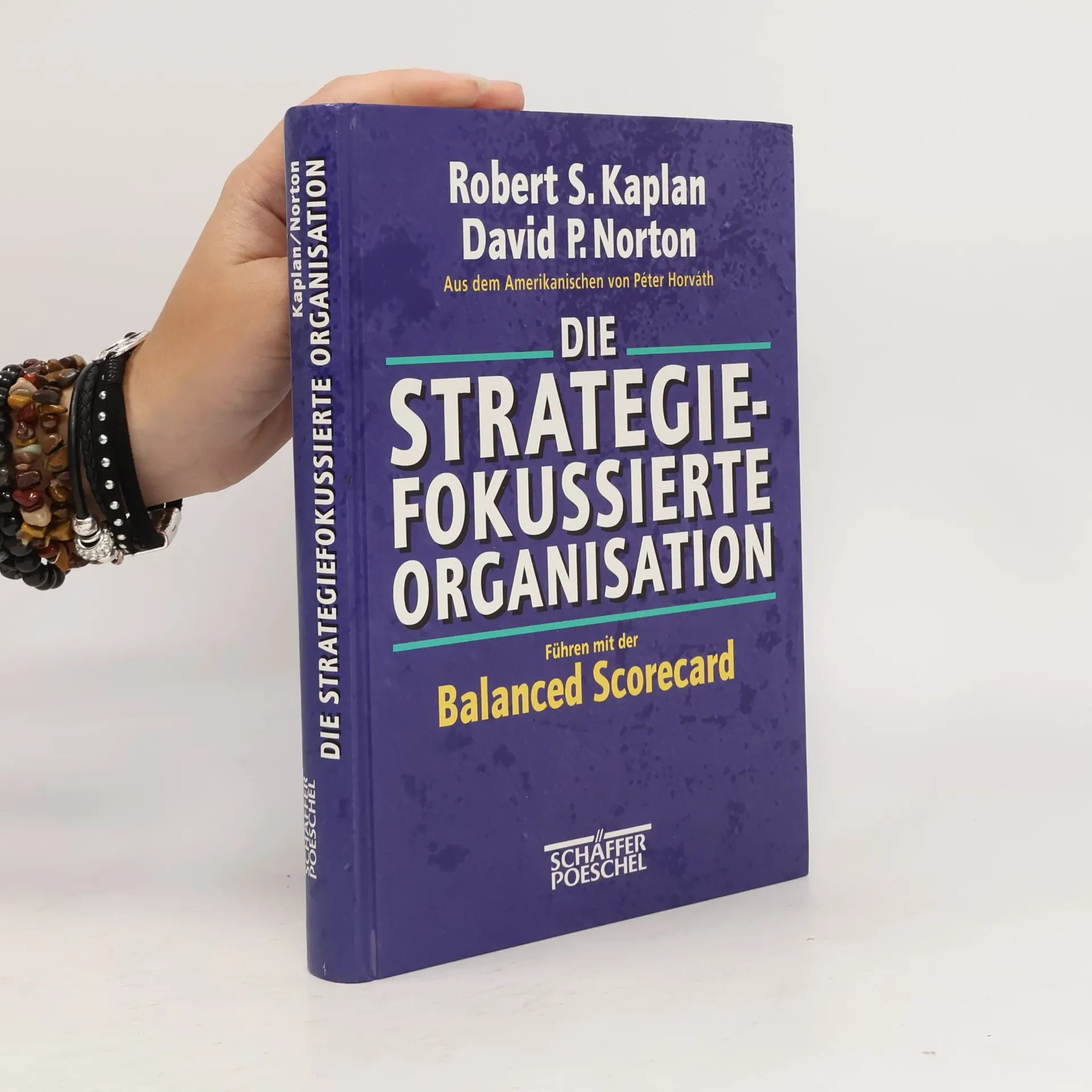
Die Top-Autoren befassen sich mit der Frage, wie Unternehmensstrategien bis an die Basis von Organisationen getragen werden können. Kaplan und Norton identifizieren fünf zentrale Prinzipien für den Aufbau einer strategiekonformen Unternehmensführung:
Die Strategie ist verständlich zu kommunizieren.
Die Organisation ist auf die Strategie auszurichten.
Die Strategie ist so umzusetzen, dass sie von jedem Mitglied des Unternehmens jeden Tag gelebt wird.
Sie ist als kontinuierlicher Prozess einzubauen.
Der Wandel ist durch starke und effiziente Führung zu mobilisieren.
Konkrete Unternehmensbeispiele aus der privaten und öffentlichen Wirtschaft zeigen, wie diese Prinzipien umgesetzt werden können, um nachhaltige Erfolge zu erzielen.
Die amerikanische Originalausgabe wurde von Prof. Dr. Péter Horváth und Damir Kralj übersetzt und von Cap Gemini Ernst & Young im Jahr 2000 als 'Best International Book on Business Administration' ausgezeichnet.
Základní kniha renomovaných amerických autorů se zabývá měřením finanční i nefinanční výkonnosti podniků, zvláště pak jejími strategickými předpoklady. Předkládá podnikům originální řešení: metodu Balanced Scorecard (BSC) čili soubor nástrojů vytvářejících integrovaný manažerský systém, jenž zdůrazňuje vzájemnou provázanost hodnotových i nehodnotových kritérií a na základě sledování a řízení výkonnosti podniku v rámci čtyř subsystémů (perspektiva finančních cílů, zákazníků a trhů, podnikových procesů, učení se a růstu, resp. perspektiva zaměstnanců) umožňuje průběžné řízení realizace celkové strategie a zajišťuje i nezbytnou zpětnou vazbu. Autoři zároveň ukazují, jak tento účinný systém v podnikové praxi implementovat.