




Explore the latest books of this year!
Bookbot

Henry Mintzberg

    September 2, 1939

    Henry Mintzberg is a renowned academic and author focusing on management and business strategy. His work critically examines contemporary approaches to management and strategic planning, emphasizing the importance of practical experience and critical thinking over mere quantitative methods. Mintzberg questions traditional business education models, advocating for reforms aimed at developing genuine managerial skills and a deeper understanding of organizational processes. His analyses offer readers a refreshing and provocative perspective on the world of management.

    Structure in Fives
    Strategy Safari
    Managing
    The Structuring of Organizations
    The Strategy Process
    Understanding Organizations--Finally!
    • Understanding Organizations--Finally!

      • 244 pages
      • 9 hours of reading

      The iconic Henry Mintzberg provides a crystal-clear map to the seven forces that shape all human organizations, synthesizing sixty years of research on organizational design and theory. Human beings have been organizing to accomplish work for as long as we’ve existed. So why is organizational behavior still so elusive and mysterious? In this book, one of the greatest scholars in his field reframes his career’s work around the seven forces that drive all organizations. Mintzberg identifies them as efficiency, proficiency, consolidation, collaboration, culture, division, and conflict. Each of these forces aligns with one of the seven basic organizational forms: the Personal Enterprise, the Programmed Machine, the Professional Assembly, the Project Pioneer, the Divisional Form, the Community Ship, and the Political Arena. Mintzberg explores how these forms combine and hybridize and offers a life-cycle model to explain how organizations transition between the forms and hybrids. Mintzberg says that organizations are formed by a set of relationships, yet their purpose is achieved only through individual work—making the act of organizing a unique science. This brilliant book not only explains why organizations are the way they are, but it also shows how we can make our individual organizations function at the highest possible level.

      Understanding Organizations--Finally!
    • Readings and cases are arranged to provide students with a conceptual insight into actual business situations. The book integrates the various strands of the strategy process - strategy itself, strategy analysis, structure, power and culture - and shows how they operate in different businesses - entrepreneurial, innovative, diversified, specialized and established.

      The Strategy Process
    • Presents methods and examples of organizational structure using empirical literature to describe how organizations structure themselves. The book discusses the nature of managerial work, strategy formation process and issues associated with each type of structure.

      The Structuring of Organizations
    • A half century ago Peter Drucker put management on the map. Leadership has since pushed it off. Henry Mintzberg aims to restore management to its proper front and center. “We should be seeing managers as leaders.” Mintzberg writes, “and leadership as management practiced well.”This landmark book draws on Mintzberg’s observations of twenty-nine managers, in business, government, health care, and the social sector, working in settings ranging from a refugee camp to a symphony orchestra. What he saw—the pressures, the action, the nuances, the blending—compelled him to describe managing as a practice, not a science or a profession, learned primarily through experience and rooted in context.But context cannot be seen in the usual way. Factors such as national culture and level in hierarchy, even personal style, turn out to have less influence than we have traditionally thought. Mintzberg looks at how to deal with some of the inescapable conundrums of managing, such as, How can you get in deep when there is so much pressure to get things done? How can you manage it when you can’t reliably measure it?This book is vintage iconoclastic, irreverent, carefully researched, myth-breaking. Managing may be the most revealing book yet written about what managers do, how they do it, and how they can do it better.

      Managing
    • Strategy making is considered the high point of managerial activity. But bombarded by fads and fixes, most managers have been groping blindly to get their arms around the proverbial elephant. Now Henry Mintzberg, author of the award-winning "The Rise and Fall of Strategic Planning", has teamed up with Bruce Ahlstrand and Joseph Lampel to create a powerful antidote: a comprehensive and illuminating-- as well as colorful-- tour through the fields of strategic management. Mintzberg, Ahlstrand, and Lampel have shaped each of ten different approaches into a coherent school of strategy formation. In the process, the authors clarify the enormous amount of confusion that exists. The result is a tour de force: a brilliant, penetrating primer on business strategy that is, at the same time, immensely readable and fun. The authors provide a thorough critique of the contributions and limitations of each school-- from the design, planning, positioning, entrepreneurial, and cognitive schools to the learning, power, cultural, environmental, and configurational schools-- culminating in how they might combine to reveal that elephant. Unique, insightful, and essential, "Strategy Safari" is the indispensable guide for the creative manager.

      Strategy Safari
    • Structure in Fives

      • 312 pages
      • 11 hours of reading
      4.0(152)Add rating

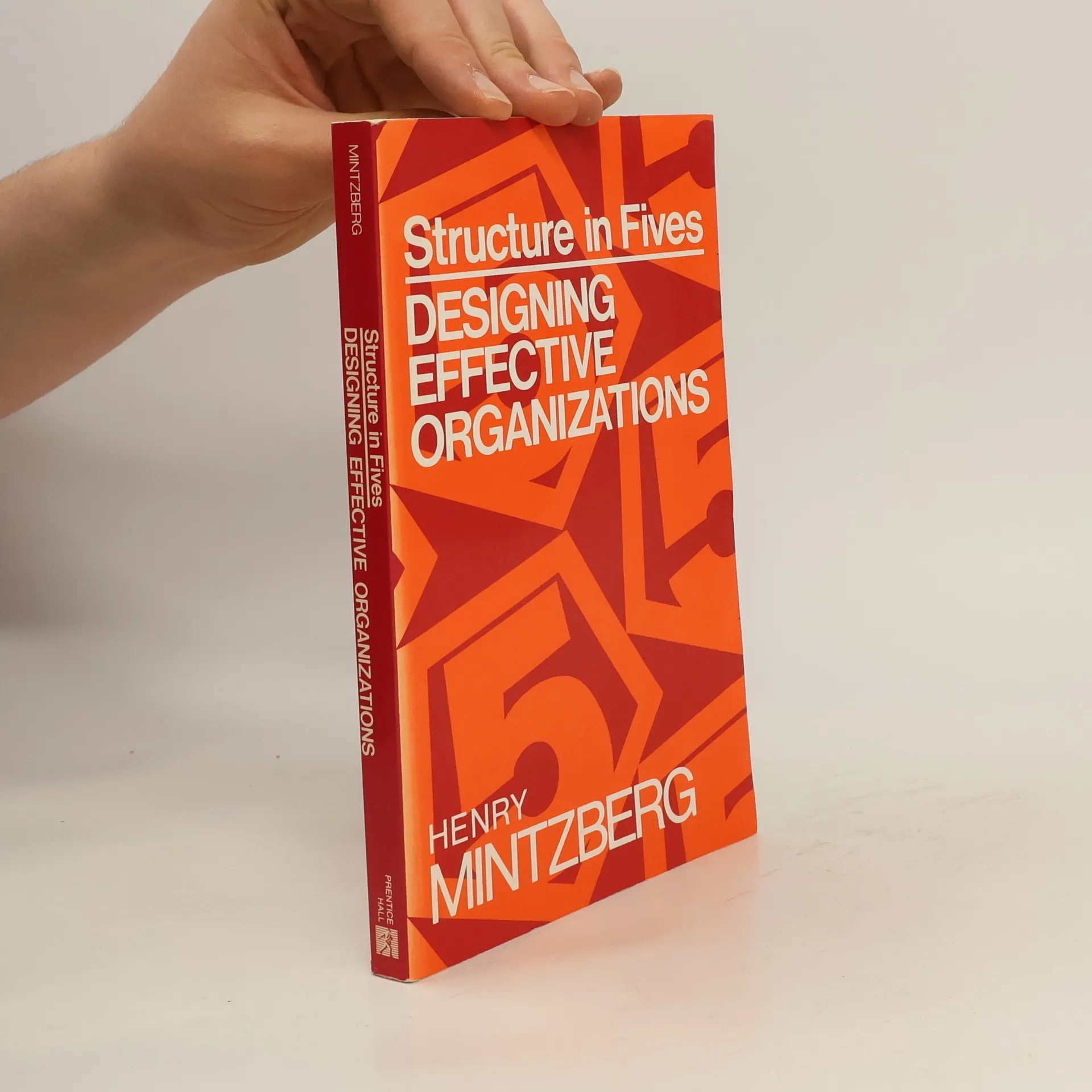
      Here's a guide that shows managers how to choose the best organizational design for their business from five basic structures identified by the author. In it readers will discover how to avoid typical mistakes, especially those pertaining to conflict among different divisions.

      Structure in Fives
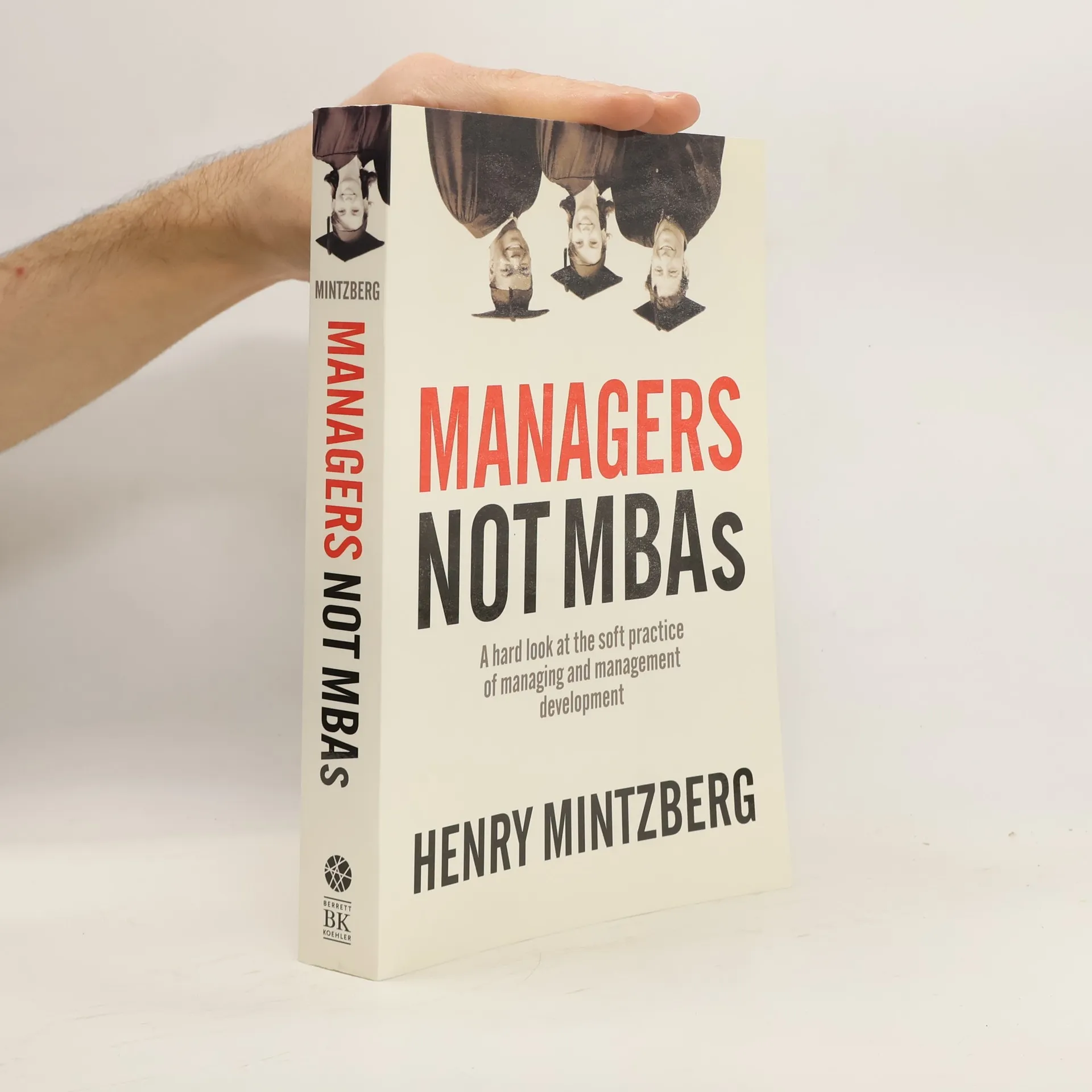
    • In this sweeping critique of how managers are educated and how, as a consequence, management is practiced, Henry Mintzberg offers thoughtful and controversial ideas for reforming both.“The MBA trains the wrong people in the wrong ways with the wrong consequences,” Mintzberg writes. “Using the classroom to help develop people already practicing management is a fine idea, but pretending to create managers out of people who have never managed is a sham.”Leaders cannot be created in a classroom. They arise in context. But people who already practice management can significantly improve their effectiveness given the opportunity to learn thoughtfully from their own experience. Mintzberg calls for a more engaging approach to managing and a more reflective approach to management education. He also outlines how business schools can become true schools of management.

      Managers Not MBAs: A Hard Look at the Soft Practice of Managing and Management Development
    • "Our world is out of balance, says Henry Mintzberg, and the consequences are proving fateful: the degradation of our environment, the demise of our democracies, and the denigration of ourselves, with greed having been raised to some sort of high calling. But we can set things right. Mintzberg argues that a healthy society is built on three balanced pillars: a public sector of respected governments, a private sector of responsible enterprises, and what he calls a plural sector of robust voluntary associations (nonprofits, NGOs, etc.)"--Amazon.com

      Rebalancing Society: Radical Renewal Beyond Left, Right, and Center
    • Bedtime Stories for Managers

      • 200 pages
      • 7 hours of reading
      3.6(170)Add rating

      In forty-two succinct, surprising essays, legendary scholar Henry Mintzberg brings management down from the clouds and onto solid ground.If you're like most managers and things keep you up at night, now you can turn to a book that's designed especially for you! But you won't find talking rabbits or princesses here. (There is a cow, but it doesn't jump.) Henry Mintzberg has culled forty-two of the best posts from his widely read blog and turned them into a deceptively light, sneakily serious compendium of sometimes heretical reflections on management.The moral here is managers need to leave their castles and find out what's actually going on in their kingdoms. And like real bedtime stories, these essays have metaphors galore. So prepare to grow strategies like weeds and organize like a cow. Discover the maestro myth of managing, find the soft underbelly of hard data, and learn why downsizing is bloodletting and your board should be a bee. Mintzberg writes, "Just try not to be outraged by anything you read, because some of my most outrageous ideas turn out to be my best. They just take a while to become obvious."

      Bedtime Stories for Managers
    • Strategy Bites Back

      • 223 pages
      • 8 hours of reading
      3.1(13)Add rating

      SWOTed by strategy models? Crunched by analysis? Strategy doesn't have to be this way. Strategy is really all about being different. Thinking about it shouldn't make you reach for the snooze button. Strategy Bites Back brings you a provocative, imaginative and surprising mix of perspectives to help stimulate more creative strategic thinking and more enjoyable strategy making. From voices as diverse as and Lucy Kellaway, Mao Tse Tung and Jack Welch, even Michael Porter and Gary Hamel, you can enjoy exploring the sharper side of strategy. Strategy as a Little Black Dress Forecasting: Whoops! Management and Magic Strategy and the Art of Seduction The Soft Underbelly of Hard Data Strategy as destiny Jack Welch on Planning The Seven Deadly Sins of Planning Strategy One Step at a Time and many, many more. Why not have a good time reading a strategy book for a change?

      Strategy Bites Back