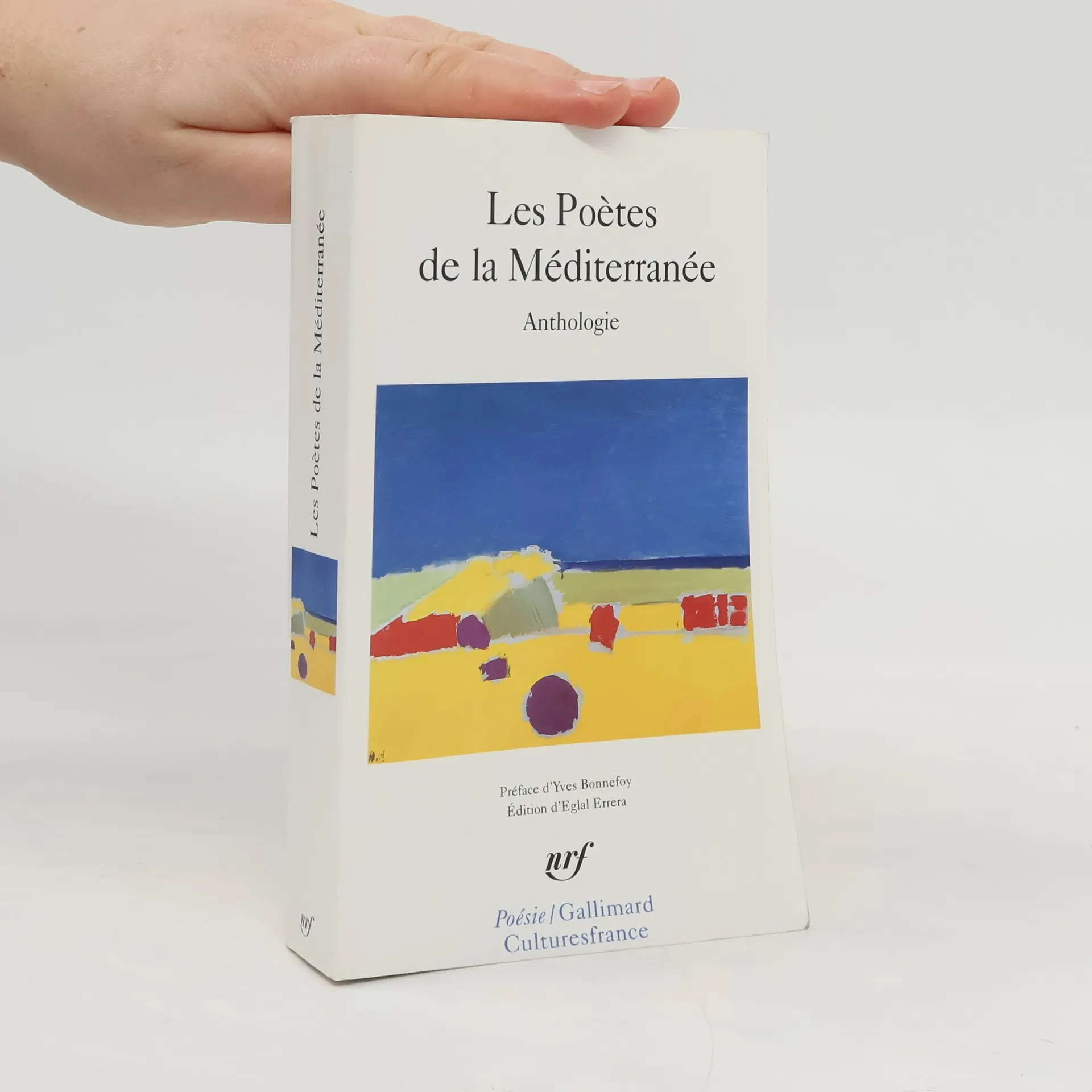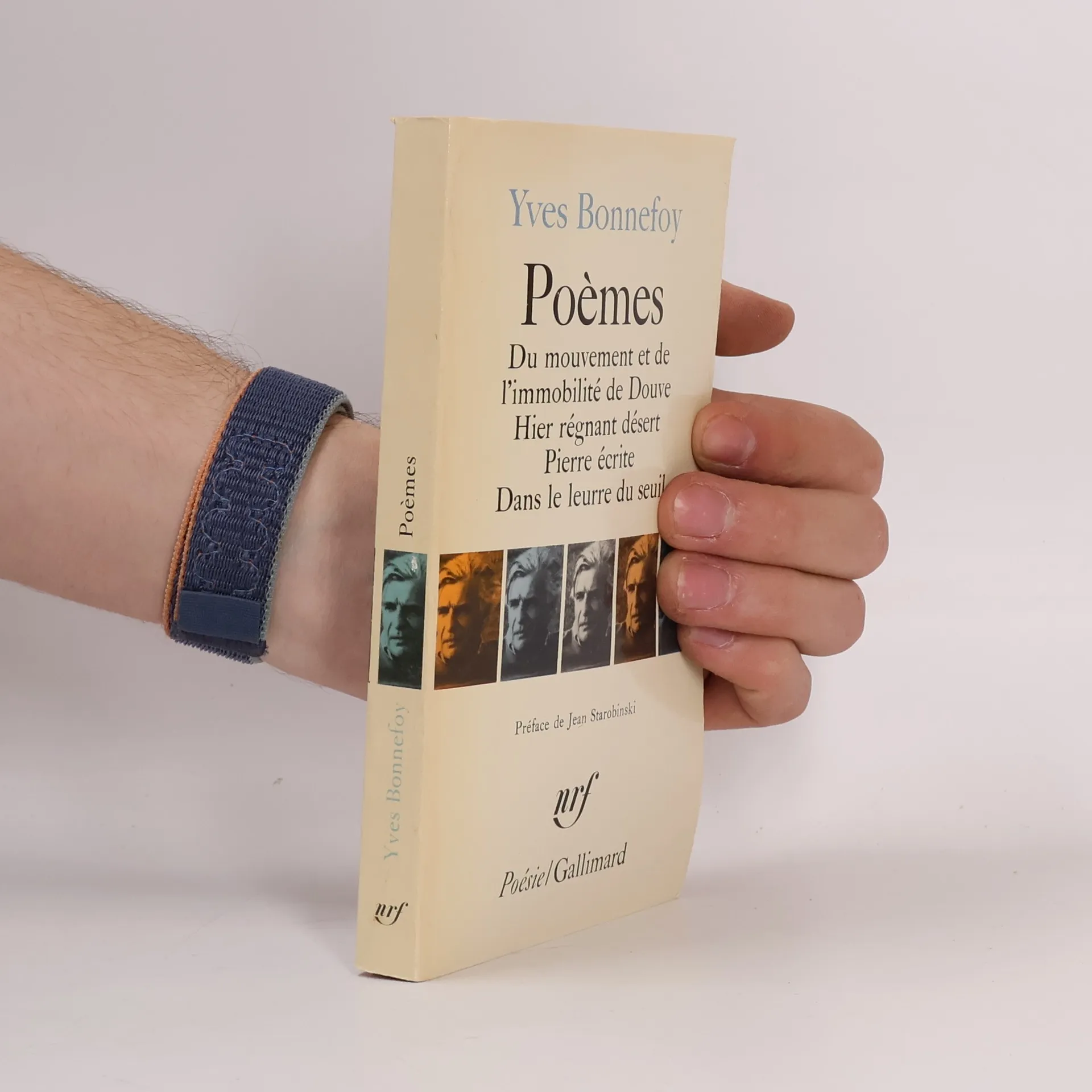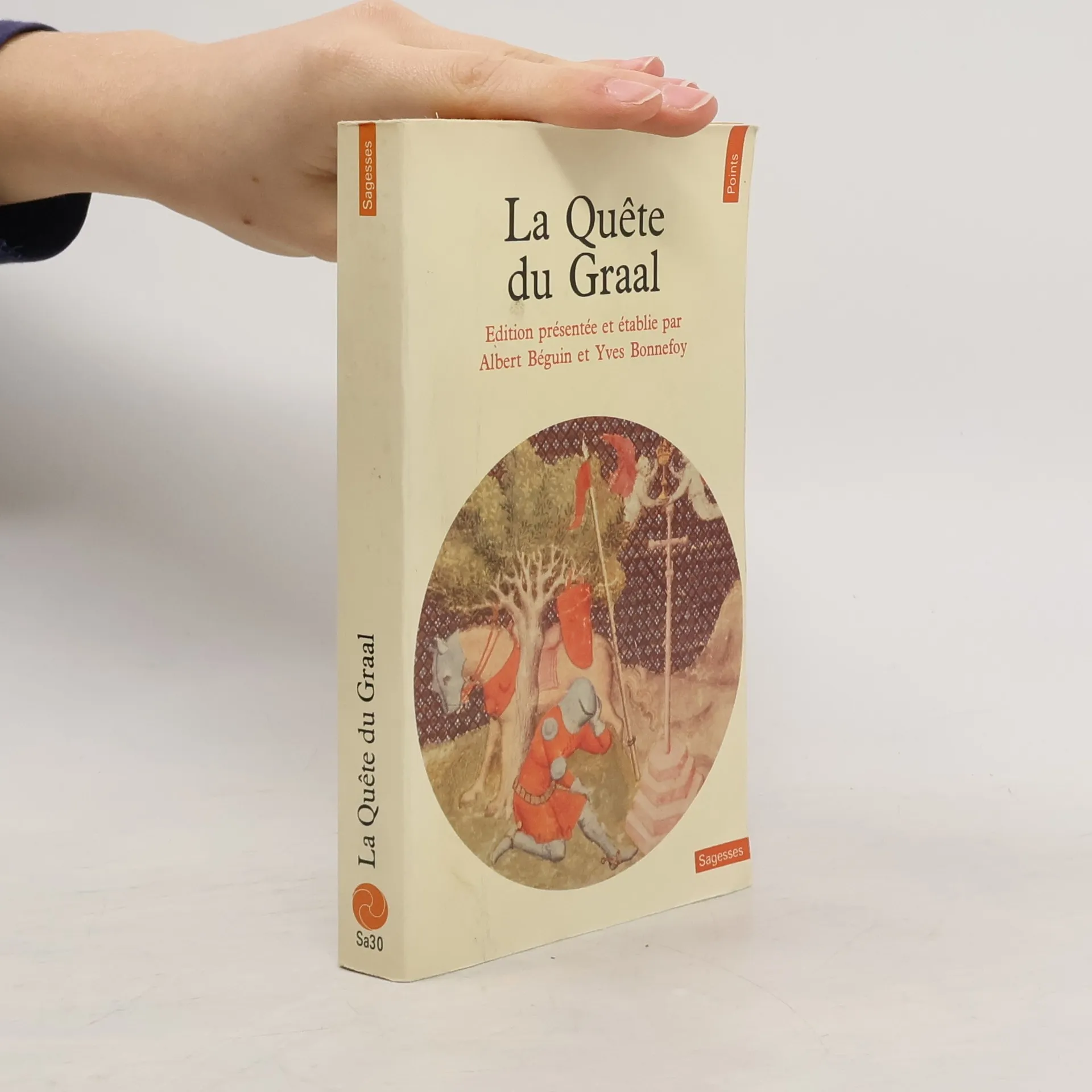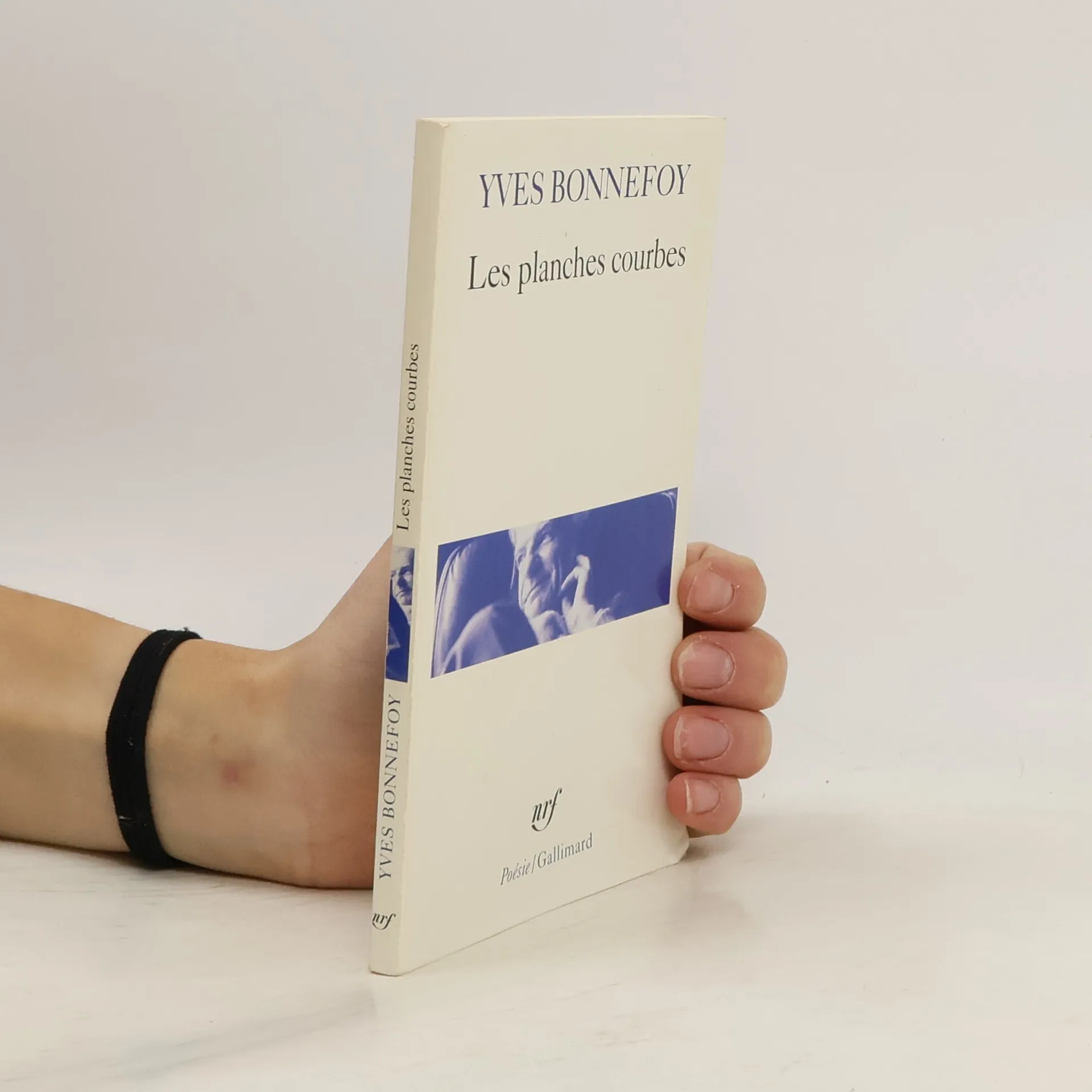
Prose
- 456 pages
- 16 hours of reading
Following on from 2017's celebrated Poems, this is a wide-ranging selection of Bonnefoy's essays on literature, art and life.
Yves Bonnefoy was a French poet and essayist whose work holds significant importance in post-war French literature. His writings, characterized by a blend of the poetic and theoretical, deeply explore the meaning and essence of the spoken and written word. Bonnefoy also made notable contributions through his translations, particularly of Shakespeare, and authored several influential works on art and art history.


Following on from 2017's celebrated Poems, this is a wide-ranging selection of Bonnefoy's essays on literature, art and life.
A meditation on the major plays of Shakespeare and the thorny art of literary translation, Shakespeare and the French Poet contains twelve essays from France's most esteemed critic and preeminent living poet, Yves Bonnefoy. Offering observations on Shakespeare's response to the spiritual crisis of his era as well as compelling insights on the practical and theoretical challenges of verse in translation, Bonnefoy delivers thoughtful, evocative essays penned in his characteristically powerful prose.Translated specifically for an American readership, Shakespeare and the French Poet also features a new interview with Bonnefoy. For Shakespeare scholars, Bonnefoy enthusiasts, and students of literary translation, Shakespeare and the French Poet is a celebration of the global language of poetry and the art of "making someone else's voice live again in one's own."
Focusing on childhood memories and familial relationships, the book presents Yves Bonnefoy's poignant reflections on his father's silence and the melancholy of his parents' marriage. Written as a commemoration shortly before his death, it intertwines fragments from 1964 with his experiences as a solitary boy in Auvergne and Tours. The narrative centers on the lives of his parents, Elie and Hélÿne, offering a deeply personal exploration of memory and anxiety, making it an essential read for those interested in introspective literature.
An intensely personal and profoundly moving review of Bonnefoy's childhood memories. In December 2015, six months before his death at the age of 93, Yves Bonnefoy concluded what was to be his last major text in prose, L'écharpe rouge, translated here as The Red Scarf. In this unique book, described by the poet as "an anamnesis"--a formal act of commemoration--Bonnefoy undertakes, at the end of his life, a profoundly moving exegesis of some fragments written in 1964. These fragments lead him back to an unspoken, lifelong anxiety: "My most troubling memory, when I was between ten and twelve years old, concerns my father, and my anxiety about his silence." Bonnefoy offers an anatomy of his father's silence, and of the melancholy that seemed to take hold some years into his marriage to the poet's mother. At the heart of this book is the ballad of Elie and Hélène, the poet's parents. It is the story of their lives together in the Auvergne, and later in Tours, seen through the eyes of their son--the solitary boy's intense but inchoate experience, reviewed through memories of the now elderly man. What makes The Red Scarf indispensable is the intensely personal nature of the material, casting its slant light, a setting sun, on all that has gone before.
An experiment with the sonnet form by one of the foremost French poets of his generation. Yves Bonnefoy has wowed the literary world for decades with his diffuse volumes. First published in France in 2008, The Anchor's Long Chain is an indispensable addition to his oeuvre. Enriching Bonnefoy's earlier work, the volume, translated by Beverley Bie Brahic, also innovates, including an unprecedented sequence of nineteen sonnets. These sonnets combine the strictness of the form with the freedom to vary line length and create evocative fragments. Compressed, emotionally powerful, and allusive, the poems are also autobiographical--but only in glimpses. Throughout, Bonnefoy conjures up life's eternal questions with each new poem. Longer, discursive pieces, including the title poem's meditation on a prehistoric stone circle and a legend about a ship, are also part of this volume, as are a number of poetic prose pieces in which Bonnefoy, like several of his great French predecessors, excels. Long-time fans will find much to praise here, while newer readers will quickly find themselves under the spell of Bonnefoy's powerful, discursive poetry.
An inspiring book of poetry and prose by the celebrated author Yves Bonnefoy. Heralded as one of France's greatest poets, Yves Bonnefoy has been dazzling readers since the publication of his first book in 1953. He remains influential and relevant, continuing to compose groundbreaking new work. Though Bonnefoy recently celebrated his ninetieth birthday, many are calling these past two decades his most impressive yet. His latest book of poetry and prose, The Digamma, fits wonderfully into his impressive oeuvre, offering his signature style of simple but powerful language with fresh new grace. A key passage of the title piece of the book depicts the figures of Nicolas Poussin's The Shepherds of Arcadia, which Bonnefoy has identified as crucial to the artist's evolution. The sustained reference to Poussin's iconography serves to ground the text in the lost civilizations of antiquity. Subtly, it brings out the underlying theme of the entire collection--in the ambivalent world we inhabit, being and non-being is fundamentally one. As a leading translator of Shakespeare in France, Bonnefoy's fascination with the master playwright is displayed in "God in Hamlet" and "For a Staging of Othello," two poems in prose that belong to an ongoing series of meditations on the plays. The collection also includes haunting reflections on children, nature, the origins of art, and vanished cultures.
Yves Bonnefoy's final poetic work, a collection of reflections about poetry, legacy, and life. The international community of letters mourned the recent death of Yves Bonnefoy, universally acclaimed as one of France's greatest poets of the last half-century. A prolific author, he was often considered a candidate for the Nobel Prize and published a dozen major collections of poetry in verse and prose, several books of dream-like tales, and numerous studies of literature and art. His oeuvre has been translated into scores of languages, and he himself was a celebrated translator of Shakespeare, Yeats, Keats, and Leopardi. Together Still is his final poetic work, composed just months before his death. The book is nothing short of a literary testament, addressed to his wife, his daughter, his friends, and his readers throughout the world. In these pages, he ruminates on his legacy to future generations, his insistence on living in the present, his belief in the triumphant lessons of beauty, and, above all, his courageous identification of poetry with hope.
These 130 articles explore mythologies in societies from India to Japan. Among the many topics are Buddhist and Hindu symbolic systems, myth in pre-Islamic Iran, Indonesian rites of passage, Chinese cosmology and demons, and Japanese conceptions of the afterlife and the "vital spirit." The mythological traditions of Turkey, Korea, Tibet, and Mongolia are also included."The almost 100 contributors combine, with characteristic precision and élan, the arts of science and poetry, of analysis and translation. The result is a treasury of information, brilliant guesswork, witty asides, and revealing digressions. This is a work of genuine and enduring excitement."—Thomas D'Evelyn, Christian Science Monitor