
Explore the latest books of this year!
Bookbot

Wilhelm Reich

    March 24, 1897 – November 3, 1957

    This author explored the link between sexuality and neurosis, emphasizing "orgastic potency" as the foremost criterion for psycho-physical health. His work, though rooted in psychoanalysis, synthesized insights from cultural anthropology, economics, and sociology. Throughout his career, he was a controversial figure, particularly for his theories on "orgone" energy and his "orgone accumulators," which led to a significant rift with the psychoanalytic establishment. Despite the controversy, his writings influenced numerous thinkers and continue to provoke reflection on the complex relationship between the body and mind.

    Wilhelm Reich
    Listen, Little Man
    The Murder of Christ
    Character Analysis
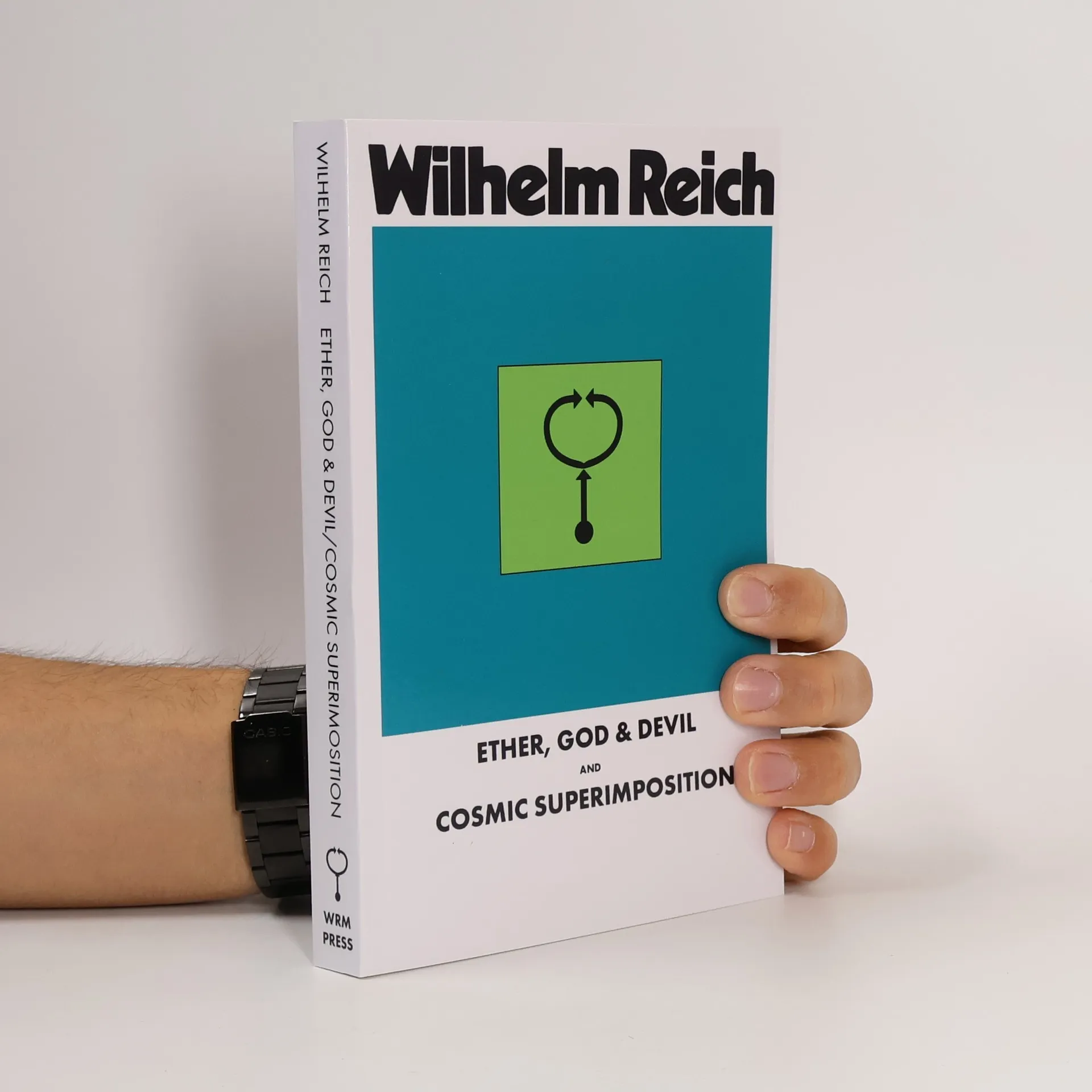
    Ether, God & Devil & Cosmic Superimposition
    American odyssey
    The Invasion of Compulsory Sex-Morality
    • The Invasion of Compulsory Sex-Morality

      • 248 pages
      • 9 hours of reading
      4.3(69)Add rating

      Exploring the historical roots of sexual suppression, this 1931 study delves into the emergence of compulsory sexual morality and its impact on human neuroses. Reich connects his clinical insights with ethnological research, particularly drawing from Bronislaw Malinowski's studies of Trobriand Islanders, to illuminate the origins of sexual disturbances. This work serves as a precursor to Reich's later influential writings on mass psychology and sexual revolution, positioning it as a critical examination of societal norms surrounding sexuality.


      The Invasion of Compulsory Sex-Morality
    • American Odyssey describes more than a period in the life of an embattled scientist. It illuminates the social and intellectual life of a country in a tumultuous time in history.

      American odyssey
    • Wilhelm Reich’s influential works explore a transformative shift in humanity's understanding of the universe. In "Ether, God and Devil," he introduces orgonomic functionalism, leading to his discovery of cosmic orgone energy. "Cosmic Superimposition" challenges traditional mechanistic views, revealing a profound connection between man and nature through the interaction of orgone energy streams. Reich contemplates humanity's unique capacity for thought and understanding, presenting a new perspective on our role in the cosmos and the interconnectedness of all existence.

      Ether, God & Devil & Cosmic Superimposition
    • Character Analysis

      • 576 pages
      • 21 hours of reading
      4.1(342)Add rating

      Focusing on the interplay between mind and body, this seminal work presents Wilhelm Reich's innovative character analysis technique, which evolved from traditional psychoanalysis. Reich explores how individuals develop specific character attitudes as defenses against emotional experiences, likening these to an "armor" that manifests in chronic muscular tension. His approach not only addresses psychological resistance but also lays the groundwork for a biophysical understanding of disease and its prevention, merging psychological treatment with physical health.

      Character Analysis
    • The Murder of Christ

      • 244 pages
      • 9 hours of reading
      4.1(200)Add rating

      Volume One of The Emotional Plague of MankindIntroductionThe TrapThe Kingdom of Heaven on EarthThe Genital EmbraceSeduction into LeadershipThe Mystification of ChristThe Great Gap-Man's SittingThe March on JerusalemJudas IscariotPaul of TarsusProtecting the Murderers of ChristMocenigoToward GolgothaThe Disciples SleepGethsemaneThe Scourging'You Say It'The Silent GlowCrucifixion & ResurrectionAppendixBibliography

      The Murder of Christ
    • Listen, Little Man

      • 109 pages
      • 4 hours of reading
      4.1(3488)Add rating

      Written `to win for the researcher and thinker the right to personal reaction' and to show the man-in-the-street how he forges his own chains by his unquestioning acceptance of prevailing norms. 1979

      Listen, Little Man
    • The Sexual Revolution

      Toward a Self-Regulating Character Structure

      3.7(13)Add rating

      In this book, Wilhelm Reich summarizes the criticism of the prevailing sexual conditions and conflicts as it resulted from his sex-economic medical experiences over a period of years.

      The Sexual Revolution
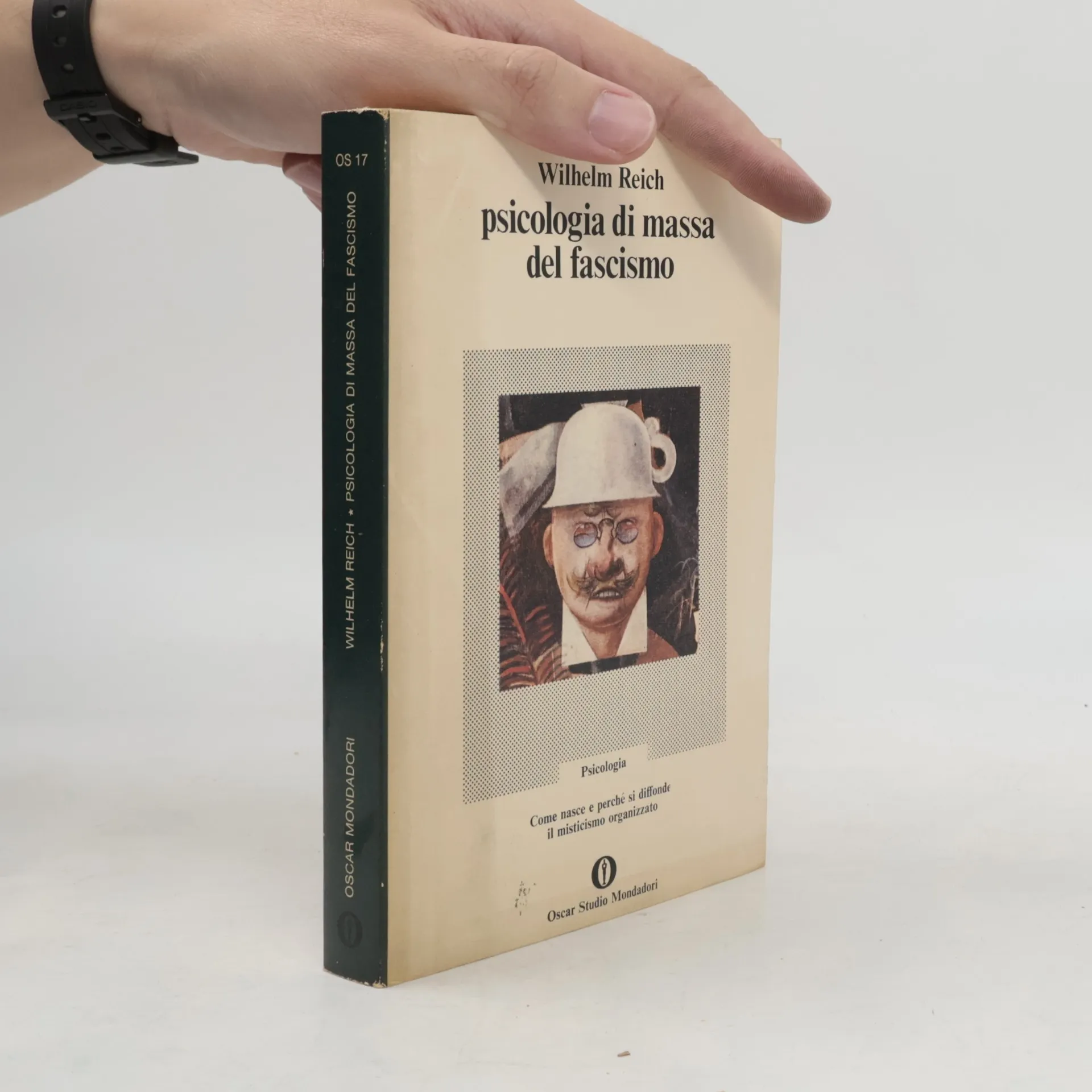
    • The mass psychology of fascism

      • 232 pages
      • 9 hours of reading
      3.5(12)Add rating

      Wilhelm Reich's classic study is a unique contribution to the under.standing of one of the crucial phenomena of our times - fascism. Reich firmly repudiates the concept that fascism is the ideology or action of a single individual or nationality, or of any ethnic or political group. He also denies a purely socio-economic explanation as advanced by Marxian ideologists. He understands fascism as the expression of irrational character structure of the average human being whose primary biological needs and impulses have been suppressed for thousands of years.The social function of this suppression and the crucial role played in it by the authoritarian family and the church are carefully analysed. Reich shows how every form of organised mysticism, including fascism, relies on the unsatisfied orgastic longing of the masses.

      The mass psychology of fascism
    • The Cancer Biopathy

      • 492 pages
      • 18 hours of reading

      Cancer is traditionally viewed as an invasive tumor that emerges in a healthy body, leading to complex medical interventions aimed at eradication. However, these approaches have shown mixed results, highlighting the need for a deeper understanding of the disease beyond just treating the tumor and its complications.

      The Cancer Biopathy