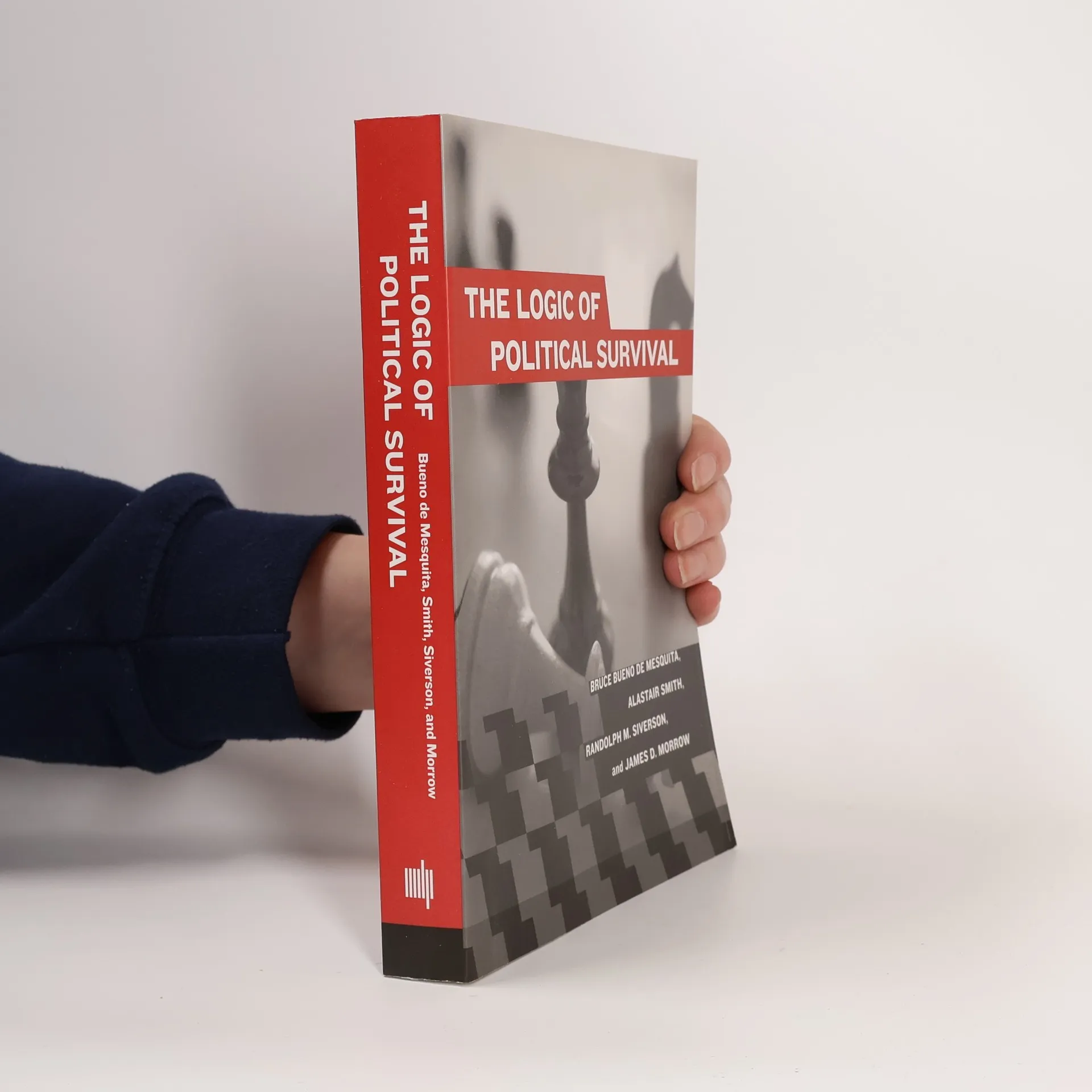
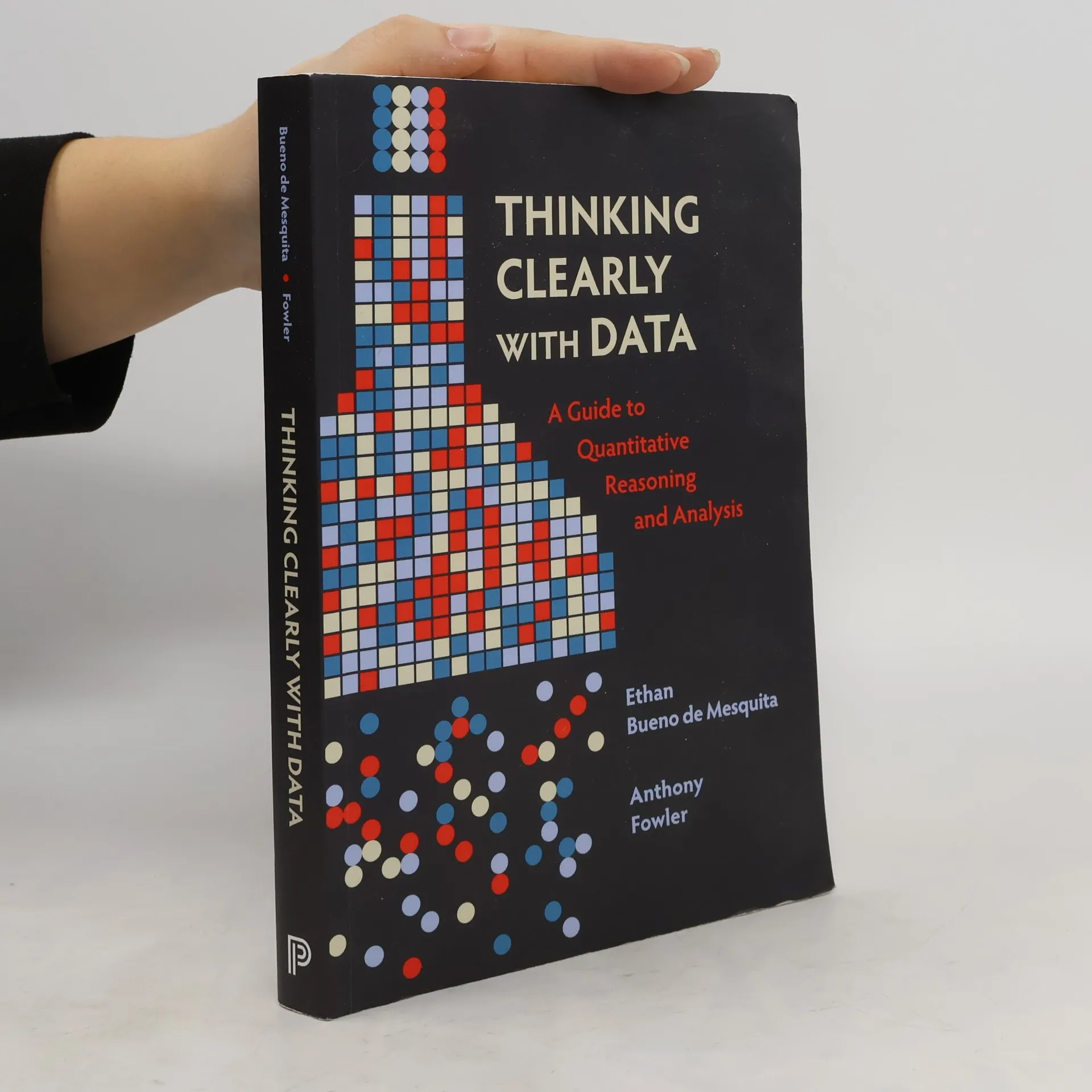
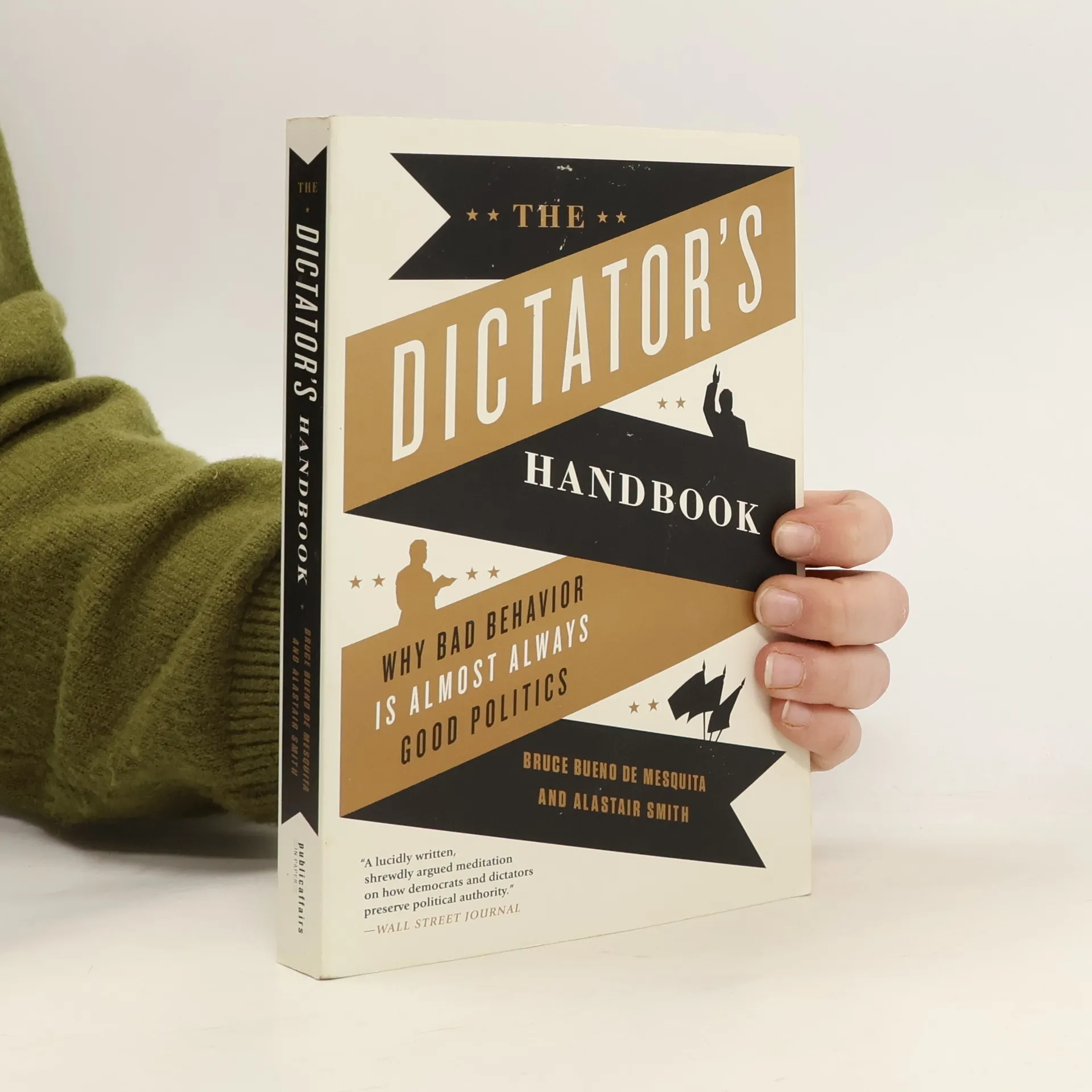
Bruce Bueno de Mesquita is a political scientist renowned for his work on international relations and foreign policy. He is a key developer of the selectorate theory, offering insights into the dynamics of governance and decision-making. Utilizing computer models and game theory, he analyzes political events and forecasts future outcomes. His research delves into the underlying forces that drive conflict and shape global politics.
"This book solves one of the great puzzles of history: why did the West become the most powerful civilization in the world? Political scientist Bruce Bueno de Mesquita explains the consolidation of power in the West through a single, little noticed event: the 1132 Concordat of Worms. Bueno de Mesquita makes a deeply researched and persuasive case that the Concordat changed the terms of competition between churches and nation-states, incentivizing economic growth and benefiting citizens over kings and popes. In the centuries since, those countries that have had similar arrangements have been consistently better off than those that did not"-- Provided by publisher

"This is an intro-level text that teaches how to think clearly and conceptually about quantitative information, emphasizing ideas over technicality and assuming no prior exposure to data analysis, statistics, or quantitative methods. The books four parts present the foundation for quantiative reasoning: correlation and causation; statistical relationships; causal phenomena; and incorporating quantitative information into decision making. Within these parts it covers the array of tools used by social scientists, including regression, inference, experiments, research design, and more, all by explaining the rationale and logic behind such tools rather than focusing only on the technical calculations used for each. New concepts are presented simply, with the help of copious examples, and the books leans towards graphic rather than mathematical representation of data, with any technical material included in appendices"--
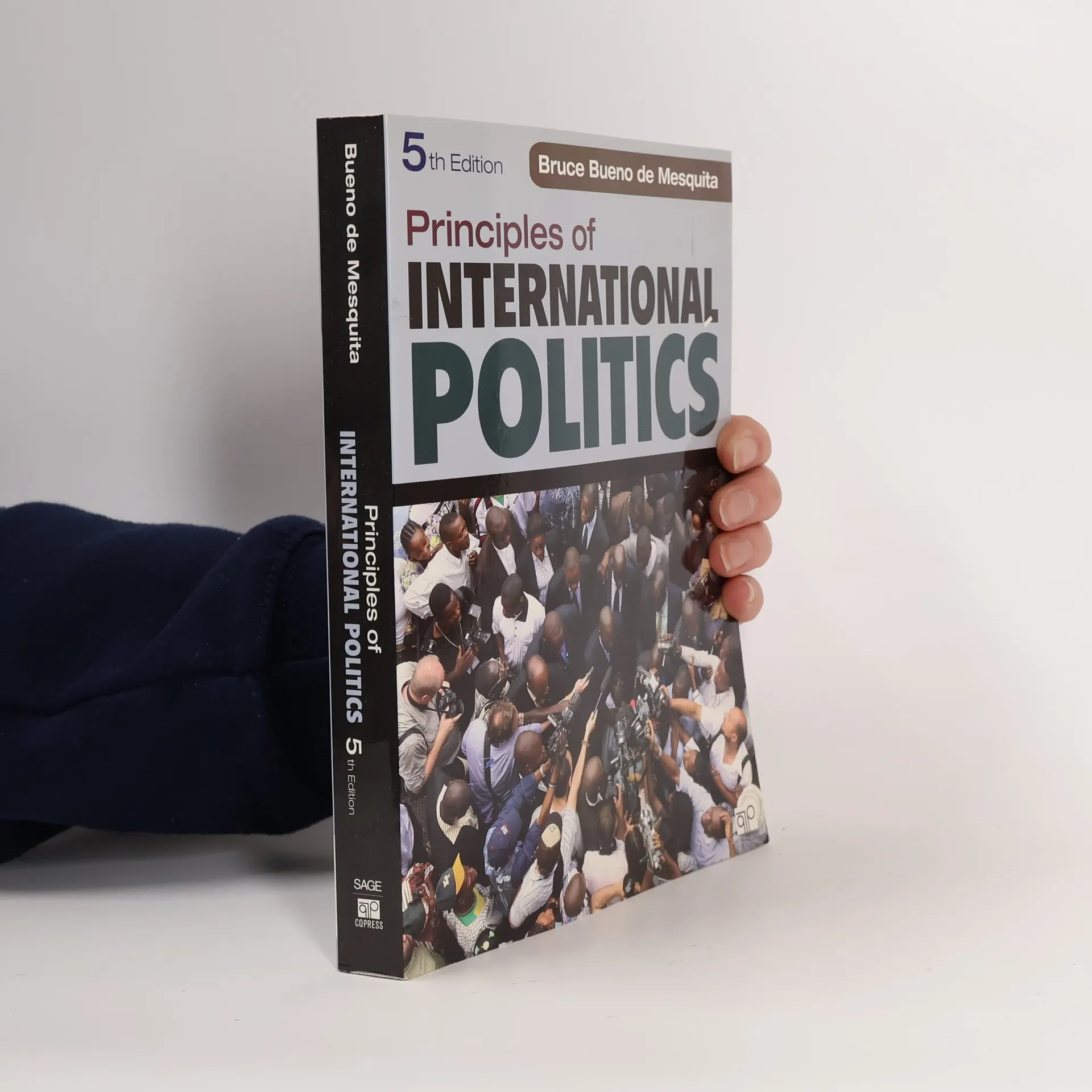
The fifth edition by Bruce Bueno de Mesquita offers a refined exploration of international relations, emphasizing the strategic factors behind war, peace, and world order. Drawing on extensive feedback, this edition enhances clarity and precision, making complex concepts more accessible. The author’s scientific approach continues to set a benchmark in the field, providing readers with a comprehensive understanding of the dynamics that shape global interactions.
Two renowned political scientists show how the rules of politics almost always favor leaders who ignore the national interest and focus on serving their own supporters.
One Who Uses Maths, Science and the Logic of Brazen Self-Interest to See and Shape the Future
272 pages
10 hours of reading
* Bruce Bueno de Mesquita can predict the future. He is a master of game theory, a rather fancy name for a simple idea: when people compete with each other they always do what they think is in their own best interest. Bueno de Mesquita uses game theory to foretell - and even engineer - political, financial and personal events. In fact, Bueno de Mesquita's forecasts, for everyone from the CIA to major companies, have an astonishing ninety per cent success rate. In this startling and revelatory book he describes his methods and allows us to play along. * Bueno de Mesquita explores the origins of game theory as formulated by John Nash , the Nobel Prize-winner who became the subject of the film A Beautiful Mind. He has developed Nash's ideas to create a rigorous and pragmatic system of calculation that enables us to think strategically about what our opponents want, how much they want it, and how they might react to our every move. * Bueno de Mesquita applies his methods to many of the most pressing issues of our day. He advises how best to contain the nuclear ambitions of Iran and North Korea. He shows how the Israeli-Palestinian conflict might be resolved. He explains how corporate fraud can be anticipated and prevented. He addresses climate change and international terrorism: their likely evolution and our most effective response. * But, as Bueno de Mesquita makes clear, game theory isn't just for saving the world. It can also help in your own life - to succeed in a legal dispute, to advance your career or that of a colleague, and even to buy a car at the lowest possible price. * Shrewd, provocative and original , Predictioneer will change your understanding of the world - both now and in the future. If life's a game, then Bruce Bueno de Mesquita is the one essential member of your team.
Explores the political careers of Ronald Reagan and Boris Yeltsin, who overcame defeat early in their political careers and rose to the highest elected offices in their respective countries
The authors of this ambitious book address a fundamental political question: why are leaders who produce peace and prosperity turned out of office while those who preside over corruption, war, and misery endure? Considering this political puzzle, they also answer the related economic question of why some countries experience successful economic development and others do not. The authors construct a provocative theory on the selection of leaders and present specific formal models from which their central claims can be deduced. They show how political leaders allocate resources and how institutions for selecting leaders create incentives for leaders to pursue good and bad public policy. They also extend the model to explain the consequences of war on political survival. Throughout the book, they provide illustrations from history, ranging from ancient Sparta to Vichy France, and test the model against statistics gathered from cross-national data. The authors explain the political intuition underlying their theory in nontechnical language, reserving formal proofs for chapter appendixes. They conclude by presenting policy prescriptions based on what has been demonstrated theoretically and empirically.
To predict global policy developments over the next thirty years, Bruce Bueno de Mesquita employs game theoretic models, demonstrating their application in business and significant American foreign policy initiatives. Utilizing data from 1948, he illustrates how these models successfully predicted the end of the Cold War. He then analyzes data from 1980 across approximately one hundred countries to simulate future scenarios, particularly regarding democratization. His findings indicate that the wave of democratization seen in the late 1980s and early 1990s was foreseeable based on data available in 1980. While he presents concerning predictions about Russia and China's domestic situations, he also offers a unique perspective on Russia's struggle to attract investment and achieve growth rates typical of democratic nations. Despite being more democratic than in 1980, Russia has lagged in democratization compared to the global standard, lacking the essential elements of property rights, rule of law, and transparent governance necessary for investment attraction. Bueno de Mesquita's analysis of policy situations through game theory not only elucidates past and present events but also equips readers with the tools to make their own informed predictions about future foreign policies.
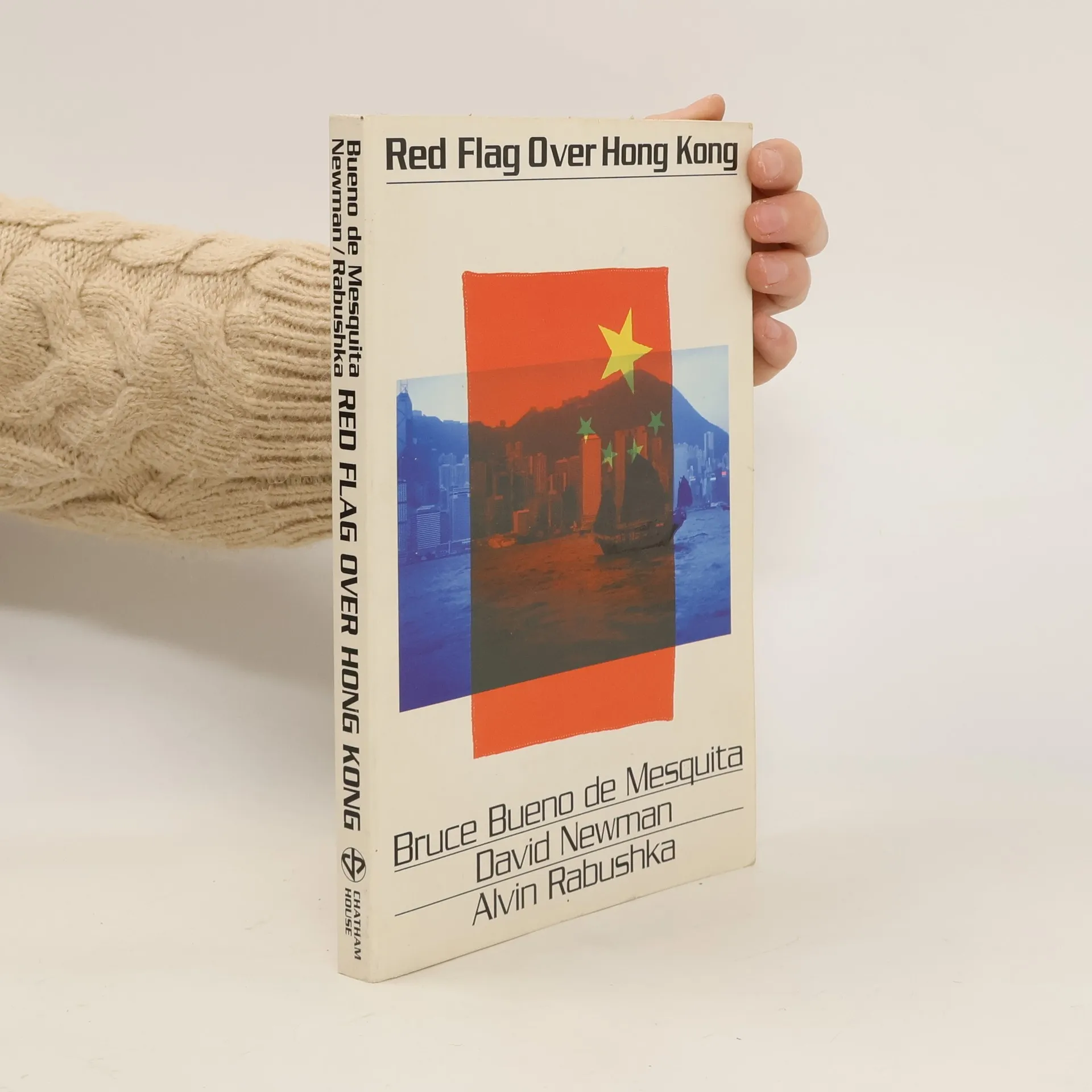
Lucid and compelling, this is an essential guide to the turbulent future of Hong Kong. The authors begin with a concise historical overview, tracing how Hong Kong with its unique geographical setting, "textbook" freemarket economy, and industrious population, developed into one of the world's richest territories. Based on their own expertise in policy choices and a collection of data from a wide range of expert observers, the authors applied a scientific model of decision making to Hong Kong's unknown future.