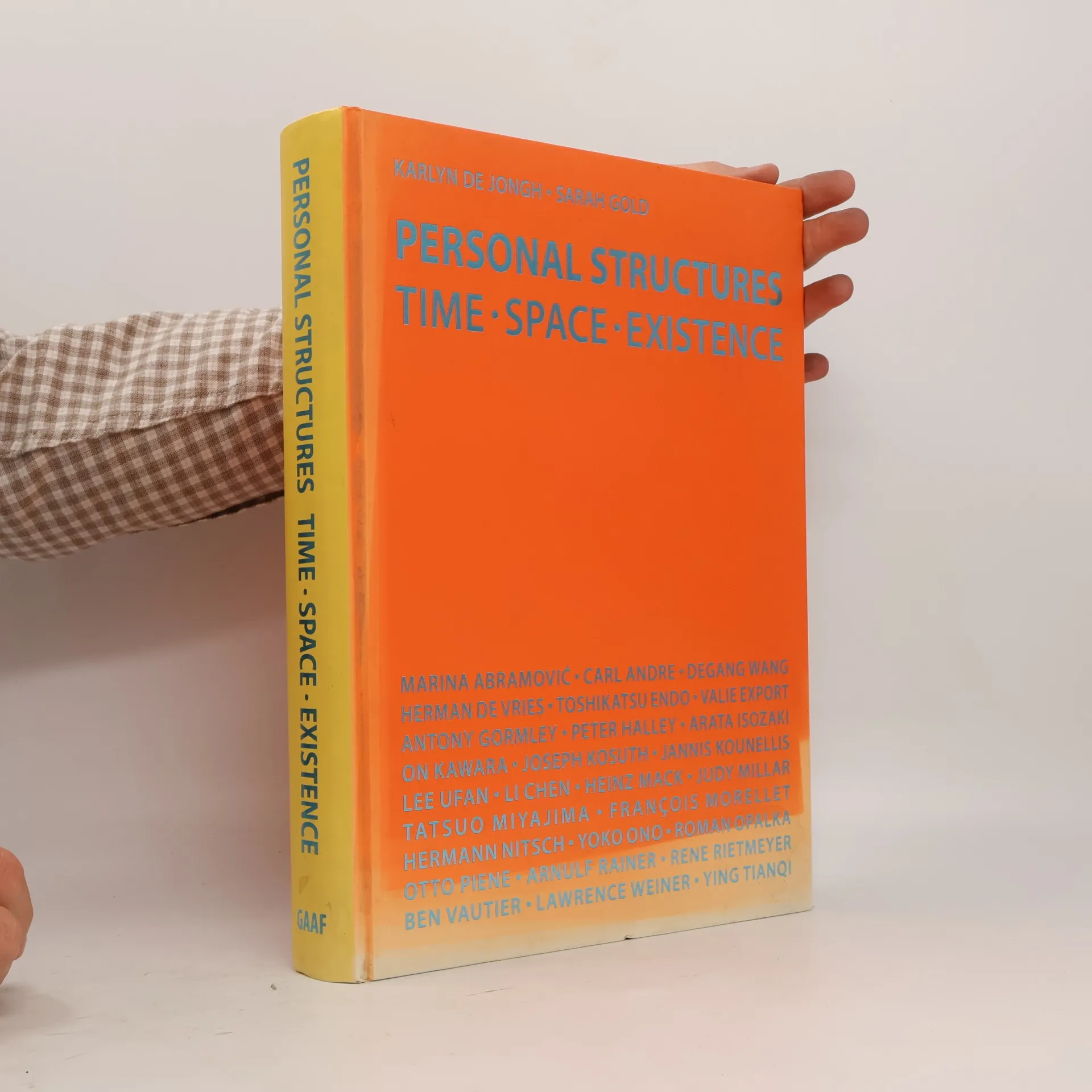
Personal Structures presents an ongoing project that deals with questions concerning time, space and existence.This is the second book in the Time. Space. Existence series and involves the personal participation of 46 artists from different parts of the world, in a combination of internationally renowned artists and others whose oeuvre is less known.The concepts time, space and existence are highlighted in very personal ways and from unusual points of view. The many photographs of the artworks and encounters with the artists convey fascinating insights into their being, ideas and work.Seven art projects with established artists centralise their thoughts to a great extent. In addition, the book emphasises two Personal Structures exhibitions that were part of the Venice Biennale in 2011 and 2013.This publication also contains several interviews, artists' statements, and symposium contributions that discuss the theme of this book in detail.Personal Structures was initiated in 2002 by the Dutch artist Rene Rietmeyer. His observation that even in the most distant places artists are occupied with time, space and existence, led to the idea of bringing several of these artists together in publications, symposia and exhibitions.English and Japanese text.
Arata Isozaki Book order (chronological)
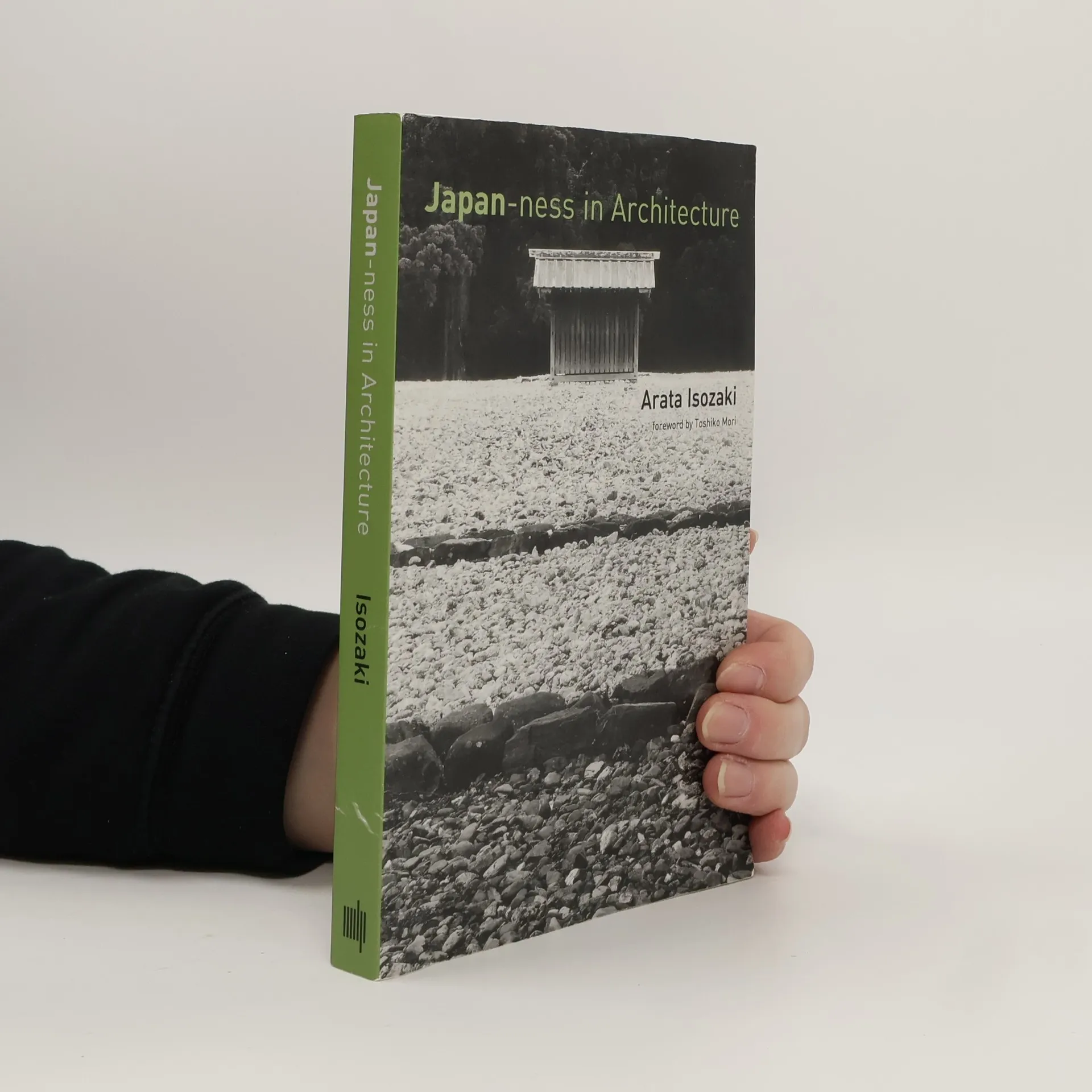
Japan-ness in Architecture
- 376 pages
- 14 hours of reading
One of Japan's leading architects explores the concept of Japan-ness through significant events in Japanese architectural history from the seventh to the twentieth century, offering essays that contextualize buildings within their cultural milieu. Arata Isozaki perceives buildings as dynamic entities that embody social and historical narratives, urging us to interpret them continually rather than view them as static objects. He identifies essential Japanese characteristics in architecture, starting with modern architects' struggles to forge a uniquely Japanese identity amidst modernity. Isozaki reflects on historical examples such as the Ise shrine, the Todai-ji Temple, and the Katsura Imperial Villa, illustrating how these structures embody Japan-ness. He contrasts the Ise shrine's ritual relocation with Western notions of permanence, suggesting that such rituals counter modernity's search for origins. The Todai-ji Temple's reconstruction, guided by the monk Chogen, captures the era's revolutionary spirit, while the Katsura Imperial Villa reinterprets traditional styles to create its unique identity. Isozaki critiques the common perception of Japanese aesthetics, arguing that what is often seen as Japan-ness is a stylized simplification that lacks the vibrancy of cultural evolution. Through a blend of historical analysis, theoretical insights, and personal reflections, these essays affirm Isozaki's prominence as a leading arc
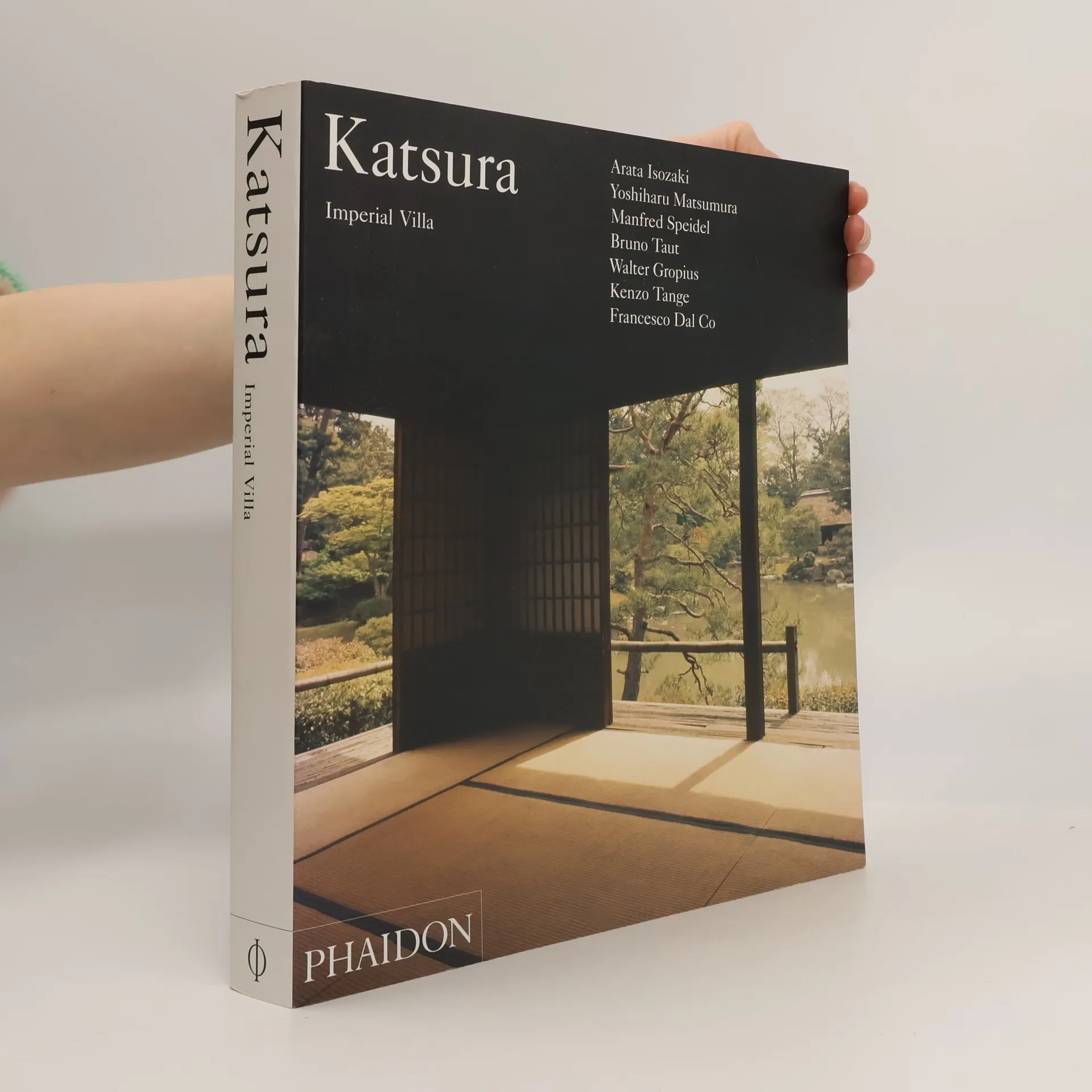
A detailed history of Katsura, the seventeenth-century Imperial Palace in Kyoto, Japan, a pivotal work of Japanese architecture, often described as the 'quintessence of Japanese taste'. First revealed to the modern architectural world by Bruno Taut, the great German architect, in the early twentieth-century, Katsura stunned and then excited the architectural community of the West. Le Corbusier and Walter Gropius, pillars of the Modernist establishment, were fascinated by Katsura's 'modernity'. This book documents the palace in detail, combining newly commissioned photographs, detailed drawings, archival material, and historical analysis.
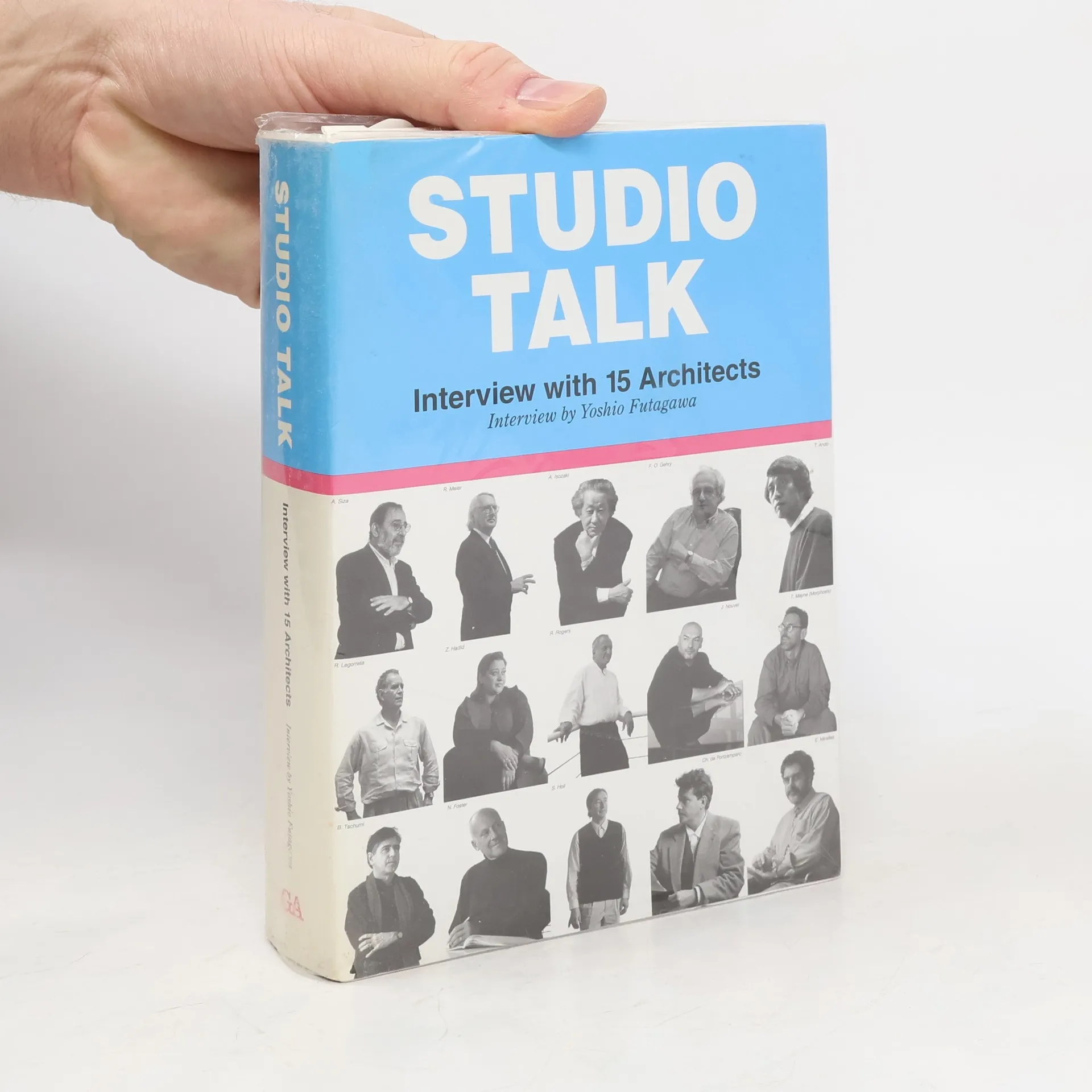
This volume entitled Studio Talk is a collection of 13 interviews that have constituted the first chapter, “Studio”, of each issue of GA DOCUMENT EXTRA series that have been published since 1995, an unpublished interview with Frank O. Gehry originally for the aforementioned series, and an interview with Enric Miralles (GA DOCUMENT #60) who has passed away in 2000.Frank O. Gehry 1929-Arata Isozaki 1931-Ricardo Legorreta 1931-Richard Rogers 1933-Alvaro Siza 1933-Richard Meier 1934-Norman Foster 1935-Tadao Ando 1941-Thom Mayne/Morphosis 1944-Christian de Portzamparc 1944-Bernard Tschumi 1944-Jean Nouvel 1945-Steven Holl 1947-Zaha Hadid 1950-Enric Miralles 1955-2000
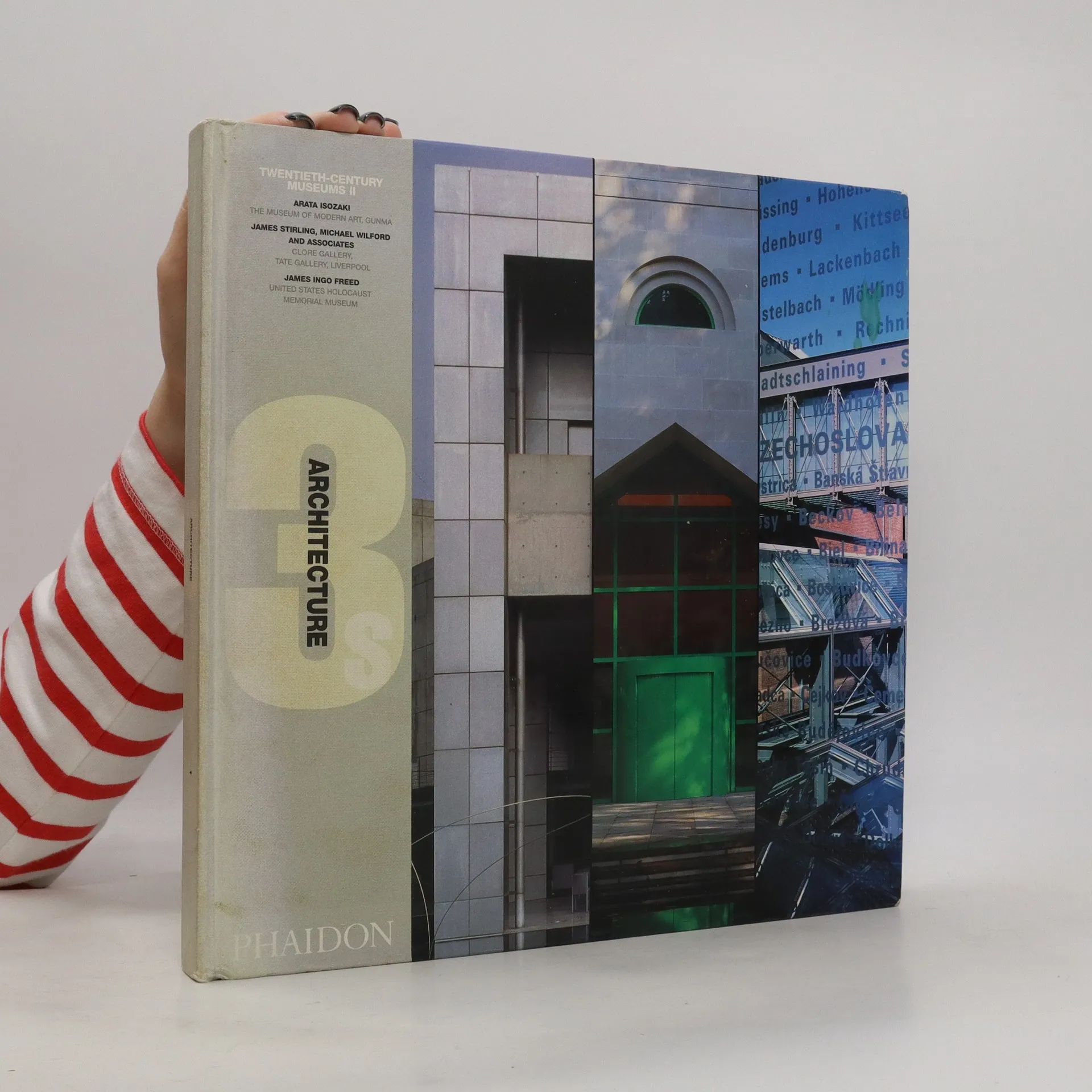
Twentieth-century museums II
- 180 pages
- 7 hours of reading
Part of a series that places buildings within their historical context, this text considers the Museum of Modern Art in Japan, the Clore Gallery and the United States Holocaust Memorial Museum. It includes technical drawings that explain how the buildings were detailed and put together.
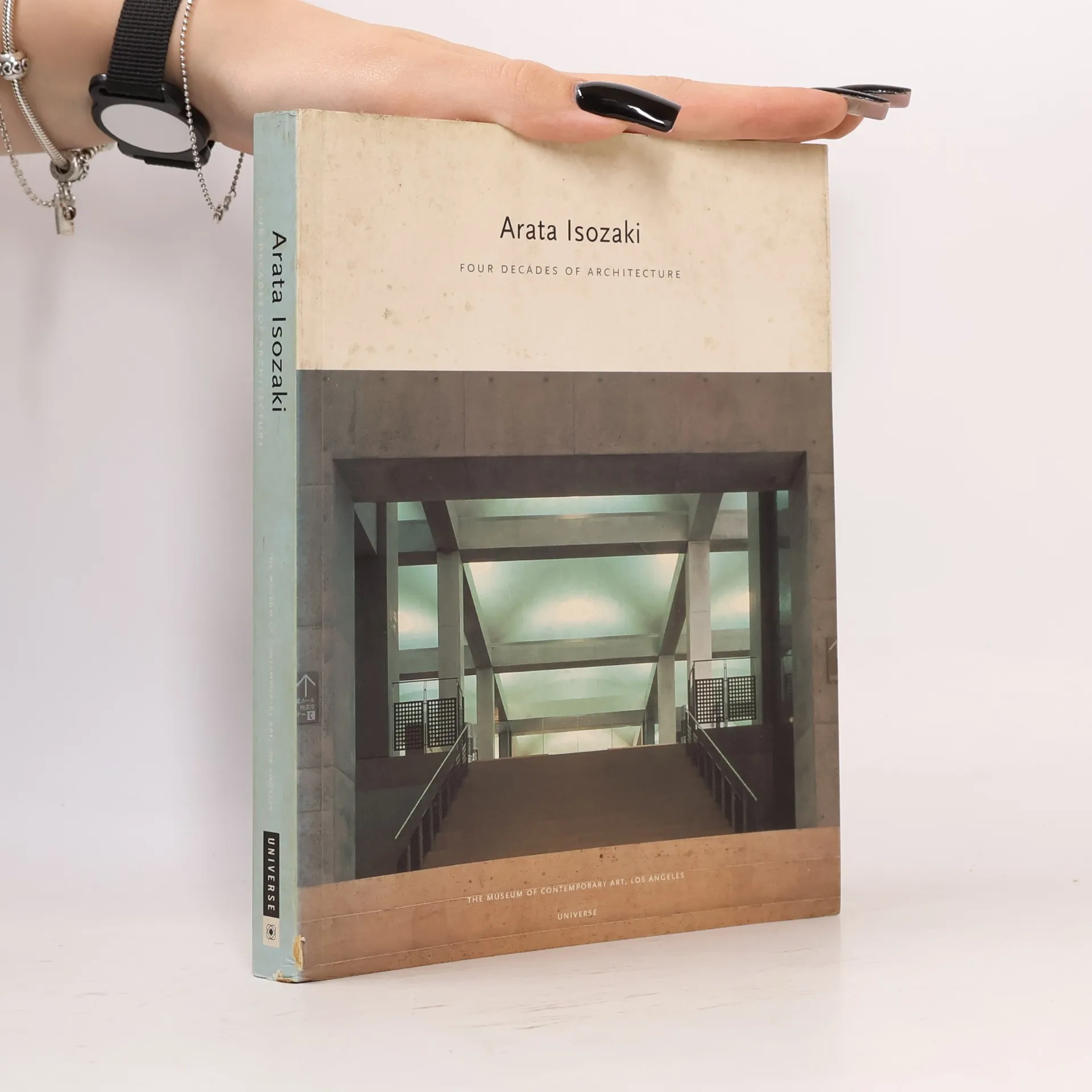
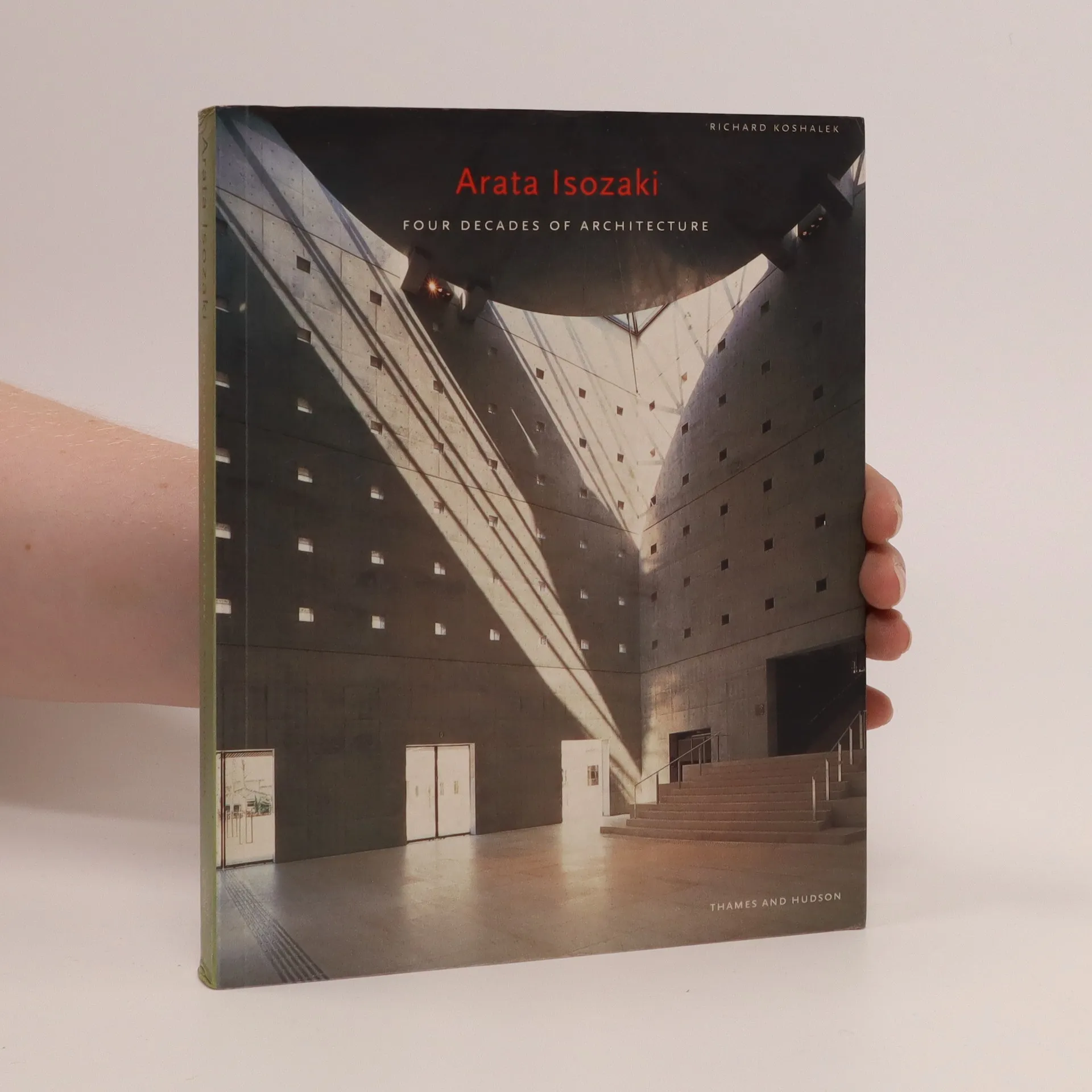
Arata Isozaki is one of Japan's greatest architects and a commanding presence in international architecture, as demonstrated in such buildings as The Museum of Contemporary Art in Los Angeles (MOCA), the Disney Building in Lake Buena Vista, Florida, and the New Tokyo City Hall.From the author of MOCA's 1991 Isozaki exhibition catalog comes this pioneering new book featuring twenty new projects, including the new designs for Toyonokuni Libraries for Cultural Resources and the Kyoto Concert Hall. All are illustrated with photographs, drawings and plans and analyzed by Isozaki himself.
This work features 20 of Arata Isozaki's projects, including the new designs for Toyonokuni Libraries for Cultural Resources and the Kyoto Concert Hall. Each building is illustrated with colour photographs, drawings and plans, and is analyzed in text by Isozaki himself.
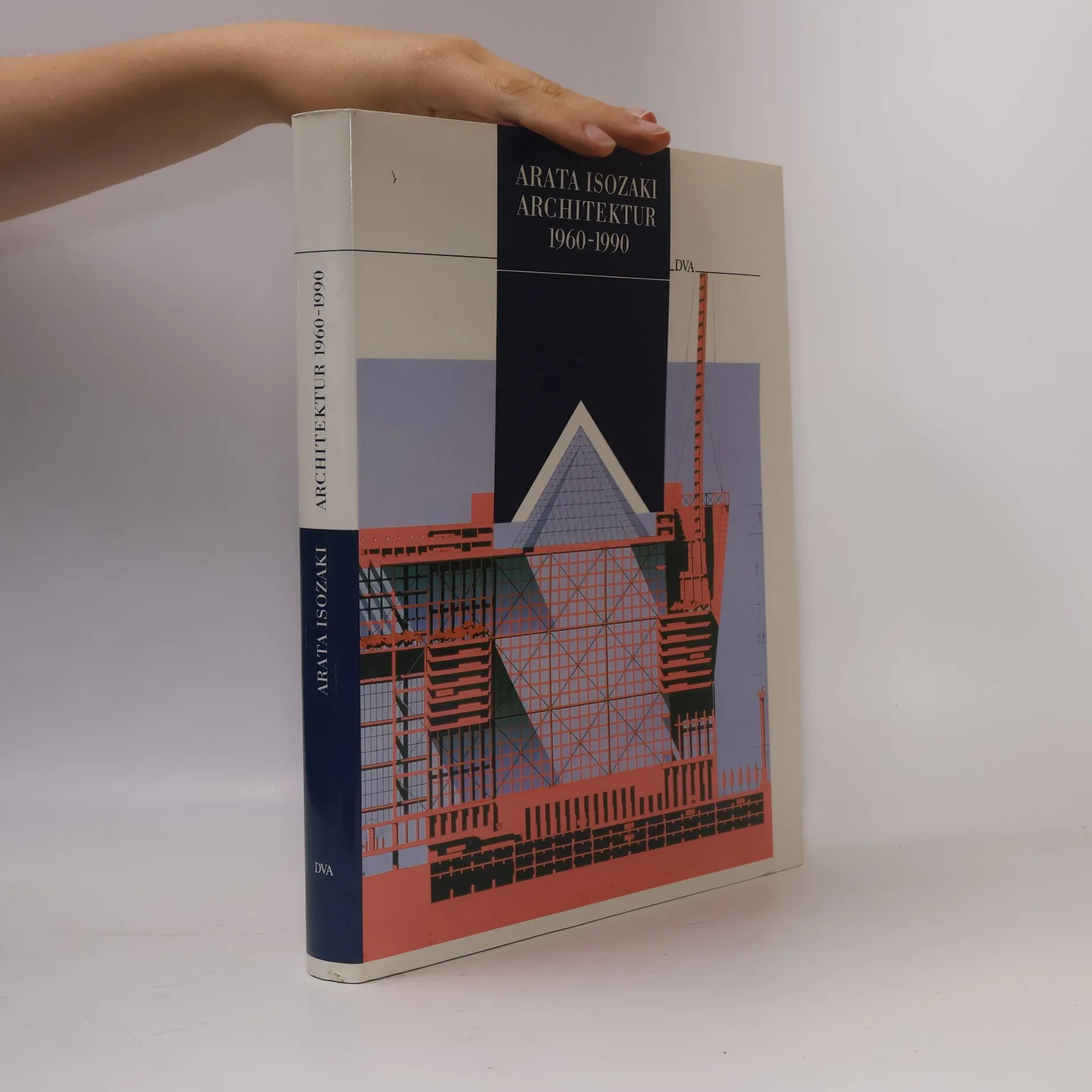
Architektur 1960 - 1990
- 304 pages
- 11 hours of reading
Rare Book
Das internationale Design Jahrbuch 1988/89
- 238 pages
- 9 hours of reading