John Dewey analysiert in diesem Werk die komplexen Zusammenhänge von menschlichem Verhalten und sozialer Psychologie. Er beleuchtet die Bedeutung von Gewohnheiten, Impulsen und Intelligenz für das Handeln und zeigt, wie moralische Prinzipien im Alltag verankert sind. Durch die Fokussierung auf die Interaktion zwischen Individuen und ihrer Umwelt bietet Dewey eine innovative Perspektive, die traditionelle moralische Konzepte in Frage stellt und einen praktischen Ansatz zur Förderung ethischen Verhaltens präsentiert. Ideal für alle, die sich mit der menschlichen Natur auseinandersetzen möchten.
John Dewey Book order (chronological)
October 20, 1859 – June 1, 1952
John Dewey was an American philosopher and educational reformer, recognized as a founder of pragmatism. His thought centered on educational reform, championing learning by doing over rote memorization. Dewey believed ideas should be judged by their results and eschewed fixed dogma. His work profoundly influenced pedagogy and social reform.




In diesem Aufsatz untersucht John Dewey die qualitative Dimension menschlicher Erfahrungen in Alltag, Kunst und Wissenschaft. Die Ausgabe enthält den englischen Text, eine neue Übersetzung und ein Nachwort, das die Argumentation und den Einfluss des Aufsatzes bis heute beleuchtet. Teil der Reihe „Great Papers Philosophie“.
This book features a reproduction of an original historical work, presented in large print to enhance accessibility for readers with impaired vision. Published by Megali, a house dedicated to making historical texts more readable, it aims to preserve important literature while catering to the needs of those who may struggle with standard print sizes.
Leibniz's New Essays Concerning The Human Understanding
- 176 pages
- 7 hours of reading
This philosophical work by Gottfried Wilhelm Leibniz explores human understanding through a series of essays, delving into the nature of knowledge and perception. Leibniz's ideas contrast with those of John Dewey, an American philosopher who focused on pragmatism and education. The text offers insights into the development of thought and the interplay between rationalism and empirical inquiry, highlighting the evolution of philosophical discourse on understanding.
John Dewey's influential philosophy centers on democracy as a fundamental ethical ideal, affecting politics, education, and communication. He emphasized the importance of schools and civil society as critical areas for reform, advocating for experimental intelligence and pluralism. Dewey's ideas significantly shaped educational practices and social reform in the early twentieth century, reflecting his commitment to fostering a democratic society. His work continues to resonate in discussions about the role of education in promoting democratic values.
Focusing on democracy as a central theme, Dewey's work emphasizes its importance across politics, education, and communication. He viewed schools and civil society as crucial areas for reform, advocating for an approach that promotes experimental intelligence and embraces diversity. His influential ideas have shaped educational practices and social reform throughout the twentieth century, reflecting his belief that democracy is synonymous with humanity's ultimate ethical ideal.
German philosophy and politics
- 68 pages
- 3 hours of reading
Exploring the intersection of philosophy and politics, the text delves into the complex relationship between ideas and practical actions. It questions the belief in the power of thought to influence reality, suggesting that such a belief may be an illusion that leads to disillusionment. The author reflects on humanity's historical confidence in the efficacy of thought, particularly during times of limited control over nature. Additionally, it critiques the notion that nature operates with purpose, presenting a thought-provoking examination of human understanding and instinct.
Human Nature and Conduct
- 348 pages
- 13 hours of reading
This work has been selected by scholars as being culturally important and is part of the knowledge base of civilization as we know it. This work is in the public domain in the United States of America, and possibly other nations. Within the United States, you may freely copy and distribute this work, as no entity (individual or corporate) has a copyright on the body of the work. Scholars believe, and we concur, that this work is important enough to be preserved, reproduced, and made generally available to the public. To ensure a quality reading experience, this work has been proofread and republished using a format that seamlessly blends the original graphical elements with text in an easy-to-read typeface. We appreciate your support of the preservation process, and thank you for being an important part of keeping this knowledge alive and relevant.
Die menschliche Natur
- 268 pages
- 10 hours of reading
John Deweys Buch 'Human Nature and Conduct' entstand aus einer Reihe von Vorlesungen, die Dewey im Mai 1918 gehalten hatte. Dewey setzt sich in diesem Werk mit der Rolle der Gewohnheit, des Triebs und der Intelligenz im menschlichen Verhalten und in ihren sozialen Bezügen auseinander. Dewey geht nicht von einen Gegensatz zwischen 'Geist' und 'Natur' aus, sondern bezieht das theoretische Problem auf die Veränderung von Gewohnheiten, also auf eine Grundfrage jeder Erziehung. 'Die menschliche Natur' ist der 4. und abschliessende Band einer kommentierten Neuedition von Deweys Werken auf deutsch.
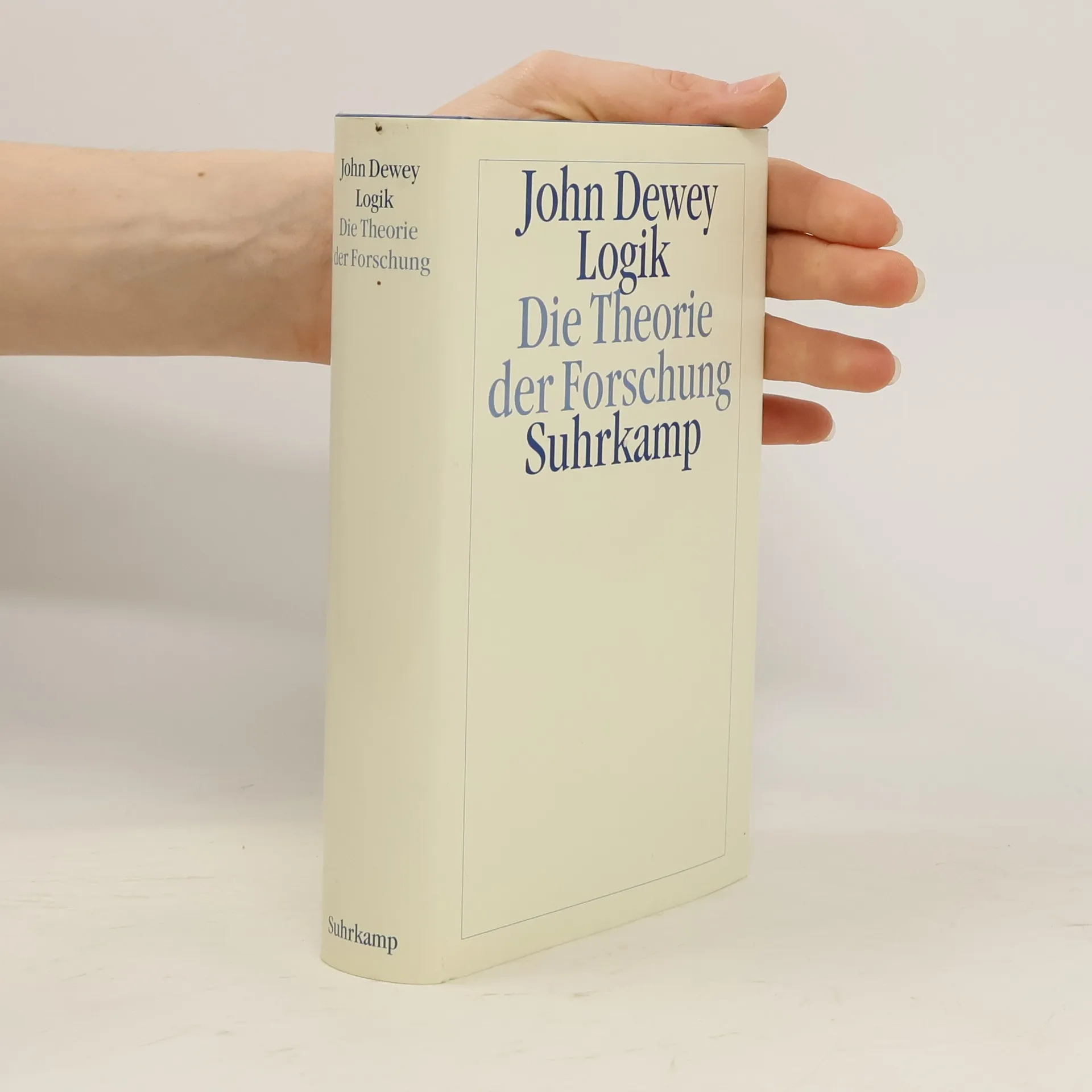
Zu seinen Lebzeiten war John Dewey nicht nur Amerikas berühmtester Philosoph, sondern auch einer der führenden Intellektuellen. Seine Schriften reichten in ihrer Wirkung weit über das akademische Publikum hinaus und hatten großen Einfluß auf die öffentlichen Debatten. Er gilt als einer der Väter des Pragmatismus, einer philosophischen Position, die heute wieder stark diskutiert wird. In seinem Hauptwerk Logik. Die Theorie der Forschung , das erstmals 1938 veröffentlicht wurde und nun als deutsche Erstausgabe erscheint, vertritt Dewey den Standpunkt eines naturalistischen Humanismus in bezug auf Logik. Er schreibt über logische Formen und Prinzipien wie ein Naturforscher. Wie ein Biologe mit Hinblick auf die verschiedenen Lebens- und Organformen, so stellt Dewey dar, unter welchen Bedingungen logische Formen entstehen und sich entwickeln. Genau wie man Pflanzen und Tiere am besten innerhalb ihrer natürlichen Umwelt studiert, um die charakteristischen Eigenschaften ihrer verschiedenen Organe kennenzulernen, so erhalten nach Deweys Ansicht die spezifischen Techniken und Prinzipien der Logik eine adäquate theoretische Interpretation dadurch, daß man ihre Rolle innerhalb der Forschung darstellt. Insofern geht Deweys Logik weit über die beschränkten Ziele der formalen Logik hinaus und gewinnt heute, da sich die Logik zunehmend in Richtung einer allgemeinen Informationstheorie bewegt, immer stärker an Aktualität.
Rekonštrukcia liberalizmu
- 680 pages
- 24 hours of reading
Výber z Deweyho politických a liberalistických spisov – prvý raz v slovenčine – oboznamuje nielen študentov, politológov a politikov, ale i celú verejnosť s autorovými názormi na demokraciu a politickú slobodu.
In this series of lectures, Dewey presents the metaphysics underlying his influential views on science, ethics, education, and social reform. His starting point is that existence is a mingling of the stable and predictable with the shifting and hazardous. The notion of causality has a practical basis, and science is concerned with bringing about preconceived ends. On this basis, Dewey develops his conception of the mind as a manifestation of social interactions, and expounds his distinctive views on the mind-body problem, esthetics, and values in general.
Die Suche nach Gewißheit
- 320 pages
- 12 hours of reading
In der ersten Hälfte des 20. Jahrhunderts war Dewey Amerikas berühmtester Philosoph, ja mehr als ein Philosoph: ein öffentlicher Intellektueller, der auch für ein Publikum außerhalb der Universitäten schrieb. Die hier vorliegenden Gifford Lectures aus dem Jahre 1929 gehören - zusammen mit Erfahrung und Natur - zu den programmatischen Schriften des »naturalistischen Humanismus«, wie Dewey seine Philosophie nannte. Er verfolgt darin Entstehung und Geschichte des Theorie-Praxis-Dualismus sowie dessen Auswirkungen auf Begriff und Struktur der Philosophie.
Pragmatizmus
- 569 pages
- 20 hours of reading
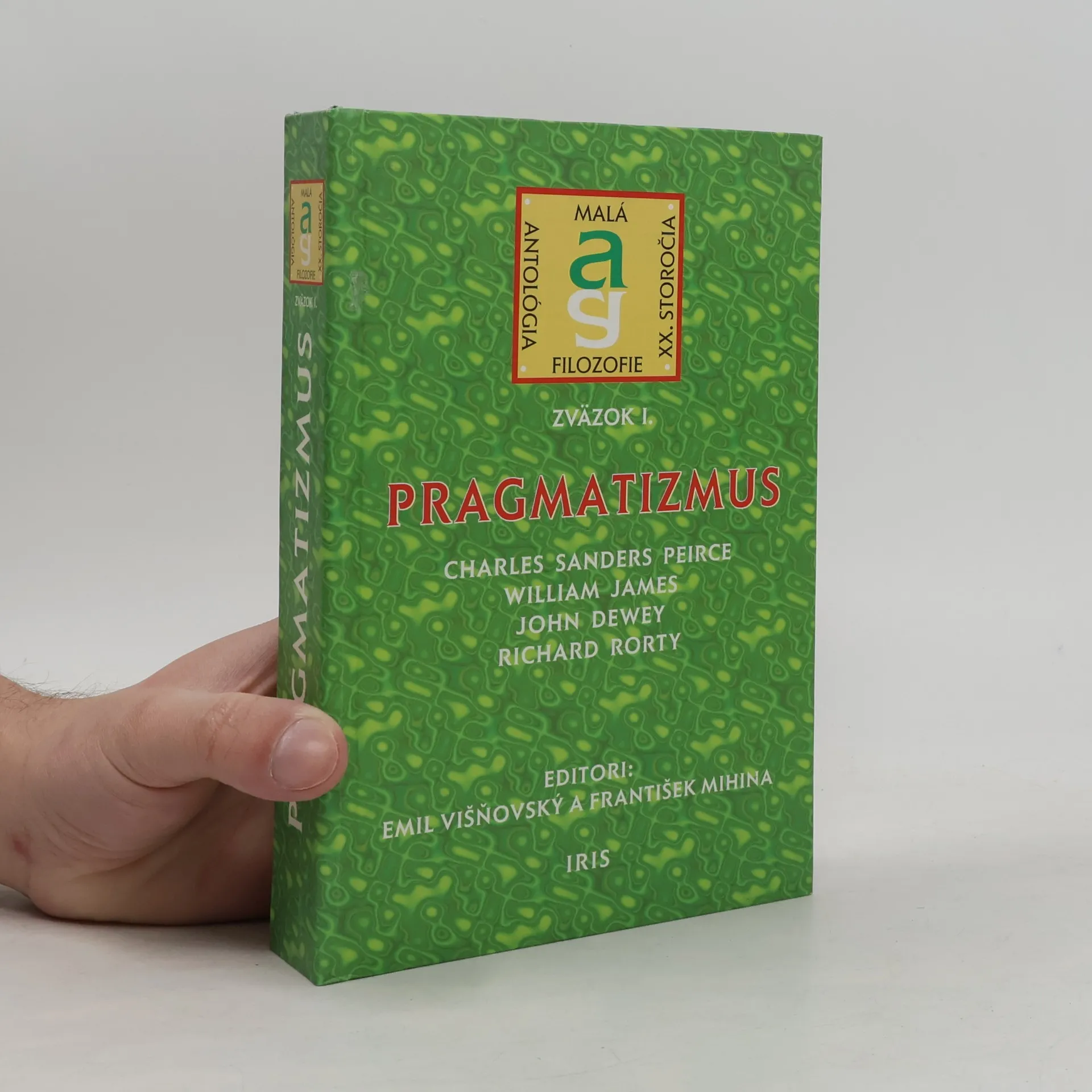
Obsah: Predhovor k Malej antológii filozofie 20. storočia (František Mihina - Emil Višňovský) PRAGMATIZMUS VČERA A DNES (Emil Višňovský — František Mihina) Klasický pragmatizmus CHARLES SANDERS PEIRCE (František Mihina) — Upevňovanie viery — Ako vyjasniť naše idey — Princípy fenomenológie — Základy pragmatizmu — Logika ako semiotika: teória znakov — Filozofia a vedy: klasifikácia — Uniformita WILLIAM JAMES (František Mihina) — Prúd myslenia — Existuje „vedomie“? — Radikálny empirizmus — Pragmatizmus a radikálny empirizmus — Pragmatizmus a zdravý rozum — Pragmatistická koncepcia pravdy — Pragmatistický výklad pravdy a jeho nesprávne pochopenia — Pragmatizmus a humanizmus — Pragmatizmus a náboženstvo — Vôľa veriť JOHN DEWEY (Emil Višňovský) — Prečo študovať filozofiu? — Filozofia a americký národný život — Vplyv darvinizmu na filozofiu — Vplyv pragmatizmu na výchovu — Filozofia výchovy — Potreba obnovy filozofie — Skúsenosť a filozofická metóda — Súkromné a verejné — Indivíduum v kultúrnej kríze — Únik z ohrozenia — Model skúmania — Budúcnosť filozofie v nalej ére vedy (Jej rola nikdy nebola väčšia) Neopragmatizmus RICHARD RORTY (Emil Višňovský) — Čo je pragmatizmus — Pragmatizmus a filozofia — Pragmatizmus je politický skrz-naskrz Vybraná bibliografia k štúdiu filozofie pragmatizmu Edičná poznámka Menný register...
Experience And Education
- 91 pages
- 4 hours of reading
Experience and Educationis the best concise statement on education ever published by John Dewey
One of America's most prominent pedagogues discusses training students to think well. This educational classic covers inductive and deductive logic, concrete and abstract thinking, and many other aspects of thought training.
John Dewey’s Democracy and Education (1916) transformed how people around the world view the purposes of schooling. This edition makes Dewey’s ideas come alive for a new generation of readers.
The Child and the Curriculum
- 28 pages
- 1 hour of reading
John Dewey's essay offers a thought-provoking exploration of the relationship between children and their educational curriculum. It presents a distinctive perspective on how education should be structured to align with the needs and experiences of children, emphasizing the importance of integrating their interests and developmental stages into the learning process. Dewey advocates for a more dynamic and interactive approach to education, challenging traditional methods and encouraging a deeper understanding of the child's role in the learning environment.
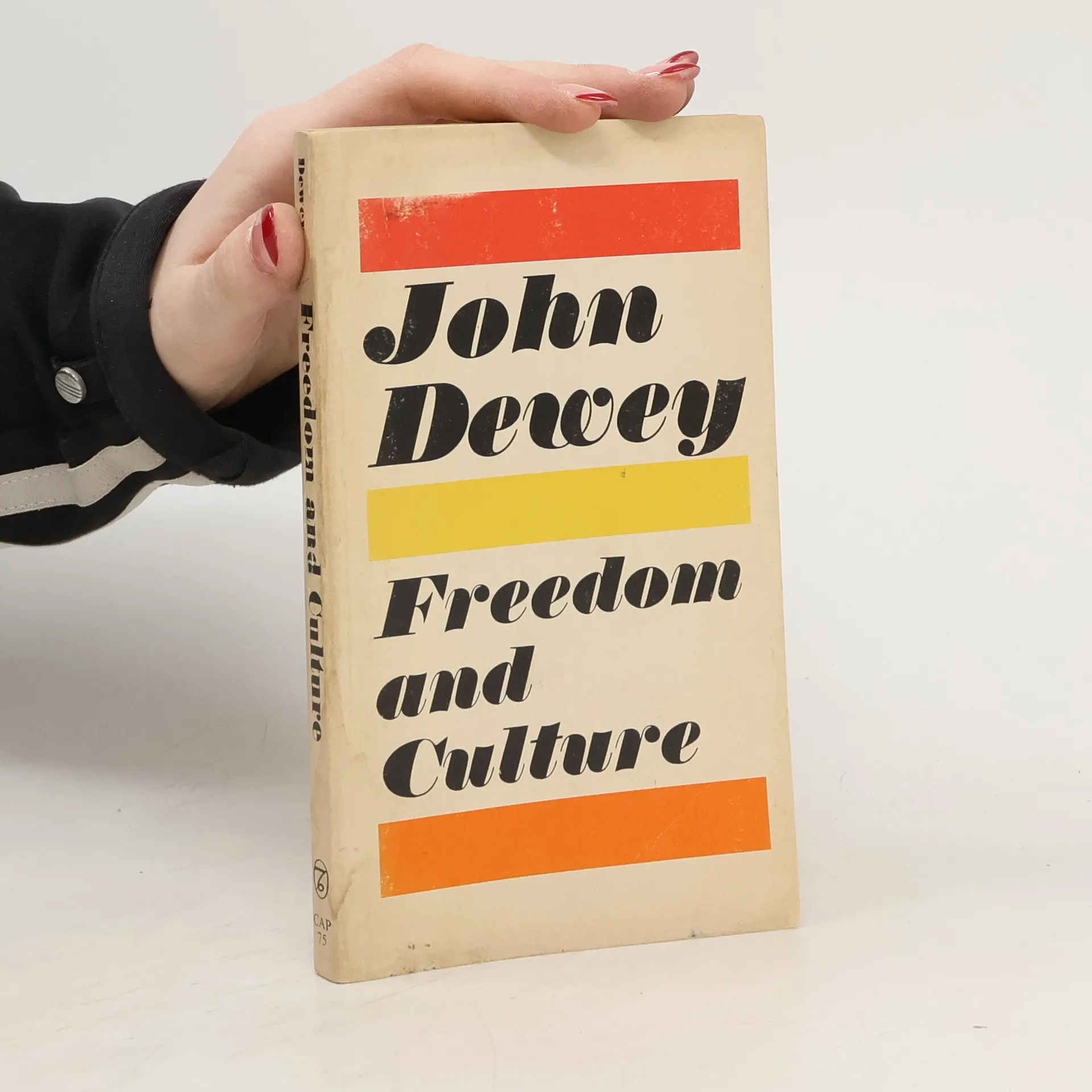
Freedom And Culture
- 134 pages
- 5 hours of reading
The 20th century has witnessed the blossoming of Western culture: new technology; communications & transportation systems; social, political, educational, agricultural & medical advances. But with these changes have come the strains & tensions of conflicting interests, desires & values within the community. John Dewey, one of America's most prolific writers of popular philosophy, believed that humankind could keep a firm hold on its destiny only if the critical intelligence of scientific method & its democratic counterpart were emphasized & promoted. Freedom of inquiry, tolerance of diverse ideas & opinions, cultural pluralism, free speech & a willingness to cooperate in pursuit of shared values & ideals would be the springboard for social development.
Based on John Dewey's lectures on esthetics, delivered as the first William James Lecturer at Harvard in 1932, Art as Experience has grown to be considered internationally as the most distinguished work ever written by an American on the formal structure and characteristic effects of all the arts: architecture, sculpture, painting, music, and literature.
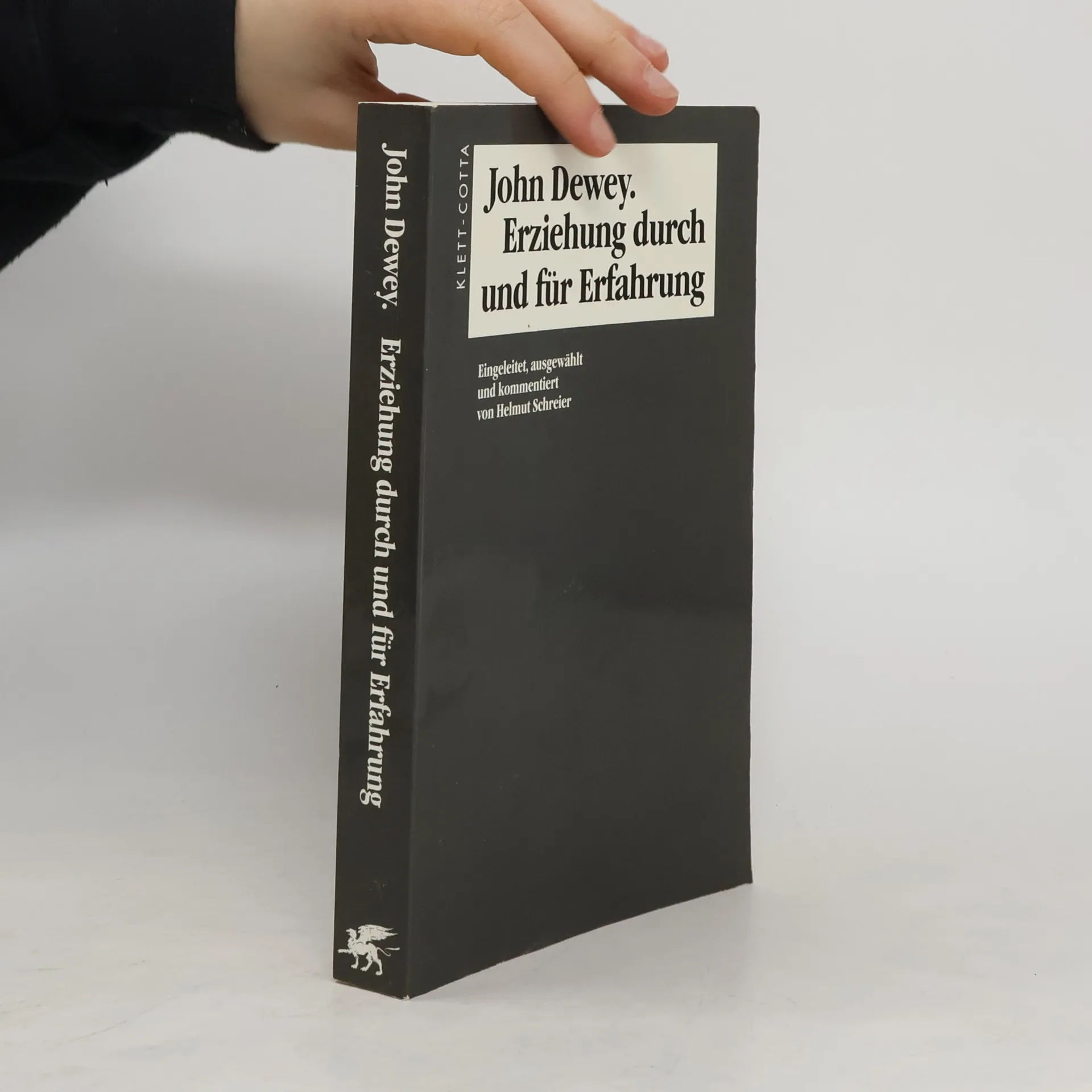
Erziehung durch und für Erfahrung
- 346 pages
- 13 hours of reading
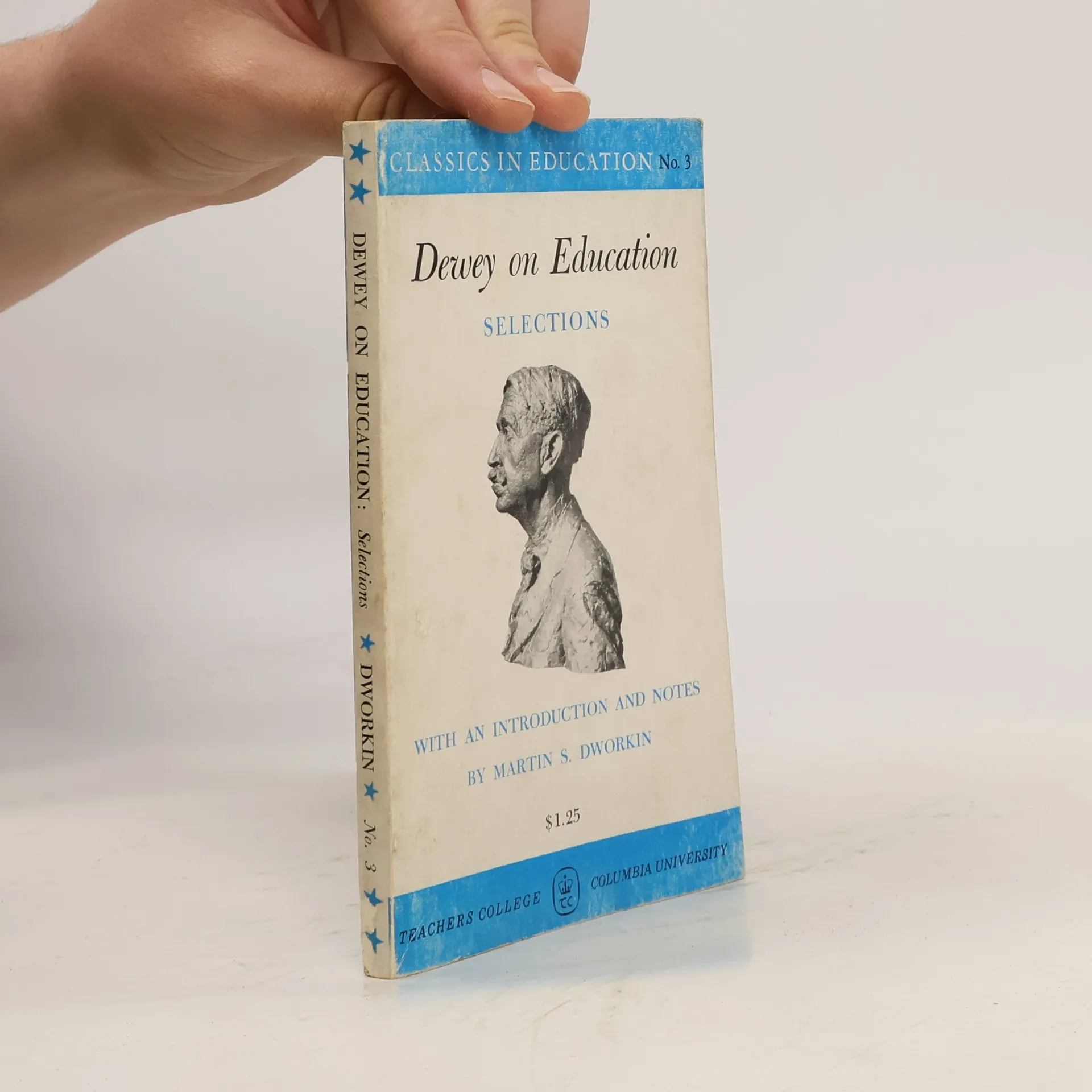
Dewey on Education
Selections
Reconstruction in Philosophy
- 140 pages
- 5 hours of reading
The book presents a compelling exploration of philosophical origins through a historical lens, showcasing the enduring vigor of Dewey's lectures. It emphasizes his unique approach to philosophy, illustrating how historical context shapes philosophical thought. The work is recognized as a modern classic, highlighting its relevance and the insightful treatment of its central themes.