
A guidebook for contemporary artists navigating the planetary instead of the Eurocentric globalPositioning the Eurocentric term “global” against the more holistic word “planetary” toward an interconnected anticolonialist art world, this volume proposes “planetary” approaches to art.
Sabine Breitwieser Book order (chronological)


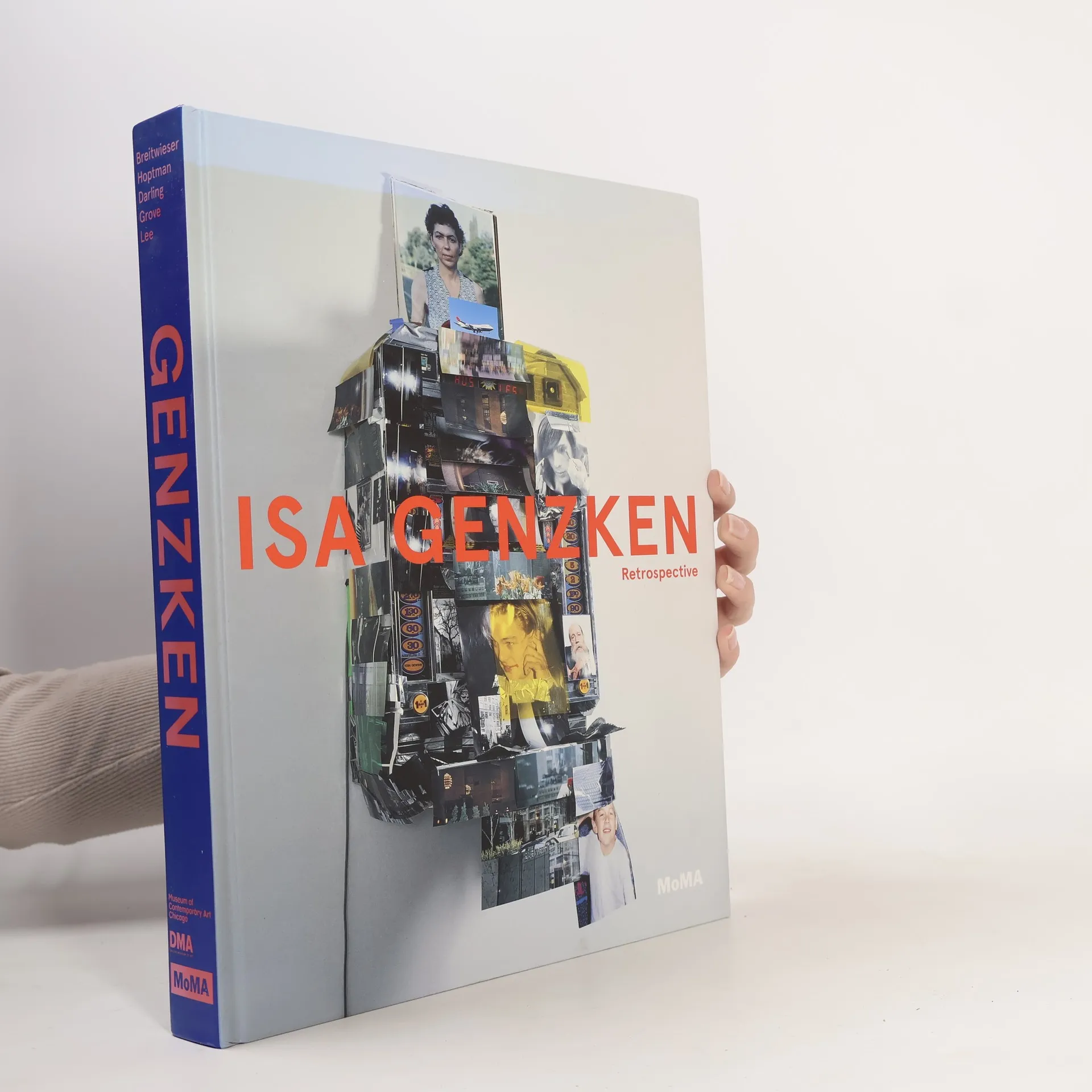
Isa Genzken is one of the most significant female artists of the past 30 years, yet her extensive contributions across various media—sculptures, paintings, photographs, collages, drawings, artist's books, films, installations, and public works—remain largely underrecognized in the United States. This publication coincides with the first comprehensive retrospective of her diverse work, covering 40 years and serving as the most complete English monograph on her. Genzken has been a key figure in the art world since her mid-1970s exhibitions, inspiring a new generation of artists with her innovative approach. The last decade has been particularly fruitful for her, as she has redefined assemblage for contemporary art. The catalogue features essays that trace her artistic evolution from 1973 to the present, along with an extensive plate section that chronologically outlines her major works and exhibitions. Born in Germany in 1948, Genzken gained early acclaim for her geometric wood sculptures while studying at Dusseldorf's Kunstakademie. Her work has since evolved to include sculptures in various materials, influenced by Minimalism yet rich in narrative. From the 1990s onward, she has produced increasingly intricate sculptural installations, alongside paintings that explore surface and light.
Seit beinahe zwanzig Jahren hat die Generali Foundation mit einem gleichermaßen konzentrierten wie konsequenten Programm einen nicht mehr wegzudenkenden Beitrag zu Produktion und Rezeption von kritischer Kunst geleistet. Diese Publikation zeichnet die letzten 20 Jahre des Programms der Generali Foundation nach – von den ersten Ausstellungen mit Auftragsarbeiten in einem multifunktionalen Büro-Ausstellungsraum bis zu den großen Themenausstellungen und retrospektiv angelegten Einzelpräsentationen im 1995 eröffneten Ausstellungshaus. Die vorliegende Publikation bietet anhand zahlreicher Ausstellungsansichten und Texte einen Überblick über das umfassende Programm und geht dabei trotzdem ins Detail. Ähnlich wie der Sammlungskatalog, der 2003 erschienen ist, dokumentiert auch diese Publikation einen Status quo – eine Chronologie der „Sammlung“ von Ausstellungen, Veranstaltungen und Publikationen, letztlich somit auch aller KünstlerInnen, KritikerInnen, WissenschafterInnen, die auf die eine oder andere Art in das Programm involviert gewesen waren.
Edward Krasiński. Les mises en scene
- 351 pages
- 13 hours of reading
Edward Krasiński (1925–2004) is a key figure in the progressive Polish art scene of the 1960s and 1970s. His work, rooted in the avant-garde traditions of Constructivism and Surrealism, is comprehensively documented here for the first time with around 300 historical illustrations. This publication features numerous photographs by Eustachy Kossakowski and Tadeusz Rolke, who chronicled Krasiński’s artistic journey over more than four decades. The emphasis is on his distinctive exhibition designs, which transcended mere presentation of individual pieces. Krasiński transformed exhibition spaces into extraordinary environments, integrating his works in ways that offered fresh perspectives on his art, which spans painting, sculpture, and installation. For instance, he converted his studio, previously owned by Constructivist Henryk Stażewski, into a thematic environment for new creations. His well-known exploration of the blue “line” appears in various forms, such as tapering sculptural objects, a telex at the Tokyo Biennale in 1970, or strips of Scotch tape. This blue tape became his preferred method for defining spaces, showcasing his innovative approach to art and exhibition design.
Isa Genzken
- 160 pages
- 6 hours of reading
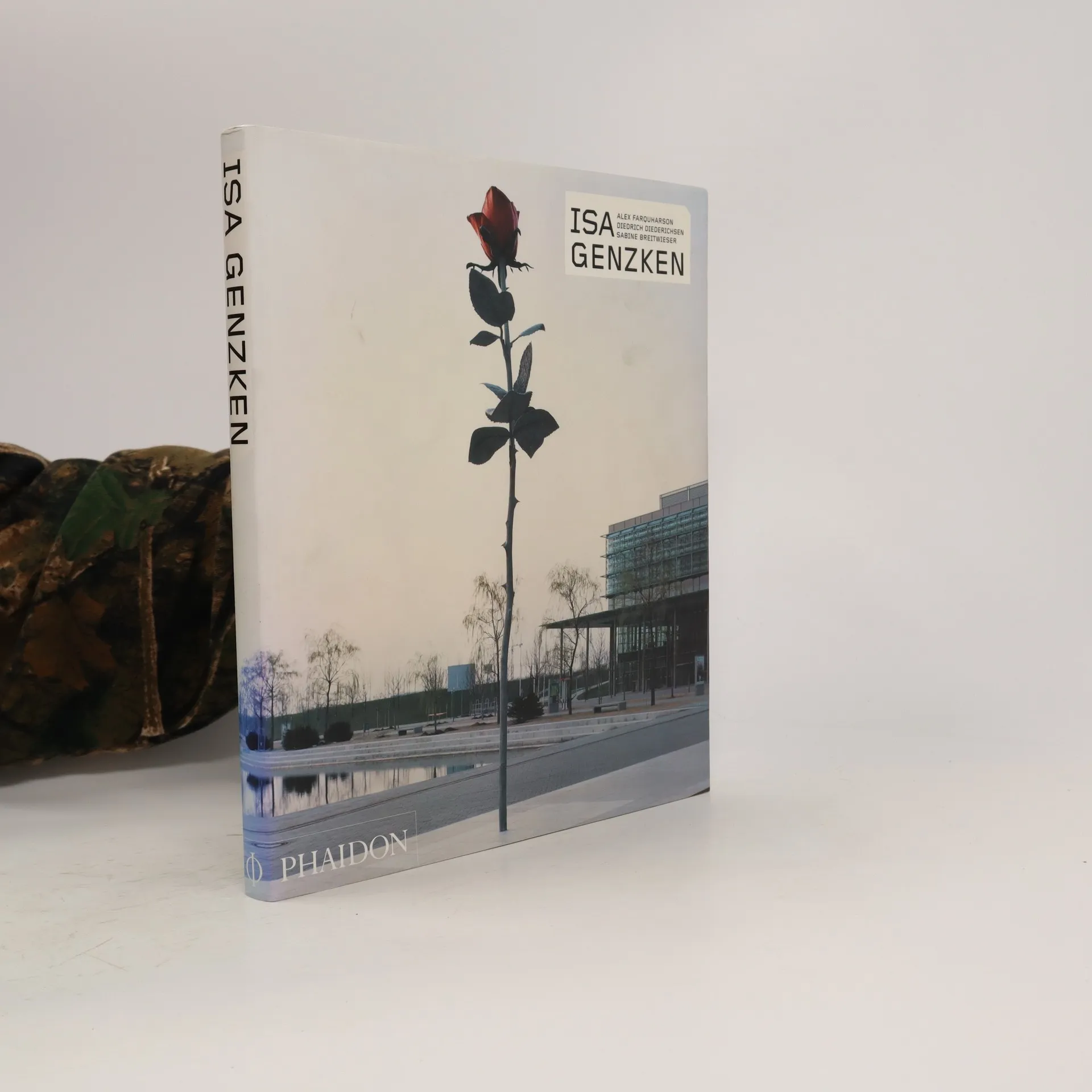
Isa Genzken (b. 1948) is one of Germany’s most prominent artists. She is best known for her architectural sculptures that combine a Minimal aesthetic with the bright colours and synthetic materials of Modernist architecture. Her hybrid, colourful mini-skyscrapers combine mirrored sheets, fluorescent plastic, glass and concrete. She first began exhibiting in the 1970s and has exhibited at The Renaissance Society in Chicago (1989) and Documenta 7 (1982), 9 (1992) and 11 (2002) in Kassel, Germany, among many other prestigious venues. Genzken’s work is represented by Galerie Daniel Buchholz, Neven-DuMont-Str. 17, Cologne 50667, Germany, post@galeriebuchholz.de , Hauser & Wirth, 196A Piccadilly, London, W1J 9DY, london@hauserwirth.com and David Zwirner Gallery, 525 W 19th Street, New York, NY 10011, USA, angela@davidzwirner.com
Herausgegeben Von Sabine Breitwiesser. Catalog Of Exhibition Held At Generali Foundation, Vienna From 11 May Till 12 August 2001. Includes Bibliographical References (p. 230-236) German And English.
Herwig Kempinger
Dt. /Engl.