


Explore the latest books of this year!
Bookbot

Benedict Anderson

    August 26, 1936 – December 13, 2015

    Benedict Anderson is renowned for his examinations of nationalism, particularly his influential work on the origins and spread of 'imagined communities.' His analyses delve deeply into the cultural and historical roots of national identities, exploring how these identities are forged and sustained in the modern world. Anderson's approach often emphasizes the role of media, language, and shared narratives in fostering a sense of belonging and national consciousness. His scholarship remains pivotal for understanding the dynamics of nationalism and its impact on global politics.

    Benedict Anderson
    The Spectre of Comparisons
    Imagined Communities
    The City in Geography
    The City in Transgression
    Life Beyond Boundaries
    No Worse Enemy
    • 2020

      The City in Transgression

      Human Mobility and Resistance in the 21st Century

      • 230 pages
      • 9 hours of reading

      Focusing on overlooked areas of urban landscapes, this book examines how these neglected spaces transform into sites of resistance and community for marginalized groups, including refugees, asylum seekers, and the homeless. It delves into the dynamics of these environments, highlighting the resilience and agency of those who inhabit them, while addressing broader themes of displacement and social justice.

      The City in Transgression
    • 2019

      The City in Geography

      Renaturing the Built Environment

      • 240 pages
      • 9 hours of reading

      Exploring the disconnect between urban life and physical geography, this book highlights the impact of this separation on human survival. It emphasizes the need for a transformative approach to reconnect city dwellers with their environment, advocating for a reimagining of the relationship between urban spaces and the landscape. Through this lens, it calls for a deeper understanding of how cities can harmonize with their geographical contexts to foster a more sustainable future.

      The City in Geography
    • 2019

      Buried City, Unearthing Teufelsberg

      Berlin and its Geography of Forgetting

      • 180 pages
      • 7 hours of reading

      The book delves into Berlin's devastation during World War II and the subsequent efforts to rebuild the city. It explores the interplay between destruction and burial, highlighting how these processes reshape urban geography and contribute to the collective amnesia surrounding trauma and ruin. By examining the relationship between forgetting and reconstructing, it provides a thought-provoking perspective on the city's historical narrative and the complexities of memory in urban development.

      Buried City, Unearthing Teufelsberg
    • 2018
    • 2017

      Focusing on Berlin's destruction during World War II and its reconstruction after the end of the war, this book offers a rethinking of how the practices of destruction and burial combine to reform the city through geography and how burying a city is intricately tied to forgetting destruction, ruination and trauma. This book is valuable reading for those interested in Architectural Theory, Urban Geography, Modern History and Urban Design.

      Buried city, unearthing Teufelsberg
    • 2016

      Set in a bizarre temple complex in rural Thailand, the narrative explores the peculiar attractions of Wat Phai Rong Wua, designed by monk Luang Phor Khom. Political scientist Benedict Anderson reflects on its unsettling statues that depict hellish scenes, blending art and morality. His fascination with the site leads to an examination of why it draws numerous visitors and how capitalism influences rural communities. This unique travelogue offers insights into cultural dynamics, inviting readers to ponder the interplay between tradition and modernity.

      The Fate of Rural Hell: Asceticism and Desire in Buddhist Thailand
    • 2016

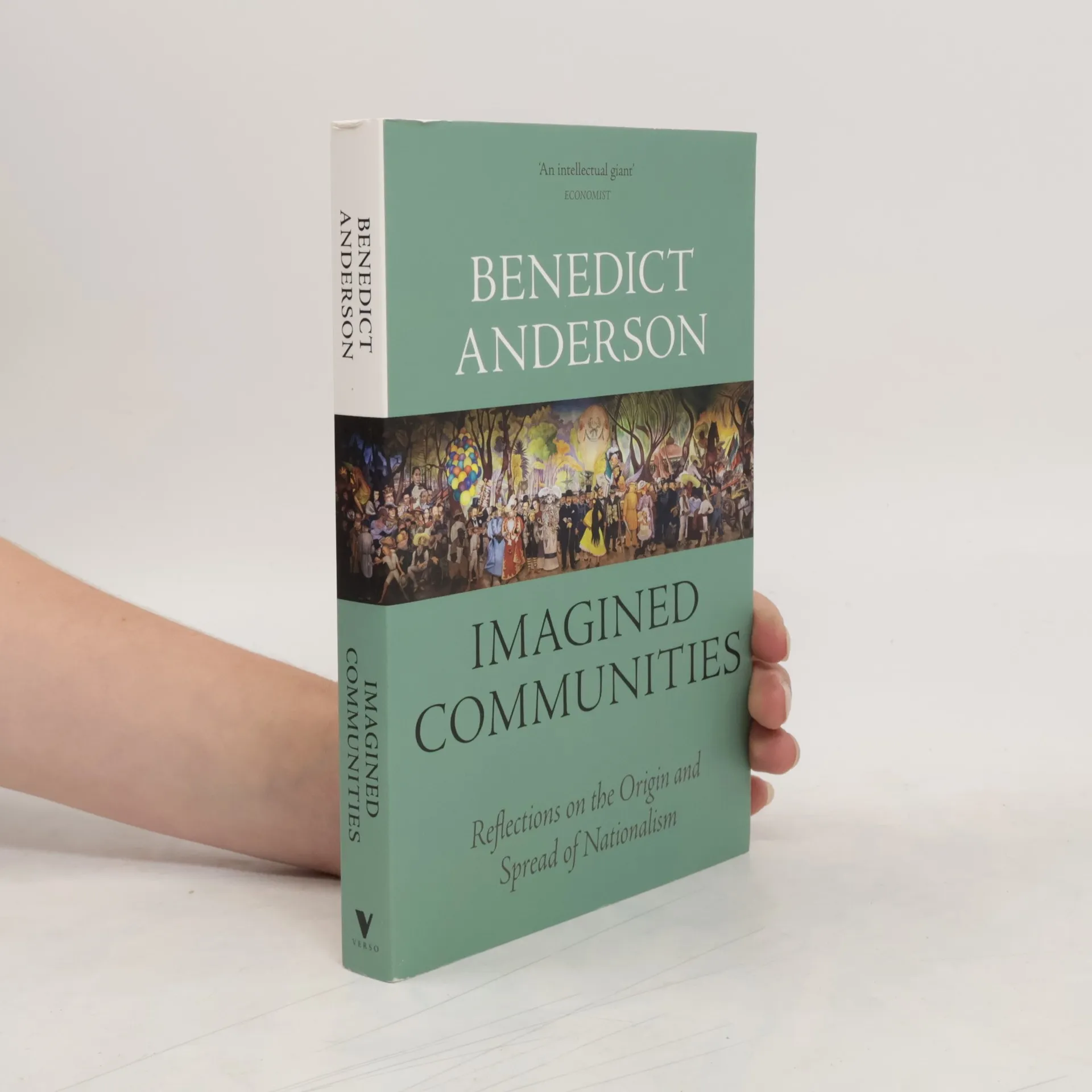
      Imagined Communities

      • 256 pages
      • 9 hours of reading
      4.2(609)Add rating

      This “sparkling” and world-famous work examines what drives people to live, die, and kill in the name of nations—revealing the surprising origins and development of nationalism (The Guardian). The full magnitude of Benedict Anderson’s intellectual achievement is still being appreciated and debated. Imagined Communities remains the most influential book on the origins of nationalism, filling the vacuum that previously existed in the traditions of Western thought. Cited more often than any other single English-language work in the human sciences, it is read around the world in more than thirty translations. Written with exemplary clarity, this illuminating study traces the emergence of community as an idea to South America, rather than to nineteenth-century Europe. Later, this sense of belonging was formed and reformulated at every level, from high politics to popular culture, through print, literature, maps and museums. Following the rise and conflict of nations and the decline of empires, Anderson draws on examples from South East Asia, Latin America and Europe’s recent past to show how nationalism shaped the modern world.

      Imagined Communities
    • 2016
    • 2014

      Benedict R. O'G. Anderson is internationally known for his groundbreaking work on the politics and cultures of Indonesia, Thailand, and the Philippines. This collection of essays gathers in one book his analyses of Siam (Thailand), its political institutions and bloody upheavals, its literature, authors, and contemporary cinema.

      Exploration and Irony in Studies of Siam over Forty Years
    • 2013