


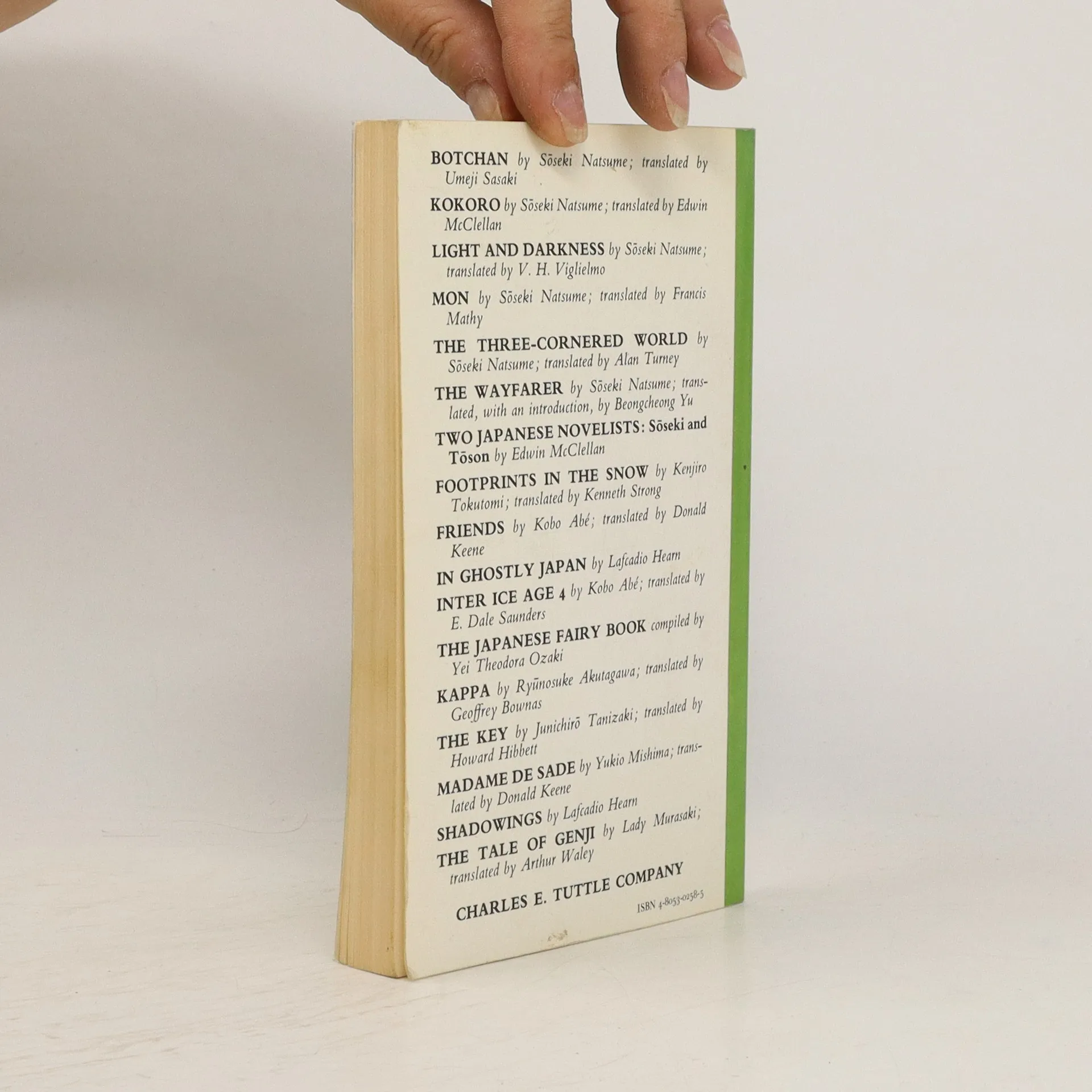

More about the book
Grass on the Wayside (Michikusa), Sōseki’s only autobiographical novel, was written in 1915 when he was forty-eight. He was ill at the time and died the following year. It is an intensely personal document in which the author describes his loneliness, the failure of his marriage, and above all his sense of the futility of human relationships. It was the first autobiographical novel of its kind to appear in modern Japan. No one before Sōseki had written with such concern about his own marriage or with such intelligence and articulateness about his private life. The novel manages to avoid the annoying reticence and vagueness of most Japanese works of the genre. Its people are alive and refuse to be overwhelmed in the misty Japanese scene. It is a measure of Sōseki’s honesty and skill that for all the narrator’s self-centeredness and seeming lack of sympathy for his wife, she emerges—as so many women in Japanese fiction do not—as an understandable yet complex personality. Grass on the Wayside is a somber work. In writing his only autobiographical novel toward the end of his career, Sōseki tried, perhaps too hard, to restrain his inclination to dramatize. Yet it is as passionate as anything he wrote, and through it he introduced to the modern Japanese novel a certain new quality of commitment. —from the inside front cover UNESCO Collection of Representative Works, Japan Series This translation first published in 1969 Tut Books L
Book purchase
Grass on the wayside, Natsume Sōseki
- Language

- Released
- 2000
- Binding
- (Paperback)
Payment methods
We’re missing your review here.
- Title
- Grass on the wayside
- Language
- English
- Authors
- Natsume Sōseki
- Publisher
- Turrle
- Released
- 2000
- Format
- Paperback
- Pages
- 169
- ISBN10
- 4805302585
- ISBN13
- 9784805302583
- Series
- Rating
- 3.7 out of 5
- Description
- Grass on the Wayside (Michikusa), Sōseki’s only autobiographical novel, was written in 1915 when he was forty-eight. He was ill at the time and died the following year. It is an intensely personal document in which the author describes his loneliness, the failure of his marriage, and above all his sense of the futility of human relationships. It was the first autobiographical novel of its kind to appear in modern Japan. No one before Sōseki had written with such concern about his own marriage or with such intelligence and articulateness about his private life. The novel manages to avoid the annoying reticence and vagueness of most Japanese works of the genre. Its people are alive and refuse to be overwhelmed in the misty Japanese scene. It is a measure of Sōseki’s honesty and skill that for all the narrator’s self-centeredness and seeming lack of sympathy for his wife, she emerges—as so many women in Japanese fiction do not—as an understandable yet complex personality. Grass on the Wayside is a somber work. In writing his only autobiographical novel toward the end of his career, Sōseki tried, perhaps too hard, to restrain his inclination to dramatize. Yet it is as passionate as anything he wrote, and through it he introduced to the modern Japanese novel a certain new quality of commitment. —from the inside front cover UNESCO Collection of Representative Works, Japan Series This translation first published in 1969 Tut Books L