

More about the book
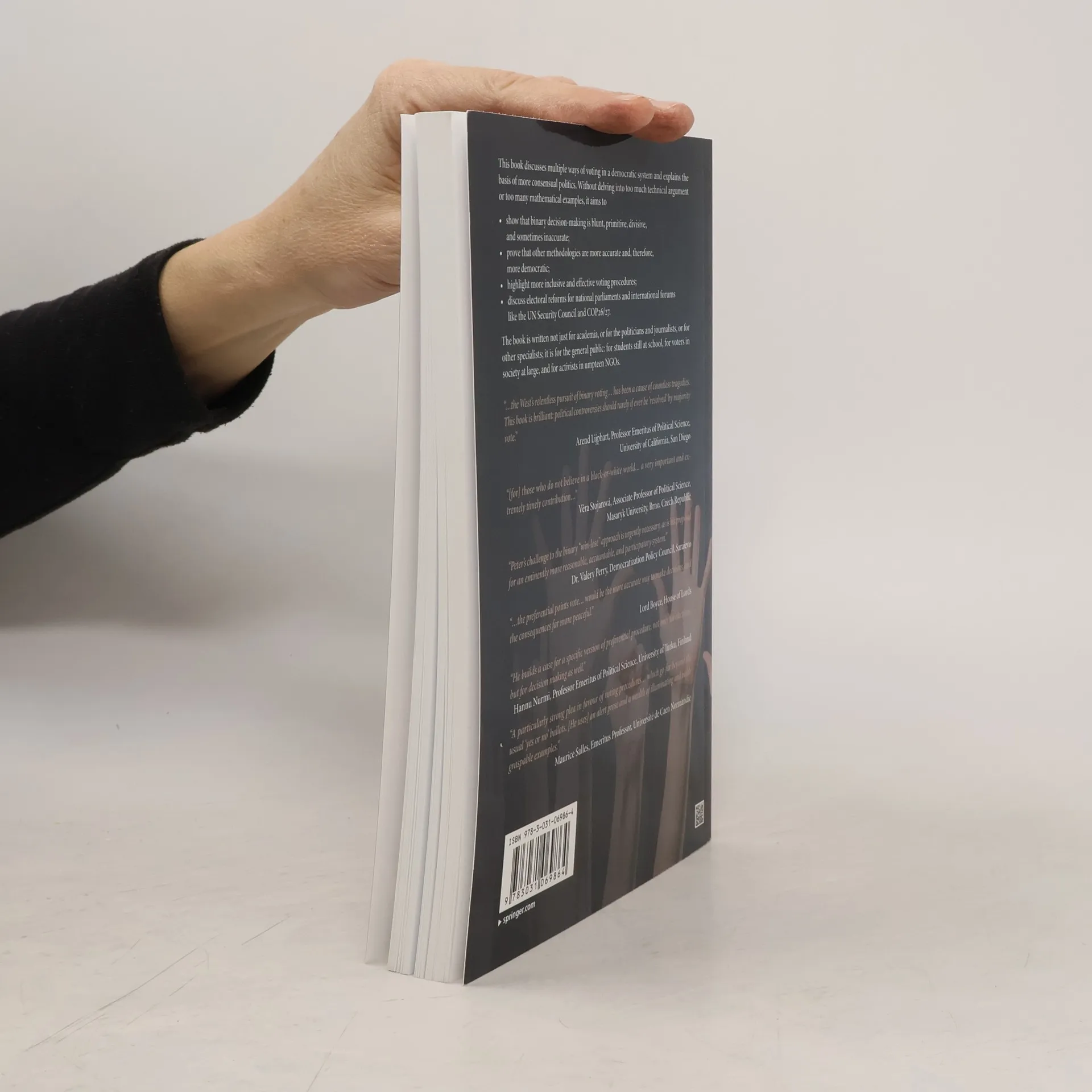
This book discusses multiple ways of voting in a democratic system and explains the basis of more consensual politics. Without delving into too much technical argument or too many mathematical examples, it aims to show that binary decision-making is blunt, primitive, divisive, and sometimes inaccurate; prove that other methodologies are more accurate and, therefore, more democratic; highlight more inclusive and effective voting procedures; discuss electoral reforms for national parliaments and international forums like the UN Security Council and COP26/27. The book is written not just for academia, or for the politicians and journalists, or for other specialists; it is for the general public: for students still at school, for voters in society at large, and for activists in umpteen NGOs
Book purchase
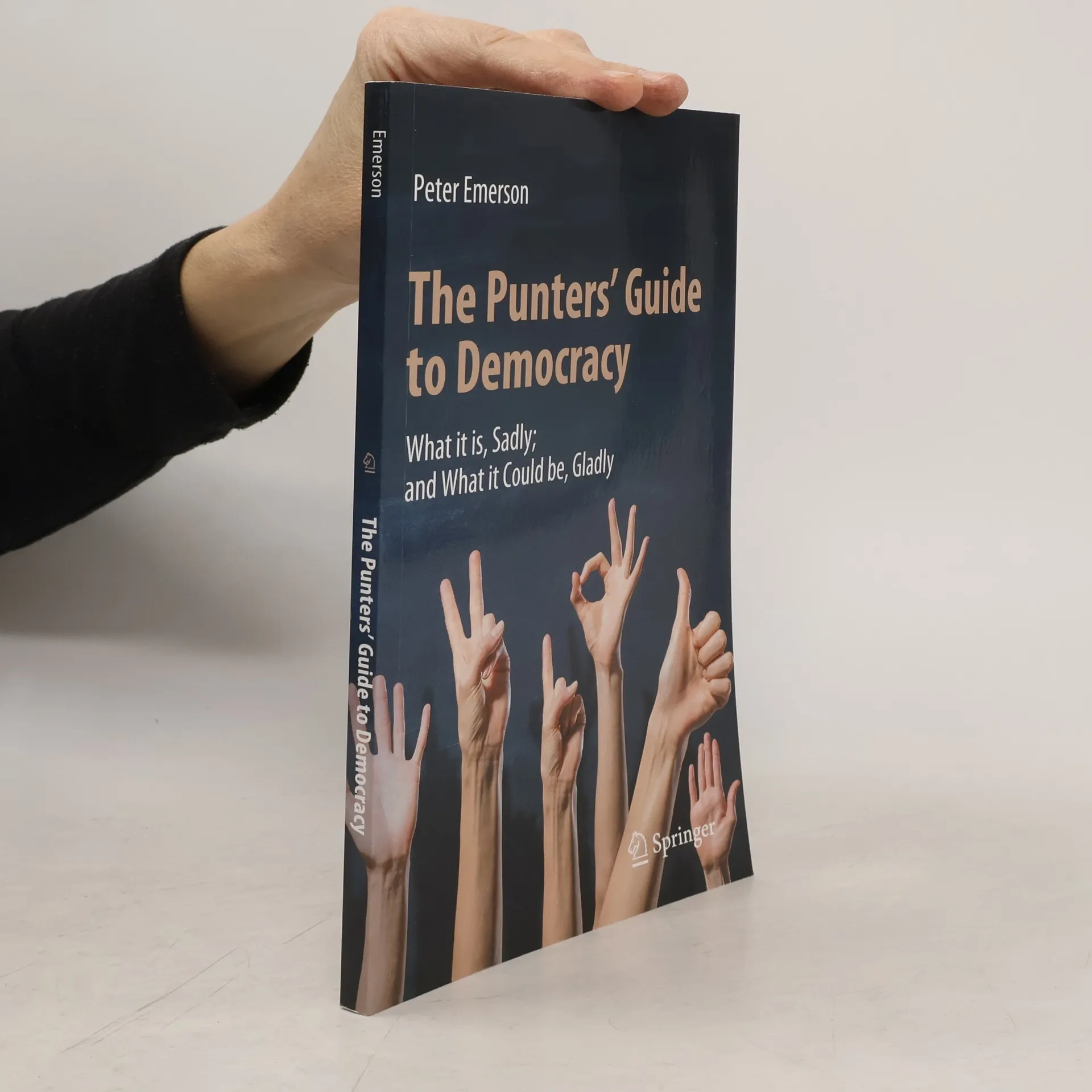
The Punters' Guide to Democracy, Peter Emerson
- Language

- Released
- 2022
- Binding
- (Paperback)
Payment methods
No one has rated yet.
- Title
- The Punters' Guide to Democracy
- Subtitle
- What it is, Sadly; and What it Could be, Gladly
- Language
- English
- Authors
- Peter Emerson
- Publisher
- Springer International Publishing AG
- Released
- 2022
- Format
- Paperback
- Pages
- 176
- ISBN10
- 3031069862
- ISBN13
- 9783031069864
- Series
- Description
- This book discusses multiple ways of voting in a democratic system and explains the basis of more consensual politics. Without delving into too much technical argument or too many mathematical examples, it aims to show that binary decision-making is blunt, primitive, divisive, and sometimes inaccurate; prove that other methodologies are more accurate and, therefore, more democratic; highlight more inclusive and effective voting procedures; discuss electoral reforms for national parliaments and international forums like the UN Security Council and COP26/27. The book is written not just for academia, or for the politicians and journalists, or for other specialists; it is for the general public: for students still at school, for voters in society at large, and for activists in umpteen NGOs