

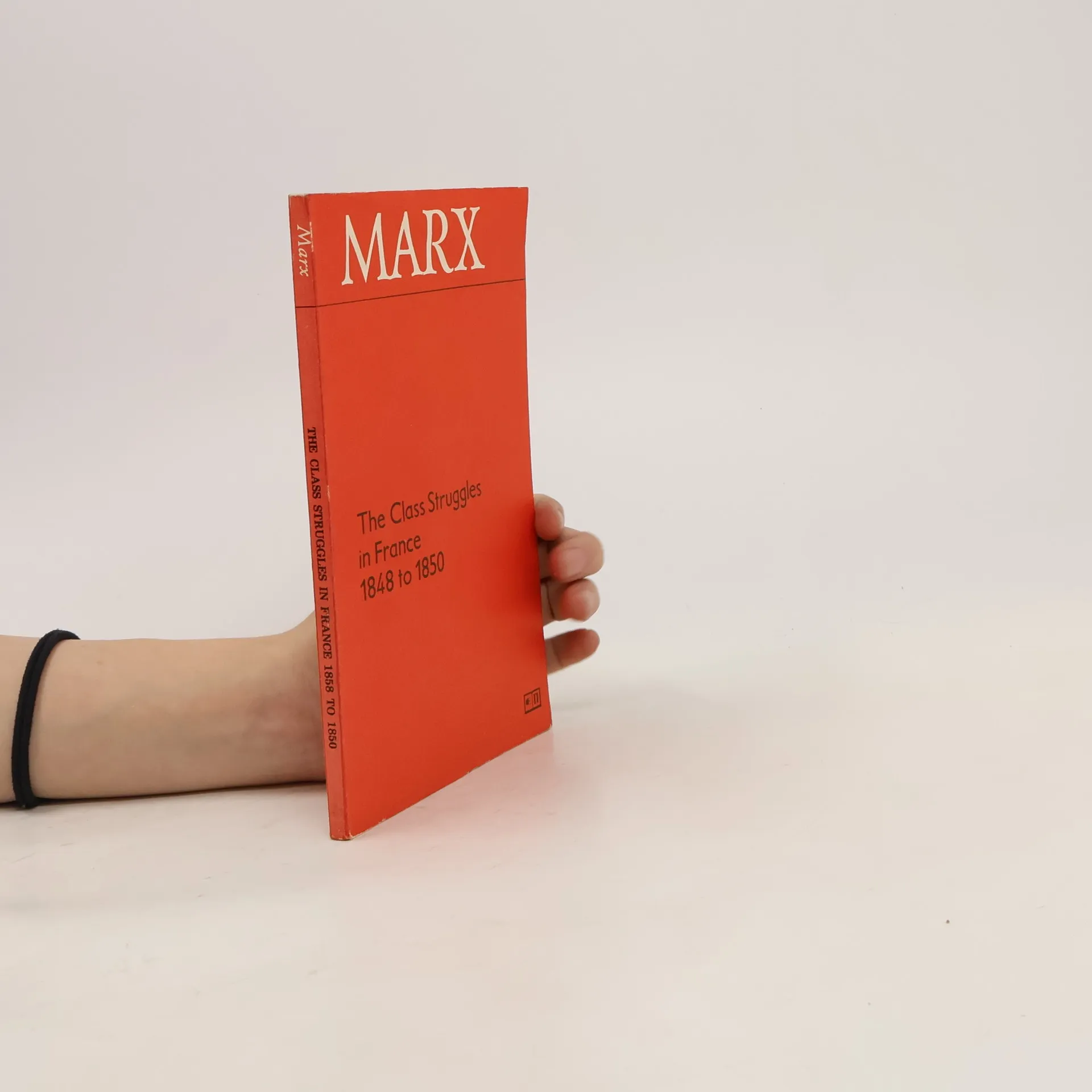
The present work was written while the events analyzed were still in progress. It is, as Frederick Engels says, "Marx's first attempt, with the aid of his materialist conception, to explain a section of contemporary history from the given economic situation." The work has long been considered a class in historical materialism as applied to current events, having withstood the test of later and fuller analyses. This edition includes in full Engels' famous Preface of 1895, in which he assessed Socialist strategy and tactics for the previous fifty years.Cover: From a lithograph by H. Daumier symbolizing the reactionaries of the period.
The French Trilogy Series
This series of essays delves into the tumultuous political and social landscape of 19th-century France. It examines pivotal moments of revolution, coups, and uprisings, such as the events of 1848 and the Paris Commune. The works analyze class struggle, the rise and fall of political figures, and the emergence of the working class as a decisive force.

Recommended Reading Order
The Eighteenth Brumaire of Louis Bonaparte
- 108 pages
- 4 hours of reading
Focusing on the political upheaval of 1851, this essay offers a deep analysis of the French coup led by Louis Bonaparte, examining its implications for the working class. Marx critiques the events surrounding the overthrow of the 1848 constitution, providing insights into the dynamics of power and revolution. This work is recognized for its historical significance and profound commentary on the struggles of the proletariat, positioning it as a key text in Marxist literature.
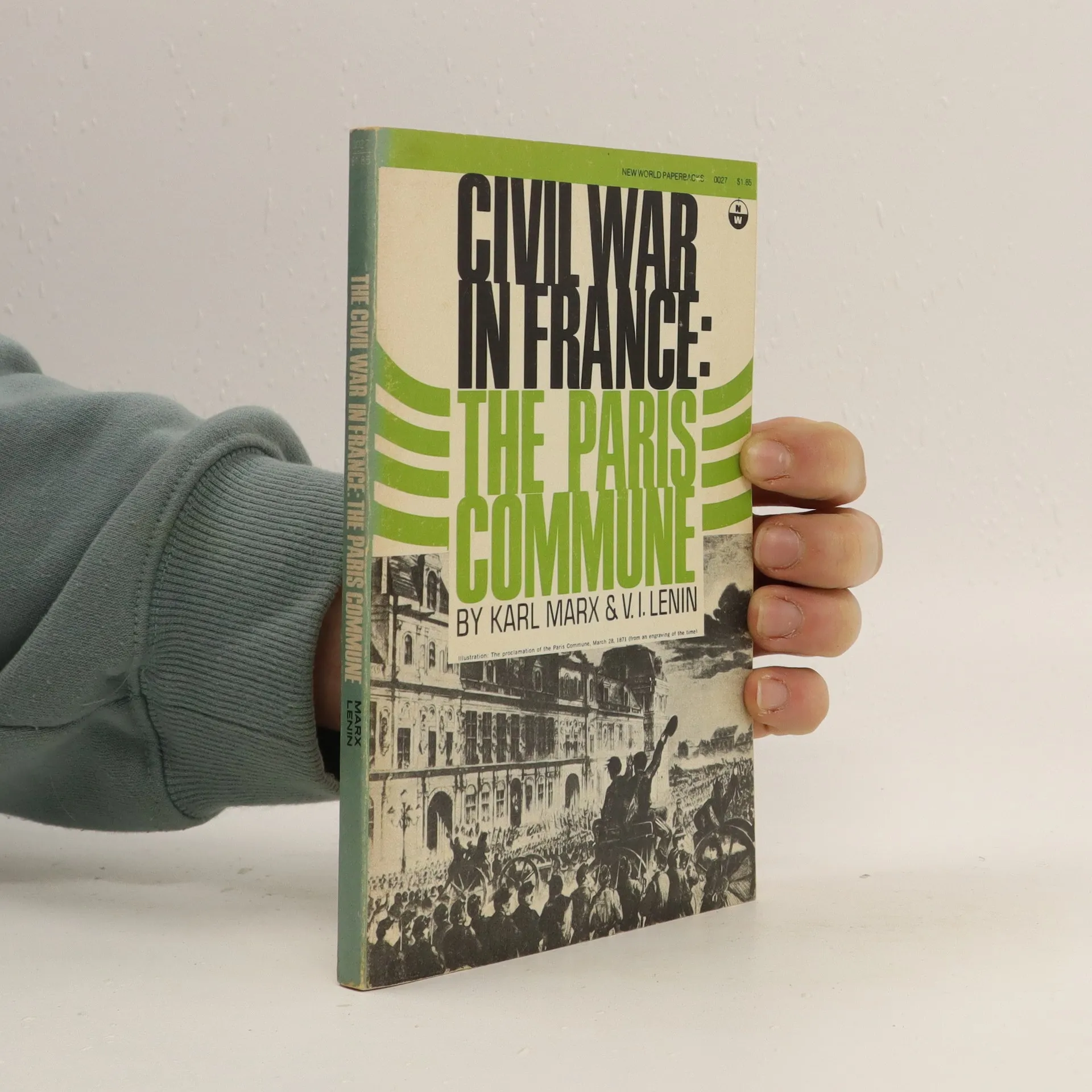
Civil War in France: The Paris Commune
- 144 pages
- 6 hours of reading
A reprint of the 1934 'enlarged edition', a volume that added newly translated material to the title essay. It includes an introduction by Engels ["Do you want to know that this dictatorship of the proletariat looks like? Then look at the Paris Commune. That was the dictatorship of the proletariat"], Marx's first and second 'Manifesto On The Franco-Prussian War', the correspondence of Marx & Engels on the Commune, and Engels' 'The Program of the Blanquist Fugitives from the Paris Commune'.