
Explore the latest books of this year!
Bookbot

Julieta Aranda

    Julieta Aranda is a conceptual artist whose work delves into the creation and manipulation of artistic exchange, challenging traditional notions of commerce through art. Her practice, encompassing installation, video, and print media, critically examines the economies, labor, and value systems embedded within contemporary art. Aranda's approach is often characterized by a playful yet incisive subversion of established systems, prompting viewers to reconsider their own roles and the circulation of art. Her explorations reveal a deep engagement with the cultural and economic forces that shape artistic production and reception.

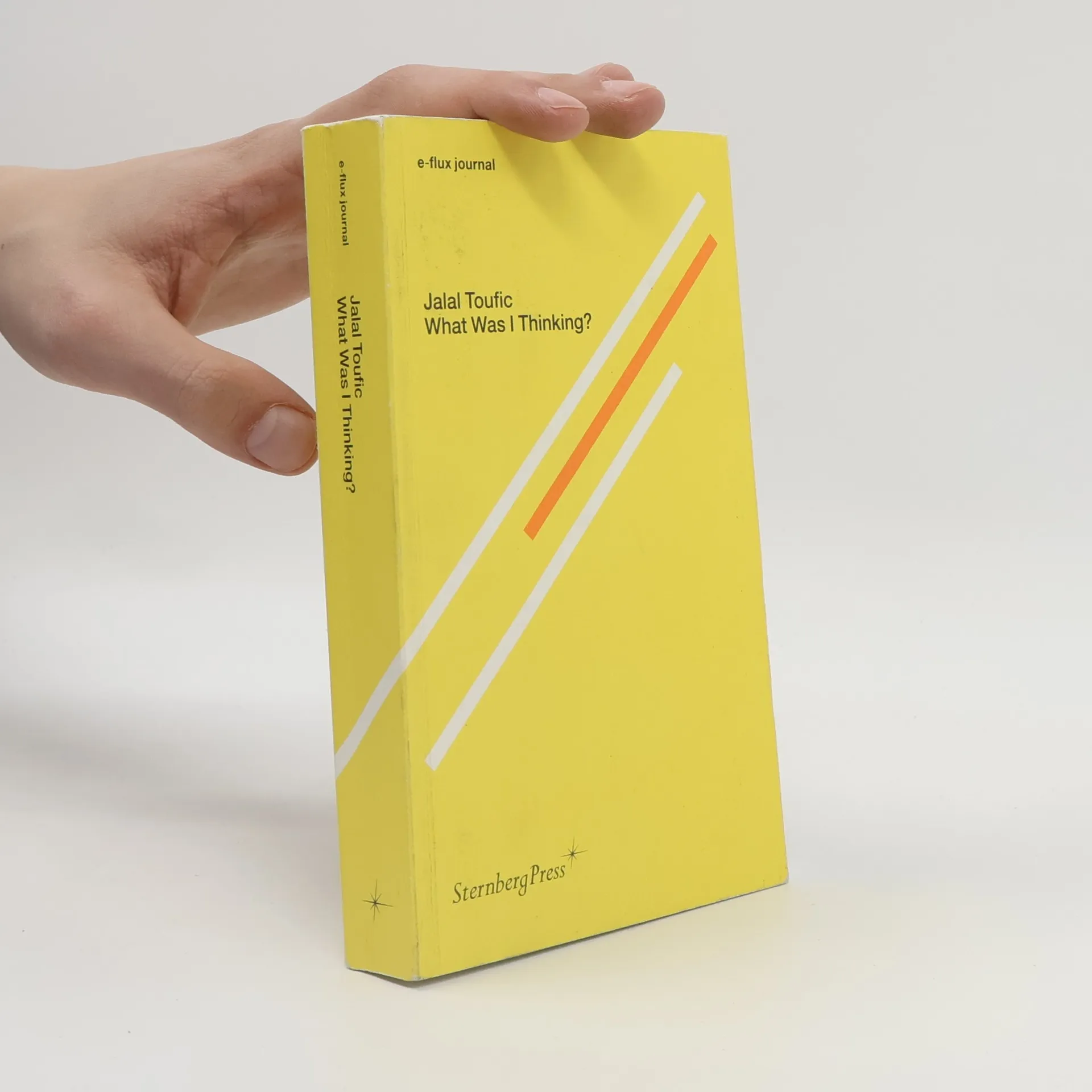
    E-Flux Journal: What Was I Thinking?
    The Internet does not exist
    • E-Flux Journal: What Was I Thinking?

      • 280 pages
      • 10 hours of reading

      What Was I Thinking? serves as an initiation into the realm of thought. Jalal Toufic, with his analytical mind, creates an open-ended "summa" that explores the arts as a privileged site for thinking, even amidst inevitable failures. He juxtaposes his insights with texts from traditional religions and mystics, achieving a serene detachment and joy in thinking reminiscent of Nietzsche's understanding. Toufic stands out as one of the most original thinkers today, embracing the challenge posed by Heidegger in What Is Called Thinking? His exploration ventures into uncharted artistic territories, delving into their layers, paradoxes, and inherent inaccessibility. This endeavor requires immense courage and unique freedom, allowing his mind to pursue unpredictable conclusions, ensuring his writing remains relevant. His work resonates with the spirit of Einstein's General Theory of Relativity and Nietzsche's breakthroughs, establishing Toufic as a significant intellectual force.

      E-Flux Journal: What Was I Thinking?2017
    • The internet does not exist. Maybe it did exist only a short time ago, but now it only remains as a blur, a cloud, a friend, a deadline, a redirect, or a 404. If it ever existed, we couldn't see it. Because it has no shape. It has no face, just this name that describes everything and nothing at the same time. Yet we are still trying to climb onboard, to get inside, to be part of the network, to get in on the language game, to show up on searches, to appear to exist. But we will never get inside of something that isn't there. All this time we've been bemoaning the death of any critical outside position, we should have taken a good look at information networks. Just try to get in. You can't. Networks are all edges, as Bruno Latour points out. We thought there were windows but actually they're mirrors. And in the meantime we are being faced with more and more—not just information, but the world itself.ContributorsJulian Assange, Franco “Bifo” Berardi, Benjamin Bratton, Diedrich Diederichsen, Keller Easterling, Rasmus Fleischer, Joana Hadjithomas and Khalil Joreige, Ursula K. Heise, Brian Kuan Wood, Bruno Latour, Geert Lovink, Patricia MacCormack, Metahaven, Gean Moreno, Hans Ulrich Obrist, Jon Rich, Hito Steyerle-flux journal Series edited by Julieta Aranda, Brian Kuan Wood, Anton Vidokle

      The Internet does not exist2015
      4.0