

Explore the latest books of this year!
Bookbot

Miklos Veto

    Von Kant zu Schelling
    From Budapest to Paris (1936-1957)
    The Thought of Jonathan Edwards
    • The Thought of Jonathan Edwards

      • 522 pages
      • 19 hours of reading

      Focusing on the profound impact of Jonathan Edwards, the book explores his role as a leading theologian and philosopher of colonial America. It delves into his Calvinistic Orthodoxy shaped by the Great Awakening, emphasizing his theological writings and systematic philosophical reflections. The study examines three key areas: being, grace, and glory; the doctrine of the will; and an innovative theory of knowledge that intertwines spirituality and aesthetics. This comprehensive analysis situates Edwards within the broader context of classical Protestant theology and early modern philosophy, catering to the renewed interest in his work.

      The Thought of Jonathan Edwards
    • From Budapest to Paris (1936-1957)

      • 162 pages
      • 6 hours of reading

      Miklos Veto's autobiography offers a profound exploration of his life and identity against the backdrop of significant historical events. Witnessing the Holocaust as a child and participating in the 1956 anti-Soviet Revolution, he faced immense challenges, including escaping through refugee camps to France. His spiritual journey led him to Catholicism at seventeen, influencing his academic career across three continents, including prestigious positions at Yale and in Ivory Coast. The narrative highlights his early life and contributions to Hungary, culminating in recognition by the Hungarian Academy of Sciences.

      From Budapest to Paris (1936-1957)
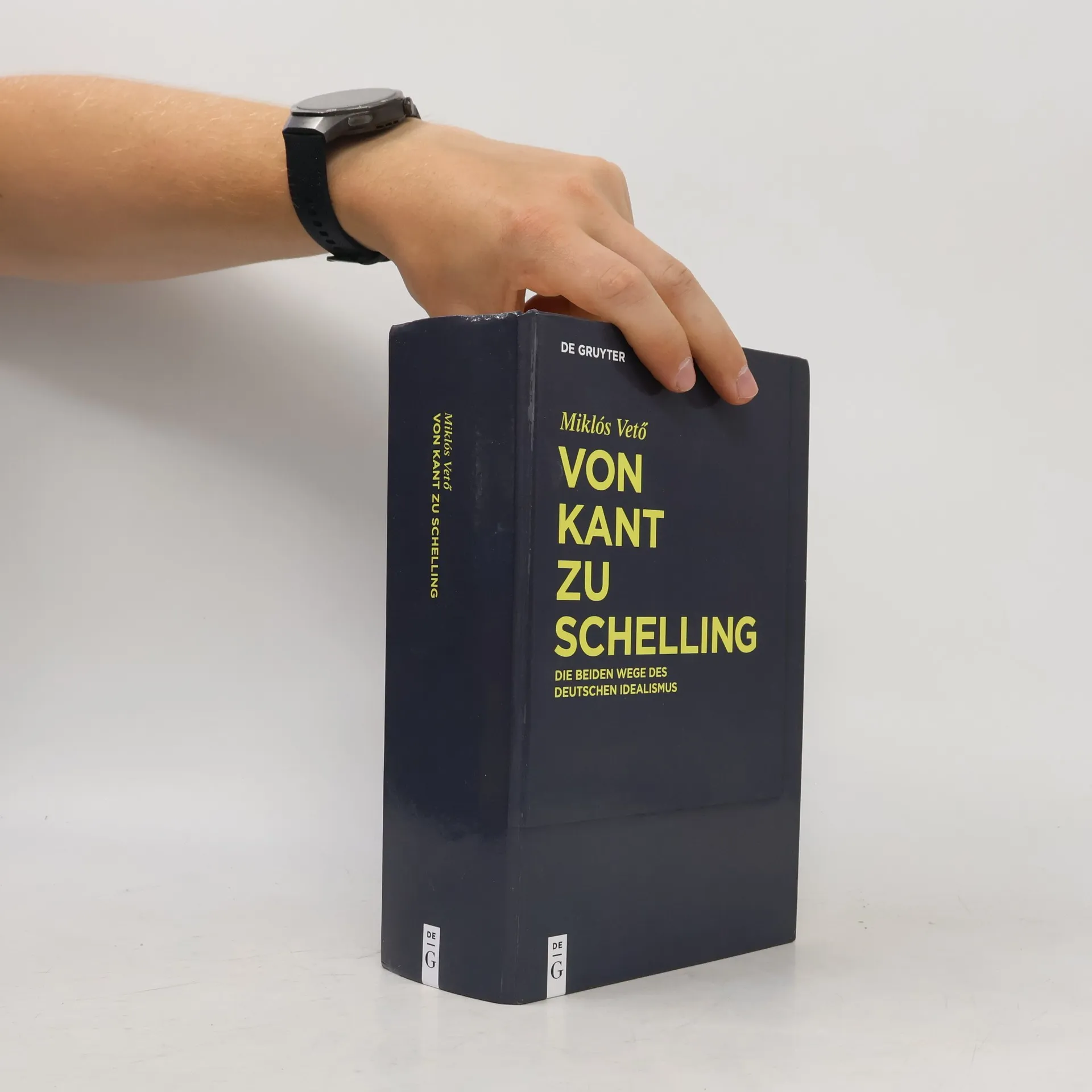
    • Von Kant zu Schelling

      Die beiden Wege des Deutschen Idealismus

      • 1128 pages
      • 40 hours of reading

      Die traditionelle Interpretation des deutschen Idealismus geht von einer geradlinigen Entwicklung von Kant über Fichte und den frühen Schelling bis zur Vollendung im System von Hegel aus. In seinem klassischen Werk, das nun in der deutschen Übersetzung von Hans-Dieter Gondek vorliegt, schlägt Vetö eine andere Perspektive vor. Ausgehend von Kant, folgt er dem Denken auf zwei Wegen. Die erste Lesart, entlang einer Rationalität, die immer vollkommener wird, entspricht der traditionellen Interpretation. Die zweite will von der Endlichkeit her verstanden sein, wie sie der späte Fichte begründete, und die ihre endgültige Ausformulierung in Schellings "Spätphilosophie" erhielt. Dieses monumentale Werk zum deutschen Idealismus gewichtet und interpretiert in drei Teilen die vier Hauptphilosophen des Deutschen Idealismus. Berücksichtigt werden dabei alle Schriften, wobei ein Schwerpunkt auf den Problemstellungen der Metaphysik, der Moral und der Religionsphilosophie liegt.

      Von Kant zu Schelling