

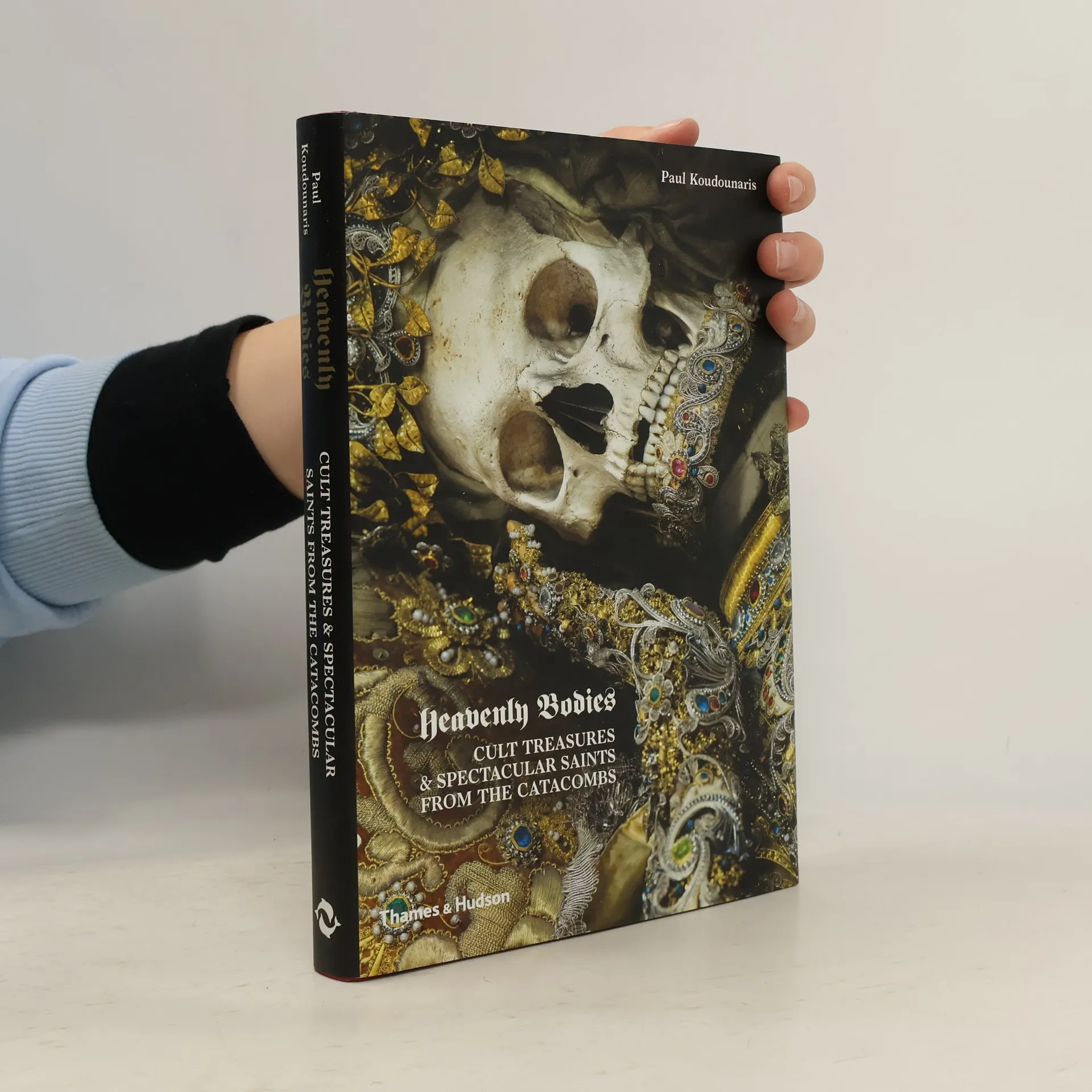
An intriguing visual history of the veneration in European churches and monasteries of bejeweled and decorated skeletons Death has never looked so beautiful. The fully articulated skeleton of a female saint, dressed in an intricate costume of silk brocade and gold lace, withered fingers glittering with colorful rubies, emeralds, and pearls—this is only one of the specially photographed relics featured in Heavenly Bodies. In 1578 news came of the discovery in Rome of a labyrinth of underground tombs, which were thought to hold the remains of thousands of early Christian martyrs. Skeletons of these supposed saints were subsequently sent to Catholic churches and religious houses in German-speaking Europe to replace holy relics that had been destroyed in the wake of the Protestant Reformation. The skeletons, known as “the catacomb saints,” were carefully reassembled, richly dressed in fantastic costumes, wigs, crowns, jewels, and armor, and posed in elaborate displays inside churches and shrines as reminders to the faithful of the heavenly treasures that awaited them after death. Paul Koudounaris gained unprecedented access to religious institutions to reveal these fascinating historical artifacts. Hidden for over a century as Western attitudes toward both the worship of holy relics and death itself changed, some of these ornamented skeletons appear in publication here for the first time.
Paul Koudounaris Books
Paul Koudounaris, a PhD in Art History, is an author and photographer recognized for his work in macabre art and art history. His publications delve into research on charnel houses and ossuaries, establishing him as a notable figure in the field. As a member of The Order of the Good Death, his work explores humanity's fascination with mortality through artistic artifacts. He brings a unique scholarly lens to the study of death in art.


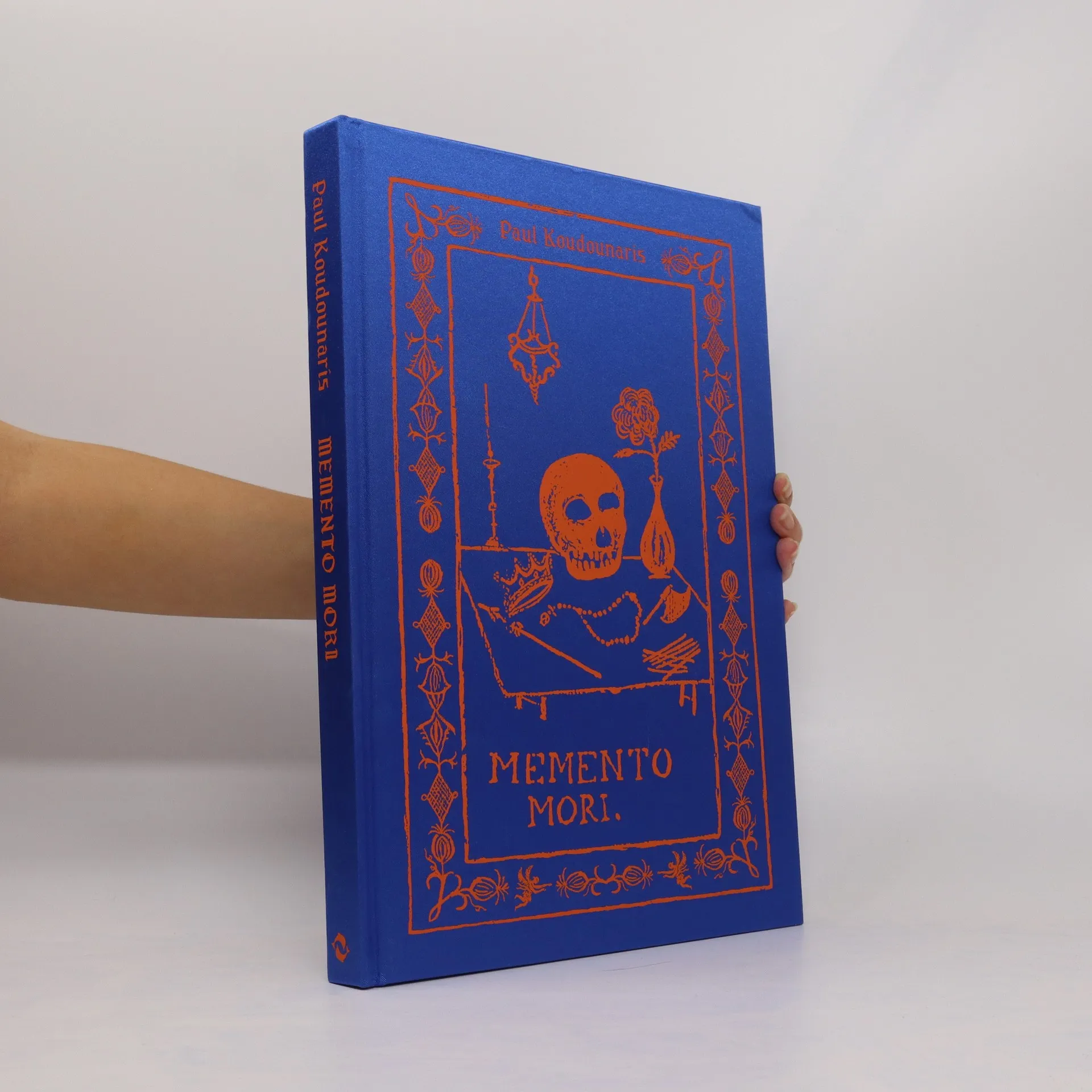
Memento Mori: The Dead Among Us
- 215 pages
- 8 hours of reading
The astonishing story of how the dead live on in memorials and traditions across the globe, from Ethiopia and Nepal to Cambodia and Rwanda, told through arresting images and captivating narration
The Empire of Death
- 224 pages
- 8 hours of reading
From bone fetishism in the ancient world to painted skulls in Austria and Bavaria: an unusual and compelling work of cultural history. It is sometimes said that death is the last taboo, but it was not always so. For centuries, religious establishments constructed decorated ossuaries and charnel houses that stand as masterpieces of art created from human bone. These unique structures have been pushed into the footnotes of history; they were part of a dialogue with death that is now silent. The sites in this specially photographed and brilliantly original study range from the Monastery of Santa Maria delle Grazie in Palermo, where the living would visit mummified or skeletal remains and lovingly dress them; to the Paris catacombs; to fantastic bone-encrusted creations in Austria, Cambodia, the Czech Republic, Ecuador, Egypt, Germany, Greece, Italy, Peru, Portugal, Serbia, Slovakia, Slovenia, Spain, Switzerland, and elsewhere. Paul Koudounaris photographed more than seventy sites for this book. He analyzes the role of these remarkable memorials within the cultures that created them, as well as the mythology and folklore that developed around them, and skillfully traces a remarkable human endeavor.
A Cat's Tale
- 288 pages
- 11 hours of reading
The first ever illustrated history of the world's most noble species from prehistoric times to present day - as told by the cats who lived it.
Es begann mit der Mäusejagd: ein packender Streifzug durch die Geschichte der Hauskatze Kulturgeschichte aus Katzenhand! Katzendame Baba erzählt in diesem prächtig gestalteten Geschenkbuch von der wechselhaften Beziehung zwischen Mensch und Mieze. Gemeinsam mit ihrem Co-Autor Paul Koudounaris, Kunsthistoriker und Katzenexperte, begibt sie sich auf eine Zeitreise. Sie begegnen Babas wilder Urahnin Felis und der altägyptischen Katzengöttin Bastet, erfahren Wissenswertes über die Rolle der Katze im Mittelalter und der Aufklärung, stechen mit wagemutigen Schiffskatzen in See und folgen den Spuren von Babas Vorfahren bis ins Weltall. - Amüsanter Streifzug: von der prähistorischen Felis bis zu berühmten Katzen der Gegenwart - Humorvolles Katzenbuch: Anekdoten und Geschichten über eine jahrtausendealte Beziehung - Historisch fundiert: Alles über Abstammung, Mythologie und Historie der beliebten Stubentiger - Geschenkbuch in hochwertiger Ausstattung, reich illustriert und mit ungewöhnlichen Fotografien Katze und Mensch: Diese Konstellation hat Weltgeschichte geschrieben! Stubentiger Baba erklärt, wie clevere Samtpfoten der Historie ihren Stempel aufgedrückt haben. Wer wissen will, wie sich Katzen über die Jahrtausende hinweg selbst domestizierten und vom Leben und Denken der Menschen Besitz ergriffen haben, liegt mit diesem Buch goldrichtig. Ein unterhaltsames Geschenk für Katzenliebhaber und alle, die es werden wollen. Ihre Katze