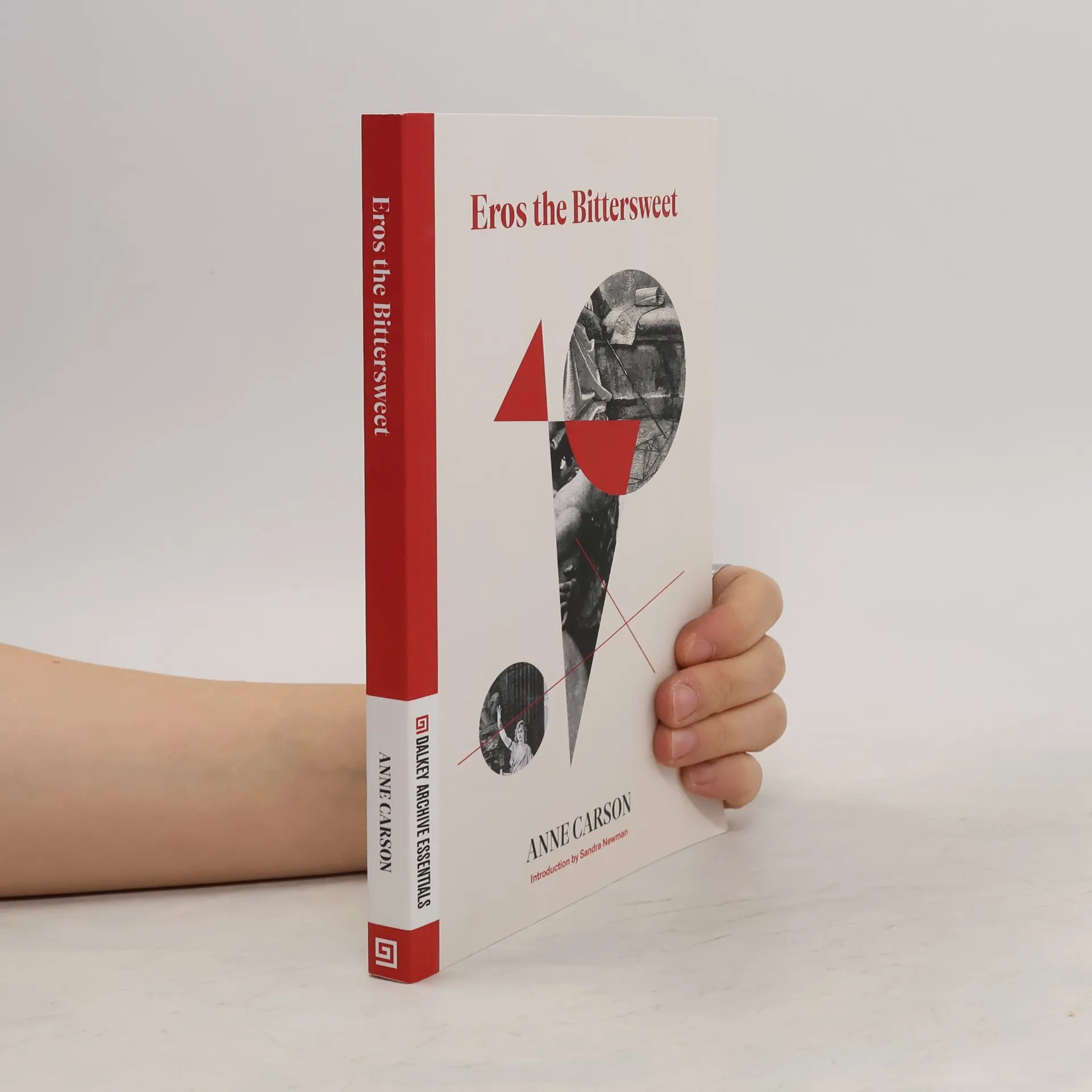
Selected by the Modern Library as one of the 100 best nonfiction books of all time A book about romantic love, Eros the Bittersweet is Anne Carson's exploration of the concept of "eros" in both classical philosophy and literature. Beginning with, "It was Sappho who first called eros 'bittersweet.' No one who has been in love disputes her," Carson examines her subject from numerous points of view, creating a lyrical meditation in the tradition of William Carlos Williams's Spring and All and William H. Gass's On Being Blue. Epigrammatic, witty, ironic, and endlessly entertaining, Eros is an utterly original book.
Anne Carson Books
June 21, 1950
Anne Carson is a Canadian poet and essayist who masterfully bridges classical traditions with modern sensibilities. Her work draws from a deep background in classics, comparative literature, and anthropology, often reinterpreting ancient texts for contemporary audiences. Carson's unique ability to blend poetry, essay, prose, and criticism creates a profoundly original and intellectually stimulating reading experience. Her innovative approach to form and content makes her one of the most significant contemporary literary voices.

H of H Playbook
- 208 pages
- 8 hours of reading
The narrative explores the struggle of Herakles, a symbol of masculine strength and violence, as he returns home after his legendary battles. Despite his heroic feats, he faces challenges in adjusting to a peaceful domestic life, highlighting the tension between warrior identity and the expectations of everyday existence. This theme delves into the complexities of heroism and the difficulties of reintegration into society after a life of conflict.
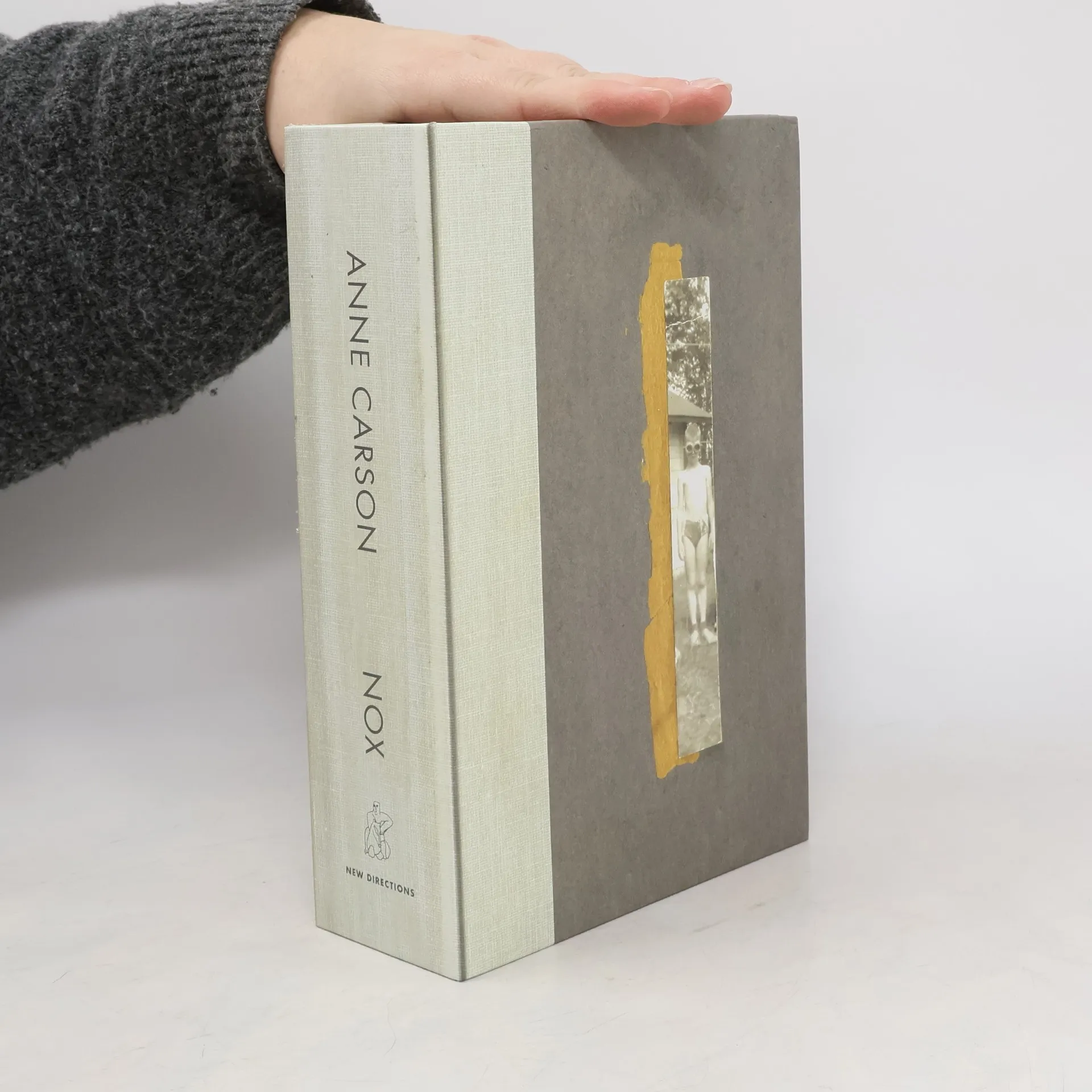
Nox
- 192 pages
- 7 hours of reading
Exploring grief and memory, this book serves as a poignant tribute to the author’s late brother. It combines original poetry with a translation of Catullus's work, intertwining personal reflections with classical themes of loss. The physical presentation is striking, featuring pasted letters, family photos, and collages that enhance the emotional depth of the text. This innovative format transforms the reading experience, challenging conventional notions of poetry and inviting readers into a deeply personal narrative.
Economy of the Unlost
- 160 pages
- 6 hours of reading
Offers a reading of certain of Simonides' texts and aligns these with writings of the modern Romanian poet Paul Celan. Asking such questions as, What is lost when words are wasted? and Who profits when words are saved? This work reveals the two poets' striking commonalities.
Known as a remarkable classicist, Anne Carson weaves contemporary and ancient poetic strands with stunning style in Glass, Irony and God. This collection includes: "The Glass Essay," a powerful poem about the end of a love affair, told in the context of Carson's reading of the Brontë sisters; "Book of Isaiah," a poem evoking the deeply primitive feel of ancient Judaism; and "The Fall of Rome," about her trip to "find" Rome and her struggle to overcome feelings of a terrible alienation there.
Antigonick
- 51 pages
- 2 hours of reading
Antigone, daughter of Oedipus and Jocasta, Oedipus's mother, attempts to secure a respectable burial for her brother Polynices, even though he is seen as a traitor to Thebes and the law forbids even mourning for him.--Wikipedia.
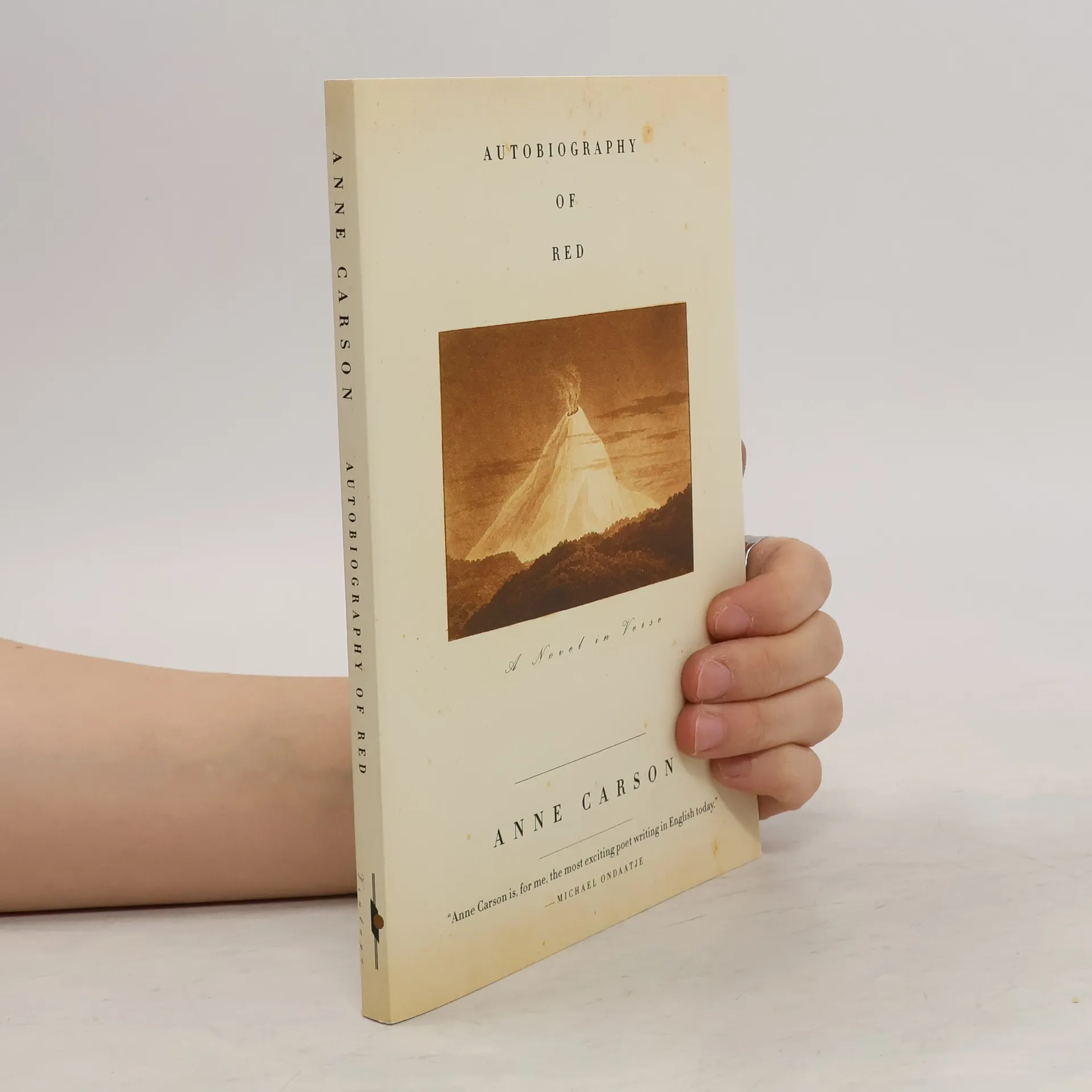
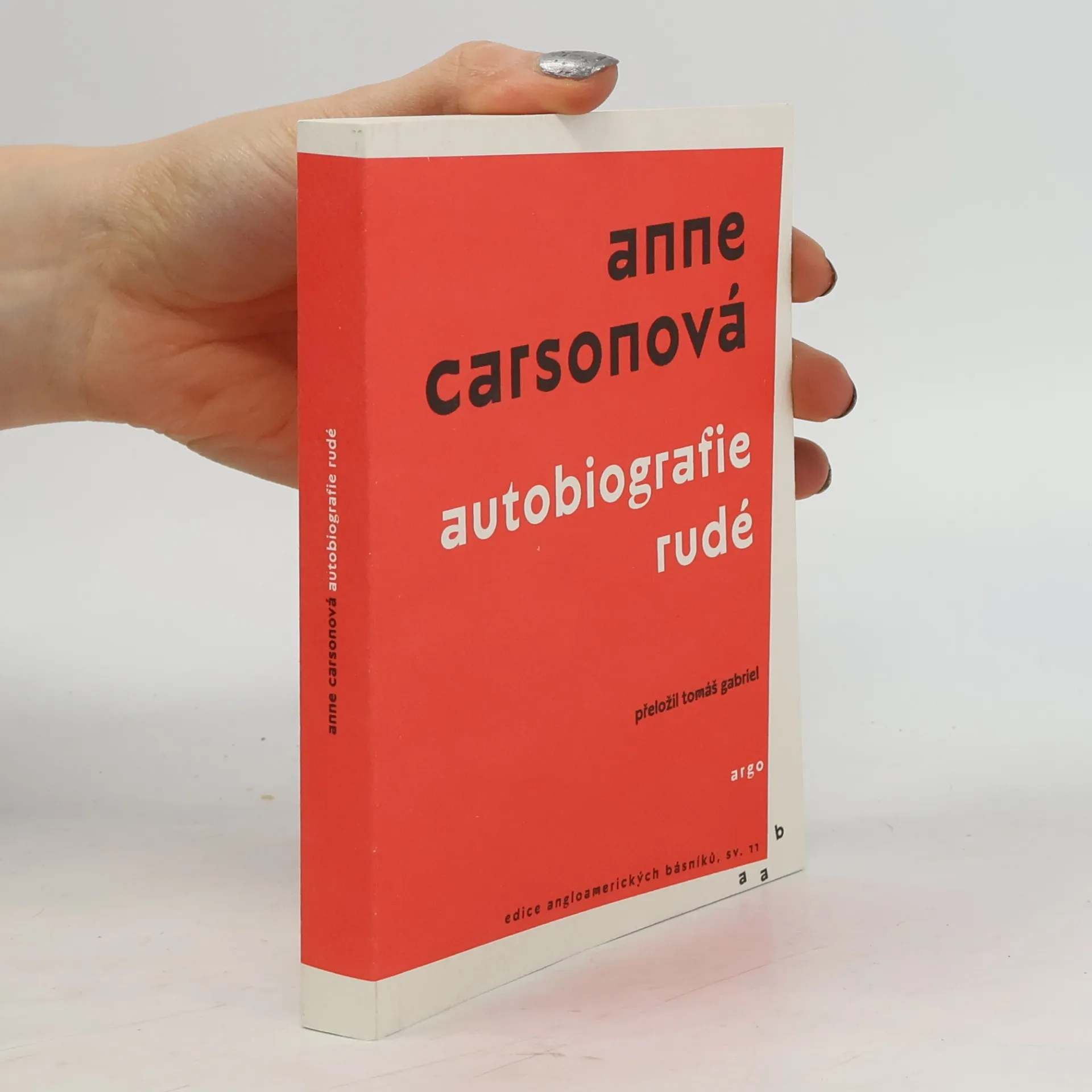
Autobiography of Red
- 160 pages
- 6 hours of reading
The award-winning poet Anne Carson reinvents a genre in Autobiography of Red, a stunning work that is both a novel and a poem, both an unconventional re-creation of an ancient Greek myth and a wholly original coming-of-age story set in the present.Geryon, a young boy who is also a winged red monster, reveals the volcanic terrain of his fragile, tormented soul in an autobiography he begins at the age of five. As he grows older, Geryon escapes his abusive brother and affectionate but ineffectual mother, finding solace behind the lens of his camera and in the arms of a young man named Herakles, a cavalier drifter who leaves him at the peak of infatuation. When Herakles reappears years later, Geryon confronts again the pain of his desire and embarks on a journey that will unleash his creative imagination to its fullest extent. By turns whimsical and haunting, erudite and accessible, richly layered and deceptively simple, Autobiography of Red is a profoundly moving portrait of an artist coming to terms with the fantastic accident of who he is."A profound love story . . . sensuous and funny, poignant, musical and tender." -- The New York Times Book Review"A deeply odd and immensely engaging book. . . . [Carson] exposes with passionate force the mythic underlying the explosive everyday." -- The Village VoiceA NEW YORK TIMES NOTABLE BOOK OF THE YEARNational book Critics Circle Award Finalist
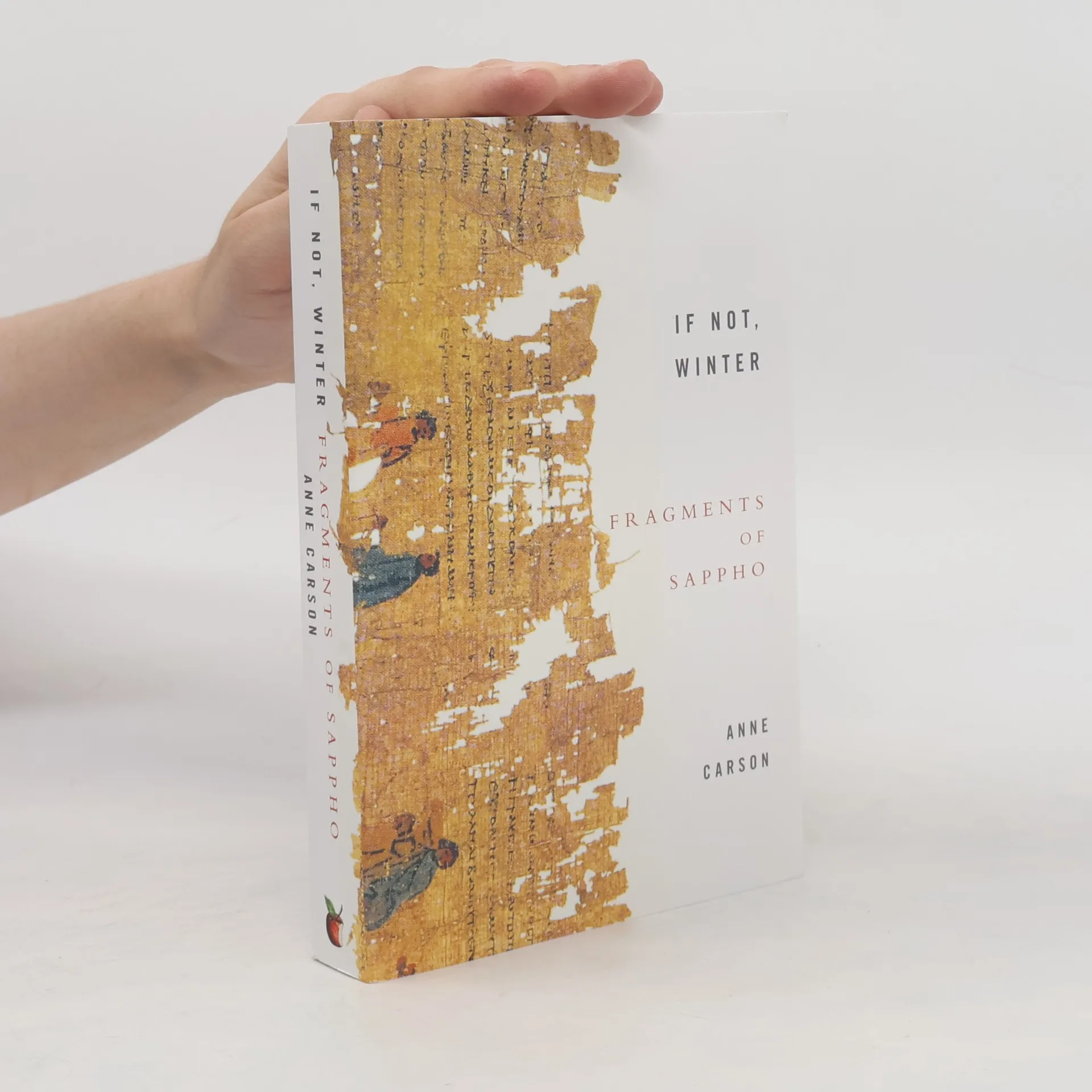
If Not, Winter: Fragments Of Sappho
- 402 pages
- 15 hours of reading
The definitive and ONLY complete translation of Sappho, by one of the world's greatest living poets schovat popis
Plainwater
- 272 pages
- 10 hours of reading
The poetry and prose collected in Plainwater are a testament to the extraordinary imagination of Anne Carson, a writer described by Michael Ondaatje as "the most exciting poet writing in English today." Succinct and astonishingly beautiful, these pieces stretch the boundaries of language and literary form, while juxtaposing classical and modern traditions.Carson envisions a present-day interview with a seventh-century BC poet, and offers miniature lectures on topics as varied as orchids and Ovid. She imagines the muse of a fifteenth-century painter attending a phenomenology conference in Italy. She constructs verbal photographs of a series of mysterious towns, and takes us on a pilgrimage in pursuit of the elusive and intimate anthropology of water. Blending the rhythm and vivid metaphor of poetry with the discursive nature of the essay, the writings in Plainwater dazzle us with their invention and enlighten us with their erudition.
The Beauty of the Husband is a work that explores these oldest of lyrical subjects - beauty, desire, love, betrayal - with freshness and devastating power. schovat popis
The Trojan Women
- 80 pages
- 3 hours of reading
This new comic-book version of Euripides' classic The Trojan Women follows the fates of Hekabe, Andromache and Kassandra after Troy has been sacked and all its men killed. The Trojan Women is a wildly imaginative collaboration between the visual artist Rosanna Bruno and the poet and classicist Anne Carson.
Norma Jeane Baker of Troy
- 64 pages
- 3 hours of reading
A poetic meditation on the power of female beauty by Anne Carson.
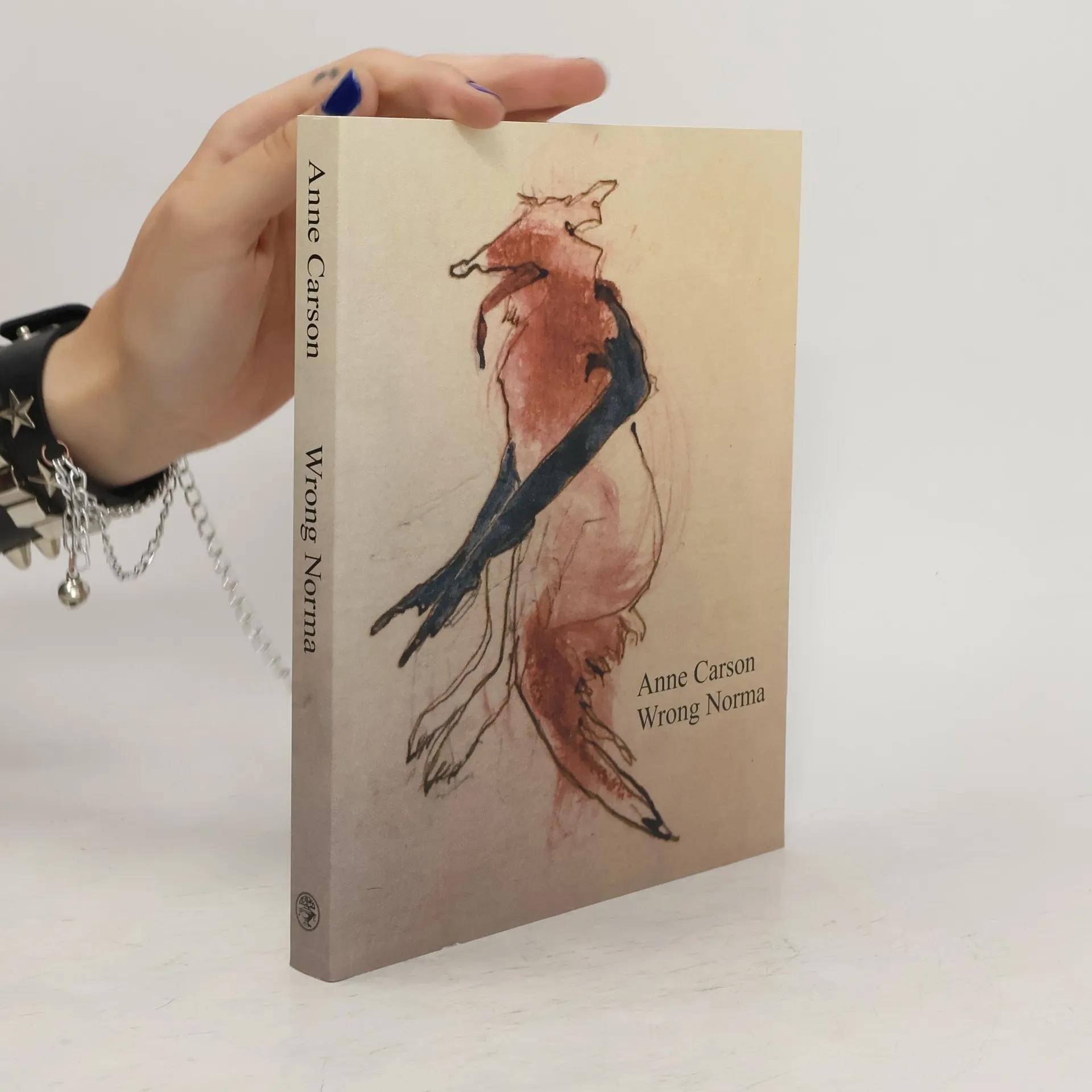
Wrong Norma
- 192 pages
- 7 hours of reading
Wrong Norma is Anne Carson's first book of original material in eight years 'If she was a prose writer she would instantly be recognised as a genius' COLM TÓIBÍN, author of Brooklyn 'I'm a big fan... She pinpoints the collision of oracle and anachronism' TEJU COLE, author of Tremor As with her most recent publications, Wrong Norma is a facsimile edition of the original hand-designed book, drawn and annotated by the author. Several of the twenty-five startling poetic prose pieces have appeared in magazines and journals like the New Yorker and the Paris Review. Anne Carson is probably our most celebrated living poet, winner of countless awards and routinely tipped for the Nobel Prize in Literature. Famously reticent, asking that her books be published without cover copy, she has agreed to say this: Wrong Norma is a collection of writings about different things, like Joseph Conrad, Guantanamo, Flaubert, snow, poverty, Roget's Thesaurus, my Dad, Saturday night, Sokrates, writing sonnets, forensics, encounters with lovers, the word "idea", the feet of Jesus, and Russian thugs. The pieces are not linked. That's why I've called them "wrong".
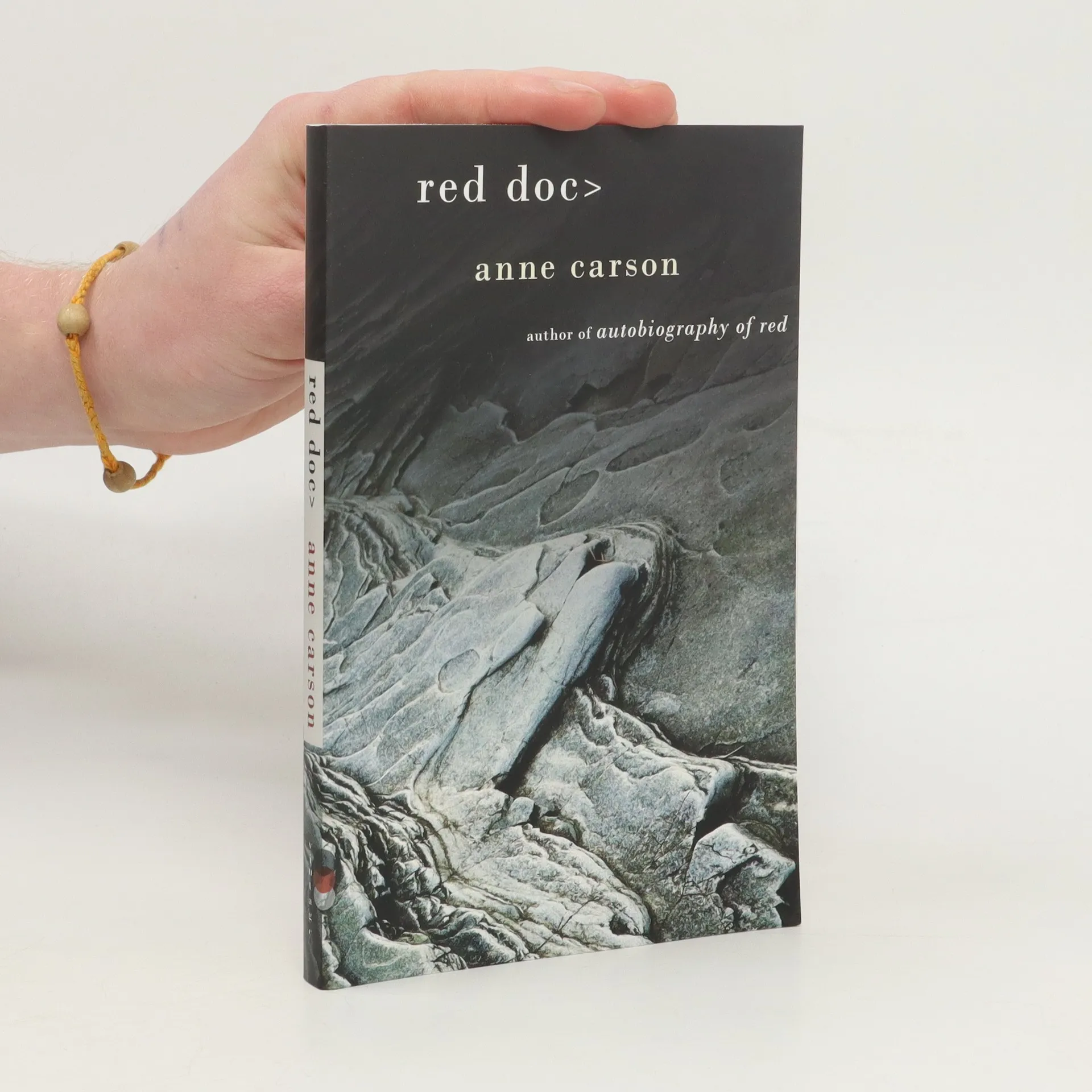
Red Doc>
- 192 pages
- 7 hours of reading
**New York Magazine's Top 10 Books of 2013** **GoodReads Reader’s Choice Award Winner** Some years ago I wrote a book about a boy named Geryon who was red and had wings and fell in love with Herakles. Recently I began to wonder what happened to them in later life. Red Doc/i” continues their adventures in a very different style and with changed names. brbrTo live past the end of your myth is a perilous thing.
Float
- 272 pages
- 10 hours of reading
A New Statesman / Observer Book of the Year `She pinpoints the collision of oracle and anachronism.' - Teju Cole, ObserverAnne Carson dazzles us, book after book, with her inventiveness, her ranging imagination, and the way her work utterly changes our perspectives.
This deluxe redesign celebrates a significant poetry collection that marked the debut of a profound voice in contemporary literature. Featuring a foreword by Margaret Christakos and a reflective piece by the poet herself, the edition also showcases artwork by renowned typographer Robert Bringhurst. Originally published in 1992, it is the only collection released by an independent Canadian press, offering a blend of elegiac and incisive themes that resonate alongside the author's acclaimed later works.
Plainwater. Essays and Poetry
- 272 pages
- 10 hours of reading
From Anne Carson, the award-winning Canadian author of Autobiography of Red, comes a landmark collection that stretches the boundaries of genre, pressing the traditional form of the essay into new service. In succinct and astonishingly beautiful prose and verse, Anne Carson exposes the fragile differences between "I" and "you," and between the modern and the classical, in a voice that shatters convention with its integrity and clarity. Carson envisions a present-day interview with a 7th- century BC poet; lectures on subjects as diverse as hedonism and Ovid; imagines a 15th-century painter's muse at a phenomenology conference in Italy; and in the final section presents a poetic travelogue of a woman's life that beautifully contemplates the difference between the sexes. Plainwater is a stunning collection.
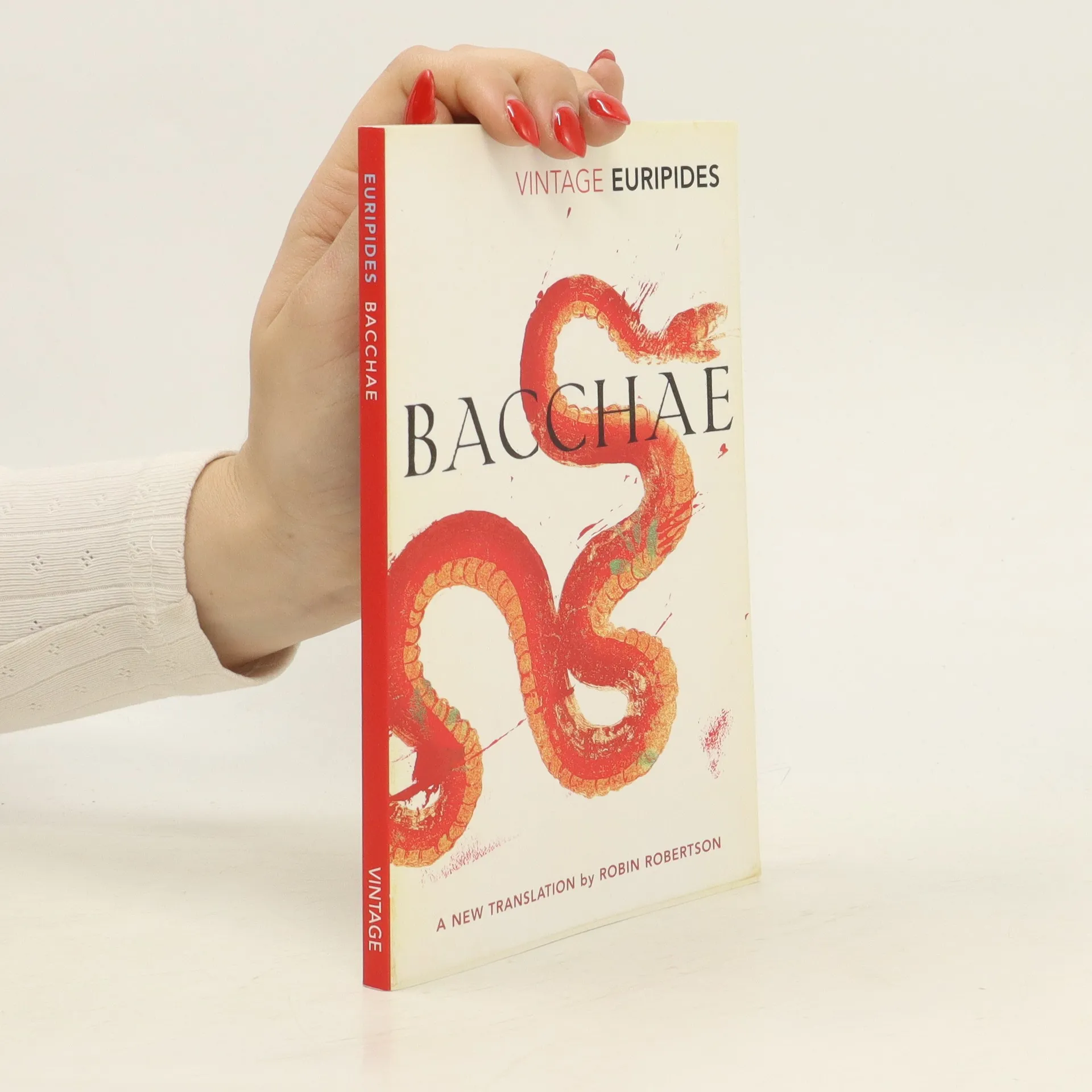
Bacchae
- 128 pages
- 5 hours of reading
Dionysus, god of wine and ecstasy, has come to Thebes, and the women are streaming out of the city to worship him on the mountain, drinking and dancing in wild frenzy. The king, Pentheus, denouces this so-called 'god' as a charlatan. But no mortal can deny a god and no man can ever stand against Dionysus. This stunning translation, by the award-winning poet Robin Robertson, reinvigorated Euripides' devastating take of a god's revenge for contemporary readers, bringing the ancient verse to fervid, brutal life.
The Trojan Women: A Comic
- 96 pages
- 4 hours of reading
The comic-book adaptation reimagines Euripides's The Trojan Women, focusing on the aftermath of Troy's destruction through the experiences of Hekabe, Andromache, and Kassandra. In a unique artistic approach, characters are depicted as animals to symbolize the dehumanizing effects of war, while Kassandra retains her human form, reflecting her psychological detachment. This collaboration between visual artist Rosanna Bruno and poet Anne Carson offers a poignant exploration of the emotional toll of conflict on individuals.
Decreation
- 272 pages
- 10 hours of reading
In her first collection in five years, Anne Carson contemplates 'decreation' - an activity described by Simone Weil as 'undoing the creature in us' - an undoing of self. But how can we undo self without moving through self, to the very inside of its definition?Anne Carson's Decreation starts with form - the undoing of form.
Anthropologie des Wassers
- 130 pages
- 5 hours of reading
Eine Frau und ein Mann pilgern auf dem Jakobsweg. Ein anderer Mann und eine andere Frau – oder sind es dieselben? – reisen durch die Rocky Mountains nach Los Angeles. Ein Schwimmer erobert sich einen Waldsee. Erkundungsreisen, in denen sich das ewige Staunen über das Leben und die Verschiedenheit von Männern und Frauen mit intensiven mitunter surrealen Landschaftsbildern mischen. Inspiriert von der Kunst des Haibun, dessen erzählerische Kraft in aller Schlichtheit unmittelbares Erleben mit Gedankenbildern berühmter Dichter und Mönche aus vergangenen Zeiten in Einklang setzt, erkundet die große Lyrikerin Anne Carson die Kraft der suchenden Bewegung. Ihre Worte und Gedanken fließen, sprudeln, rauschen und stauen sich, hüpfen und verlieren sich wieder. Die intensiven Momentaufnahmen, in denen Carson ganz nebenbei eine Anthropologie der Geschlechter unternimmt, offenbaren die Spannweite der Dichterin: die Klangkraft ihrer Poesie, die erzählerische Konkretion der Prosa, den subtilen Humor und den Atem des Denkens.
Fujiko Nakaya
- 156 pages
- 6 hours of reading
Fujiko Nakaya zählt zu den wichtigsten zeitgenössischen Künstlerinnen Japans. Als Mitglied des New Yorker Kollektivs Experiments in Arts and Technology (E. A. T.) gelang ihr in den 1960er-Jahren der künstlerische Durchbruch mit ihren grenzüberschreitenden Nebelkunstwerken, die sich über die traditionellen Konventionen der Bildhauerei hinwegsetzten und einen neuartigen Dialog mit dem Publikum ermöglichen. Schon früh beschäftigt sich Nakaya mit ökologischen Fragen und arbeitet mit Wasser und Luft – Elementen, die angesichts der Klimakrise eine besondere Bedeutung haben. Von den frühen Gemälden bis hin zu ihren Nebelskulpturen, Einkanal-Videos, Installationen und Dokumentationen, die Nakayas kulturelle und soziale Bezüge zeigen, bietet dieser Band einen umfassenden Überblick über das Schaffen der Künstlerin. FUJIKO NAKAYA (*1933, Sapporo) studierte in den 1950er-Jahren an der Northwestern University in Illinois. 1966 schloss sie sich der Künstlergruppe E. A. T. um Robert Rauschenberg an und zeigte ihre wegweisenden Nebelskulpturen erstmals 1970 auf der Weltausstellung in Osaka. 2018 erhielt sie den renommierten Praemium Imperiale, mit dem der japanische Staat alljährlich herausragende Leistungen auf künstlerischem Gebiet würdigt.
Irdischer Durst
- 120 pages
- 5 hours of reading
Anne Carson verbindet in vier poetischen Streifzügen Dichtung, Essay und Theater und zeigt, wie Geschichten und Mythen unsere Realität prägen. Der Band umfasst Themen wie Forellen, Rembrandt und das Leben des Malers Perugino. Carson feiert die Stärke von Frauen und deren Verständnis für das Wesen des Lebens.
If Not, Winter / fehlst du, ist Winter
Fragments of Sappho / Fragmente der Sappho