
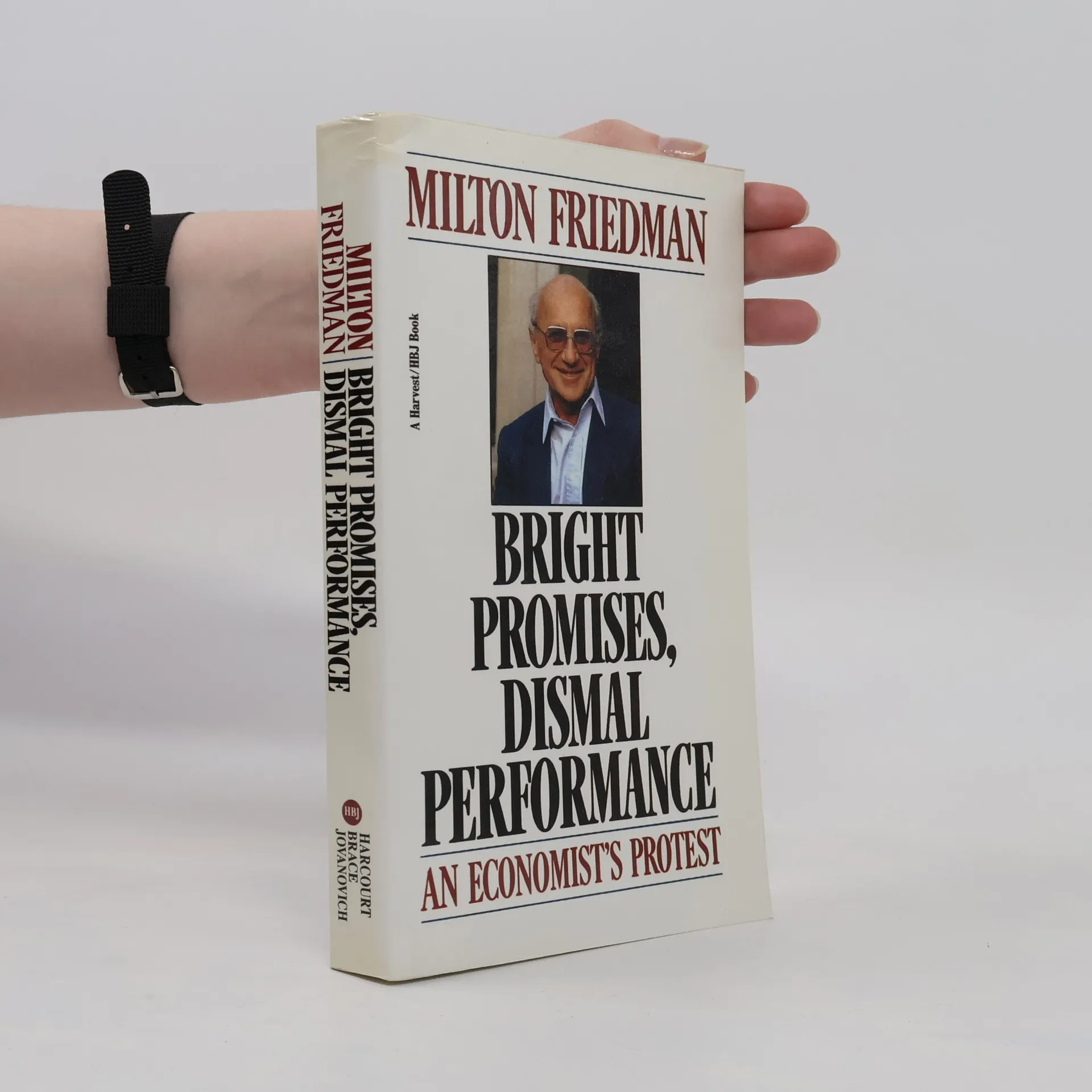

The book presents a clear and logical examination of the money and credit structure, analyzing the role of government and the criteria for monetary authority powers. It offers reform proposals and serves as a significant theoretical statement from a prominent economist whose influence shaped the field for decades. The lucid writing style makes complex ideas accessible, making it a valuable resource for understanding economic principles and policy implications.

Milton Friedman was lauded as the grandmaster of free-market economic theory
in the postwar era. This book collects many of Friedman's papers on topics in
economics that were published in the Journal of Political Economy. It
incorporates papers from 1948 to 1990. It is useful for those tracing the
course of 20th century economics and politics.
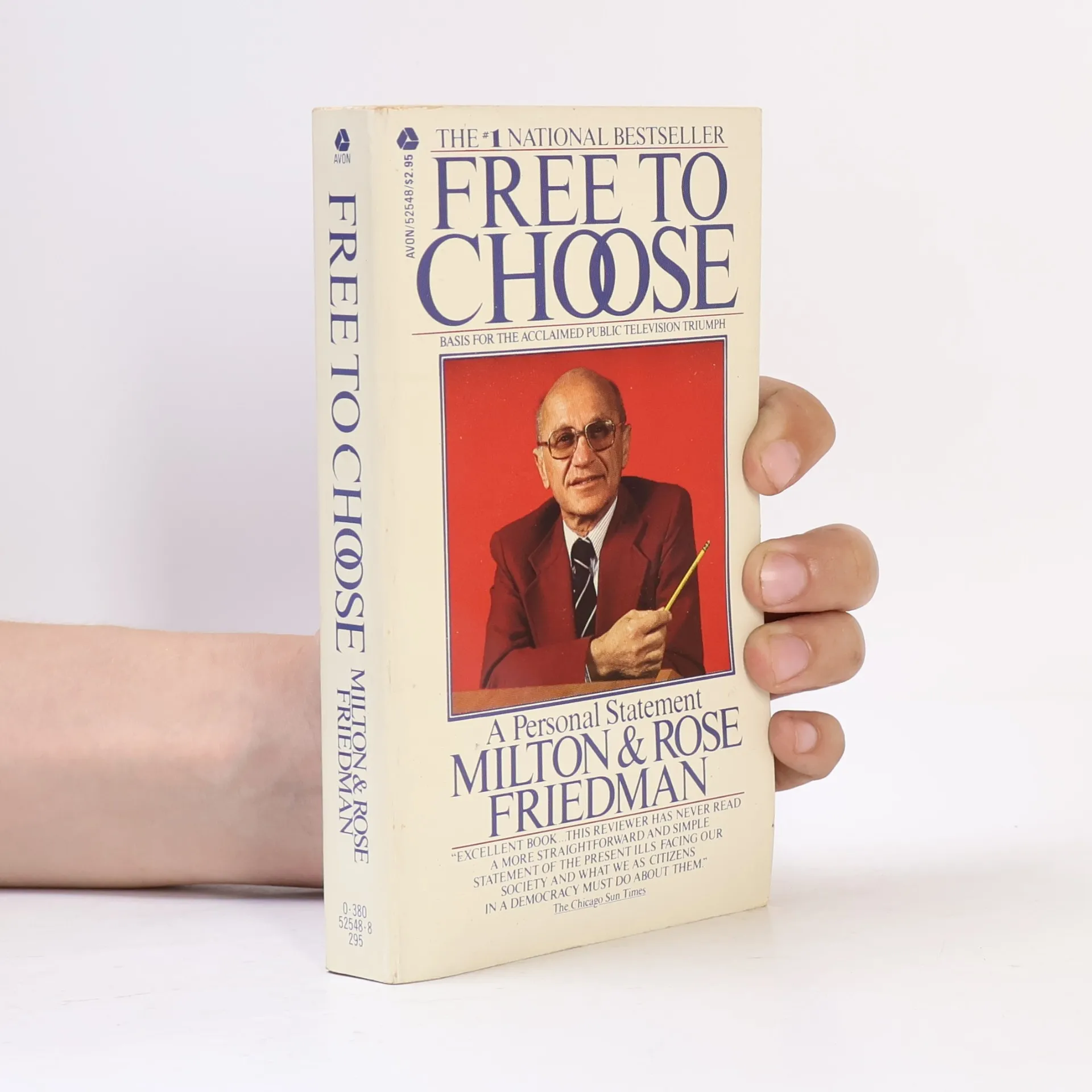
The international bestseller on the extent to which personal freedom has been eroded by government regulations and agencies while personal prosperity has been undermined by government spending and economic controls. New Foreword by the Authors; Index.
An unimpeachable classic in political philosophy, intellectual and cultural history, and economics, this work has inspired and infuriated readers for decades. Originally published in 1944, it passionately warns against the dangers of state control over production. F. A. Hayek argues that collectivist policies empowering government with economic control would not lead to utopia, but rather to the horrors witnessed in Nazi Germany and fascist Italy. Over the past sixty years, it has established itself alongside the works of Alexis de Tocqueville, John Stuart Mill, and George Orwell for its exploration of the relationship between individual liberty and government authority.
This new edition is part of the Collected Works of F. A. Hayek series and features an introduction by series editor Bruce Caldwell, who discusses the book's origins, publishing history, and common misinterpretations of Hayek's ideas. Caldwell has standardized and corrected references and included new explanatory notes. Additionally, the volume is supplemented with an appendix of related materials, including prepublication reports and forewords by notable figures such as John Chamberlain and Milton Friedman. This edition serves as the definitive version of Hayek's enduring masterwork.
"Stimulating, provocative, often infuriating, but well worth reading."—Peter Newman, Economica"His critical blast blows like a north wind against the more pretentious erections of modern economics. It is however a healthy and invigorating blast, without malice and with a sincere regard for scientific objectivity."—K.E. Boulding, Political Science Quarterly"Certainly one of the most engrossing volumes that has appeared recently in economic theory."—William J. Baumol, Review of Economics and Statistics
This thought-provoking and influential book by a distinguished economist examines whether consumption behavior can be defined in a way that's supported by empirical evidence and useful for research and planning.
Frontmatter -- Table of Contents -- Preface -- Preface to Price Theory: A Provisional Text -- 1. Introduction -- 2. Theory of Demand -- 3. The „Welfare“ Effects of Taxes -- 4. The Utility Analysis of Uncertainty -- 5. The Relationships Between Supply Curves and Cost Curves -- 6. The Law of Variable Proportions and a Firm's Cost Curves -- 7. Derived Demand -- 8. The Theory of Distribution with Fixed Proportions -- 9. The Theory of Marginal Productivity and the Demand for Factors of Production -- 10. Marginal Productivity Analysis: Some General Issues -- 11. The Supply of Factors of Production -- 12. Wage Determination and Unemployment -- 13. Wages in Different Occupations -- 14. Relation Between the Functional and Personal Distribution of Income -- 15. The Size Distribution of Income -- 16. Profits -- 17. The Theory of Capital and the Rate of Interest -- Appendix A: Reading Assignments -- Appendix B: Problems -- Index
The book features a significant discussion on economic policies, highlighting a seminar led by Prof. Franco Modigliani at the Federal Reserve Bank of San Francisco in January 1977. It includes Modigliani's lecture on the monetarist controversy and stabilization policies, alongside a response from Nobel Laureate Milton Friedman. The content encapsulates their dialogue and a broader floor discussion, enriched by an appendix containing Modigliani's AEA Presidential Address. Dr. Michael W. Keran chaired this notable event, providing a scholarly context to the debates in economics.
There are at least three requirements for an economy to maintain stable
prices. This book brings together two classic IEA papers, and explains how the
Institutional arrangements for central banks should be developed to deliver
stable prices and, importantly, to influence inflation expectations. schovat
popis
Presents historical data and analytics to support the claim that monetary
policy - steady control of the money supply - matters profoundly in the
management of the nation's economy, especially in navigating serious economic
fluctuations. číst celé
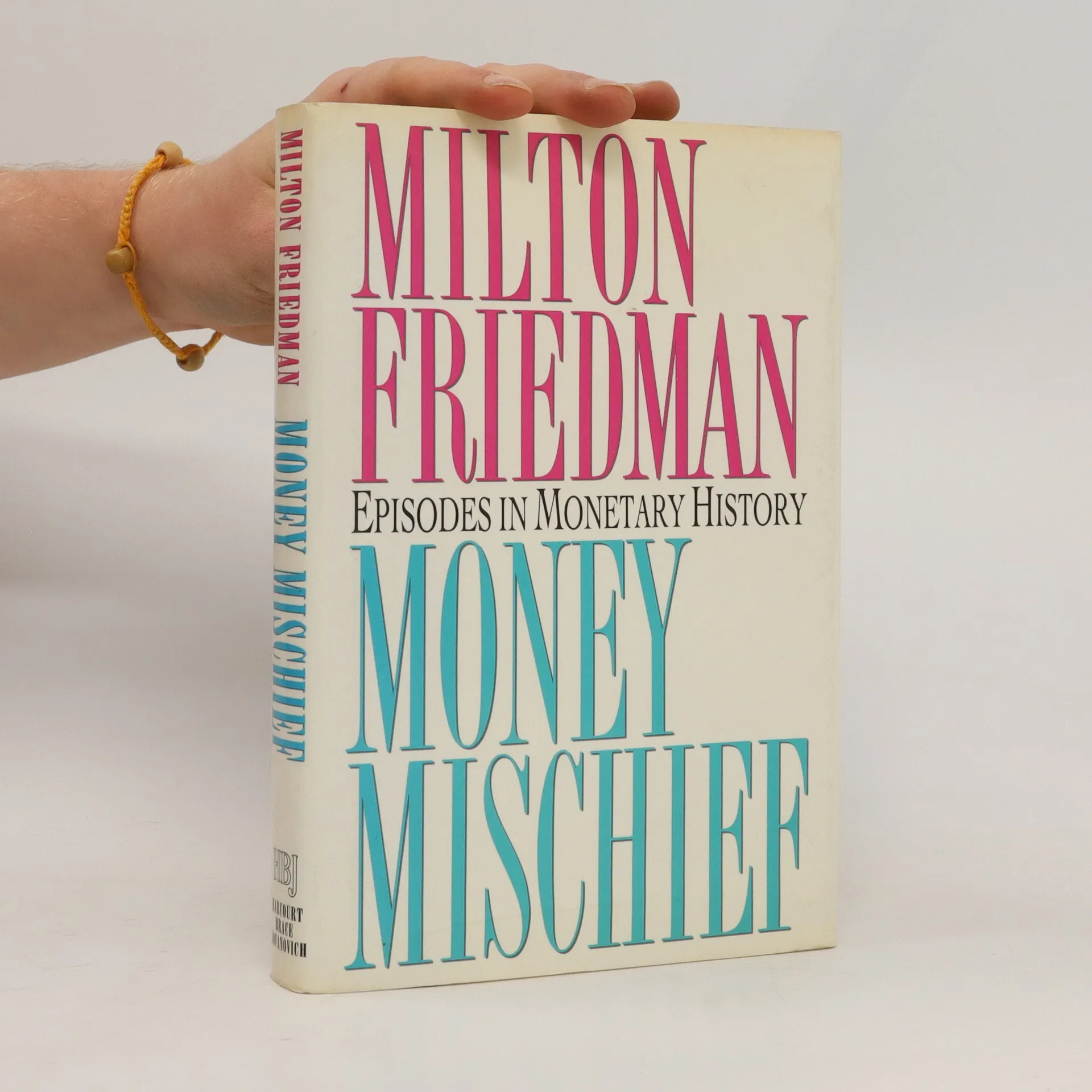
Nobel Prize-winner Milton Friedman makes clear once and for all that no one is immune from monetary economics--that is, from the effects of its theory and its practices. He demonstrates through historical events the mischief that can result from misunderstanding the monetary system--how, for example, the work of two obscure Scottish chemists destroyed the presidential prospects of William Jennings Bryan and how Franklin D. Roosevelt's decision to appease a few senators from the American West helped communism triumph in China. In Money Mischief Dr. Friedman discusses the creation of value: from stones to feathers to gold. He outlines the central role of monetary theory and shows how it can act to ignite or deepen inflation, as one instance. He explains, in layman's English, what the present monetary system in the United States--a system without historical precedent--means for your paycheck and savings book as well as for the global economy
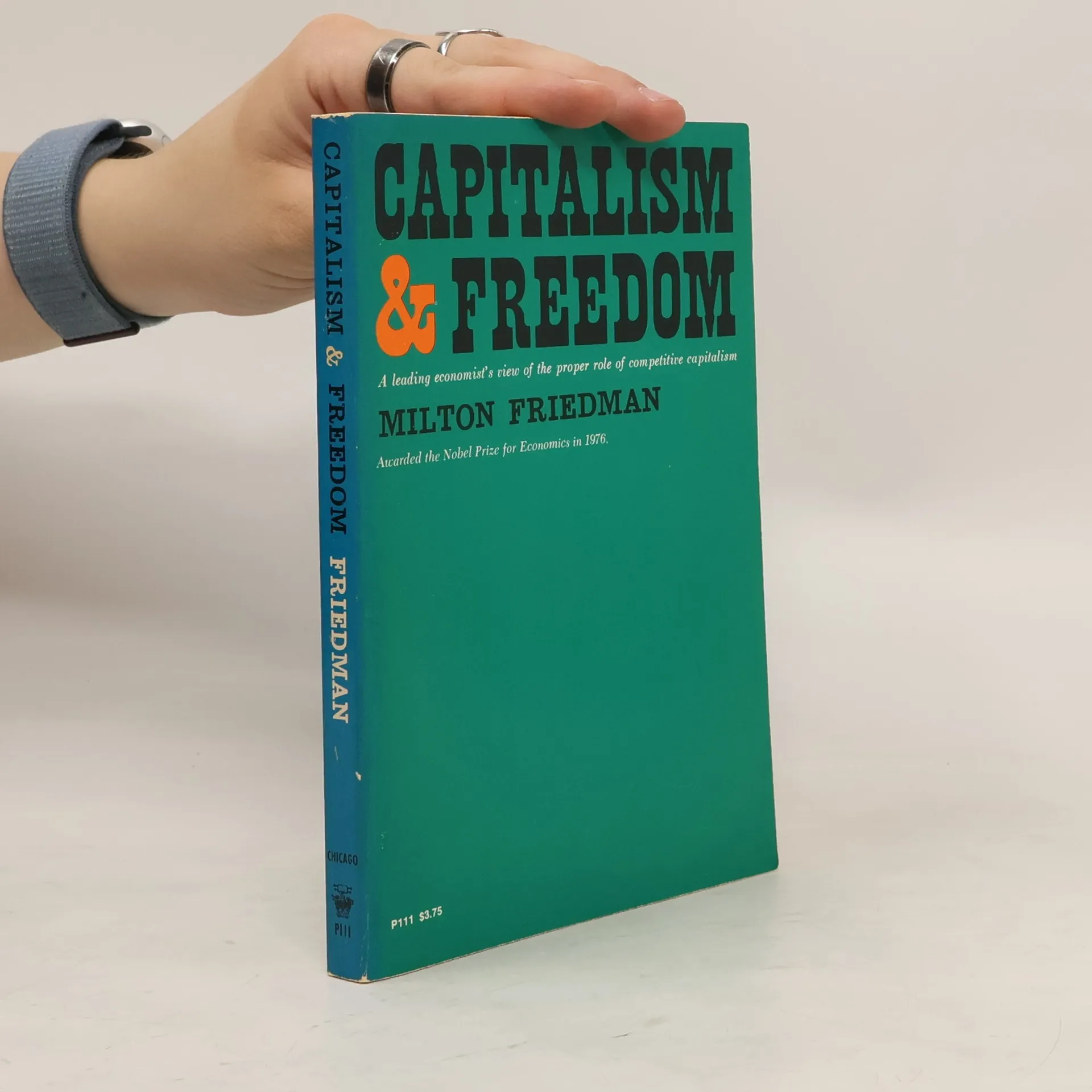
How can we benefit from the promise of government while avoiding the threat it poses to individual freedom? In this classic book, the author provides the definitive statement of his economic philosophy--one in which competitive capitalism serves as both a device for achieving economic freedom and a necessary condition for political freedom.
Recognized for its cultural significance, this work contributes to the foundational knowledge of civilization. Scholars have selected it for its importance, highlighting its relevance and impact on understanding historical and societal contexts.
This selection from the authors' A Monetary History of the United States, 1867-1960 (Princeton) describes the changes that were made in the banking structure and in the monetary standard following the great contraction of 1929 to 1933, the establishment of monetary policies after the New Deal period, and the development of inflation during World War II. Originally published in 1980. The Princeton Legacy Library uses the latest print-on-demand technology to again make available previously out-of-print books from the distinguished backlist of Princeton University Press. These editions preserve the original texts of these important books while presenting them in durable paperback and hardcover editions. The goal of the Princeton Legacy Library is to vastly increase access to the rich scholarly heritage found in the thousands of books published by Princeton University Press since its founding in 1905.
Der Ökonomie-Nobelpreisträger Milton Friedman (1912–2006) ist neben John Maynard Keynes der einflussreichste Ökonom des 20. Jahrhunderts. Er entwickelte die Quantitätstheorie des Geldes weiter; auf ihn geht der sogenannte Monetarismus zurück. Im Mittelpunkt seiner Veröffentlichungen standen die Themen des klassischen Liberalismus: schlanker Staat, individuelle Freiheit und Marktwirtschaft. Darüber hinaus gab er Anstösse zur praktischen Sozial- und Bildungspolitik. Seine Thesen beeinflussten Ronald Reagan, Margaret Thatcher und die Deutsche Bundesbank. Durch seine populären Bücher und TV-Auftritte – er konnte komplexe Sachverhalte allgemeinverständlich und nachvollziehbar darstellen – wurde er auch einem breiten Publikum bekannt. Mit der Finanz- und Eurokrise gewinnen Friedmans geldpolitische Positionen an Aktualität und helfen, die gegenwärtigen Debatten über Zentralbanken und Geldstabilität zu verstehen.
Kniha vychází z více než 50 let Friedmanova studia peněz a peněžních institucí a ukazuje na ředě historických epizod z různých období na velmi překvapivé souvislosti mezi chováním měnových autorit (panovníků, centrálních bank) a politickými událostmi. V knize, která je psána velmi čtivě, se dovídáme, jak politické ústupky jedné úzké zájmové skupině v několika státech USA přivodily nástup komunismu v Číně, sledujeme, jak znehodnocování zlatých mincí přivodilo rozpad Římského impéria, Friedman ukazuje, jakou shodou náhod došlo k tomu, že se zlato stalo hlavním měnovým kovem. Na příkladech z nedávné doby jasně vidíme, jak nezodpovědné vlády mnoha zemí světa pomocí inflace ožebračily své občany a jak bezprecedentní je současná situace světového měnového uspořádání.