


Explore the latest books of this year!
Bookbot

A. J. Pollard

    Anthony James Pollard is a British medieval historian specializing in North-Eastern England during the Wars of the Roses. He is considered a leading authority in the field. His work delves into the intricate political and social dynamics that shaped this tumultuous era. Pollard's research illuminates the complex relationships between the nobility and common people, offering fresh perspectives on events that influenced English history.

    Справочник по вычислительным методам статистики / A Handbook of Numerical and Statistical Techniques
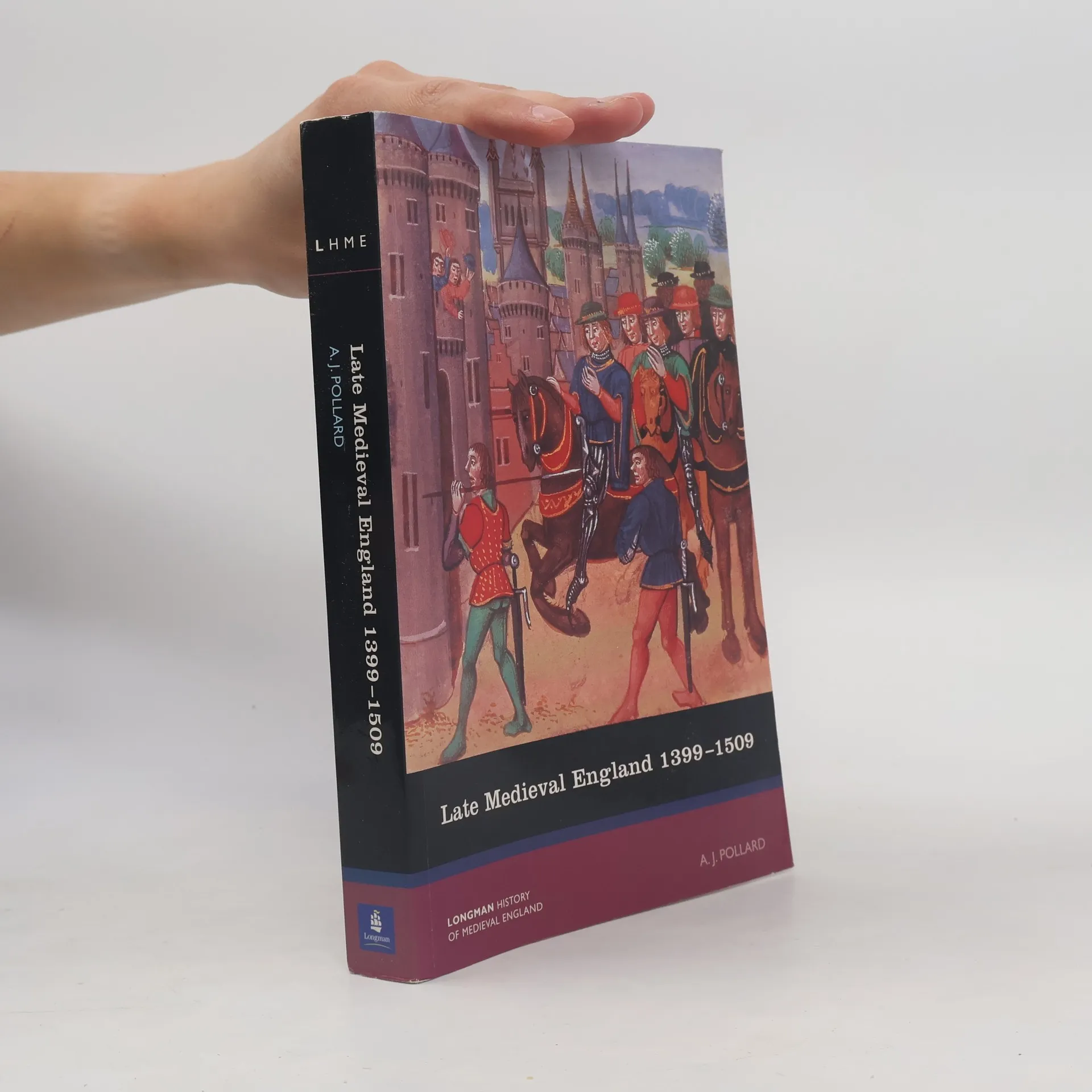
    Longman History of Medieval England: Late Medieval England 1399-1509
    Edward IV
    Richard III and the Princes in the Tower
    Edward IV (Penguin Monarchs)
    • Edward IV (Penguin Monarchs)

      • 160 pages
      • 6 hours of reading

      In 1461 Edward earl of March, an able, handsome, and charming eighteen-year old, usurped the English throne from his feeble Lancastrian predecessor Henry VI. Ten years on, following outbreaks of civil conflict that culminated in him losing, then regaining the crown, he had finally secured his kingdom. The years that followed witnessed a period of rule that has been described as a golden age: a time of peace and economic and industrial expansion, which saw the establishment of a style of monarchy that the Tudors would later develop. Yet, argues A. J. Pollard, Edward, who was drawn to a life of sexual and epicurean excess, was a man of limited vision, his reign remaining to the very end the narrow rule of a victorious faction in civil war. Ultimately, his failure was dynastic: barely two months after his death in April 1483, the throne was usurped by Edward's youngest brother, Richard III.

      Edward IV (Penguin Monarchs)2019
      5.0
    • Edward IV

      • 128 pages
      • 5 hours of reading

      In 1461 Edward earl of March, a handsome eighteen-year old of massive charisma and ability, usurped the English throne from his vacant Lancastrian predecessor Henry VI. Ten years on, following outbreaks of civil conflict that culminated in him losing, then regaining the crown, he had finally secured his kingdom. The years that followed witnessed a period of rule that has been described as a golden age: a time of peace and economic and industrial expansion, which saw the establishment of a style of strong monarchy that the Tudors would make their own. Yet, argues A. J. Pollard, Edward, who squandered his undoubted talents in a frenzy of sexual and epicurean excess, was a man of limited vision, his reign remaining to the very end the narrow rule of a victorious faction in civil war. Ultimately, his failure was dynastic: barely two months after his death in April 1483, his young son and heir was usurped by Edward's youngest brother, Richard III.

      Edward IV2016
      3.6
    • A highly accessible and unashamedly `King-centred' history of the 15th century which, as Pollard clearly shows, was not only a period of change and disunity, but also witnessed a great increase in the English sense of identity and self-worth. Beginning with the deposition of Richard II in 1399, Pollard investigates the political, religious and social factors that transformed England from a medieval to a modern society during the reigns of Lancastrian, Yorkist and Tudor monarchs. Chapters also consider the place of the 15th century within the broader history of England, different interpretations of the period and the social changes that affected all sectors of the population.

      Longman History of Medieval England: Late Medieval England 1399-15092000