

"Très improbable, cette amitié entre un paludier misanthrope, ex-Parisien installé près de Guérande, et un agent immobilier ambitieux, prêt à tout pour 'réussir'. Le premier mène une vie quasi monacale, déconnecté avec bonheur de toute technologie, tandis que le second gare avec fierté sa Porsche devant les boîtes de nuit. Liés à la fois par une promesse absurde et par une fascination réciproque, ils vont passer une semaine à tenter de s'apprivoiser, au cœur des marais salants."--Page 4 of cover.
Olivier Bourdeaut Book order (chronological)
Growing up by the Atlantic, Olivier Bourdeaut found his freedom early when the traditional education system failed to grasp his unique learning desires. In the absence of television, his childhood was filled with extensive reading and boundless dreaming. After a decade navigating the unpredictable world of real estate and a subsequent two-year stint managing a peculiar firm, Bourdeaut, having explored roles from lead experts to salt-flower harvesters, finally pursued his lifelong ambition: writing. His first published work stands as a testament to this enduring creative drive.


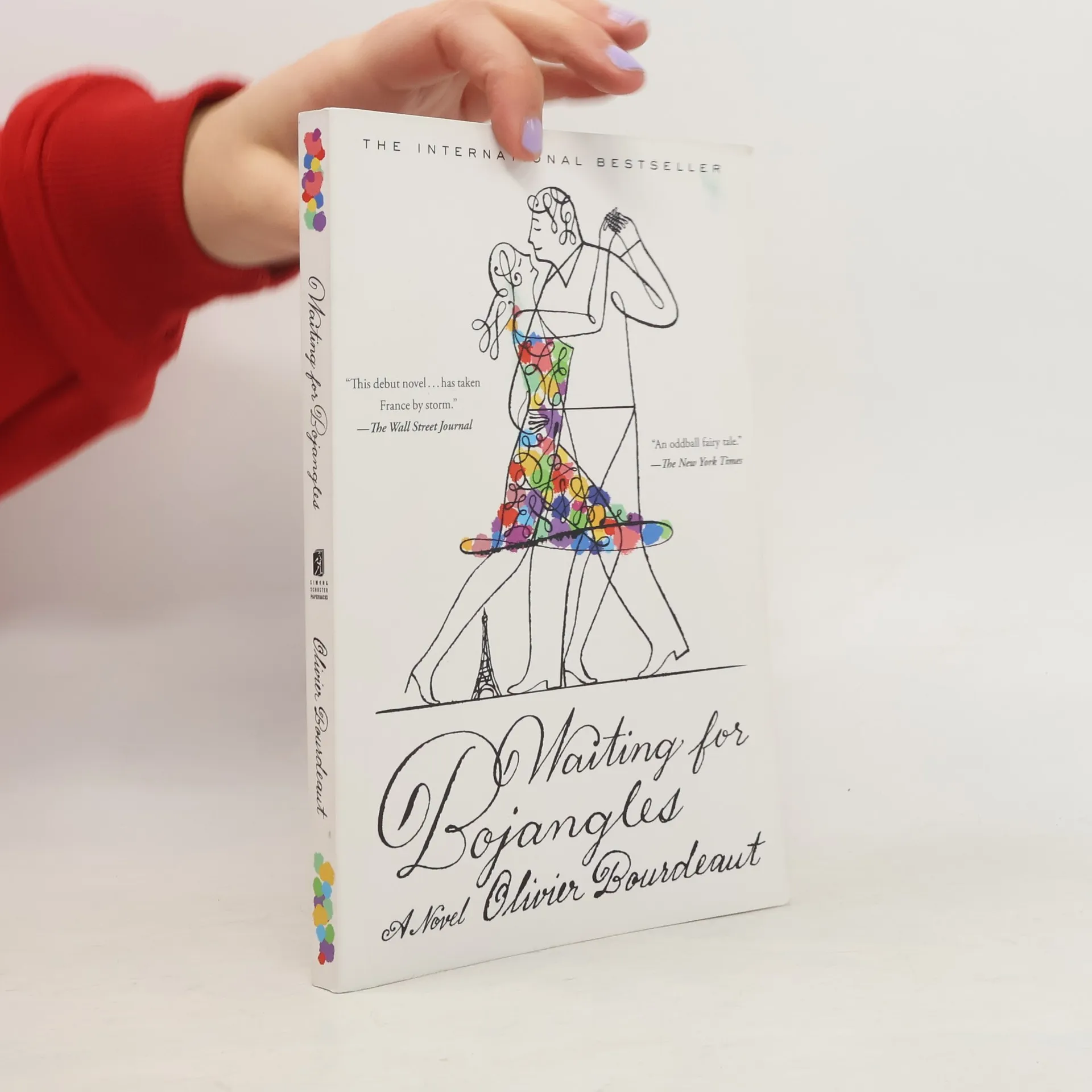
Waiting for Bojangles
- 176 pages
- 7 hours of reading
An “oddball fairy tale” (The New York Times)—shortlisted for one of France’s highest literary prizes—a dark, funny, and wholly charming novel about a young boy and his eccentric family, who grapple with the realities of mental illness in unique and whimsical ways. A young boy lives with his madcap parents, Louise and George, and an exotic bird in a Parisian apartment, where the unopened mail rises in a tower by the door and his parents dance each night to Nina Simone’s mellifluous classic “Mister Bojangles.” As his mother, mesmerizing and unpredictable, descends deeper into her own mind, it is up to the boy and his father to keep her safe—and, when that fails, happy. Fleeing Paris for a country home in Spain, they come to understand that some of the most radiant people bear the heaviest burdens. Told from the perspective of a young boy who idolizes his parents—and from George’s journals, detailing his epic love story with his wife—Waiting for Bojangles is a “lighthearted and yet sorrowful tale” (San Francisco Chronicle) that will stay with you long after the final page.