

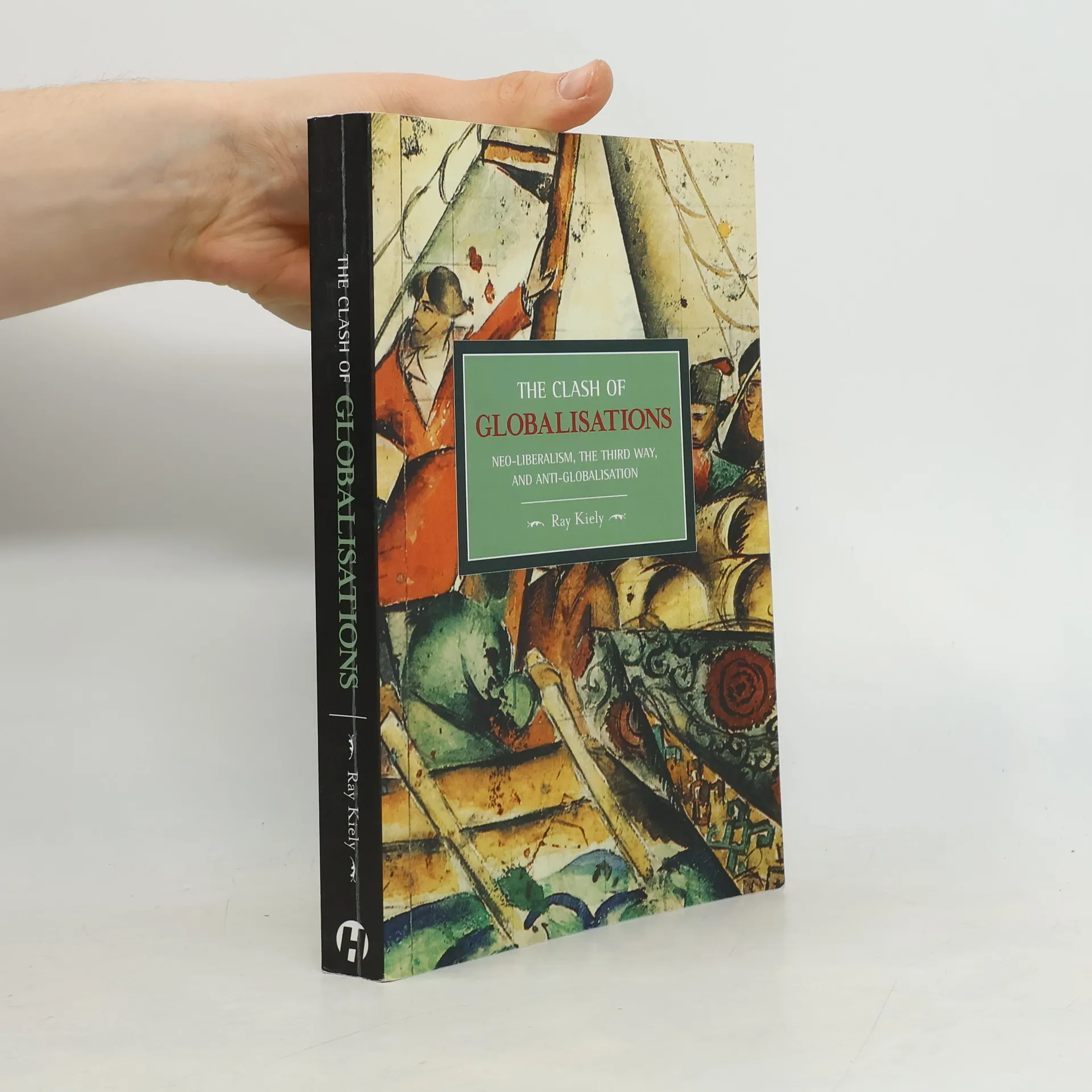
The Clash of Globalizations
Neo-Liberalism, the Third Way and Anti-globalization
- 322 pages
- 12 hours of reading
This work addresses the politics of globalisation through an examination of neo-liberalism, the third way, and anti-capitalist responses and alternatives. It utilises a Marxist approach, not only to challenge the claims made by apologists for 'actually existing globalisation', but to explain, contextualise and problematise the rise of anti-globalisation politics. Central to the work is a critique of globalisation theory, neo-liberalism and the third way; an examination of the role of the state as an agent of globalisation, particularly the hegemonic US state; a theorisation of the nature of uneven development in the global order; and an examination of the political implications of these issues for progressive alternatives to neo-liberal globalisation. Ray Kiely, Ph.D. (1991) in Sociology, University of Warwick, is Senior Lecturer in Development Studies, SOAS, University of London. He has published widely in the fields of globalisation and development, including Sociology and Development (UCL Press, 1995) and The Ends of Globalisation: US Hegemony and the Globalist Project (forthcoming, 2005).