

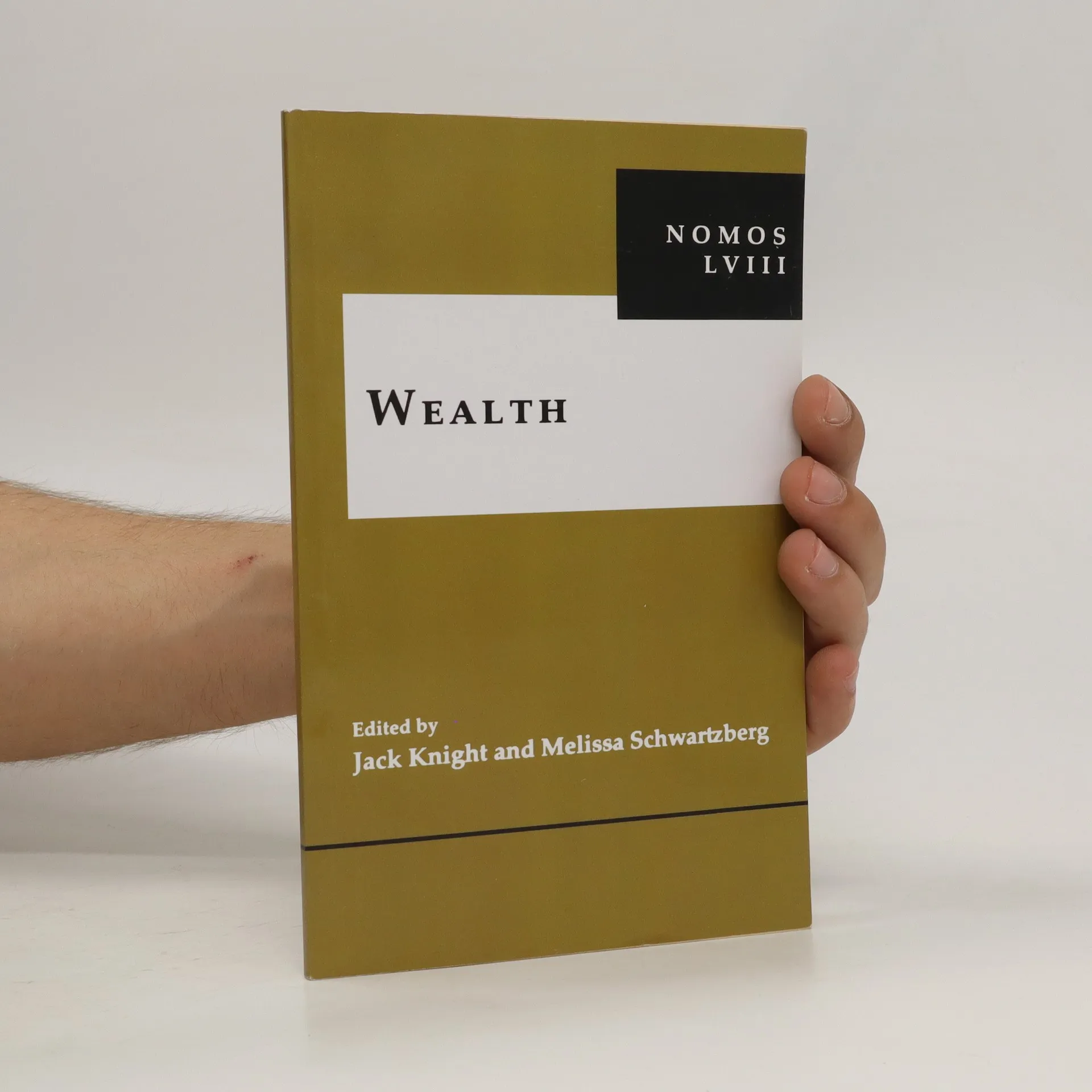
An in-depth political, legal, and philosophical study into the implications of wealth inequality in modern societies. Wealth, and specifically its distribution, has been a topic of great debate in recent years. Calls for justice against corporations implicated in the 2008 financial crash; populist rallying against "the one percent"; distrust of the influence of wealthy donors on elections and policy--all of these issues have their roots in a larger discussion of how wealth operates in American economic and political life
Jack Knight Book order (chronological)
This author primarily focuses on deep analyses of political and social structures. Their work examines how economic forces intertwine with political decisions and how these interactions shape society. Emphasis is placed on theoretical frameworks and critical evaluation of contemporary social and political phenomena.

The Choices Justices Make
- 222 pages
- 8 hours of reading
Focusing on the strategic nature of Supreme Court decision-making, this work reveals how justices navigate their goals based on the preferences of other actors and the institutional context. It explores their choices in case selection, interactions with colleagues, and policy adoption through a blend of theoretical insights and empirical evidence. Utilizing data from public records and private papers of notable justices, the book provides a compelling narrative that enhances the understanding of the Court's inner workings, making it an excellent resource for judicial process and public law courses.
Viele der grundlegenden Fragen in der Sozialwissenschaft erfordern eine Untersuchung der Rolle sozialer Institutionen. Warum gibt es so viele soziale Institutionen? Warum nehmen sie in einer Gesellschaft eine Form an und in einer anderen eine ganz andere? Auf welche Weise entwickeln sich diese Institutionen ursprünglich? Und wann und warum verändern sie sich? "Institutionen und gesellschaftlicher Konflikt" behandelt diese Fragen auf zwei Arten. Zunächst bietet es eine gründliche Kritik an einer Vielzahl von Theorien des institutionellen Wandels, von den klassischen Darstellungen von Smith, Hume, Marx und Weber bis zu den zeitgenössischen Ansätzen der evolutionären Theorie, der Theorie sozialer Konventionen und dem neuen Institutionalismus. Zweitens entwickelt es eine neue Theorie des institutionellen Wandels, die die Verteilungskonsequenzen sozialer Institutionen betont. Das Entstehen von Institutionen wird als Nebenprodukt von Verteilungskonflikten erklärt, in denen Machtasymmetrien in einer Gesellschaft institutionelle Lösungen für Konflikte erzeugen. Das Buch zieht seine Beispiele aus einer umfangreichen Vielfalt sozialer Institutionen.