
Explore the latest books of this year!
Bookbot

Jeremy Kleidosty

    Macat Library: An Analysis of John Locke's Two Treatises of Government
    Theory of Justice
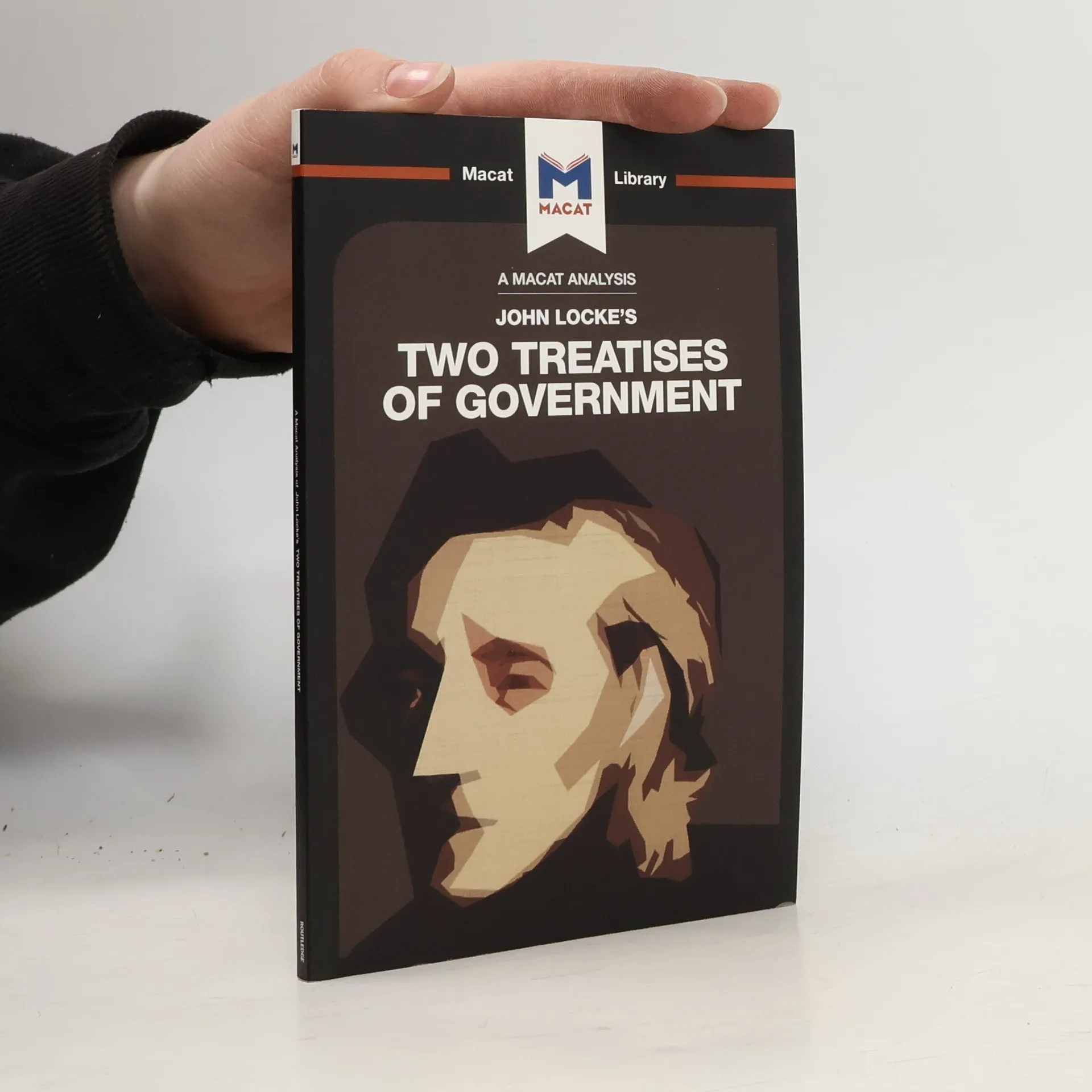
    • John Locke’s 1689 Two Treatises of Government is a pivotal text in political theory, significantly influencing modern politics and the American Constitution. This work is not only a foundational exploration of government legitimacy but also a masterclass in critical thinking, particularly in evaluation and reasoning. The first treatise serves as a thorough critique of Sir Robert Filmer’s Patriarcha, which argued for the divine right of kings, claiming that monarchs derive their authority directly from God through Biblical evidence. Locke systematically dismantles Filmer’s arguments, demonstrating their inadequacy and reliance on flawed evidence, ultimately deeming them invalid. In the second treatise, Locke articulates his own views on legitimate power and its sources. He constructs a compelling argument based on the concept of man in “the state of nature,” advocating that a civilized society should be founded on natural human rights and the social contract. Through logical reasoning and historical context, Locke lays the groundwork for modern democratic thought, emphasizing the importance of individual rights and the role of government as a protector of those rights.

      Macat Library: An Analysis of John Locke's Two Treatises of Government2017
    • Theory of Justice

      • 96 pages
      • 4 hours of reading

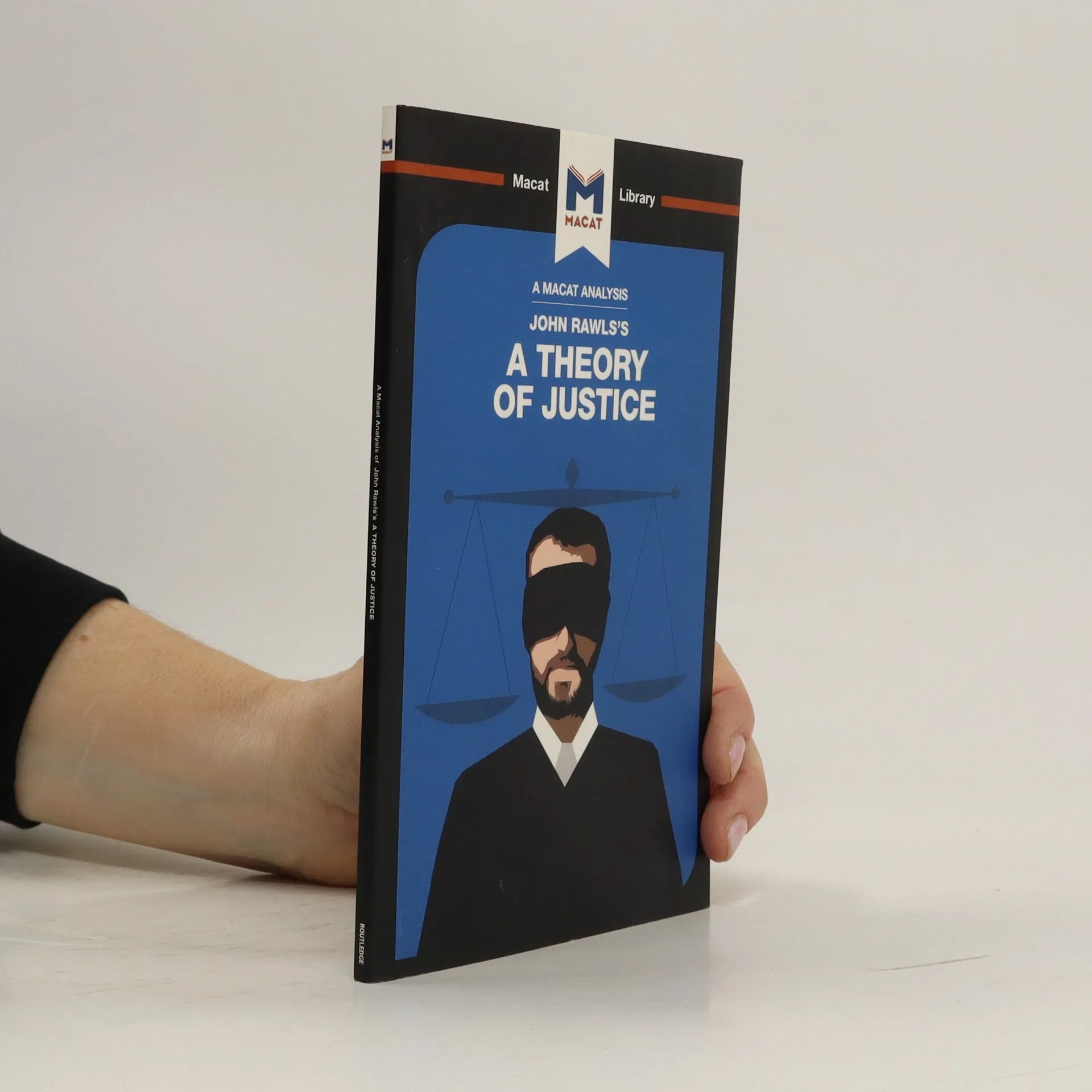
      John Rawls's A Theory of Justice is one of the most influential works of legal and political theory published since the Second World War. It provides a memorably well-constructed and sustained argument in favour of a new (social contract) version of the meaning of social justice. In setting out this argument, Rawls aims to construct a viable, systematic doctrine designed to ensure that the process of maximizing good is both conscious and coherent – and the result is a work that foregrounds the critical thinking skill of reasoning. Rawls's focus falls equally on discussions of the failings of existing systems – not least among them Marxism and Utilitarianism – and on explanation of his own new theory of justice. By illustrating how he arrived at his conclusions, and by clearly explaining and justifying his own liberal, pluralist values, Rawls is able to produce a well structured argument that is fully focused on the need to persuade. Rawls explicitly explains his goals. He discusses other ways of conceptualizing a just society and deals with counter-arguments by explaining his objections to them. Then, carefully and methodically, he defines a number of concepts and tools―“thought experiments”―that help the reader to follow his reasoning and test his ideas. Rawls’s hypothesis is that his ideas about justice can be universally they can be accepted as rational in any society at any time.

      Theory of Justice2017
      3.0