

Arguing that the power in America is concentrated in large institutions, this book studies the people at the top of these institutions—who they are, how much power they wield, and how they came to power. Tom Dye has chronicled the national leadership since the Nixon-Ford years, each edition featuring the current president and his staff. The seventh edition focuses on the new Bush administration and the contrast it will bring to Washington following 8 years of Clinton dominance. The commentary is supported by years of data analysis involving more than 7000 institutional elites, which includes governmental and corporate leaders. This edition describes the return of the Bush dynasty to power. It includes a new chapter on “The Money Elite” , describing the power of the banking and financial community as well as the Federal Reserve Board; Chapter 7 now covers important issues concerning elite interlocking, recruitment, social characteristics, class, and factionalism; the discussion of “How Institutional Leaders Make Public Policy” has been expanded greatly in Chapter 8; several discussions have been added, including “The Globalization of Economic Power,” “The Battle for IBM,” “Alan Ruling over Money,” “Hillary Power and Ambition,” and “Liberal and Conservative Factions among Elites” .
Thomas R. Dye Books
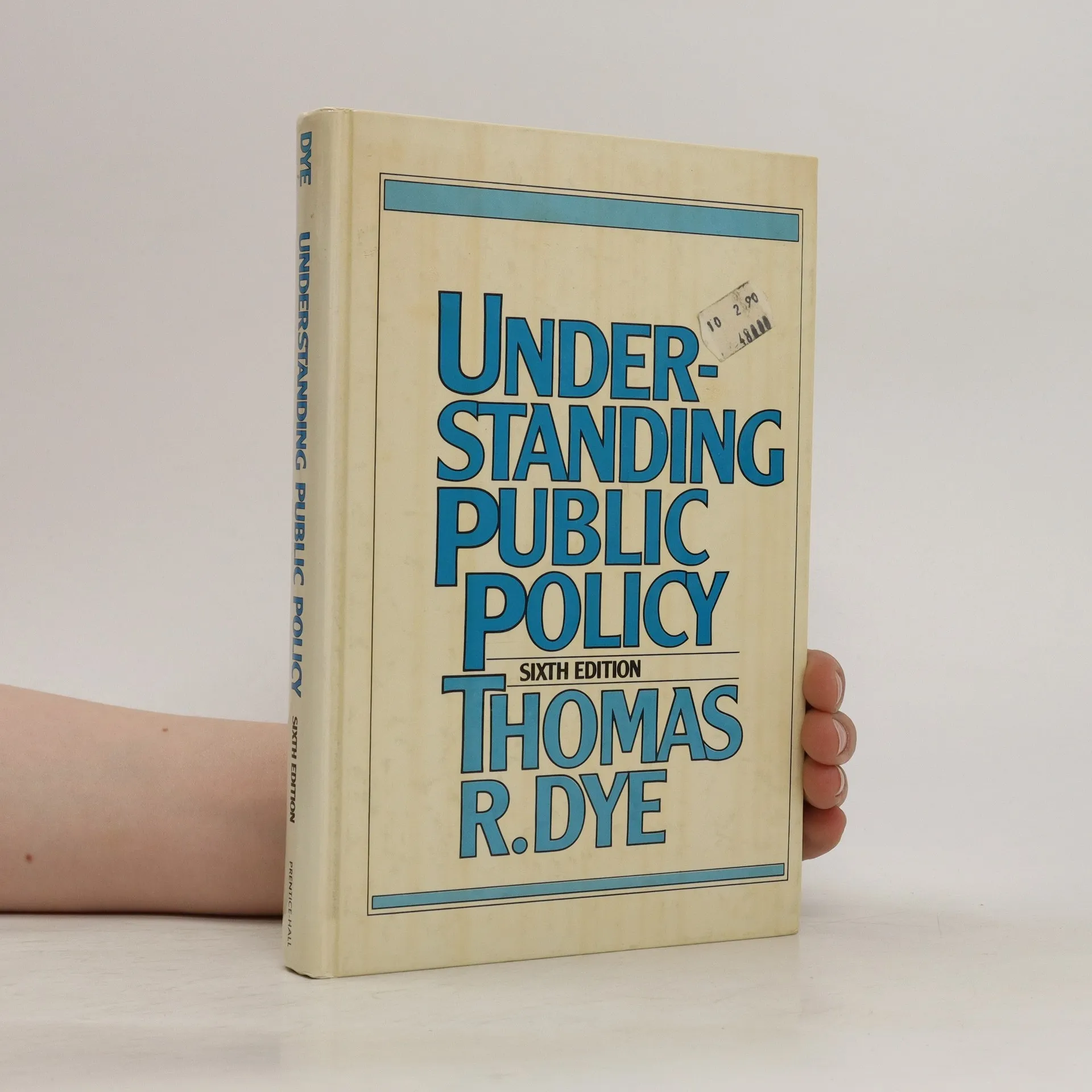

Understanding Public Policy
- 382 pages
- 14 hours of reading
Understanding Public Policy offers an introduction to the study of public policy and the models political scientists use to analyze political life. Author Thomas Dye equips readers with the tools to assess public policy, explaining why governments adopt specific policies and the implications of these choices. The updated fifteenth edition reflects key issues from President Obama's second term, using contemporary examples to illustrate how public policy impacts daily life. Key topics include: Policy Analysis, exploring government actions and their significance; Models of Politics, providing frameworks for understanding public policy; The Policymaking Process, detailing decision-making activities; Policy Evaluation, assessing outcomes post-legislation; Federalism and State Policies, examining institutional arrangements; Criminal Justice, discussing rationality in policy; Welfare, seeking rational strategies; Health Care, aiming for comprehensive reform; Education, highlighting group struggles; Economic Policy, addressing incrementalism; Tax Policy, navigating special interests; International Trade and Immigration, focusing on elite-mass conflict; Energy and the Environment, considering externalities; Civil Rights, analyzing elite and mass interactions; Defense Policy, strategizing for complex scenarios; and Homeland Security, tackling terrorism and nondeterrable threats. This book is ideal for readers looking for a practical and