

Is the universe infinite or just really big? With this question, the gifted young cosmologist Janna Levin not only announces the central theme of her intriguing and controversial new book but establishes herself as one of the most direct and unorthodox voices in contemporary science. For even as she sets out to determine how big “really big” may be, Levin gives us an intimate look at the day-to-day life of a globe-trotting physicist, complete with jet lag and romantic disturbances.Nimbly synthesizing geometry, topology, chaos and string theories, Levin shows how the pattern of hot and cold spots left over from the big bang may one day reveal the size and shape of the cosmos. She does so with such originality, lucidity—and even poetry—that How the Universe Got Its Spots becomes a thrilling and deeply personal communication between a scientist and the lay reader.
Janna Levin Books
Janna Levin is a professor of physics and astronomy whose scientific research delves into the early universe, chaos, and black holes. She masterfully bridges complex scientific concepts with engaging prose, making the cosmos accessible to a wide audience. Her writing is characterized by a unique blend of personal reflection and rigorous scientific inquiry, often employing epistolary formats and vivid imagery to explore the universe's deepest mysteries. Levin's distinctive voice invites readers on a journey through the vastness of space and the intricacies of the mind.




From the acclaimed author of Black Hole Blues and Other Songs from Outer Space--an authoritative, wholly accessible, fascinating guide to the most challenging phenomena of contemporary science, which is now the anchor of our understanding of the cosmos. Throughout her career, astrophysicist Janna Levin has focused, alongside her research, on making the science she studies not just accessible, but, perhaps more important, intriguing to the nonscientist. And that is what she has done again here, helping us to understand the black hole: perhaps the most opaque theoretical construct ever imagined by physicists. She explains how their existence came to be proven decades after they were first predicted in Einstein's 1915 general theory of relativity. And she explores the ways in which what we know about them has changed our most basic understanding of the galaxy, the universe, the whole expanse of reality that we inhabit. Lively, engaging and utterly unique, Black Hole Survival Guide is not just informative. It is as well, a wonderful read from first to last
A Madman Dreams of Turing Machines
- 240 pages
- 9 hours of reading
In a saga of genius, madness, and seminal scientific accomplishment, a physicist obsessed with logician Kurt Gödel and mathematician Alan Turing chronicles the lives of both men in parallel narratives that reveal each man's great achievements and sorry deaths. Reprint.
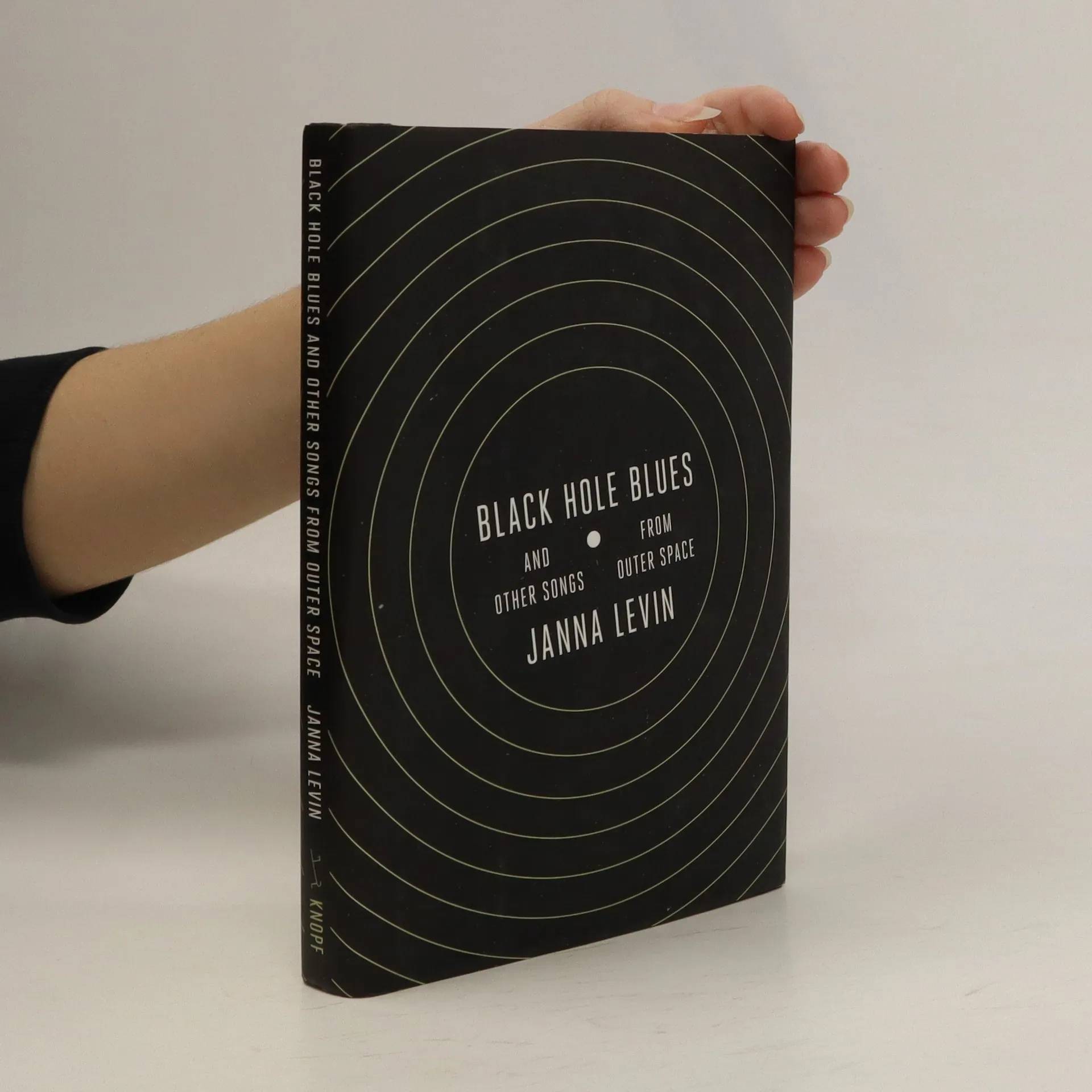
Black Hole Blues
- 241 pages
- 9 hours of reading
"In 1916, Einstein became the first to predict the existence of gravitational waves: sounds without a material medium generated by the unfathomably energy-producing collision of black holes. Now, Janna Levin, herself an astrophysicist, recounts the story of the search, over the last fifty years, for these elusive waves--a quest that has culminated in the creation of the most expensive project ever funded by the National Science Foundation ($1 billion-plus). She makes clear the how the waves are created in the cosmic collision of black holes, and why the waves can never be detected by telescope. And, most revealingly, she delves into the lives and fates of the four scientists currently engaged in--and obsessed with--discerning this soundtrack of the universe's history. Levin's account of the surprises, disappointments, achievements, and risks of this unfolding story provides us with a uniquely compelling and intimate portrait of the people and processes of modern science"--