

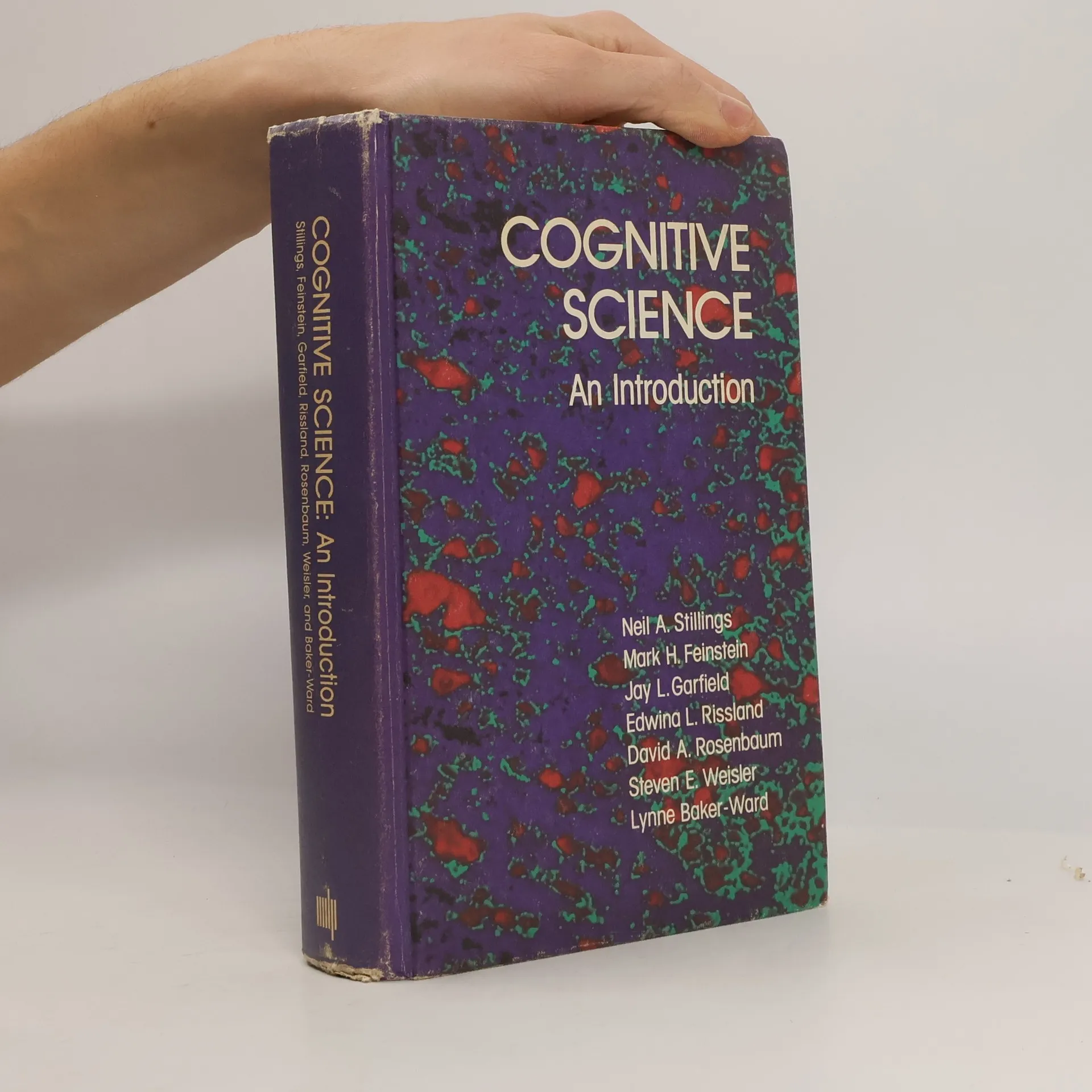
Cognitive Science is a single-source undergraduate text that broadly surveys the theories and empirical results of cognitive science within a consistent computational perspective. In addition to covering the individual contributions of psychology, philosophy, linguistics, and artificial intelligence to cognitive science, the book has been revised to introduce the connectionist approach as well as the classical symbolic approach and adds a new chapter on cognitively related advances in neuroscience. Cognitive science is a rapidly evolving field that is characterized by considerable contention among different views and approaches. Cognitive Science presents these in a relatively neutral manner. It covers many new orientations theories and findings, embedding them in an integrated computational perspective and establishing a sense of continuity and contrast with more traditional work in cognitive science. The text assumes no prerequisite knowledge, introducing all topics in a uniform, accessible style. Many topics, such as natural language processing and vision, however, are developed in considerable depth, which allows the book to be used with more advanced undergraduates or even in beginning graduate settings. A Bradford Book
Jay L. Garfield Books


The Buddhist philosophical tradition is vast and diverse, encompassing texts in various canonical languages. This complexity can make it challenging for those trained in Western philosophy to approach it for the first time, as well as for educators seeking suitable textbooks that represent the tradition's diversity, provide reliable translations of primary texts, and highlight key philosophical issues. This volume addresses that gap by compiling significant philosophical texts from each major Buddhist tradition, with each text translated and introduced by an authority in Buddhist studies. The introductions contextualize the texts and outline the philosophical issues and arguments they present, serving as a valuable guide for readers and instructors. The volume is organized into topical sections that align with Western philosophical structures, each prefaced by an essay that explains Buddhist perspectives on the subject matter and the relevance of the included texts. This collection is ideal for intermediate or advanced courses in Buddhist philosophy, making the tradition accessible to those familiar with Western philosophy. It also serves scholars and students of Buddhist studies interested in the philosophical aspects of the tradition.
Losing Ourselves
- 224 pages
- 8 hours of reading
In Losing Ourselves, Jay Garfield, an expert in Buddhist philosophy, presents a compelling argument about the concept of self and its implications for our lives. He draws from Indian and East Asian Buddhism, Daoism, Western philosophy, and cognitive neuroscience to illustrate that while it's natural to believe in a self, this belief is ultimately misguided and can be harmful. Garfield argues that letting go of the self-illusion can lead to personal growth and improved relationships. Through a thorough examination of various arguments regarding the existence of the self, he asserts that denying its reality can foster healthier social and moral lives. The book highlights the transformative power of the Buddhist notion of no-self, emphasizing its practical benefits. Embracing this perspective allows individuals to overcome egoism, act more ethically, and engage more fully with life. By shedding the confines of self-identity, we can escape isolation and participate more meaningfully in the shared experience of existence. Ultimately, the text encourages readers to recognize that losing the self can lead to profound gains in personal and communal well-being.
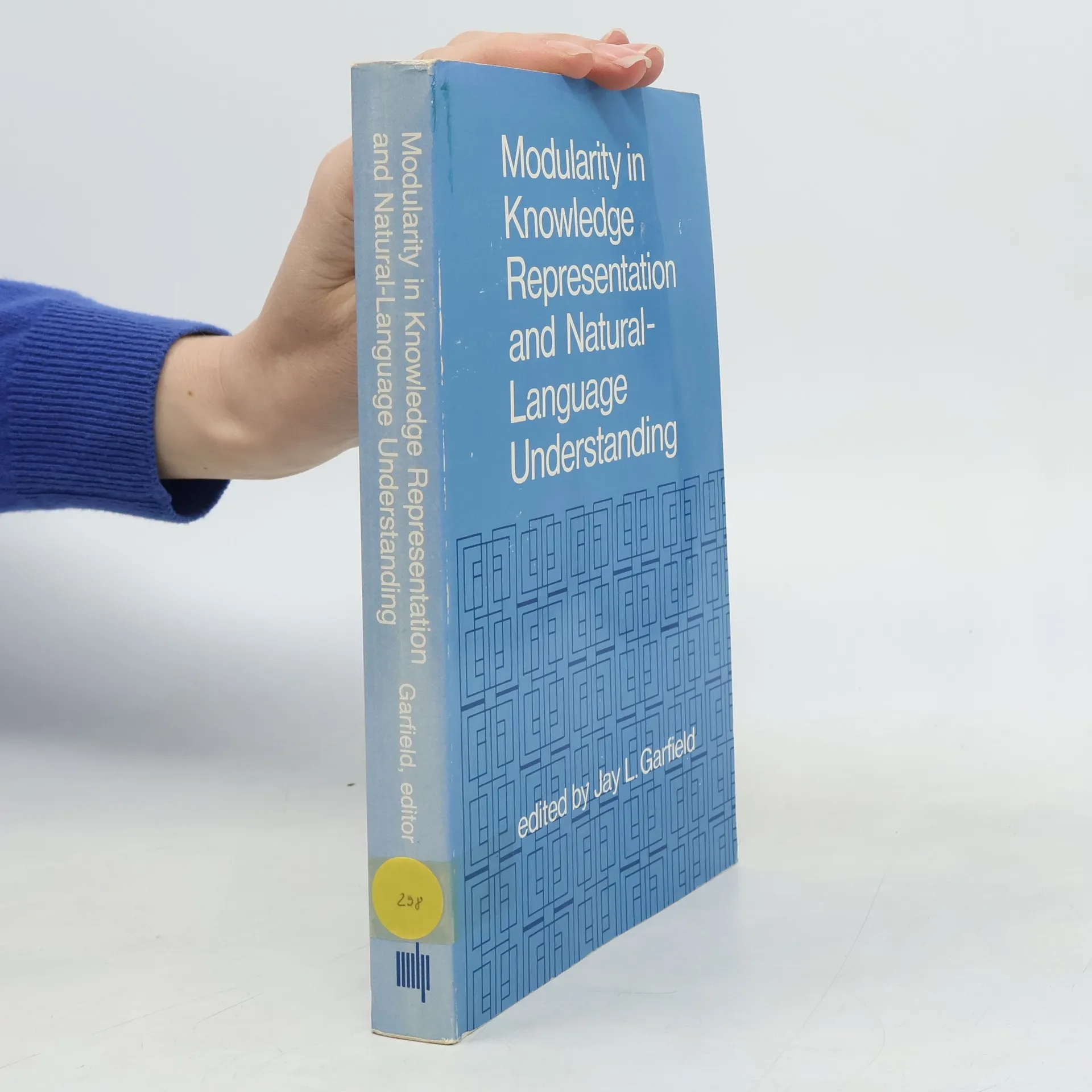
Modularity in Knowledge Representation and Natural-Language Understanding
- 440 pages
- 16 hours of reading
The notion of modularity, introduced by Noam Chomsky and developed with special emphasis on perceptual and linguistic processes by Jerry Fodor in his important book The Modularity of Mind, has provided a significant stimulus to research in cognitive science. This book presents essays in which a diverse group of philosophers, linguists, psycholinguists, and neuroscientists—including both proponents and critics of the modularity hypothesis—address general questions and specific problems related to modularity.
Über die Kunst des Loslassens
Alte Weisheiten für inneren Frieden von Buddha und seinen Nachfolgern. Dauerhaftes Glück und innere Freiheit finden
- 256 pages
- 9 hours of reading
Von Selbstverwirklichung und Selbstvermarktung bis hin zur Selbsthilfe und dem Selfie – die heutige Welt ermutigt die Menschen, selbstbesessen zu sein. Es heißt sogar, dass der Schlüssel zum Glück darin besteht, sich selbst zu finden. Vor mehr als 2500 Jahren argumentierte der Buddha jedoch, dass das Selbst eine Illusion ist und unser Glaube daran die Ursache für die meisten, wenn nicht alle unsere Leiden. Der Schlüssel zum Glück besteht demnach darin, sich selbst zu verlieren! Dieser neue Band der Reihe »Alte Weisheiten für moderne Leser« präsentiert leicht zugängliche neue Übersetzungen alter buddhistischer Schriften über die zentrale buddhistische Lehre des »Nicht-Selbst«. Diese grundlegenden indischen, tibetischen und chinesischen Schriften bieten eine reiche Auswahl an Möglichkeiten, wie buddhistische Philosophen die Idee, dass wir selbstlose Menschen sind, verstanden haben – und warum diese Einsicht so wertvoll ist. Wenn wir das Selbst loslassen, werden wir uns der Gegenwart aller Dinge bewusst, so, wie sie wirklich sind, und wir lassen Angst, Furcht, Gier und Hass los, die Quellen allen Leidens. Das Buch enthält kurze Einführungen zu den ausgewählten Texten und die buddhistischen Originaltexte auf den gegenüberliegenden Seiten.