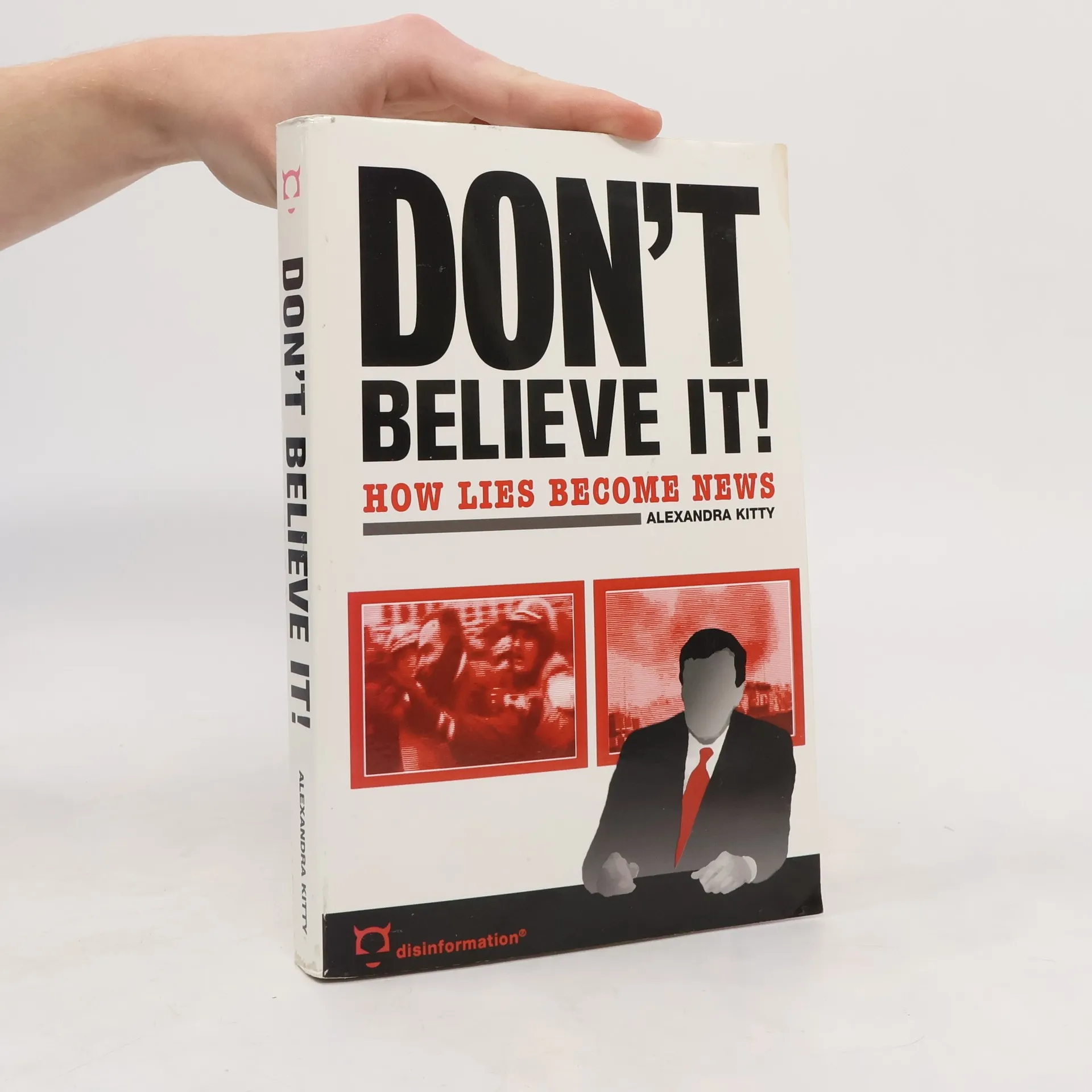
Do you think shamed journalists Jayson Blair and Stephen Glass were rare bad apples? They were simply the ones who got caught. Alexandra Kitty illustrates how manufactured news is widespread in our media, providing numerous examples to help readers identify suspicious stories. The journalism industry has recently cut costs by reducing the number of fact-checkers, editors, and reporters, leading to less time for verifying information. Additionally, journalists often lack professional training or experience in their coverage areas. This fierce competition for scoops can result in careless errors and a lack of double-checking. To retain audiences, journalists and editors may prioritize sensational stories that shock, sometimes disseminating false or misleading information. The urgency to "get" a story often overshadows accuracy, as the focus shifts to being first rather than correct. This environment creates pressure to deliver flawed or inaccurately obtained news. The book teaches news consumers how to verify information and evaluate sources, eyewitnesses, and data. It serves as a comprehensive guide to information verification, encouraging skepticism without cynicism, and includes case studies and a classification manual for practical application.
Alexandra Kitty Book order (chronological)
Alexandra Kitty's literary explorations delve into the mechanisms of propaganda, the craft of journalism, and profound artistic and philosophical concepts. Her works are characterized by deep insights into psychology and societal dynamics, examining how these forces shape human perception and behavior. Kitty approaches her writing with analytical precision and literary elegance, offering readers thought-provoking reflections on the complexities of the modern world. Her books are valued for their intellectual depth and their ability to penetrate to the core of the subjects they explore.