

Explore the latest books of this year!
Bookbot

IAEA

    Case Study on Assessment of Radiological Environmental Impact from Potential Exposure
    Development of a Common Framework for Addressing Climate and Environmental Change in Post-closure Radiological Assessmen
    Quality Assurance and Quality Control in Nuclear Facilities and Activities
    Initiating Nuclear Power Programmes: Responsibilities and Capabilities of Owners and Operators
    Design of the Reactor Coolant System and Associated Systems for Nuclear Power Plants
    IEA Foundations - 1: Human Nature and World Affairs
    • IEA Foundations - 1: Human Nature and World Affairs

      An Introduction to Classical Liberalism and International Relations Theory

      Where do classical liberals stand on international relations? Does this differ from their views on domestic policy? And how does this stance vary from other liberal schools of thought? Here, author Edwin van de Haar draws on the writings of major classical liberal thinkers such as David Hume, Adam Smith, Ludwig von Mises and Friedrich Hayek to create an insightful and comprehensive overview of the classical liberal approach to foreign affairs. He delineates how classical liberals embrace a realistic view of human nature, recognising the basic social nature of individuals, yet acknowledging their propensity to quarrel, fight and use violence - and how this has consequently become an inevitable feature of international relations. He compares and contrasts this thinking with other forms of liberal thought, such as libertarianism, social liberalism and conservatism. And he also examines the much bigger difference between classical liberalism and non-liberal thinking on international relations. He argues that classical liberalism has a distinct, timeless and universalist approach to international relations - and that the unique ideas developed by classical liberal writers can, and should, be applied to contemporary world affairs.
      IEA Foundations - 1: Human Nature and World Affairs
    • The development of the infrastructure for a nuclear power programme includes the establishment of policies and strategies in areas such as human resource development, nuclear fuel cycle and waste management, industrial involvement and nuclear safety. It also requires the establishment of a legal and regulatory framework that creates an environment enabling the project to be implemented in a transparent and effective manner. These elements of this infrastructure will have an impact on the project and will guide the discussions of the future owner/operator with potential vendors. In this regard, it is important that the owner/operator, if already identified, participates in this process from the beginning. This publication provides guidance on the establishment and development of the owner/operator so that it can discharge its responsibilities throughout the phases of the programme. It also discusses the management of the interfaces between the owner/operator and other stakeholders.

      Initiating Nuclear Power Programmes: Responsibilities and Capabilities of Owners and Operators
    • Explains the concepts of quality assurance and quality control. The publication provides examples, illustrated by good practices, of their implementation within the processes of the management systems of nuclear facilities and describes how they are managed through interfaces with suppliers and subcontractors.

      Quality Assurance and Quality Control in Nuclear Facilities and Activities
    • Provides guidance and recommendations to nuclear organizations by offering a practical approach to assessing the behavioural competencies for safe, secure and effective performance across the nuclear workforce. The book outlines a variety of tools and approaches that can aid behavioural assessment processes.

      Assessing Behavioural Competencies of Employees in Nuclear Facilities
    • Draws on the work carried out during an IAEA coordinated research project to benchmark computational fluid dynamics (CFD) codes used in fuel assembly design and model options and methods against 'CFD quality' experimental data under single phase flow conditions.

      Benchmarking of Computational Fluid Dynamics Codes for Fuel Assembly Design
    • Examines the technical basis for the use of seismic isolation systems in nuclear installations. There are many benefits of seismic isolation in design and construction of new facilities and in the retrofitting of existing nuclear installations.

      Seismic Isolation Systems for Nuclear Installations
    • This publication results from a technical meeting on phenomenology and technologies relevant to in-vessel melt retention (IVMR) and ex-vessel corium cooling (EVCC). The purpose is to capture the state of knowledge related to phenomenology and technologies as well as the challenges and issues relevant to IVMR and EVCC for water cooled reactors.

      In-vessel Melt Retention and Ex-vessel Corium Cooling
    • Describes the general concept of using quantitative and qualitative information to be integrated in making safety related decisions. The publication also provides practical insights on the selection of the various factors that could be included in the integrated risk informed decision making process.

      Considerations on Performing Integrated Risk Informed Decision Making
    • Contractor personnel provide essential services to nuclear power plants (NPPs). They have required levels of competency and must interface effectively with nuclear power plant personnel when performing their assigned duties. It is in this context that this publication offers a framework for assuring the competence of such contractor personnel.

      Assuring the Competence of Nuclear Power Plant Contractor Personnel
    • Evaluates the different coolant options considered for nuclear applications with a fast neutron spectrum, compiles the latest information in the field and identifies research needs. In this study, systems cooled by light and heavy liquid metals, molten salts, as well as gas and water choices are analysed and discussed.

      Challenges for Coolants in Fast Neutron Spectrum Systems
    • Provides a description of the Rossendorf coolant mixing test facility, used to provide benchmark experiments related to the phenomena of pressurized thermal shock and boron dilution, the calculation results using computational fluid dynamics (CFD) methods, and the conclusions drawn from comparison of CFD results with experimental measurements.

      Benchmarking of Computational Fluid Dynamics Codes for Reactor Vessel Design
    • Describes several available techniques with sealed radioactive sources, by showing examples of their use in industrial applications and by demonstrating how they can be used to improve process efficiency and to save money. The focus is on two major techniques with sealed radioactive sources: gamma scanning and neutron backscattering.

      Industrial Applications of Sealed Radioactive Sources
    • This publication is the outcome of two technical meetings and compiles the results and conclusions in terms of benefits to be obtained from the use of high assay low enriched uranium (HALEU) fuel, with due consideration of safety issues that arise from its use.

      Light Water Reactor Fuel Enrichment beyond the Five Per Cent Limit
    • Provides guidance for individuals and organisations on the assessment of prospective cancer risks due to occupational exposure to ionizing radiation for prevention purposes. The publication describes cancer risk assessment theory, models and methodologies, and offers practical examples of carrying out these assessments.

      Assessment of Prospective Cancer Risks from Occupational Exposure to Ionizing Radiation
    • Addresses the sustainability of all aspects of a national nuclear security regime, including those relating to nuclear material and nuclear facilities, other radioactive material and associated facilities, and nuclear and other radioactive material out of regulatory control.

      Sustaining a Nuclear Security Regime
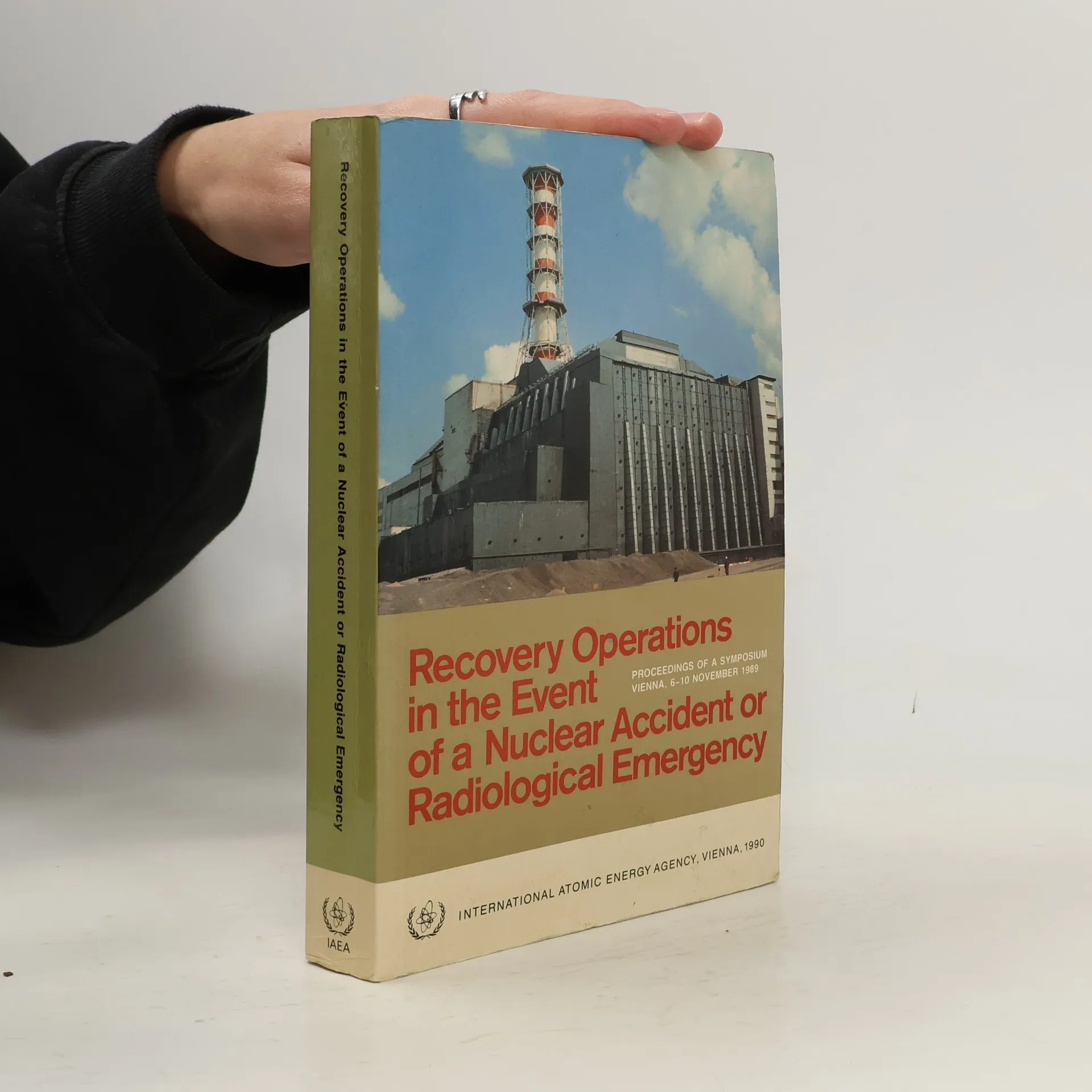
    • Proceedings of a symposium, Vienna, 6-10 November 1989. The purpose was to provide a forum for review of actual experience gained and lessons learned from recovery techniques and operations in response to serious accidents at nuclear facilities and accidents associated with radioactive materials, and also to consider the development of emergency planning and preparedness resources. A special feature of the symposium programme was a full session on an accident involving a chemical explosion in a high level waste tank at a plutonium extraction plant in the Southern Urals in the USSR in 1957.

      Proceedings Series (International Atomic Energy Agency): Recovery Operations in the Event of a Nuclear Accident or Radiological Emergency