

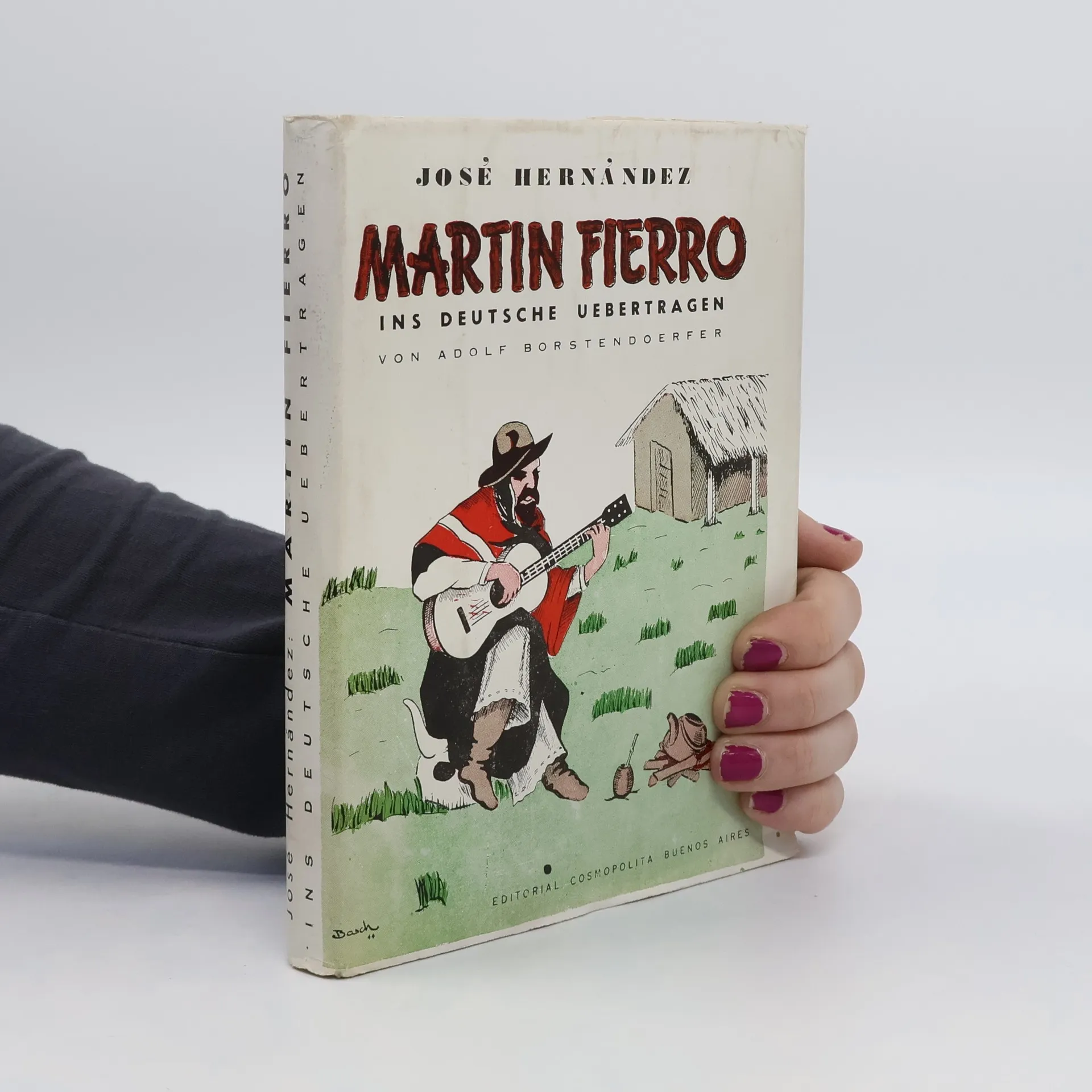

Martin Fierro
- 128 pages
- 5 hours of reading
Martín Fierro: An Epic of the Argentine (1923) is an epic poem and accompanying scholarship by José Hernández and Henry A. Holmes. Originally published in two parts, the poem has been praised as a defining work of Argentine literature for its depiction of national identity in relation to the gaucho culture, which was used to consolidate the historical and political image of the country against European influence. Unlike many of his contemporaries, Hernández was a writer who grew up in a ranching family, who knew firsthand the prowess of a people who helped Argentina free itself from Spanish control.Martín Fierro is a masterpiece of Spanish-language literature that continues to define and inform Argentine culture today. In this text, scholar Henry A. Holmes translates parts of the poem while contextualizing it alongside works of Hernández's predecessors. In addition, Holmes provides invaluable information on the poet's life, discusses the significance of the gaucho in Argentine literature, and investigates the portrayal of the indigenous peoples of Argentina in the poem. With a beautifully designed cover and professionally typeset manuscript, this edition of José Hernández and Henry A. Holmes' Martín Fierro: An Epic of the Argentine is a classic of Argentine literature reimagined for modern readers.