Gary Saul Morson brings to life the intense intellectual debates shaping two centuries of Russian writing. Dialogues of great writers with philosophical wanderers and blood-soaked radicals reveal a contest between unyielding dogmatism and open-minded wonder, rendering the Russian literary canon at once distinctive and universally human.
Gary Saul Morson Books



Anna Karenina in Our Time
- 263 pages
- 10 hours of reading
In this invigorating new assessment of Anna Karenina , Gary Saul Morson overturns traditional interpretations of the classic novel and shows why readers have misunderstood Tolstoy’s characters and intentions. Morson argues that Tolstoy’s ideas are far more radical than has been his masterpiece challenges deeply held conceptions of romantic love, the process of social reform, modernization, and the nature of good and evil. By investigating the ethical, philosophical, and social issues with which Tolstoy grappled, Morson finds in Anna Karenina powerful connections with the concerns of today. He proposes that Tolstoy’s effort to see the world more wisely can deeply inform our own search for wisdom in the present day. The book offers brilliant analyses of Anna, Karenin, Dolly, Levin, and other characters, with a particularly subtle portrait of Anna’s extremism and self-deception. Morson probes Tolstoy’s important insights (evil is often the result of negligence; goodness derives from small, everyday deeds) and completes the volume with an irresistible, original list of One Hundred and Sixty-Three Tolstoyan Conclusions.
Anna Karenina
- 838 pages
- 30 hours of reading
A famous legend surrounding the creation of Anna Karenina tells us that Tolstoy began writing a cautionary tale about adultery and ended up by falling in love with his magnificent heroine. It is rare to find a reader of the book who doesn't experience the same kind of emotional upheaval: Anna Karenina is filled with major and minor characters who exist in their own right and fully embody their mid-nineteenth-century Russian milieu, but it still belongs entirely to the woman whose name it bears, whose portrait is one of the truest ever made by a writer.
This timely exploration delves into the intellectual dogmatism permeating politics, economics, religion, and literature, highlighting its role in the current polarization threatening democracy. Literary scholar Gary Saul Morson and economist Morton Schapiro identify a rise in "fundamentalist" thinking across various fields, which has fostered rigid ideological adherence that undermines open-mindedness and compromise essential for democratic discourse. They argue that this fundamentalist mindset is pervasive across the political spectrum, resulting in a cacophony of monologues filled with hostility, where individuals believe they hold the exclusive truth and see their opponents as either evil or misguided. Morson and Schapiro contend that this divisive atmosphere can be transformed. By drawing on insights from a diverse array of thinkers in the humanities and social sciences, they propose methods to foster meaningful dialogue, including case-based reasoning and objective analysis. Their work serves as a powerful call to abandon simplification and extremism, advocating for a future characterized by greater open-mindedness, moderation, and wisdom. Through their analysis, they illuminate pathways to reestablish constructive conversations and bridge the divides that currently threaten democratic ideals.
Cents and Sensibility
- 336 pages
- 12 hours of reading
In Cents and Sensibility, an eminent literary critic and a leading economist make the case that the humanities—especially the study of literature—offer economists ways to make their models more realistic, their predictions more accurate, and their policies more effective and just. Arguing that Adam Smith’s heirs include Austen, Chekhov, and Tolstoy as much as Keynes and Friedman, Gary Saul Morson and Morton Schapiro trace the connection between Adam Smith’s great classic, The Wealth of Nations, and his less celebrated book on ethics, The Theory of Moral Sentiments. The authors contend that a few decades later, Jane Austen invented her groundbreaking method of novelistic narration in order to give life to the empathy that Smith believed essential to humanity. More than anyone, the great writers can offer economists something they need—a richer appreciation of behavior, ethics, culture, and narrative. Original, provocative, and inspiring, Cents and Sensibility demonstrates the benefits of a dialogue between economics and the humanities and also shows how looking at real-world problems can revitalize the study of literature itself. Featuring a new preface, this book brings economics back to its place in the human conversation.
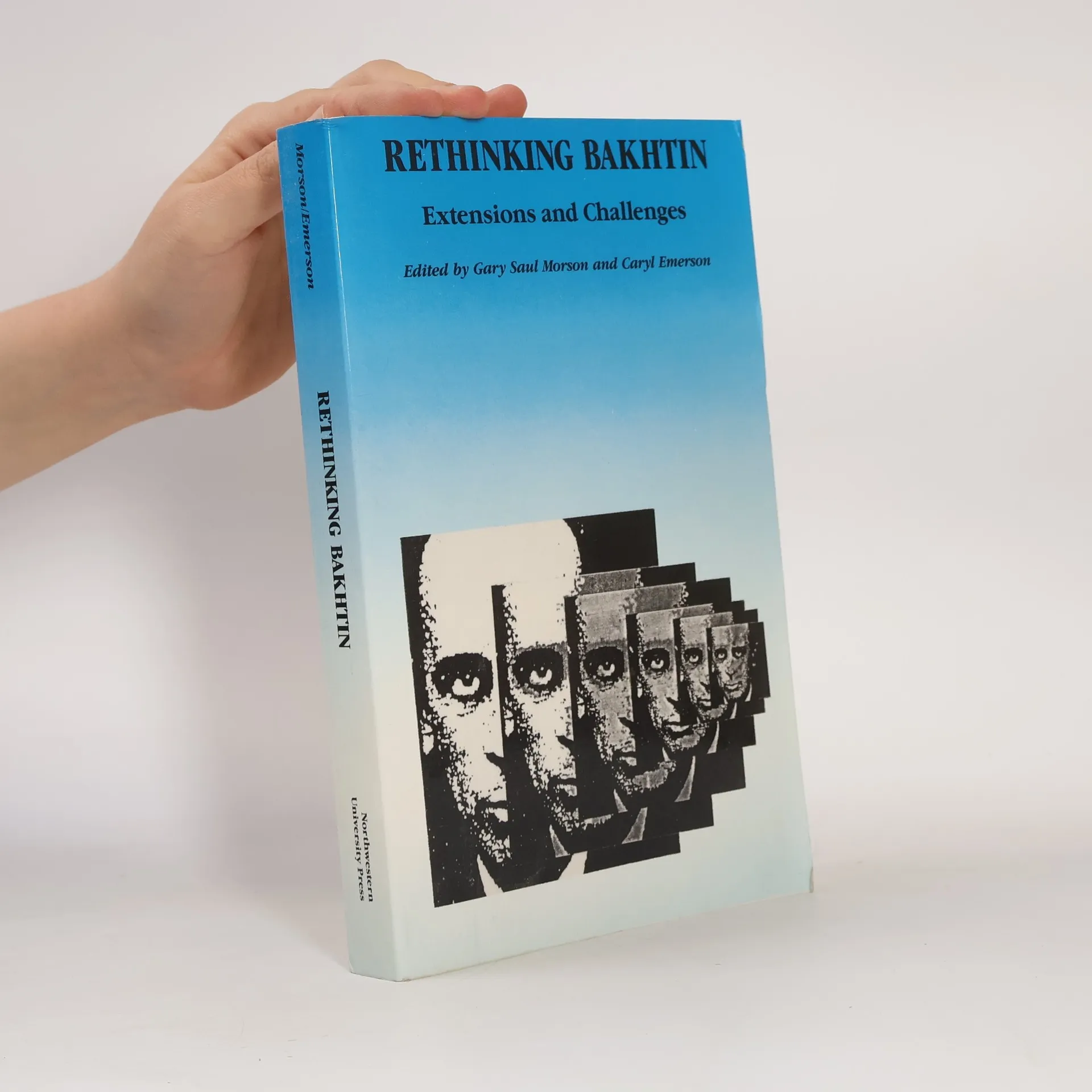
The essays in Rethinking Extensions and Challenges extend Bakhtin's concepts in important new directions and challenge Bakhtin's own use of his most cherished ideas. Four sets of paired essays explore the theory of parody, the relation of de Man's poetics to Bakhtin's dialogics, Bakhtin's approach to Tolstoy and ideological literature generally, and the dangers of dialogue, not only in practice but also as an ideal.
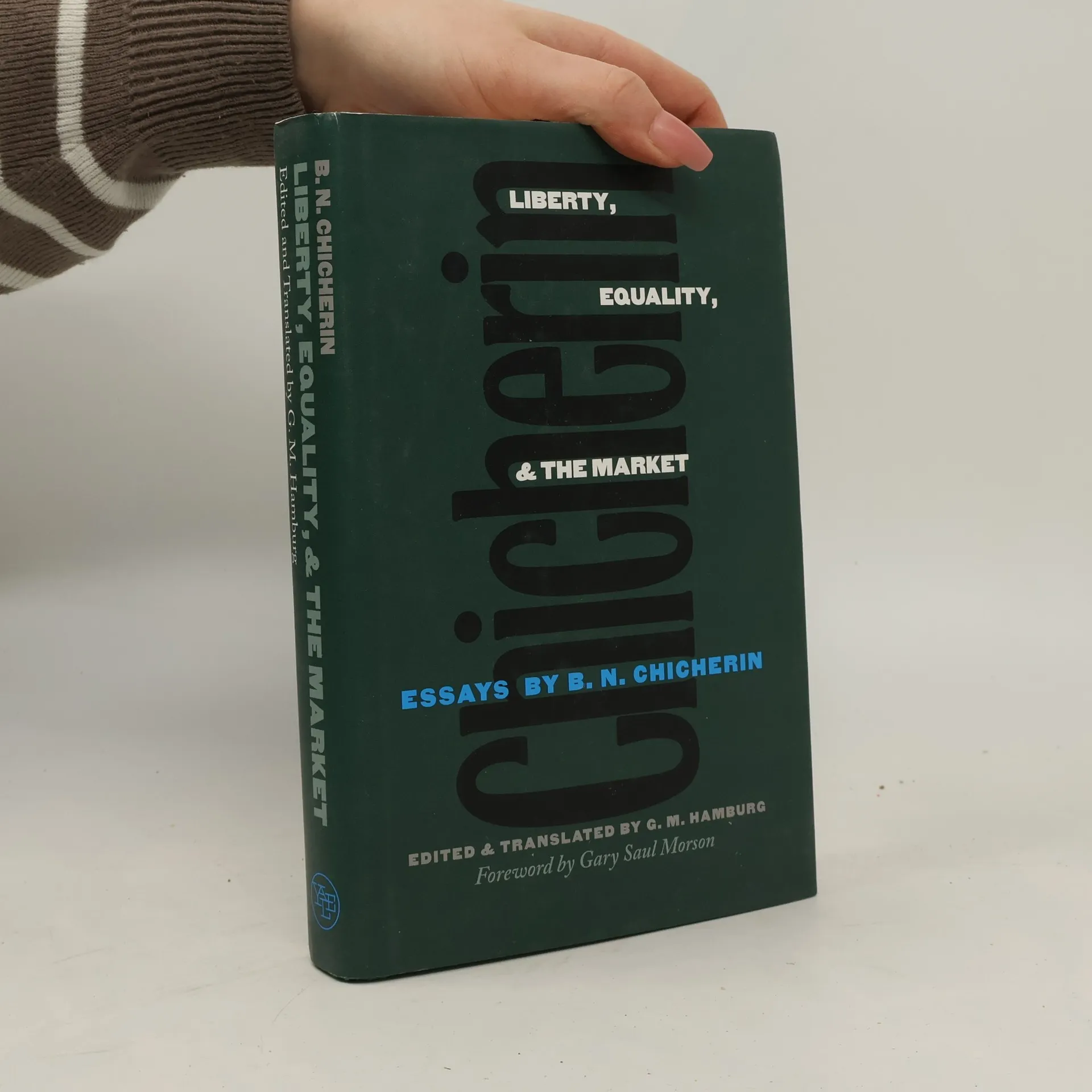
This volume presents the writings of Russian liberal thinker Boris Nikolaevich Chicherin (1828–1904) to English-language readers for the first time. It features key essays addressing the political and social challenges Russia faced from 1855 to the early twentieth century. Chicherin’s ideological alternatives to the Bolshevik revolutionary agenda offer valuable historical insights and remain relevant to contemporary discussions of liberalism in Russia and the West. G. M. Hamburg provides a comprehensive introduction that contextualizes Chicherin’s thought, portraying him as a powerful and often misunderstood advocate for civil and political rights. Influenced by German idealism and Hegel, Chicherin diverged from many contemporaries by supporting a market economy and emphasizing the need for reforms tailored to local conditions and traditions. In this collection, Chicherin addresses contemporary issues such as the abolition of serfdom, Russian education, and the necessity of a constitution. He also engages with broader philosophical questions regarding liberty and equality, styles of political discourse, and critiques notable philosophers including Plato, Aristotle, More, Machiavelli, Montesquieu, Hegel, and Marx.