

Explore the latest books of this year!
Bookbot

Kenneth Pomeranz

    November 4, 1958

    Kenneth Pomeranz is a distinguished historian specializing in the comparative history of Asia and Europe. His work delves into long-term economic and social trends, analyzing why certain regions of the world diverged in their development over time. Pomeranz is known for his rigorous research and insightful scholarship, offering fresh perspectives on global history. His analyses provide readers with a richer understanding of how the world came to be.

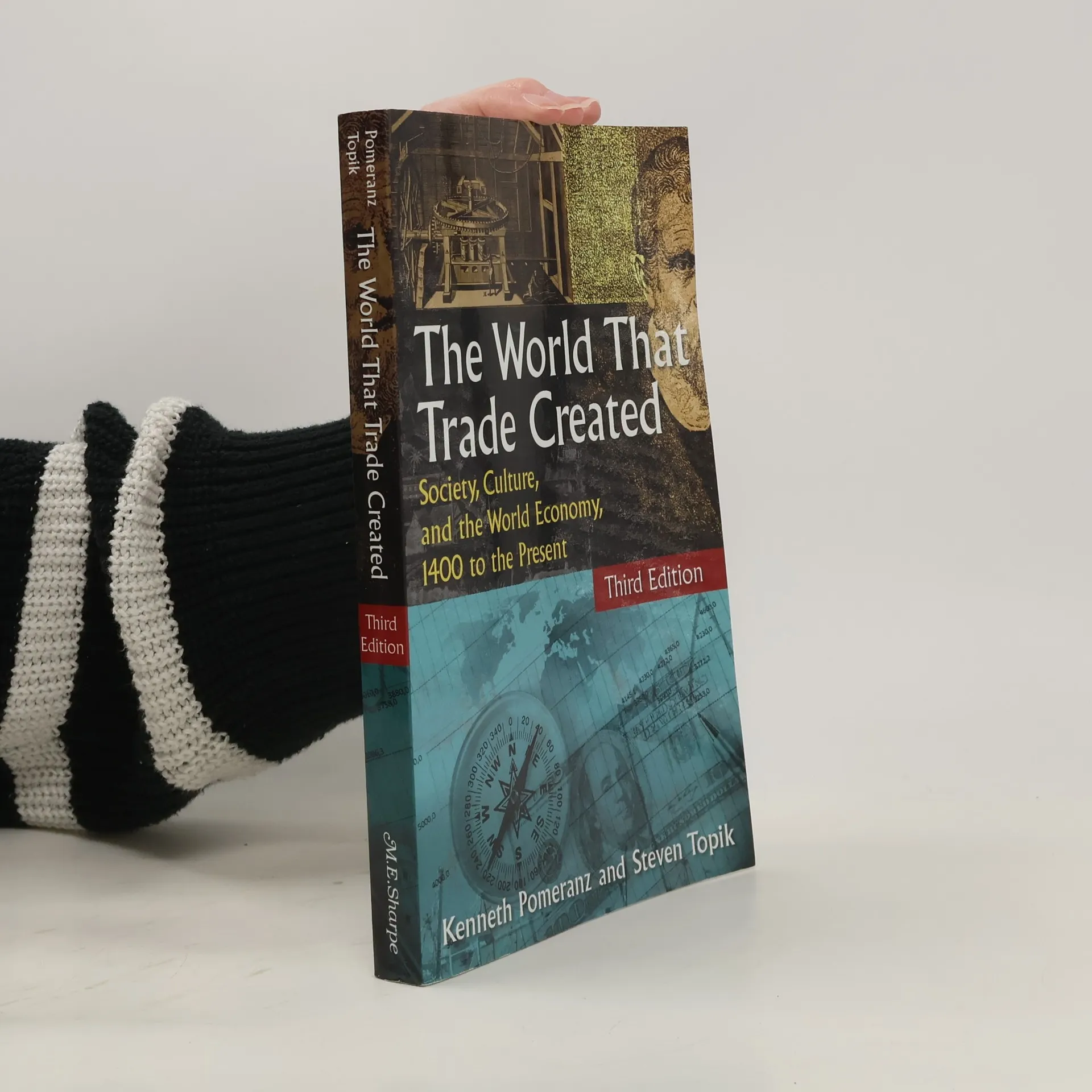
    The World That Trade Created
    Great Divergence
    The World that Trade Created
    • A landmark comparative history of Europe and China that examines why the Industrial Revolution emerged in the West The Great Divergence sheds light on one of the great questions of history: Why did sustained industrial growth begin in Northwest Europe? Historian Kenneth Pomeranz shows that as recently as 1750, life expectancy, consumption, and product and factor markets were comparable in Europe and East Asia. Moreover, key regions in China and Japan were no worse off ecologically than those in Western Europe, with each region facing corresponding shortages of land-intensive products. Pomeranz’s comparative lens reveals the two critical factors resulting in Europe's nineteenth-century divergence—the fortunate location of coal and access to trade with the New World. As East Asia’s economy stagnated, Europe narrowly escaped the same fate largely due to favorable resource stocks from underground and overseas. This Princeton Classics edition includes a preface from the author and makes a powerful historical work available to new readers.

      Great Divergence2021
      3.6
    • The World that Trade Created

      Society, Culture, and the World Economy, 1400 to the Present

      In a series of brief, highly readable vignettes, the authors bring to life international trade and its actorsmerchants and bankers, pirates and privateers, sailors and slaves, traders and tree tappers. In the process they make clear that the seemingly modern concept of economic globalization has deep historical roots. The third edition provides expanded coverage of the twentieth century, new selections on silver and gold in Brazil and Mexico, the rise of Panama as a financial center, the transition from coal to oil, fair trade laws, and the expansion of offshore manufacturing since World War II. A new illustration program has been added that offers a more visual appeal to the text.

      The World that Trade Created2013
      3.9
    • The World That Trade Created

      Society, Culture, and the World Economy, 1400 to the Present - Second Edition

      • 285 pages
      • 10 hours of reading

      Why are railroad tracks separated by the same four feet, eight inches as ancient Roman roads? How did 19th-century Europeans turn mountains of bird excrement from Peru into mountains of gold? Where has most of the world's oil come from in the 20th century? This new edition of "The World That Trade Created" reveals the answers to dozens of tantalizing questions like these. In a series of brief, highly readable vignettes the authors bring to life international trade and its actors - including migrants and merchants, pirates and privateers, sailors and slaves, traders and tree-tappers. In the process they make clear that the seemingly modern concept of economic globalization has deep historical roots. The authors also demonstrate that economic activity cannot be divorced from social and cultural contexts. This second edition provides enhanced coverage of Africa, the Middle East, and the 20th century, and features eighteen new vignettes, including two new pieces on oil.

      The World That Trade Created2005