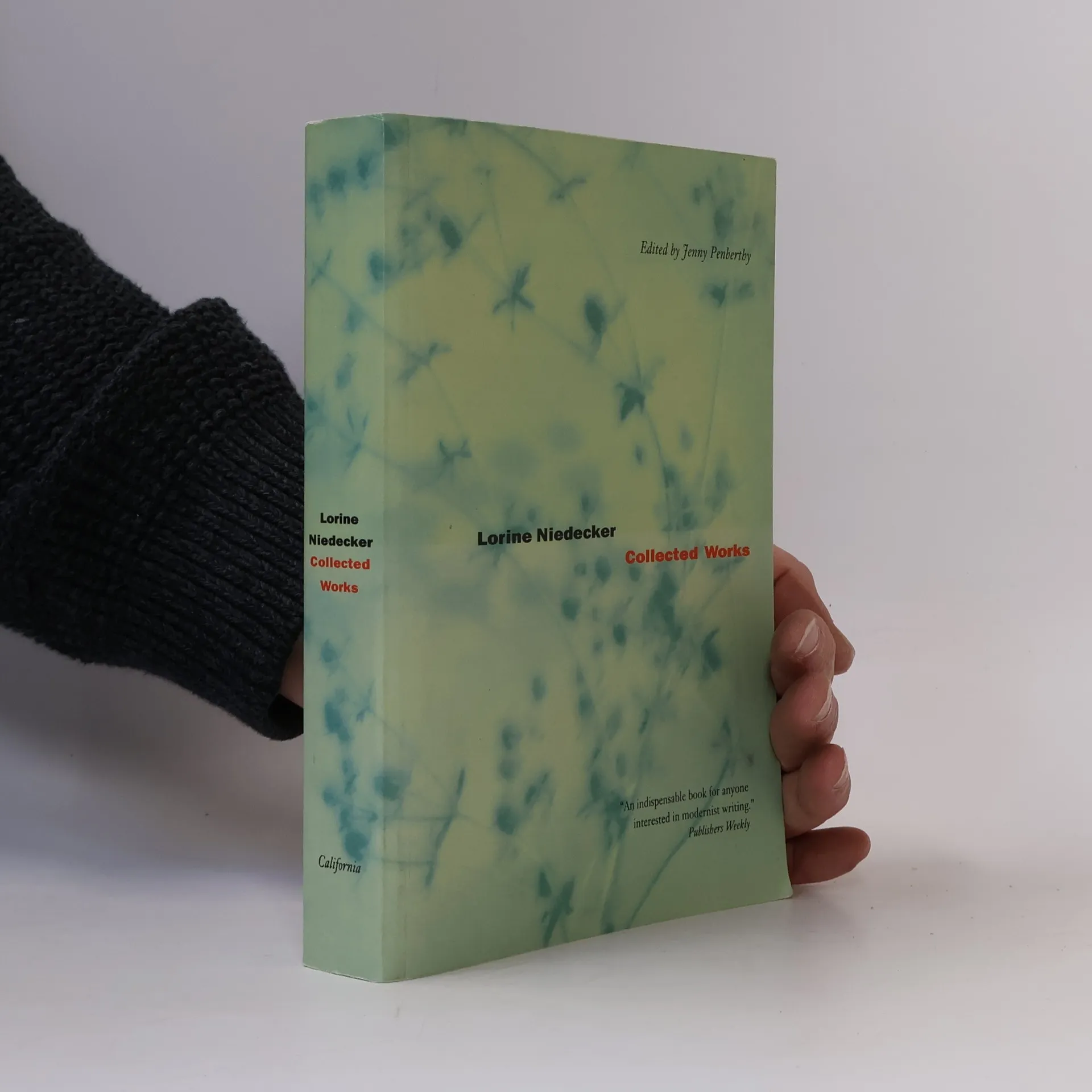
Lorine Niedecker, a significant poet of her generation and a key figure in the Objectivist circle, lived much of her life on flood-prone Black Hawk Island in Wisconsin, a stark contrast to the avant-garde poetry scene she also inhabited. Her work garnered acclaim from contemporaries like Marianne Moore and William Carlos Williams, with whom she maintained meaningful correspondence. As a prominent woman poet, Niedecker explored themes of gender, domesticity, work, marriage, and sexual politics long before the feminist movement gained momentum. Her unique position, both geographically and as a woman, informs her impactful poetry. Niedecker's lyric voice is subtle and sensuous, attuned to nature's sounds and the nuances of vernacular speech. Often likened to Emily Dickinson, she blends wit and emotion with cosmopolitan experimentation and American vernacular. This anticipated volume compiles all of Niedecker's surviving poetry, plays, and creative prose in chronological order, featuring previously unpublished works and her 1930s surrealist pieces, as well as her folk poetry from 1936-46, illuminating the experimental stages of her early career. An introduction detailing her life and informative notes make this edition essential for both readers and scholars.
Lorine Niedecker Books
Niedecker's early poetry drew inspiration from Imagism and Surrealism, later finding a pivotal connection with Objectivism through Louis Zukofsky. This marked her entry into the American poetic avant-garde. Shifting away from Surrealism, her work evolved to engage more directly with social and political realities and her immediate rural surroundings. Her poetry is characterized by a keen observation of reality and a distinctive linguistic sensibility.