
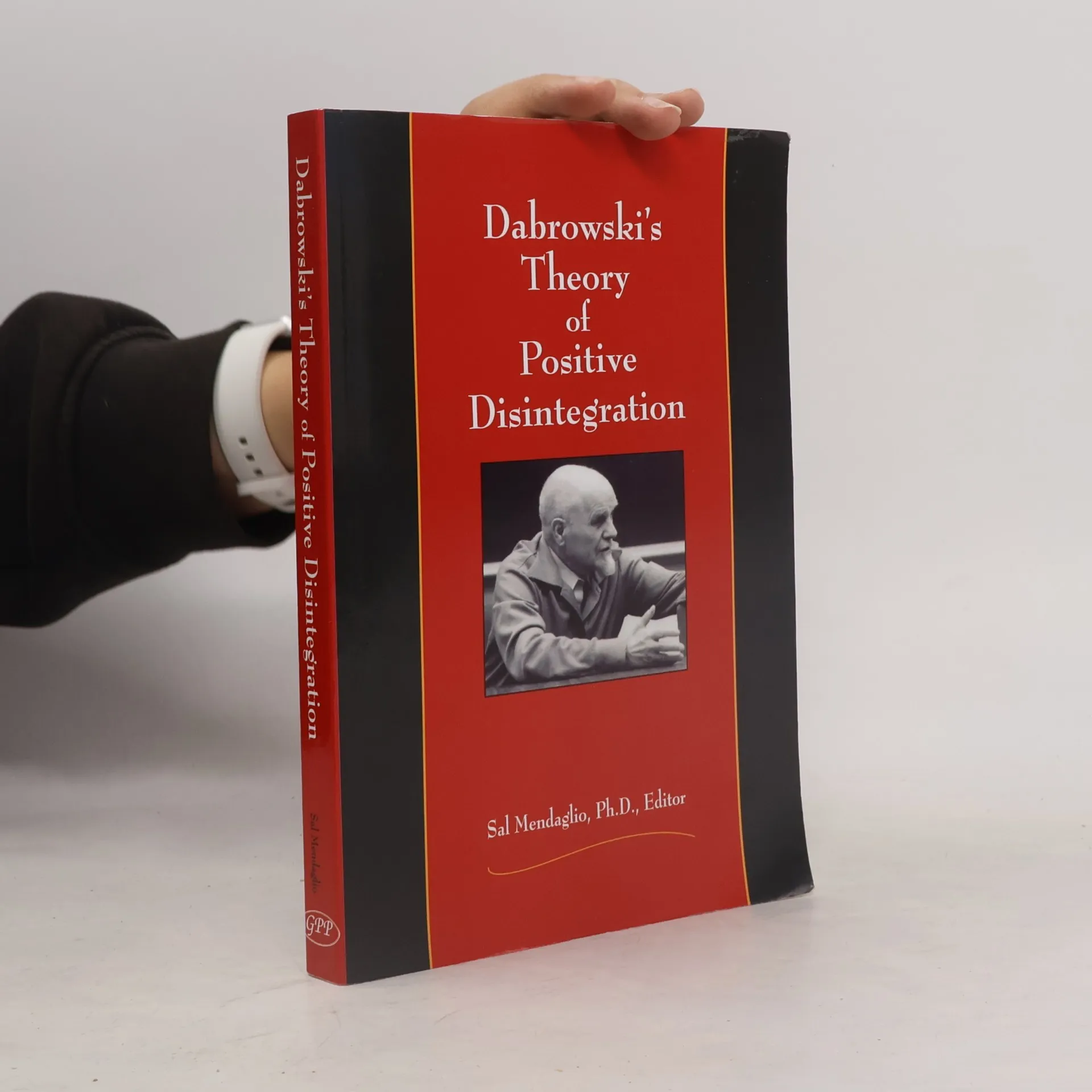
Kazimierz Dabrowski's Theory of Positive Disintegration (TPD), which includes the widely known "overexcitabilities," is one of the most influential theories in gifted education. This groundbreaking book, edited by Dr. Sal Mendaglio, brings together leading professionals, many of whom knew Dr. Dabrowski himself, and provides readers with a diversity of perspectives on TPD. It summarizes the research and application of TPD, as well as compares it to other theories of personality and psychological development. Dabrowski's Theory of Positive Disintegration is a thought-provoking book that provides powerful insights and information not previously published about Dabrowski's theory.
Salvatore Mendaglio Books
Sal Mendaglio delves into the social and emotional issues faced by gifted individuals, with a particular focus on perfectionism. His work draws inspiration from Dabrowski's theory of positive disintegration, exploring the complex development of human personality. He seeks a deeper understanding of the challenges gifted individuals encounter and aims to foster supportive environments. His analyses contribute to enriching the field of gifted education.

Dynamisms, Development, and Dispositions
- 268 pages
- 10 hours of reading
Dabrowski's theory of positive disintegration redefines established psychological constructs, especially the construct of psychopathology. Current views of what constitutes disorders is so engrained in western cultures that they are seen, implicitly, as immutable. Any codification of what comprises psychiatric disorders or abnormality is a social construction, subject to change, as indicated by some changes in the DSM over the years. Dabrowski's theory questions the very foundation of the approach to psychopathology that existed in his time and is evident today. The critical message of the theory of positive disintegration is that what are deemed symptoms of mental disorder may be, instead, signs of personal growth. Dabrowski does not simply proclaim his position, he provides a coherent explanation for it. While Dabrowski addresses substantive issues of mental illness and mental health, most of the research literature purporting to investigate his theory dwells on one component of his theory: overexcitability. The essays in Dynamism, Development and Dispositions: Essays in Honor of Kazimierz Dabrowski have a common aim: to draw attention to the fullness of the theory with the hope of encouraging researchers to move beyond their singular atomic focus. A word on the subtitle of the book is in order. Sal Mendaglio's essays honor a great theorist with a scholarly, not effusive, treatment of the theory of positive disintegration.