

Explore the latest books of this year!
Bookbot

Susan C Stokes

    Why Bother?
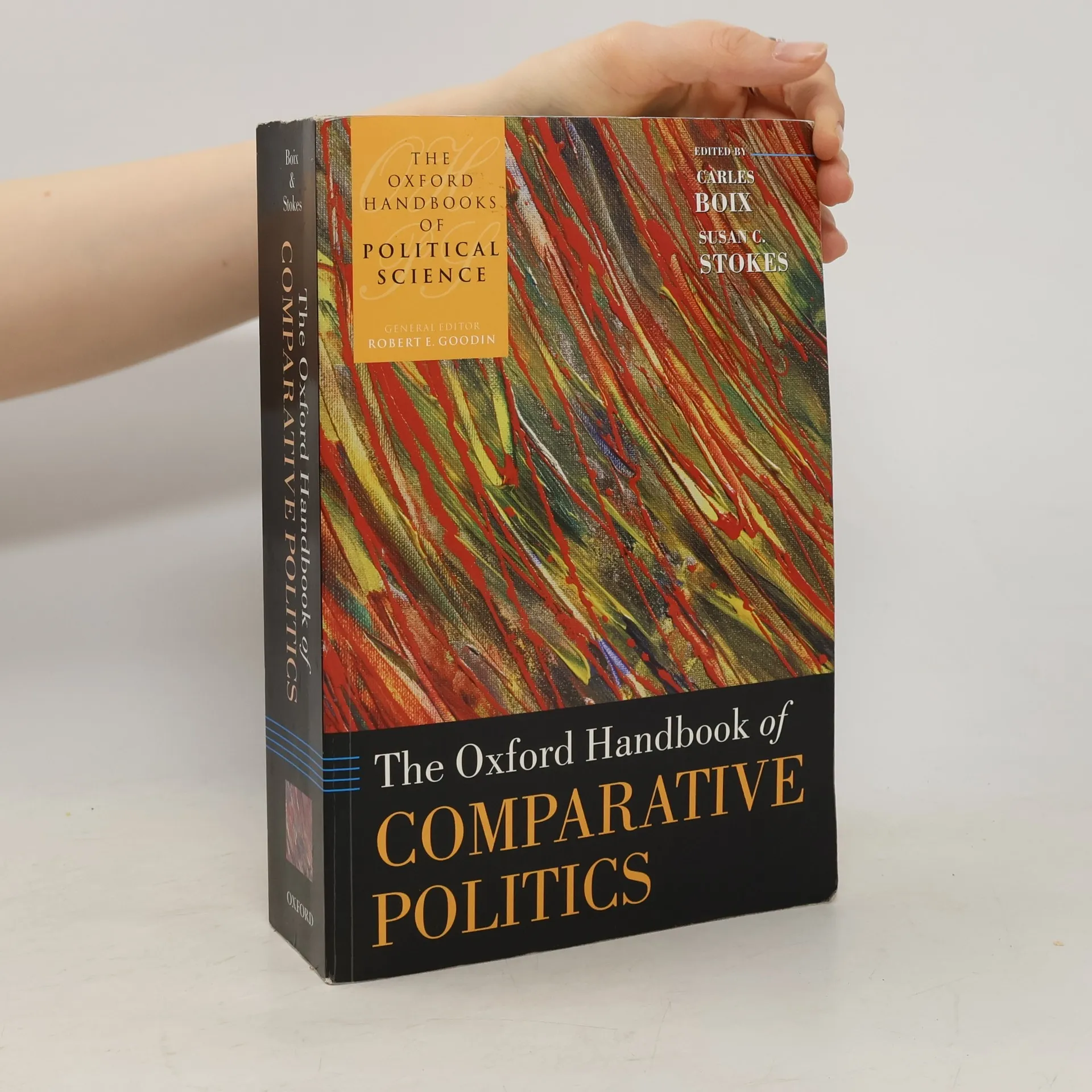
    The Oxford Handbooks of Political Science: The Oxford Handbook of Comparative Politics
    Brokers, Voters, and Clientelism
    • Why Bother?

      • 172 pages
      • 7 hours of reading

      Why Bother? offers and tests a new theory about participation in politics and, in particular, why people vote and join protests. This book will appeal to students and scholars in political science, sociology, and social psychology and to members of the public who want to understand trends in political participation.

      Why Bother?2019
    • Brokers, Voters, and Clientelism

      • 344 pages
      • 13 hours of reading

      Brokers, Voters, and Clientelism addresses major questions in distributive politics. Why is it acceptable for parties to try to win elections by promising to make certain groups of people better off, but unacceptable - and illegal - to pay people for their votes? Why do parties often lavish benefits on loyal voters, whose support they can count on anyway, rather than on responsive swing voters? Why is vote buying and machine politics common in today's developing democracies but a thing of the past in most of today's advanced democracies? This book develops a theory of broker-mediated distribution to answer these questions, testing the theory with research from four developing democracies, and reviews a rich secondary literature on countries in all world regions. The authors deploy normative theory to evaluate whether clientelism, pork-barrel politics, and other non-programmatic distributive strategies can be justified on the grounds that they promote efficiency, redistribution, or voter participation.

      Brokers, Voters, and Clientelism2015
      4.4
    • This comprehensive volume offers a critical survey of empirical political science through contributions from 48 leading scholars in comparative politics. Part I explores key research methodologies, including the comparative method, historical analysis, case-study research, and field research, while assessing the potential for establishing a science of comparative politics. Parts II to IV delve into the foundations of political order, examining state origins, their connections to war and economic development, and the sources of citizen compliance and political obligation. Topics such as democratic transitions, civic culture, authoritarianism, revolutions, civil wars, and contentious politics are also addressed. Parts V and VI focus on the mobilization, representation, and coordination of political demands. Part V investigates the emergence of political parties, their various forms, and voter behavior, alongside discussions on collective action, social movements, and political participation. Part VI examines the mechanisms for aggregating and coordinating political demands, leading to a systematic exploration of specific institutions like electoral systems, federalism, legislative-executive relationships, the judiciary, and bureaucracy. Lastly, Part VII highlights the growing literature on macropolitical economy from the past two decades.

      The Oxford Handbooks of Political Science: The Oxford Handbook of Comparative Politics2009
      4.3